INDIAN STUDENT JAILED FOR 30 YEARS AFTER GROOMING DOZENS OF GIRLS ACROSS UK ONLINE
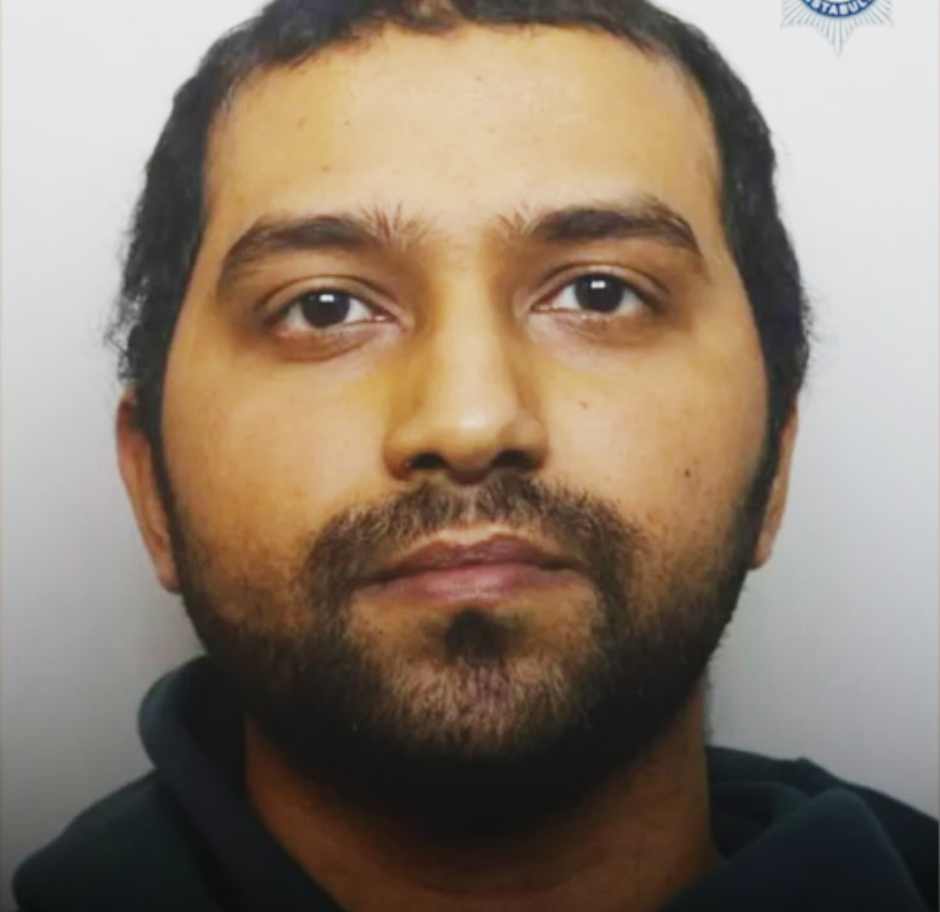
Bilal Kazi, a 27-year-old Indian student who had studied at the University of Chester, has been sentenced to 30 years in prison after admitting dozens of child sexual offenses arising from what Cheshire Police described as its largest online child abuse investigation. Investigators identified 70 victims across 28 UK police-force areas and found evidence of as many as 180 potential victims. Kazi posed as a teenage boy named “Reece,” used stolen photographs to build fake relationships with girls and then coerced them into sending explicit images and videos, using threats of exposure when they resisted. He must serve at least 20 years before becoming eligible for parole, will remain on the sex offenders register for life and faces an additional eight-year licence period if released.
CHESTER, ENGLAND — A 27-year-old Indian student has been sentenced to 30 years in prison after a sprawling investigation uncovered years of online grooming, sexual coercion and blackmail involving at least 70 girls across the United Kingdom, in what Cheshire Police described as the largest online child sexual abuse investigation ever handled by its specialist team. Bilal Kazi, who had studied at the University of Chester and later lived in Birmingham, used social media and gaming platforms to pose as a teenage boy, build what victims believed were genuine romantic relationships and then pressure them into sending increasingly explicit images and videos. When some of the girls tried to stop, investigators said he threatened to distribute material he had already obtained, turning the trust he had built into a mechanism of control.
Kazi was sentenced at Chester Crown Court on Friday, November 13, after pleading guilty to 37 child sexual offenses. Cheshire Constabulary said he had been charged with 39 offenses in its investigation and admitted 37, with two left to lie on file, while additional offenses investigated by West Midlands Police were also taken into account at sentencing. The Crown Prosecution Service separately said the final sentence covered 33 offenses, including 24 counts of causing a child to engage in sexual activity, six counts of blackmail and three counts of making indecent photographs of children. The different published totals reflect the way the various charging and sentencing proceedings were recorded rather than conflicting accounts of whether Kazi admitted a substantial number of offenses. He was given a 30-year custodial sentence followed by an eight-year extended licence period, must serve at least 20 years before he can be considered for parole and will remain subject to sex-offender notification requirements for life.
The investigation identified 70 victims across 28 of the United Kingdom’s 45 territorial police force areas, while officers found evidence suggesting there could have been as many as 180 potential victims. Cheshire Police said the identified victims in its principal investigation were aged between 11 and 17 at the time of Kazi’s offending, while wider court reporting and related cases indicated that the youngest victim involved in the overall offending was 10. The abuse stretched from 2021 to 2025 and continued even after Kazi had come to the attention of law enforcement, making the case not only unusually large but also deeply troubling for investigators because of the persistence and reach of the offending.
Kazi used a consistent method. Police said he contacted girls through platforms including Snapchat, Wink and Roblox, while other reporting also identified Wizz among the services he used. He adopted the name “Reece,” pretended to be a 14-year-old white British boy and used photographs taken from the social media account of another teenage boy whose identity was not disclosed. That false identity allowed him to present himself as a peer rather than an adult stranger, a deception that investigators said was central to his success in building trust with children who believed they were communicating with someone close to their own age.
Once contact had been established, Kazi gradually shifted conversations toward sex and requested intimate photographs and videos, according to police and prosecutors. Some victims believed they were in real romantic relationships with “Reece,” and that belief made the manipulation particularly effective because Kazi presented his demands as normal behavior between boyfriend and girlfriend. The Crown Prosecution Service said he exploited the emotional vulnerability of the girls and coerced them into performing sexual acts on camera, while court reports described him telling reluctant victims that sharing such material was simply what people did when they loved each other.
The abuse escalated further when victims resisted. Investigators said Kazi would threaten to send previously obtained images and videos to friends, relatives or other contacts if the girls refused to provide additional material. In some cases, those threats were carried out. Police said one video was posted online and viewed by 93 people, while one of the first victims reported that her Snapchat account had been hacked and material she had shared with Kazi was sent to friends. The fear of public humiliation, bullying and exposure left some victims feeling they had little choice but to continue complying with his demands.
The first major breakthrough came after a girl who had started communicating with Kazi on Snapchat when she was 13 reported what had happened to Derbyshire Police in November 2021. She initially believed Kazi was her own age, but the interaction quickly became sexual, with Kazi asking inappropriate questions and eventually requesting explicit images and videos. When she later told him she wanted only friendship and no longer wished to send such material, police said he became abusive, called her names, claimed she was his property and threatened to distribute the images she had already sent.
That report ultimately led investigators to Kazi’s last known address in Chester, and Cheshire Constabulary’s Online Child Abuse Investigation Team took over the case in 2022. By then, Kazi had left the area and later left the country, prompting police to circulate him as wanted. He was arrested when he returned to the United Kingdom at Heathrow Airport in July 2023, after which officers seized his mobile phone and began a forensic examination that dramatically expanded the scale of the investigation.
Detectives discovered what Cheshire Police said appeared to be the largest network of offending ever encountered by its Online Child Abuse Investigation Team. Specialist victim-identification officers worked through usernames, messages, digital files and other data recovered from Kazi’s devices to trace children who might have been targeted. That process produced 180 potential victim identities, with police eventually confirming 70 victims across most regions of the United Kingdom. Each identified girl was approached by officers and given an opportunity to disclose what had happened to her.
The volume of illegal material recovered was substantial. The Crown Prosecution Service said police found more than 400 indecent images and videos during the Cheshire investigation, while investigators in Birmingham discovered more than 500 additional files, many classified in the most serious category under British law. Thousands of messages were also examined, providing investigators with evidence of the repeated techniques Kazi used to deceive, manipulate and threaten his victims.
The offending did not stop after his initial arrest. Kazi was already subject to legal restrictions at points during the investigation, including a Sexual Risk Order, and further offenses were committed while he was on police bail. West Midlands Police later charged him with additional offenses, including causing children to engage in sexual activity, blackmail and making indecent images. Those matters were considered as part of the overall sentence imposed at Chester Crown Court, reinforcing the prosecution’s argument that Kazi presented an ongoing danger to children.
Judge Stephen Everett, the Honorary Recorder of Chester, described Kazi in court as a dangerous sexual predator who had preyed on girls and inflicted serious harm. The judge said the scale of his conduct and the methods he used to enter the lives of vulnerable children made him a continuing risk, while also criticizing the way social media platforms could be exploited to create false identities and gain access to young users. The sentencing reflected not only the number of victims but also the prolonged nature of the abuse, the use of blackmail and the lasting psychological effects described in victim impact statements.
Those statements showed how damaging the abuse had been long after the online contact ended. Some victims described severe anxiety, eating disorders and suicide attempts. One young woman said Kazi had taken away her sense of privacy and security and that the effects continued to shape her daily life. Another victim, who was 13 when Kazi first contacted her, said he had taken away her innocence and expressed hope that she could eventually move forward from what had happened.
Detective Constable Georgia Hughes of Cheshire Police’s Online Child Abuse Investigation Team said the investigation had required significant resources and cooperation across multiple specialist units and police forces. She emphasized that online sexual abuse should not be treated as somehow less serious because there is no physical contact between offender and victim, noting that the fear, shame and trauma created by coercion and blackmail can be profound and long-lasting. Police said several victims had spent formative years living in fear that Kazi would expose private material if they failed to obey him.
The case also illustrates how offenders exploit the architecture of social media rather than relying solely on obviously predatory approaches. Kazi did not begin most interactions by openly identifying himself as an adult seeking sexual material. Instead, investigators said he created the appearance of teenage normality, using a believable profile, youthful language and stolen photographs to place himself inside the social environments already used by his victims. The false relationship then became the foundation for later coercion.
That technique is particularly dangerous because children can interpret requests from someone they believe is a boyfriend or girlfriend very differently from an approach by a stranger. Emotional trust lowers suspicion, while the fear of losing the relationship can make victims more vulnerable to pressure. Once an intimate image has been shared, the power imbalance can shift abruptly because the offender can threaten exposure, turning a voluntary first interaction into continuing coercion.
British law treats the creation, possession and distribution of indecent images of children as serious criminal offenses, and it is also an offense to cause or incite a child to engage in sexual activity even where the offender and victim are not physically together. Blackmail compounds those offenses when threats are used to force continued compliance. Kazi’s convictions therefore covered several distinct aspects of the abuse rather than a single broad grooming charge.
The case has also renewed scrutiny of safety on social media and gaming platforms used heavily by children. Snapchat, Roblox, Wink and similar services are designed around easy communication and rapid social interaction, features that can also be exploited by adults using fake identities. The platforms have introduced reporting tools, parental controls and automated systems aimed at detecting abusive behavior, but law enforcement agencies continue to warn that offenders adapt quickly and may move conversations between services to avoid detection.
Police stressed after the sentencing that parents and guardians should maintain open conversations with children about who they communicate with online, rather than relying solely on technical restrictions. Children who believe they will be punished for sharing an image or talking to a stranger may be less likely to seek help when blackmail begins, giving offenders greater leverage. Investigators have therefore repeatedly emphasized that responsibility lies with the offender, not the child who was manipulated.
The case also demonstrates why rapid reporting matters. The initial report by one victim eventually opened an investigation that identified dozens of others who might otherwise have remained unknown. Digital evidence recovered from devices then allowed investigators to connect usernames and accounts across multiple police jurisdictions, showing how one local complaint can expose a pattern of offending on a national scale.
The fact that officers identified potential victims across 28 police force areas created a major coordination challenge. Each victim had to be located, approached sensitively and given an opportunity to disclose abuse without being pressured. Investigators also had to preserve digital evidence, trace accounts, establish which images corresponded to which victims and separate material connected to different offenses and time periods.
That process explains why the investigation continued for several years after Kazi’s arrest. Online child abuse cases can involve enormous volumes of digital material, and every image, message and account may have evidential significance. Officers also have to protect the identities of child victims, whose anonymity is guaranteed for life under British sexual-offense law, while ensuring enough evidence is available to establish each charge beyond reasonable doubt.
Prosecutors said Kazi’s guilty pleas spared victims the additional trauma of giving evidence at a full trial on the charges he admitted, although the sentencing hearing still required the court to confront the scale and consequences of the offending. Martin McRobb of the Crown Prosecution Service’s Organised Child Sexual Abuse Unit described Kazi’s conduct as ruthless and said he had deliberately gained the trust of vulnerable girls before forcing them to produce sexual material and using blackmail when they tried to resist.
The eight-year extended licence period attached to the sentence reflects the court’s assessment that Kazi will require continued supervision if he is eventually released. Under an extended sentence, a person may remain subject to strict conditions in the community after leaving prison and can be returned to custody if those conditions are breached. Kazi will also remain on the sex offenders register for life and is subject to a Sexual Harm Prevention Order and restraining order designed to limit future contact and reduce the risk of further offending.
The minimum 20-year period before parole eligibility does not guarantee release at that point. The Parole Board would have to assess whether Kazi continued to present an unacceptable risk to the public, and he could remain in custody if that risk were considered too high. The sentence therefore creates the possibility of a substantially longer period of incarceration depending on future assessments of his behavior and danger to others.
For the victims, however, the legal outcome cannot undo the damage already described in court. Some were children experiencing what they believed to be their first romantic relationship, only to discover that the person they trusted was an adult using a stolen identity. Others lived for years with the fear that intimate images might reappear online or be sent to friends and relatives, a form of psychological control that can continue even after the offender is arrested.
The case is likely to be studied closely by child-protection specialists because it combines several of the most difficult features of modern online exploitation: false identities, stolen photographs, gaming platforms, private messaging, sexual coercion, account compromise and image-based blackmail. None of those techniques is new on its own, but the scale of Kazi’s offending demonstrates how one person can use them repeatedly across different platforms and police jurisdictions.
Cheshire Police have said there may still be unidentified victims among the 180 potential contacts found during the investigation. That means the 70 confirmed victims should not necessarily be regarded as the final total, although police have not established that every potential contact represented a separate offense. Investigators and prosecutors have therefore been careful to distinguish between people identified as victims and accounts or usernames that merely suggested possible targeting.
The sentencing brings the central criminal proceedings to a major conclusion, but the wider safeguarding questions remain. Technology companies face continuing pressure to detect adults masquerading as children, authorities are trying to improve cross-platform investigations, and families are being encouraged to discuss online relationships without shame or blame. The case shows that sophisticated grooming can begin with ordinary conversation and that the most effective weapon an offender may possess is not advanced technology but a child’s trust.
Kazi’s 30-year sentence reflects the court’s assessment of both the scale of his offending and the danger he poses, but it also serves as a reminder that successful prosecution often begins only after a victim feels safe enough to disclose what happened. Police have urged children who are being threatened over intimate images not to comply with further demands and to seek help from a trusted adult or law enforcement, while services such as Childline and the Internet Watch Foundation’s Report Remove tool can help young people seek the removal of sexual images shared online.
The conclusion of Cheshire’s largest online child sexual abuse investigation therefore carries significance well beyond one offender. It exposes how readily an adult was able to construct a teenage identity, create apparent relationships with children across the country and transform private images into tools of coercion. The court has now imposed one of the most severe sentences available in such a case, but the continuing challenge for police, families, schools and technology platforms is preventing other offenders from reproducing the same pattern before another child is trapped by fear and blackmail.