CALLS GROW FOR SHEIKH HASINA TO RETURN TO BANGLADESH AND FACE DEATH SENTENCE
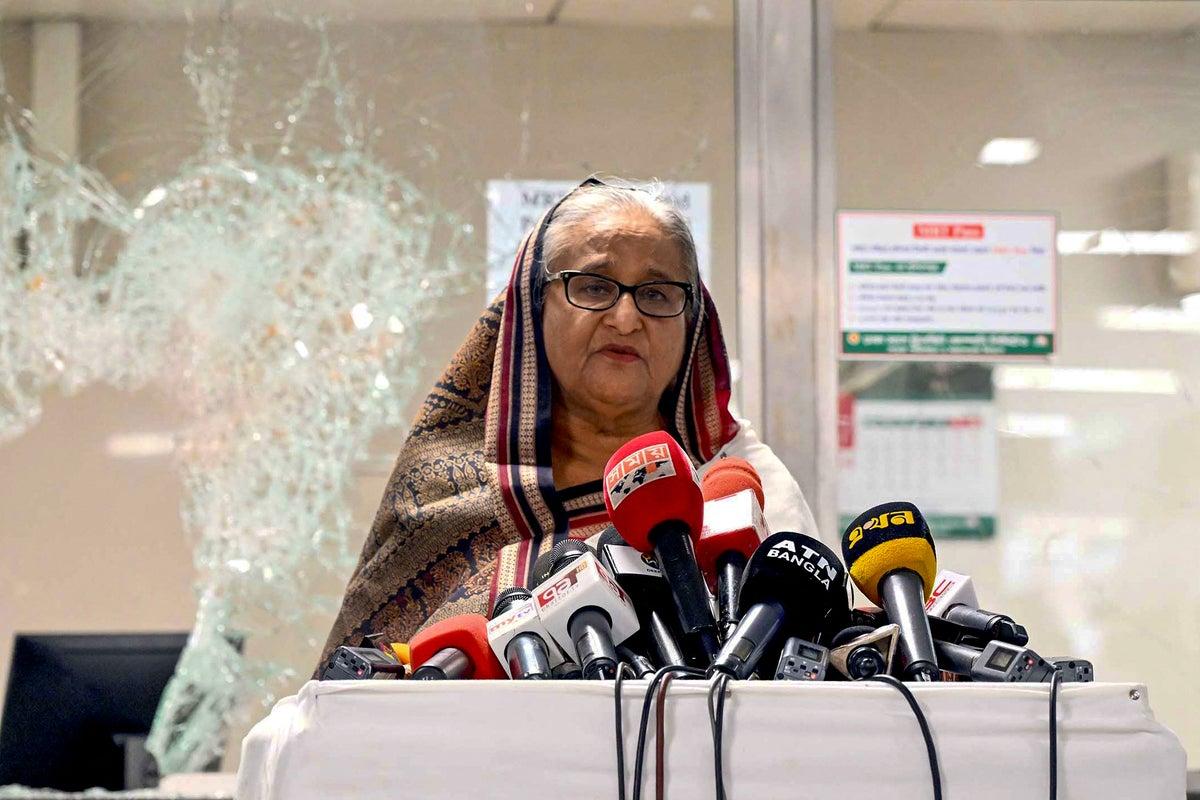
Former Bangladeshi Prime Minister Sheikh Hasina is facing renewed calls to return from exile in India and answer for a death sentence imposed over the deadly 2024 crackdown on protesters. In an Al Jazeera opinion article, Mushfiqul Fazal Ansarey argued that India should take Bangladesh’s extradition request seriously and ensure its territory is not used to destabilise Dhaka. Hasina denies wrongdoing, says her trial was politically motivated and has announced plans to return in December despite the possibility of imprisonment or execution.
Calls for former Bangladeshi Prime Minister Sheikh Hasina to return from exile in India and face the death sentence imposed on her over the deadly 2024 crackdown on protesters have intensified as political tensions between Dhaka and New Delhi continue over her presence on Indian soil. The latest intervention came from Bangladeshi diplomat and former journalist Mushfiqul Fazal Ansarey, who argued in an opinion article published by Al Jazeera that Hasina should return to Bangladesh to answer for the crimes for which she was convicted and that India should ensure its territory is not used in ways that could destabilise its neighbour.
Hasina has been living in India since August 2024, when a student led uprising forced her from power after years of increasingly authoritarian rule and a violent confrontation between protesters, security forces and supporters of her Awami League government. The United Nations Human Rights Office later estimated that as many as 1,400 people may have been killed during the unrest and said there were reasonable grounds to believe that serious human rights violations, including potential crimes against humanity, had occurred during the government’s suppression of the demonstrations.
In November 2025, Bangladesh’s International Crimes Tribunal convicted Hasina in absentia of crimes against humanity related to the crackdown and sentenced her to death. The tribunal found her responsible for instigating and facilitating violence against protesters and for actions taken by forces operating under her government, while prosecutors argued that she bore command responsibility for the deadly response. Hasina has rejected the verdict, denied ordering unlawful killings and described the proceedings as politically motivated and legally illegitimate.
The judgment nevertheless remains legally binding in Bangladesh unless overturned through the country’s judicial process. Because Hasina was tried and convicted in absentia, her return would immediately raise questions about imprisonment, appeal rights, possible retrial procedures and eventual enforcement of the death sentence. Bangladeshi officials have repeatedly said that if she returns voluntarily or is extradited from India, she will be taken into custody and dealt with under existing law.
Ansarey’s opinion piece argues that accountability for the 2024 violence should remain central to Bangladesh’s political transition. He said families who lost relatives during the uprising continue to live with the consequences of the crackdown while Hasina remains in India and continues to communicate with supporters. From his perspective, allowing the former prime minister to remain politically active from Indian territory risks deepening mistrust and prolonging uncertainty around Bangladesh’s democratic transition.
His argument must be understood as an opinion rather than the position of Al Jazeera as a news organisation. The article explicitly states that the views are Ansarey’s own, and his call for Hasina’s return reflects one side of a deeply divided national debate over justice, accountability, political revenge and the future of the Awami League. Hasina and her supporters argue that the cases against her are politically driven and that the legal process has been shaped by her opponents, while the current Bangladeshi government and many families of victims say accountability is essential after the scale of the 2024 violence.
The former prime minister has complicated the political picture further by announcing that she intends to return to Bangladesh in December 2026. She has told international media that she is prepared to surrender to a court despite knowing that she could be arrested, imprisoned or executed. Her aides have said the exact timing of her return will depend on formal arrangements, although the Bangladeshi government has rejected her request for a new passport and national identity card.
That passport request became one of the clearest signs that Hasina may be serious about returning. Her lawyers approached Bangladesh’s diplomatic mission in New Delhi seeking replacement documents, arguing that her citizenship entitles her to travel documents even though her existing passport and identity records had been revoked. Bangladeshi officials rejected the request and said she is a convicted fugitive who should return through extradition procedures rather than through a newly issued passport.
Dhaka has repeatedly asked India to extradite Hasina under the bilateral extradition treaty between the two countries. India has so far declined to hand her over, allowing her to remain in New Delhi while maintaining that its broader relationship with Bangladesh should continue through diplomatic channels. That decision has become one of the most difficult issues in relations between the neighbouring states.
Ansarey argues that the extradition request should be considered on its legal merits and points to provisions in the India Bangladesh extradition treaty that prevent certain serious crimes, including murder and incitement to murder, from automatically being treated as political offences. The treaty nevertheless contains safeguards and grounds upon which extradition requests can be refused, meaning the legal question is more complicated than simply determining whether an extradition agreement exists.
India’s position is politically sensitive because Hasina was for years regarded as one of New Delhi’s closest regional partners. During her long tenure, Bangladesh and India deepened cooperation on security, trade, transit and regional connectivity, and Indian governments generally viewed her administration as predictable and friendly. Her sudden overthrow left India facing a difficult choice between maintaining relations with Bangladesh’s new political leadership and protecting a former ally who sought refuge on Indian soil.
Bangladesh’s government has become increasingly frustrated by Hasina’s ability to make political statements from India. In January and again later in 2026, officials in Dhaka accused her of trying to influence domestic politics from exile and warned that public political activity from Indian territory could damage bilateral relations. India has responded by saying it does not necessarily endorse the views expressed by Hasina or other exiled political figures simply because they are physically present in the country.
The issue became especially contentious in August when Hasina addressed journalists and supporters through an event hosted in New Delhi. Bangladesh formally complained to India, saying that allowing a convicted and wanted former leader to make political interventions from Indian soil undermined Dhaka’s sovereignty and strained efforts to improve relations. India maintained that it did not organise the event and did not endorse her statements.
Hasina used that appearance to repeat her promise to return to Bangladesh. She also demanded that the ban on the Awami League be lifted and accused the government that replaced her of political repression and economic mismanagement. Her opponents said the speech demonstrated why India should restrict her political activities, while her supporters argued that she retains the right to defend herself and her party.
The Awami League remains banned from normal political participation in Bangladesh, and many of its senior figures are imprisoned, facing prosecution or living in exile. The party retains a significant support base, however, and Hasina’s possible return could revive political mobilisation among supporters who believe the current government has unfairly excluded them from national politics.
That possibility is one reason her announced December return has generated both anticipation and concern. Supporters see it as an act of political defiance and personal courage, while critics fear that her arrival could trigger demonstrations, violence or renewed confrontation between the Awami League and opponents who hold her government responsible for the deaths of protesters.
Bangladesh has gone through a major political transition since Hasina’s fall. An interim administration led by Muhammad Yunus oversaw the initial post uprising period, while subsequent elections brought the Bangladesh Nationalist Party and Prime Minister Tarique Rahman to power. The new government has said its priority is restoring democratic institutions, stabilising the economy and ensuring accountability for abuses committed under Hasina’s rule.
The political transition remains fragile because divisions created by the 2024 uprising have not disappeared. Families of victims continue to demand justice, while Awami League supporters argue they are being collectively punished for the actions of the previous government. Human rights groups have also raised concerns about arrests, political restrictions and the treatment of opposition figures during the post Hasina period.
The debate over Hasina’s return therefore cannot be reduced simply to whether one former prime minister should go home. It raises fundamental questions about how Bangladesh handles accountability for mass violence while preserving legal fairness and political stability. It also tests whether a deeply polarised society can distinguish criminal responsibility from collective punishment of an entire political movement.
Ansarey’s opinion places the victims of the 2024 uprising at the centre of that debate. He argues that families who lost relatives should not be expected to watch Hasina remain abroad while continuing to influence political affairs without answering in person to the courts that convicted her. He also says Bangladesh’s government should document incidents in which political activity from abroad crosses the line from lawful expression into incitement or threats.
The distinction between political speech and incitement is particularly important because Hasina remains a major political figure even while banned and exiled. Statements she makes can mobilise supporters, influence party activists and shape political narratives inside Bangladesh. Dhaka argues that some of those interventions risk encouraging instability, while India must balance Bangladesh’s concerns against questions of free expression and political asylum.
The death sentence itself adds another layer of complexity. India has historically been cautious about extraditing individuals where capital punishment or concerns about fair trial rights may arise, although the bilateral treaty provides a framework for cooperation. Human rights organisations generally oppose the death penalty and may scrutinise whether Hasina would receive adequate procedural protections if returned.
Hasina has said she understands the danger and is willing to face it. In interviews during 2026, she said she may be imprisoned or killed but still intends to return because she wants to be in Bangladesh and stand with her supporters. Those statements have strengthened speculation about whether her planned return is genuine or primarily a political strategy to keep the Awami League energised.
Some analysts remain sceptical. They argue that announcing a return allows Hasina to maintain control of the party and remain politically relevant without actually placing herself in immediate danger. Others believe she may genuinely be prepared to return because remaining indefinitely in exile would gradually weaken her influence over a political organisation built heavily around her personal leadership.
The passport dispute provides some evidence that preparations are underway, but it does not guarantee that she will return in December. If Bangladesh refuses to issue travel documents and India does not extradite her, the logistics of a voluntary return could become difficult. Her lawyers and aides may therefore seek alternative travel arrangements or a temporary travel document, although any such move would likely require cooperation from one or both governments.
The Bangladeshi government has taken a hard line. Officials have described Hasina as a fugitive and convicted criminal and have insisted that the appropriate mechanism is extradition rather than issuing her new documents. Prosecutors have also warned that she faces enforcement of the tribunal’s verdict if she returns.
That position ensures that Hasina’s arrival would immediately become a major legal and political event. Security would likely be intense, while supporters and opponents could attempt to mobilise around airports, courts or detention facilities. The government would face pressure to enforce the verdict while also preventing unrest and ensuring that any further legal proceedings meet domestic and international standards.
India would also face consequences. If Hasina returns voluntarily, New Delhi could avoid making a formal extradition decision, but questions would still arise about how she was allowed to travel and whether India facilitated or obstructed the process. If she remains, pressure from Dhaka is likely to continue.
Relations between India and Bangladesh are strategically important for both countries. They share a long border, extensive trade links, water agreements, security concerns and transport connections. Prolonged tension over Hasina could therefore affect cooperation far beyond the former prime minister’s personal fate.
For Bangladesh, the government must also decide how much political attention to devote to Hasina while attempting to address economic and institutional problems at home. An extended confrontation with the former leader could strengthen her ability to dominate the political agenda even from exile, while ignoring her could anger victims who believe justice remains incomplete.
The legal process will therefore be crucial. If Bangladesh wants international support for Hasina’s return, it will need to demonstrate that the tribunal proceedings and any future appeals or hearings meet standards of due process. The more politically charged the process appears, the easier it becomes for her supporters to argue that the conviction is simply another stage of partisan conflict.
Hasina’s own record remains deeply contested. Supporters credit her with rapid economic growth, major infrastructure projects and increased regional connectivity during her years in office. Critics accuse her government of suppressing opposition, weakening democratic institutions, controlling the media and using security forces against political opponents.
The 2024 uprising ultimately brought those tensions to a breaking point. What began as student protests over government job quotas expanded into a nationwide movement after deadly confrontations with security forces. The violence escalated rapidly, and Hasina fled as protesters advanced toward Dhaka and support for her government collapsed.
The UN later concluded that the crackdown involved serious and systematic abuses and estimated that up to 1,400 people may have been killed. Those findings provided important international documentation of the scale of the violence, although they were not themselves criminal convictions against Hasina.
The International Crimes Tribunal subsequently addressed individual criminal responsibility. Prosecutors argued that Hasina encouraged and authorised lethal measures against protesters and failed to prevent abuses by forces under her command. The tribunal accepted those arguments and imposed the death sentence.
Hasina’s legal team and supporters dispute the legitimacy of the court, arguing that it operated under a government dominated by her political enemies and that she was denied a fair opportunity to defend herself in person. Those objections are likely to become central if she returns and seeks to challenge the conviction.
Any meaningful accountability process must therefore confront two competing demands. Victims and their families want justice for deaths and injuries suffered during the uprising, while defendants are entitled to fair procedures regardless of how unpopular or powerful they may be.
That balance will determine whether Hasina’s return contributes to the rule of law or deepens political division. A transparent process could strengthen confidence that even former heads of government are accountable under the law, while a process perceived as revenge could further polarise the country.
Ansarey’s argument is firmly on the accountability side of that debate. He believes Hasina should return and answer directly for the verdict against her, while India should respect Bangladesh’s democratic transition and take Dhaka’s extradition concerns seriously. His position reflects the anger of many Bangladeshis who view the 2024 crackdown as one of the darkest periods in the country’s recent political history.
Hasina’s supporters see the same events through a different lens. They say the Awami League has been banned and its members prosecuted on a scale that makes genuine political participation impossible, and they argue that Hasina’s return could become a test of whether the new government is willing to tolerate meaningful opposition.
Those competing narratives will intensify if December approaches without clarity about her travel plans. Every statement from Hasina, Bangladesh’s government or India is likely to be interpreted through the larger struggle over who controls the political story of the 2024 uprising and its aftermath.
For now, the clearest facts are that Hasina remains in India, Bangladesh has requested her extradition, her passport request has been rejected, she faces a death sentence imposed in absentia and she says she intends to return voluntarily. India has not handed her over, and the diplomatic dispute remains unresolved.
The Al Jazeera opinion piece adds fresh pressure by arguing that allowing her to remain in India without facing the sentence undermines accountability and damages trust between the two countries. It also reflects a broader demand from victims and government supporters that the former prime minister should answer personally for what happened under her administration.
Whether Hasina ultimately returns voluntarily, is extradited or remains in India will have consequences far beyond her own legal fate. Her decision could affect Bangladesh’s political stability, the future of the Awami League, relations with India and the credibility of the country’s effort to confront abuses committed during the 2024 uprising.
The controversy is therefore entering a critical stage. Hasina says she will return in December despite knowing that she could be imprisoned or executed, while Bangladesh insists that she is a convicted fugitive who must face the law. India remains caught between an old ally and a neighbouring government demanding accountability.
If she returns, Bangladesh will face one of the most consequential legal and political moments since the uprising that removed her from power. If she does not, the dispute over her continued presence in India and her ability to influence Bangladeshi politics from exile is likely to intensify further.