SPAIN MOVES TO SUSPEND TIKTOK OVER CHILD SEXUAL ABUSE MATERIAL AS PROSECUTORS OPEN INVESTIGATION
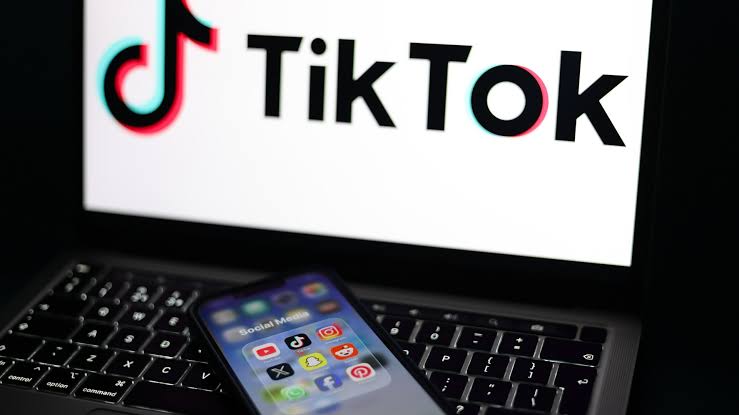
Spain has asked its Data Protection Agency to consider temporarily suspending TikTok after an investigation uncovered 1,183 public posts containing child sexual abuse material that received at least 48 million views. Prosecutors have opened a criminal investigation, while the regulator is examining specific links and sharing information with Irish and European authorities. TikTok has not yet been suspended nationwide, but Youth Minister Sira Rego says the platform should halt operations until the material is removed and stronger safeguards are in place.
Spain has moved toward a possible temporary suspension of TikTok after an investigation uncovered more than 1,000 public posts containing child sexual abuse material that collectively attracted tens of millions of views, prompting prosecutors, regulators and government ministers to demand urgent action from the social media company. Youth and Children’s Minister Sira Rego has formally asked Spain’s Data Protection Agency to suspend TikTok as an emergency measure and has also urged the company to voluntarily halt its services in the country until the material is removed and stronger safeguards are put in place. The government itself does not have the authority to unilaterally switch off the platform, meaning any nationwide suspension would have to come through the appropriate regulator or other legal mechanism.
The move follows a 35 day investigation by Spanish nonprofit Maldita.es, which said it identified 1,183 public posts containing explicit child sexual abuse material that accumulated at least 48 million views. Researchers also identified more than 26,000 profiles that had commented on or shared the content, creating what the organization described as a large online ecosystem around the distribution and promotion of abusive material involving children. The findings have triggered alarm across Spain because they suggest the problem was not limited to a handful of isolated accounts but involved thousands of users interacting with material that should have been detected and removed under TikTok’s own rules.
Maldita.es said some accounts publicly displayed explicit material while others used altered images or coded posts to advertise child sexual abuse content for sale. The investigation also found photographs of children being used to direct users toward external channels where illegal material was allegedly bought, sold or exchanged. Researchers said the structure of some of the accounts appeared designed to evade automated moderation while still signaling clearly to interested users where more material could be obtained.
One of the most serious findings involved TikTok’s livestreaming system. Maldita.es documented 91 cases in which minors were livestreaming in ways that violated TikTok’s policies, with some adult viewers allegedly offering money or virtual gifts to children in exchange for sexualized behavior. Researchers said TikTok’s own virtual gift system allowed viewers to financially reward some livestream participants, raising questions about whether platform features were indirectly facilitating exploitation.
The scale of the material prompted Spain’s Attorney General’s Office to open a formal investigation. Attorney General Teresa Peramato signed a decree assigning the case to Chief Cybercrime Prosecutor Elvira Tejada, who will examine possible offenses involving the production and distribution of child sexual abuse material and the corruption of minors. Maldita.es said it handed prosecutors approximately one terabyte of evidence gathered during its investigation, including examples of content, account activity and records showing how TikTok responded when researchers attempted to report abusive material.
The nonprofit says TikTok’s response to reports was one of the most disturbing parts of its findings. Of 50 videos researchers reported through the platform’s official channels, only five were initially removed. Another 13 were later blocked in Spain, but researchers said the overall response suggested that significant amounts of illegal material could remain accessible despite being reported directly to the company.
That apparent failure has become central to the Spanish government’s case for stronger intervention. Rego described the situation as a structural problem rather than an isolated moderation failure and argued that the platform’s systems appeared capable of allowing networks that distribute sexual violence against children to reproduce and grow with relative ease. After meeting representatives of TikTok, she said the company agreed to examine the problem but did not provide the government with immediate technical solutions, a commitment to an independent audit or guarantees that the underlying moderation failures would be corrected.
Rego said she had asked Spain’s Data Protection Agency to consider a temporary suspension because the scale of the harm justified exceptional action. She also urged TikTok itself to suspend operations voluntarily while it cleans up the platform. The minister made clear that her ministry cannot directly order TikTok offline, saying that if the decision were solely within the government’s power, the suspension would already have happened.
Under European Union data protection rules, Spain’s Data Protection Agency can impose temporary emergency measures lasting up to three months where urgent action is considered necessary to protect people’s rights and freedoms. The regulator has not yet ordered a nationwide shutdown, but it has begun responding to the investigation by seeking information about specific links identified by Maldita.es.
The Data Protection Agency has asked the nonprofit to provide the URLs where minors’ personal data is allegedly being unlawfully processed. It plans to require TikTok to explain what action it has taken on those links and can order access to individual pieces of content to be blocked. The agency is also forwarding information to Ireland’s Data Protection Commission because TikTok’s European headquarters are based in Ireland, as well as to the European Data Protection Board and the European Commission under the Digital Services Act.
The European Commission could become increasingly important because TikTok is designated as a very large online platform under the Digital Services Act. That legislation places additional obligations on major platforms to assess and reduce systemic risks, including risks affecting children and the spread of illegal material. Companies can face substantial fines if regulators determine that they have failed to comply with those responsibilities.
The Spanish controversy therefore extends beyond a domestic dispute between one ministry and one technology company. TikTok operates across the European Union under a regulatory system that increasingly treats child safety, algorithmic amplification and content moderation as major legal responsibilities rather than optional platform policies. If Spanish authorities establish that TikTok failed to adequately detect or respond to large scale distribution of child sexual abuse material, the case could influence wider European enforcement.
Spain’s Prime Minister Pedro Sánchez has publicly welcomed the prosecutor’s decision to investigate the allegations and described the opening of the inquiry as positive news. His comments signal that the issue has moved beyond the youth ministry and is now receiving attention at the highest levels of government.
Opposition politicians have also expressed alarm. Popular Party leader Alberto Núñez Feijóo said Maldita.es briefed him on its findings and argued that the country could not ignore evidence that adults were approaching children online with sexual requests. The reaction from both government and opposition figures suggests there is broad political concern about the findings even if parties may disagree over the best regulatory response.
TikTok has faced similar scrutiny elsewhere over child safety, privacy and algorithmic recommendations. Governments and regulators have repeatedly questioned whether the platform’s systems adequately protect minors from sexual exploitation, harmful content and contact with predatory adults. The Spanish investigation is particularly serious because it goes beyond general concerns about harmful material and alleges the public availability and recommendation of content that may constitute criminal child sexual abuse material.
The recommendation system is one of the most important issues under examination. Maldita.es says TikTok did not merely host some of the material but also recommended related content to users after they interacted with certain posts. If confirmed, that could suggest the platform’s algorithm was helping users discover additional abusive content rather than simply failing to remove isolated uploads.
TikTok’s recommendation system is designed to learn quickly from user behavior and provide videos likely to keep people watching. That technology has helped make the platform one of the most successful social media products in the world, but regulators have increasingly warned that the same system can amplify harmful content if safety controls fail. In the context of child sexual abuse material, algorithmic recommendation can be particularly dangerous because it may connect offenders with material they were not actively searching for.
Maldita.es also documented what it described as coded communities where users appeared to understand specific terms, emojis or modified images as signals for illegal material. Such tactics are commonly used by online abuse networks to avoid detection, requiring moderation systems to recognize patterns and relationships rather than relying only on exact images or obvious search terms.
After the investigation became public, TikTok restricted at least two search terms associated with the material for users in Spain. However, Maldita.es reported that similar searches performed from other European countries could still surface related content, suggesting that some of the platform’s response was geographically limited.
That finding has strengthened the government’s argument that removing individual posts may not be enough. Officials want TikTok to demonstrate that it can prevent the wider network from simply recreating itself through new accounts, alternative search terms or slightly altered versions of the same material.
Child sexual abuse material is illegal across the European Union and its possession, production and distribution can carry serious criminal penalties. Technology companies are expected to report known instances to appropriate authorities and remove the material quickly once identified. The challenge for platforms with billions of uploads is ensuring that automated moderation systems, human reviewers and reporting channels work quickly enough to prevent illegal content from spreading.
TikTok has invested heavily in safety teams and says its policies prohibit sexual exploitation of minors, grooming and abusive imagery. Like other large platforms, it uses automated detection tools, user reports and human moderation to identify violations. The Spanish investigation, however, raises questions about whether those systems were effective in the cases researchers documented.
One of the government’s most serious concerns is that the material remained publicly accessible long enough to accumulate tens of millions of views. A figure of 48 million views indicates that some of the content may have circulated widely before action was taken, although a view count does not necessarily represent 48 million individual users because one person can generate multiple views.
The 26,000 profiles identified by researchers also do not necessarily represent 26,000 convicted offenders. Maldita.es described them as accounts that interacted with the material through comments or sharing, and authorities will need to distinguish between different forms of behavior as the investigation continues. Criminal responsibility can only be established through evidence and legal proceedings.
The prosecutor’s office will now examine the data provided by the nonprofit and determine whether specific individuals, account operators or other actors should face criminal investigation. Law enforcement may seek information from TikTok identifying users behind certain accounts, although privacy laws and cross border legal procedures can make those requests complex.
TikTok’s European base in Ireland also means several regulatory bodies could become involved simultaneously. Ireland’s Data Protection Commission is the lead regulator for many privacy matters involving TikTok in the European Union, while Spain can take emergency measures where local residents face urgent risks. The European Commission has separate authority under the Digital Services Act.
That overlapping regulatory structure is one reason Spain has not simply switched TikTok off immediately. A nationwide suspension of a platform used by millions of people would be an extraordinary step involving significant legal questions about proportionality, jurisdiction and freedom of expression. Regulators are therefore examining whether targeted blocking, emergency restrictions or broader platform wide measures are legally justified.
Rego’s request nevertheless represents one of the strongest public demands made by a European government against TikTok over child sexual abuse material. Her position is that normal enforcement procedures may be insufficient when illegal content involving children remains accessible at such scale.
The government has also pointed to the responsibility of technology companies to design platforms in ways that reduce risks before abuse occurs. Regulators increasingly argue that removing illegal content after millions of people have already viewed it is not an adequate safety system. Platforms must instead identify predictable ways their services can be exploited and redesign features that create serious risks.
Livestreaming and virtual gifts could receive particular attention because the investigation alleges that adults used the system to offer children financial incentives. If regulators determine that TikTok’s design facilitated those interactions, they may demand stronger age verification, limits on livestream access or changes to monetization features involving minors.
Age verification has become a major issue throughout Europe. Platforms often rely on users to provide their age when creating accounts, but children can easily enter false information. Governments are increasingly examining whether stronger verification should be required for services that expose minors to significant risks.
Spain has already taken a relatively aggressive position on protecting children online. The government has supported tighter rules around minors’ access to social networks and has pushed for technology companies to take greater responsibility for addictive design, sexual content and predatory behavior.
The TikTok investigation could accelerate those efforts. If authorities conclude that the platform’s existing protections failed systematically, Spain may use the case to argue for stronger European wide rules rather than relying only on company promises.
The controversy is also likely to put pressure on other social media companies. Spain had already requested investigations into TikTok, X and Meta over allegations involving AI generated child sexual abuse material. Artificial intelligence has made it easier for offenders to create realistic abusive images without photographing real abuse, creating new challenges for law enforcement and moderation systems.
Governments increasingly argue that platforms must treat synthetic abusive material with the same seriousness as other illegal sexual content involving children because it can normalize exploitation, be used for grooming and make enforcement more difficult.
For parents, the Spanish investigation is likely to reinforce concerns about how much control platforms have over what children encounter online. TikTok is particularly popular among teenagers, and its recommendation system can expose users to large amounts of content from people they do not follow.
The company’s ability to rapidly recommend videos is one of its defining features, but it also means dangerous material can reach users far beyond the accounts that originally uploaded it. Regulators want stronger evidence that safety systems can intervene before those recommendation networks expand.
For TikTok, the immediate challenge is to convince Spanish authorities that it can eliminate the illegal content and prevent its return. Failure to do so could increase the likelihood of temporary restrictions or a broader regulatory action.
The company may also face questions about why only a small proportion of the videos formally reported by researchers were initially removed. If TikTok’s review systems incorrectly determined that clearly abusive material did not violate its rules, regulators will want to know whether the problem involved human moderation, automated classification or weaknesses in internal policies.
An independent audit could become one potential response. Rego has criticized TikTok for not immediately committing to external verification of its safety systems, suggesting that government officials are unlikely to accept assurances from the company without evidence.
The prosecutor’s investigation will proceed separately from regulatory action. Prosecutors will focus on potential crimes committed by individuals who created, distributed or facilitated illegal material, while data protection and European regulators will examine whether TikTok complied with its legal obligations as a platform.
Those investigations could take time, but pressure for immediate action is unlikely to disappear because the material involves children. Spain’s government has made clear that it sees the issue as urgent and believes a temporary suspension should remain an option if the platform cannot demonstrate rapid and comprehensive removal.
For now, TikTok remains available in Spain. The country has requested a temporary suspension rather than implemented one, and regulators are pursuing more targeted measures while examining whether stronger action is justified. That distinction is important because headlines suggesting Spain has already banned TikTok would overstate the current legal position.
What has changed is the level of government intervention. A nonprofit investigation has become a criminal inquiry, a data protection case and a potential European regulatory matter within days. Spain’s youth minister is publicly calling for the platform to be shut down temporarily, while prosecutors are examining one terabyte of evidence related to child sexual abuse and exploitation.
The coming days will show whether TikTok can satisfy Spanish authorities through content removal and stronger safeguards or whether the government’s call for temporary suspension gains further regulatory support. What is already clear is that Spain no longer views the problem as a routine content moderation failure. Officials are treating it as a serious child protection crisis that could justify exceptional restrictions on one of the world’s largest social media platforms.