FORMER U.S. POLICE OFFICER GETS 40 YEARS FOR SEXUALLY ASSAULTING 14 YEAR OLD GIRL WHILE ON DUTY
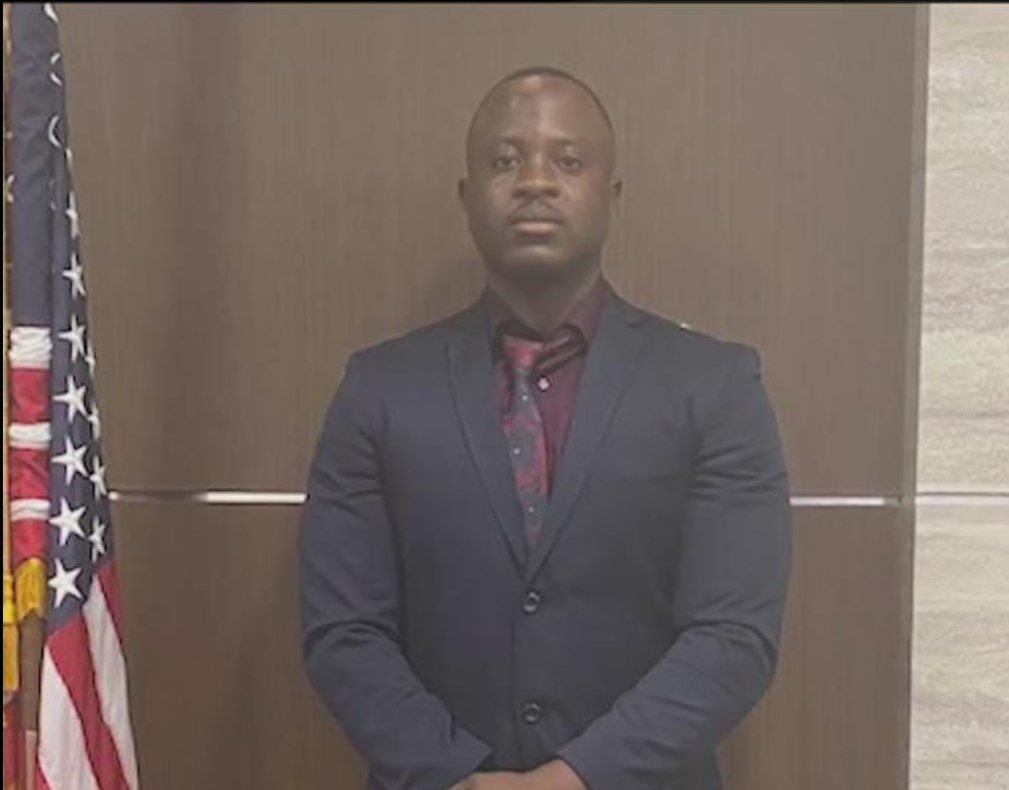
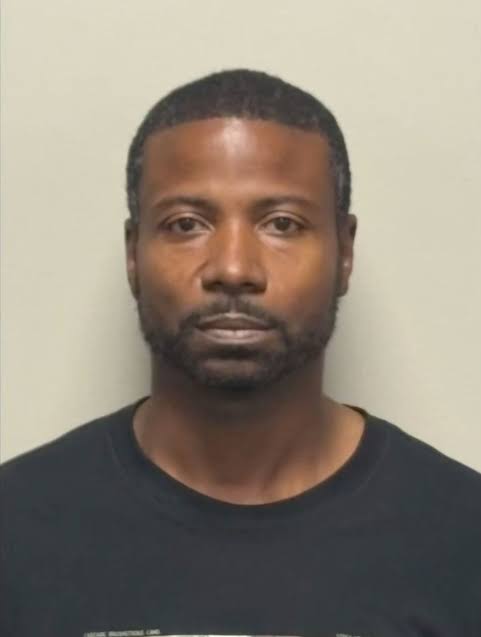
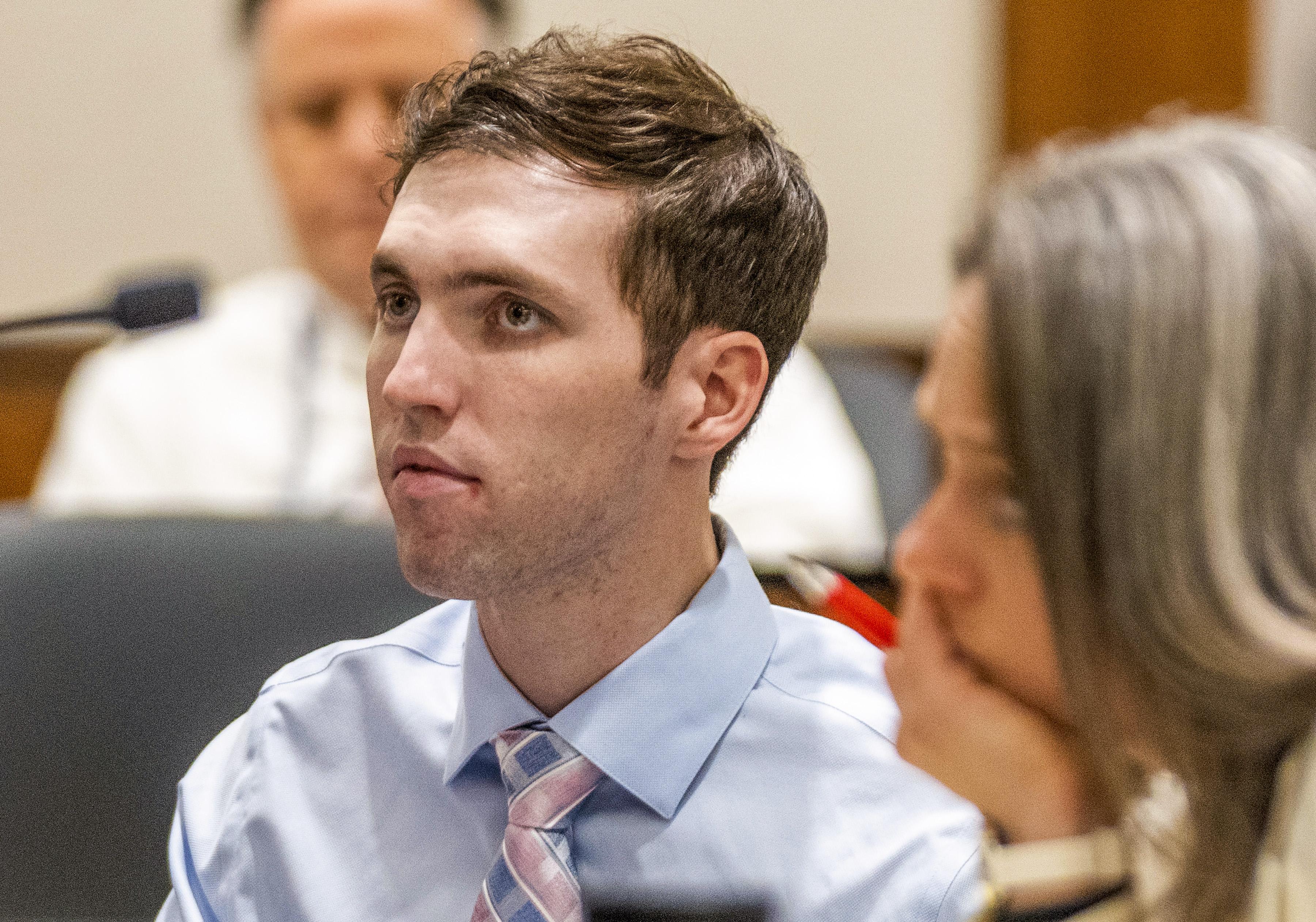
Former Kokomo Police Department officer Sinmi Asomuyide, 33, has been sentenced to 40 years in federal prison and three years of supervised release after being convicted of sexually assaulting a 14-year-old girl while on duty and attempting to conceal evidence. Prosecutors said he used his police authority, patrol vehicle and handcuffs during the offense, while DNA, GPS and digital evidence helped establish what occurred. Department of Justice
A former police officer in Indiana has been sentenced to 40 years in federal prison after a jury found that he used his authority as a law enforcement officer to sexually assault a 14 year old girl while on duty and then attempted to conceal evidence of what he had done. Sinmi Asomuyide, 33, formerly of the Kokomo Police Department, was handed the sentence by Chief United States District Judge James R. Sweeney II following a federal prosecution that exposed a disturbing abuse of police power and a series of actions investigators said were intended to hide his contact with the child.
The United States Department of Justice announced that Asomuyide will serve 40 years in federal prison followed by three years of supervised release. His sentence came after a five day jury trial in the Southern District of Indiana in June 2026, where jurors convicted him of deprivation of rights under color of law, witness tampering and destruction of records. Federal prosecutors said his conduct involved the kidnapping and abusive sexual contact of a child under the age of 16, making the case both a civil rights prosecution and a serious child protection matter.
The case began on June 30, 2024, when Asomuyide was working as a patrol officer for the Kokomo Police Department. According to evidence presented at trial, the father of the 14 year old girl called 911 earlier that day to report her as a runaway, prompting Asomuyide and another officer to respond. The officers located the girl at the home of another minor and took her into police custody, placing her in a position where she was expected to depend on the officers for protection and safe handling.
Asomuyide transported the girl to the Kinsey Youth Center, but prosecutors said his conduct changed once he arrived at the facility. As he entered the youth centre’s secure garage, known as a sallyport, he switched off his body worn camera in violation of Kokomo Police Department policy. The DOJ said he then took the girl’s cellphone and used it to call his own personal TextNow number, creating a direct private connection between himself and the teenager.
Investigators said Asomuyide also questioned the girl about her sexual history during the encounter, an action prosecutors later presented as part of a pattern showing his inappropriate intentions. During a pat down search, he discovered a vape pen in the girl’s pocket. Rather than simply processing the item according to department procedures, prosecutors said he later used it as a reason to remain in communication with her.
After entering the youth centre, Asomuyide took the teenager to a side room and told her he would contact her later to return the vape pen. The girl was eventually released from the youth centre into the care of a family friend at the direction of her father, but communication between her and the police officer continued after she left.
According to the federal case, the girl sent Asomuyide information connected to one of her social media accounts, while he asked her for her TikTok username. The two continued exchanging messages through the evening as Asomuyide completed the remainder of his official shift. Prosecutors said the teenager believed he was planning to return the confiscated vape pen, giving her reason to think the contact still involved a police related matter.
Federal investigators said Asomuyide later took deliberate steps to meet the girl privately while creating the appearance that he was still working at the police station. He returned to the Kokomo Police Department and requested overtime, telling colleagues he needed additional time between 10 p.m. and midnight to finish paperwork.
Instead of remaining at the station, prosecutors said he left to meet the teenager. Still wearing his police uniform, he went to the apartment where the girl was staying with the family friend and said he needed to speak with her privately about where she should remain.
The fact that he arrived in uniform became an important part of the prosecution because it demonstrated how his authority as a police officer influenced the situation. The girl had first encountered him because she was in police custody, and federal prosecutors argued that his later actions continued to rely on the power and trust associated with his badge.
Evidence presented to the jury showed that Asomuyide placed the girl in handcuffs and put her in the back of his patrol vehicle. He then drove her away from the apartment complex to an empty warehouse parking area, with the movement of the police vehicle later confirmed through GPS information stored by the department.
At the isolated location, investigators said he removed the handcuffs and moved the teenager into the front portion of the patrol vehicle, where he sexually assaulted her. After the assault, prosecutors said he again placed her in handcuffs and drove her back to the apartment complex.
The girl later told family members and law enforcement what had happened, triggering an investigation by the Indiana State Police. Her report led investigators to examine Asomuyide’s patrol vehicle, electronic devices, work records and communications as they attempted to establish what happened during the hours surrounding the assault.
Forensic investigators found physical evidence inside the patrol car that became central to the federal case. A dried semen stain was recovered from the vehicle’s centre console, and laboratory analysis determined that the DNA matched Asomuyide.
The physical evidence strongly supported the teenager’s account and contradicted Asomuyide’s later statements to investigators. Prosecutors used the DNA evidence together with GPS records, phone data and electronic searches to reconstruct the sequence of events.
About one week after the assault, Indiana State Police detectives interviewed Asomuyide. Federal prosecutors said he gave investigators false information while trying to distance himself from the girl and conceal the private communication that had taken place between them.
He claimed that he had never personally given the teenager his phone number and suggested she might have overheard him reciting the number to an employee at the youth centre. Investigators later established that he had used the girl’s own phone to call his personal TextNow number while she was in his custody.
Asomuyide also told investigators that the teenager contacted him through a work phone. That claim was contradicted by Kokomo Police Department records showing that officers were not issued work phones of the type he described.
Digital forensic evidence created further problems for his defence. Investigators examining his phone found that within hours of the assault, he had searched online for information about deleting a TextNow or similar messaging account.
The searches were significant because prosecutors argued they demonstrated an effort to remove evidence connecting him to private communications with the teenager. The jury later convicted him of destruction of records in connection with deleting the messaging application he had used before the assault.
The government also prosecuted him for witness tampering and obstruction related conduct. Taken together, prosecutors said the evidence showed not only an abuse of power against a vulnerable child but a calculated attempt to conceal the crime once he realised an investigation could follow.
The federal jury ultimately convicted Asomuyide after five days of testimony and evidence. Jurors found that he had willfully deprived the girl of her constitutional rights while acting under color of law, meaning he abused authority granted to him by the state while serving as a police officer.
Civil rights prosecutions involving police officers are based on the principle that law enforcement personnel cannot use official authority to violate the constitutional rights of people they encounter. When officers commit serious crimes while exercising police power, federal prosecutors can pursue charges in addition to any state level criminal offenses.
In this case, the DOJ said Asomuyide’s conduct included kidnapping and abusive sexual contact involving a child younger than 16. Those findings contributed to the severity of the sentence imposed by the federal court.
The sentencing also exposed troubling information about Asomuyide’s earlier law enforcement career. Before joining the Kokomo Police Department, he had worked as a police officer with the Portsmouth Police Department in Virginia.
According to the Department of Justice, Asomuyide had been forced to resign from the Portsmouth department after an allegation that he had sexual intercourse with a 15 year old girl while he was off duty. That earlier allegation did not result in the same federal prosecution as the Indiana case, but it became relevant because of what Asomuyide later told the Kokomo Police Department during his application process.
Federal prosecutors said he misrepresented the circumstances of his resignation from Portsmouth when seeking employment in Indiana. Instead of accurately describing the allegation involving a 15 year old, he told Kokomo officials that he had been forced to resign because he was spending time with a 17 year old girl who had told him she was 19.
That discrepancy raises serious questions about police hiring procedures and how information about previous allegations of misconduct follows officers when they move from one department to another. Cases in which officers leave one agency after allegations and later find employment elsewhere have long generated concern in the United States because failures in background checks can potentially expose new communities to avoidable risks.
The Kokomo case demonstrates how significant those failures can become. By the time the teenager encountered Asomuyide in June 2024, he was working in a position that gave him legal authority to take minors into custody, transport them in police vehicles and make decisions affecting their immediate safety.
The teenager’s initial contact with him was not voluntary in the ordinary sense. Her father had reported her missing, police had located her, and Asomuyide was acting as an officer responsible for transporting her to a youth facility.
That position created a profound imbalance of authority. The girl had reason to believe that his instructions and decisions were connected to his police role, while Asomuyide had access to equipment, a patrol car, handcuffs and institutional authority that ordinary civilians do not possess.
Federal officials repeatedly highlighted that abuse of authority when responding to the sentence. Assistant Attorney General Harmeet K. Dhillon of the Justice Department’s Civil Rights Division said the department takes abuses by law enforcement officers seriously because such conduct represents a betrayal of public trust.
Dhillon said the defendant would be held accountable for what the department described as the kidnapping and sexual abuse of a child. She also expressed hope that the victim would be able to recover from the experience and continue with her life.
United States Attorney Tom Wheeler for the Southern District of Indiana described the conduct as an extreme betrayal of the badge. He said Asomuyide used the tools, training and authority entrusted to him as a police officer not only to assault a vulnerable child but also to try to conceal what happened afterward.
Wheeler said the physical and digital evidence ultimately contradicted Asomuyide’s efforts to hide his actions. The DNA evidence from the patrol vehicle, the GPS movement of the police car, the communications with the teenager and the searches on his phone became important pieces of the case.
FBI Indianapolis Special Agent in Charge Timothy J. O’Malley said the people entrusted with protecting children must never become the individuals who harm them. He said the defendant had preyed on a 14 year old girl and later attempted to cover up his crimes.
Indiana State Police officials also condemned the conduct. Captain Ron Galaviz said investigators treat crimes against children with particular seriousness, especially when the accused person occupies a position of trust and authority.
The investigation involved both the FBI Indianapolis Division and the Indiana State Police. Federal prosecutors from the Southern District of Indiana worked with the Justice Department’s Civil Rights Division to bring the case to trial.
The prosecution illustrates how federal and state authorities can cooperate when alleged police misconduct also involves violations of constitutional rights. Local or state authorities may investigate the underlying conduct, while federal prosecutors can become involved when officers are accused of abusing governmental authority.
Asomuyide’s conviction was secured in June 2026 after jurors heard several days of testimony. The sentencing followed several months later, with Chief District Judge James R. Sweeney II imposing the 40 year prison term.
The additional three years of supervised release mean that even after completing his prison sentence, Asomuyide will remain subject to federal supervision and conditions imposed by the court. Given his age, the sentence represents the loss of a substantial part of his adult life.
The case has also drawn attention because the assault occurred inside a police vehicle, one of the very places where a person taken into custody should reasonably expect protection. Patrol vehicles are equipped with tracking systems, communications equipment and often recording technology precisely because officers exercise significant authority while transporting members of the public.
In this case, some of those same systems later helped investigators reconstruct the crime. The vehicle’s GPS data showed where Asomuyide drove after leaving the apartment, while forensic examination of the patrol car produced DNA evidence connecting him to what occurred.
His decision to turn off his body worn camera earlier at the youth centre also became relevant. Body cameras are intended partly to create independent records of police interactions, and department policies commonly require officers to keep them activated during official encounters except in limited circumstances.
Prosecutors said Asomuyide disabled his camera in violation of department policy before using the teenager’s phone to establish private communication. That sequence contributed to the government’s argument that his conduct was deliberate rather than accidental or misunderstood.
The case also raises broader concerns about the use of private messaging applications by public officials. TextNow and similar services can provide alternative telephone numbers and internet based messaging, making them useful for legitimate privacy purposes but also potentially attractive to people attempting to conceal communications.
Investigators were able to recover evidence despite the effort to delete information. Digital forensic tools can often identify searches, application activity and other data even after users attempt to erase messages or accounts.
That ability became particularly important in Asomuyide’s case because the government needed to establish what happened before and after the assault. The electronic trail supported the teenager’s report and undermined explanations the former officer later offered to police investigators.
The victim’s decision to report what happened also proved crucial. Crimes involving sexual abuse can be extremely difficult to investigate when victims are afraid, ashamed or uncertain whether authorities will believe them, particularly when the accused person is himself a law enforcement officer.
In this case, the girl told family members and authorities, allowing investigators to secure the patrol vehicle and gather evidence before it disappeared or became contaminated. The subsequent forensic findings gave prosecutors independent evidence beyond the child’s statement.
The federal sentence sends a wider message about accountability in law enforcement. Police officers are entrusted with powers that include detention, arrest, searches and the use of force, and those powers create a higher obligation to protect people in their custody.
When that authority is used to exploit vulnerable individuals, the damage extends beyond the immediate victim because it can weaken public trust in police institutions generally. Communities depend on victims being willing to approach officers for help, particularly children who may be missing, abused or otherwise at risk.
The fact that the teenager was initially considered a runaway makes the case especially troubling because runaway children are already among the populations most vulnerable to exploitation. They may be separated from family support, uncertain where they will stay and dependent on adults responsible for their safety.
Officers responding to such cases are expected to ensure children reach secure care. Prosecutors said Asomuyide instead used the circumstances surrounding the girl’s vulnerability to create private access to her.
The earlier Portsmouth allegation further intensifies concerns about whether information sharing between police departments was sufficient. If an officer is forced to resign following serious allegations, a prospective department needs accurate information about those circumstances before making a hiring decision.
Federal officials said Asomuyide concealed or distorted what happened in Virginia when applying to Kokomo. That suggests the Indiana department may not have been given a complete account directly by the applicant.
The case may therefore contribute to continued debate in the United States over national police misconduct databases and stronger background checks. Advocates of reform have argued that departments should have access to reliable records showing resignations, investigations and disciplinary action so officers accused of serious misconduct cannot simply move quietly between agencies.
The legal outcome in Indiana is now final at the sentencing stage unless Asomuyide pursues an appeal or other post conviction challenge. Like any federal defendant, he retains legal rights to challenge aspects of his conviction or sentence through the courts, but the 40 year sentence currently stands.
For the victim and her family, the sentencing closes one stage of a case that began more than two years earlier. The criminal process cannot reverse the harm that occurred, but federal officials said the sentence was intended to provide accountability and demonstrate the seriousness with which the government views abuse committed under police authority.
The case also underscores the importance of independent investigations when officers themselves are accused of serious crimes. The Indiana State Police and FBI handled the investigation rather than allowing the accused officer’s own department to control the entire process.
That separation can help reduce conflicts of interest and increase public confidence that evidence will be examined without institutional pressure. The federal involvement also brought civil rights prosecutors into the case, adding another layer of oversight.
What remains particularly striking is the extent to which evidence designed for ordinary police accountability helped expose the crime. GPS records showed where the patrol vehicle travelled, forensic testing identified DNA, and digital examination revealed the search history and deleted messaging activity.
These systems cannot prevent every abuse, but they can make it more difficult for officers to conceal misconduct afterward. Body cameras, vehicle tracking and digital records have become increasingly important tools in both protecting officers from false claims and holding them accountable when wrongdoing occurs.
The case is also a reminder that allegations involving children should be reported carefully. The victim is a minor and her identity has not been publicly disclosed by federal authorities. Responsible reporting should avoid publishing details that could identify her or unnecessarily repeat intimate information about what happened.
The essential facts are already sufficiently serious. A police officer entrusted with protecting a 14 year old girl abused his authority, took her away in a police vehicle, sexually assaulted her and then attempted to conceal evidence, according to the findings of a federal jury.
The Department of Justice’s official account leaves no ambiguity about the conviction or sentence. Asomuyide was found guilty after trial rather than merely accused, and a federal judge has now imposed a 40 year prison term.
That distinction is important because the case has moved beyond allegations. The jury considered the evidence and returned guilty verdicts, while the court later determined the appropriate punishment.
The earlier allegation in Virginia remains different because DOJ describes it as an allegation that contributed to his forced resignation rather than a conviction equivalent to the Indiana case. Reporting should preserve that distinction and avoid presenting the Virginia accusation as though it resulted in the same legal finding.
The Indiana case, however, has been established through the federal criminal process. Asomuyide’s conviction involved the assault itself as well as attempts to mislead investigators and remove evidence.
That combination explains why prosecutors repeatedly emphasised not only what he did to the child but how he used police authority and later attempted to shield himself from accountability.
For law enforcement agencies, the case creates uncomfortable questions about recruitment, oversight and internal controls. Departments cannot eliminate every possibility that an employee will commit serious misconduct, but robust background checks, clear camera policies and rapid investigation of complaints can reduce risk.
The Portsmouth history will likely receive particular scrutiny because it raises the question of whether Kokomo officials could have discovered more information before hiring him. The DOJ says Asomuyide misrepresented the circumstances himself, but the case illustrates why departments often need independent verification rather than relying only on applicants’ explanations.
For parents, communities and child protection organisations, the case carries an equally serious lesson. Children who encounter police during runaway investigations, welfare checks or other emergencies are supposed to be protected from further harm, and systems must be strong enough to detect when an official abuses that position.
The 40 year sentence reflects the severity with which the federal court viewed the conduct and the wider abuse of public trust surrounding it. It also ensures that Asomuyide will remain incarcerated for decades following conduct that began during what should have been a routine police response to a missing child report.
Federal officials say the prosecution demonstrates that police authority cannot be used as protection from criminal accountability. The badge, uniform, patrol vehicle and handcuffs that gave Asomuyide power over the teenager ultimately became part of the evidence showing how that power was abused.
For the victim, the focus now shifts away from the courtroom and toward recovery. Federal prosecutors and investigators have repeatedly stated that they hope she is able to rebuild her life after experiencing an assault committed by someone whose official duty was to keep her safe.
The case stands as a severe example of what happens when law enforcement authority is turned against the people it is supposed to protect. It also shows how physical evidence, digital records and independent investigation can expose misconduct even when an accused officer attempts to conceal it.
Sinmi Asomuyide is no longer facing an allegation or awaiting trial. He is a convicted former police officer sentenced to 40 years in federal prison after a jury found that he violated the constitutional rights of a 14 year old child, sexually assaulted her while acting under police authority and then attempted to cover up what he had done.