BENGALURU CAB DRIVER ACCUSED OF KILLING WIFE AND SIX RELATIVES SAYS HE FEELS ‘AT PEACE’ AS POLICE PROBE PROPERTY MOTIVE
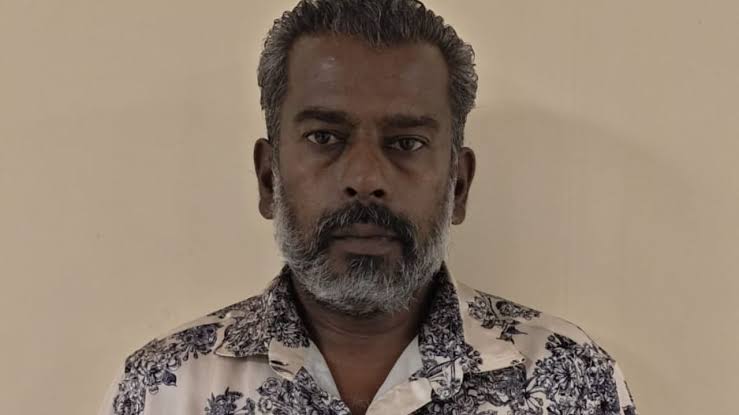
Bengaluru police are investigating S. Indushekar, 52, a cab driver accused of killing his wife and six members of her family between approximately October 16 and the end of October 2026. Police Commissioner Seemant Kumar Singh says investigators are examining both personal and financial motives, including a property dispute involving the family. All seven bodies have now been recovered from locations in Karnataka and Tamil Nadu. The Indian Express
BENGALURU, INDIA — A 52-year-old cab driver accused of killing his wife and six members of her family over a period of roughly two weeks has reportedly told Bengaluru investigators that he feels “at peace and satisfied” after the deaths, as police widen their inquiry into whether years of marital resentment, a multimillion-rupee property dispute and an alleged plan to seize family assets combined to produce one of the most disturbing multiple-murder investigations in Karnataka in recent years. The suspect, identified as S. Indushekar, also known as Shekhar, remains in police custody while detectives reconstruct an alleged sequence of killings that began around October 16 and continued through the end of the month, with investigators now saying all seven victims’ bodies have been recovered from different locations across Karnataka and neighboring Tamil Nadu.
The victims have been identified by police and major Indian news organizations as Indushekar’s wife, Sunitha M. J., 40; her mother, Rupavathi, 65; Sunitha’s brothers Shivakumar, 30, and Shankar, 44; their wives Divya, 30, and Nalini, 29; and Shivakumar’s seven-year-old son, Puneeth. Early reports sometimes described the child as the suspect’s grandson, but police-linked reporting identifies him as Shivakumar’s son, making him Indushekar’s nephew by marriage. The deaths are being treated as alleged murders committed over approximately 15 days, and although Indushekar has reportedly made extensive statements to investigators, he remains accused rather than convicted and is entitled to the presumption of innocence until a court determines the case.
The investigation took a significant turn on November 14 when Indian media, citing police sources, reported that Indushekar had described years of humiliation and disrespect within his marriage and claimed that his wife’s family routinely sided with her during disputes. According to those accounts, he told investigators, “I am at peace and satisfied now,” while explaining what he said was his motive. The statement has generated widespread outrage, but it has not been released through a publicly available police interrogation transcript and should therefore be treated as a reported account of what investigators say he told them rather than an independently authenticated confession.
Police have been careful to avoid reducing the case to a single motive. Bengaluru Police Commissioner Seemant Kumar Singh said investigators believe there may have been both personal and financial factors, telling reporters that a property-related angle has emerged and is being examined alongside long-running marital conflict. Relatives of the victims have alleged that Indushekar wanted greater control over property in Bengaluru’s Srirampura area belonging to his mother-in-law and that disputes arose because she intended for her sons to retain substantial interests in the asset.
Reports differ slightly on the estimated value of the disputed property, with figures ranging between roughly ₹2.5 crore and ₹3 crore, but the central allegation is consistent: investigators are examining whether Indushekar wanted a larger share than Rupavathi was willing to allow. Police are also looking into an alleged ₹30 lakh advance connected with a separate land transaction involving Sunitha and whether that transaction contributed to the financial tensions inside the family. None of those financial theories has yet been established in court, and investigators continue collecting documentary, banking and property evidence.
The inquiry has become even more serious following allegations that Indushekar may have taken the thumb impressions of some of the victims on stamp papers after their deaths in an attempt to create documents that could later be used to strengthen claims over family property. Udayavani and other Indian outlets reported on November 15 that police are examining stamp papers allegedly arranged before the killings and whether thumb impressions were obtained after the victims were dead. If forensic evidence confirms that allegation, it could provide prosecutors with a powerful indication of premeditation and financial motive, but the police investigation remains ongoing and authorities have not yet filed a final chargesheet setting out all proven evidence.
Investigators believe the killings began at Indushekar’s rented residence near Bhashyam Circle in Bengaluru’s Rajajinagar area around October 16. According to the First Information Report and police accounts cited by major Indian newspapers, Sunitha and her mother were among the first victims. Police suspect relatives were later brought to the residence individually or in small groups under various pretexts, including invitations for dinner, drinking and assurances that other family members were away on trips.
Detectives suspect some victims may have been incapacitated using sleeping tablets mixed into food or alcohol before being attacked with a household grinding stone, although investigators have explicitly said they are still determining whether sedatives were used against every victim. Police have seized what they believe to be the principal weapon and are relying heavily on forensic examination to establish whether biological evidence connects it to the killings.
The alleged planning extended beyond the attacks themselves. Investigators say Indushekar obtained gunny bags, ropes, plastic material, adhesive tape, perfumes and cleaning chemicals before or during the period in which the deaths occurred. Police believe those items were used to move the bodies, suppress odor and clean blood from the residence and vehicle, while forensic teams are examining the home for traces that may remain despite attempts at cleaning.
New Indian Express reported that investigators believe the victims were attacked inside the living area before their bodies were moved and eventually transported in Indushekar’s Toyota Etios. Police are also examining allegations that the television was played loudly during some of the attacks in an effort to prevent neighbors from hearing suspicious sounds. Those details remain police allegations that will need to be supported through forensic, digital and witness evidence if prosecutors ultimately rely on them at trial.
The bodies were dispersed across several locations in an apparent attempt to make investigators believe the victims had disappeared independently or traveled elsewhere. Police eventually recovered Puneeth’s body near Nandi Hills in Chikkaballapur district. Sunitha and her mother were found in the Yercaud forest area of Salem district in Tamil Nadu, while Shivakumar and Divya were recovered around the Chamundi Hills area near Mysuru. The final two bodies, belonging to Shankar and Nalini, were recovered near Shiradi Ghat in Karnataka, bringing the search operation to an end by November 9.
Those recoveries were crucial because investigators initially had only the suspect’s statements and one recovered body when the scale of the case first emerged. Bengaluru Police Commissioner Singh said officers were initially confronted with a claim by one man that he had killed seven relatives over a period of weeks, an account so extraordinary that police had to verify each element independently. As bodies were recovered from locations matching information supplied during questioning, investigators gained evidence capable of corroborating portions of the suspect’s statements.
The case came to light after Nalini’s mother filed a missing-person complaint on November 3 when she could no longer contact her daughter and other family members. Investigators began examining the relatives’ whereabouts and became suspicious of inconsistent explanations allegedly provided by Indushekar. Mobile-phone data, movement records and other technical evidence helped police locate him before his arrest on November 5.
Investigators say Indushekar had attempted to create the impression that family members were traveling. Police are examining mobile-phone use and an audio recording in which a surviving child allegedly told relatives that his parents and other family members had gone on a lengthy trip. The recording was later handed to police, who are assessing its authenticity and whether children were instructed to provide false information without understanding what had happened.
Another child who was traveling with Indushekar was rescued when police arrested him. Investigators have been examining whether the boy was simply being moved around to support the story that the family was traveling or whether there was any additional danger to him. Authorities have not publicly established that the suspect intended to harm that child, and police have said they are continuing to investigate the circumstances.
The suspect’s 17-year-old daughter has become one of the most sensitive aspects of the case. Police allege that she may have assisted her father in disposing of bodies, purchasing or obtaining cleaning materials and helping conceal evidence after being promised that her mother’s share of family property would eventually be transferred to her. Some reports further allege that she helped lure relatives to the house, but investigators are still determining exactly what she knew, what actions she carried out and whether she was acting under her father’s influence.
Because she is a minor, her case is governed by India’s juvenile justice framework, and authorities have not publicly identified her by name. Karnataka Home Minister Priyank Kharge has said police are examining whether she abetted serious offences and whether her father influenced or manipulated her. The investigation therefore must distinguish between intentional participation and conduct carried out under pressure, dependence or psychological influence from an adult parent.
That distinction is legally important. A juvenile between 16 and 18 accused of a heinous offence can face additional assessment under India’s Juvenile Justice framework, but such cases require formal procedures concerning maturity, understanding of consequences and the appropriate forum for trial. Police cannot simply treat a minor exactly like an adult defendant because of the seriousness of the allegations.
The daughter has not been convicted of any crime, and the descriptions of her alleged involvement currently come largely from police sources and investigative reporting. VNTV is therefore withholding her identity and treating every allegation concerning her as unproven unless and until it is established through formal juvenile proceedings or a court judgment.
The property allegations have become increasingly central as investigators interview relatives and examine documents. Family members told The Indian Express that Indushekar had been interested in a Srirampura property belonging to his mother-in-law and was dissatisfied with how she intended to distribute it. Commissioner Singh has confirmed that police are examining financial issues but has stopped short of declaring the property dispute the definitive motive.
That caution reflects the multiple explanations now under examination. Police sources say Indushekar also resented Sunitha’s frequent visits to her family and believed her mother and brothers interfered in their marital disagreements. Relatives had apparently attempted to mediate between the couple in the past, but investigators say those interventions may have deepened the suspect’s resentment rather than resolving the conflict.
The reported statement that he felt humiliated has therefore become one part of a wider pattern rather than a complete explanation. Even if investigators establish that he genuinely believed he had been insulted or disrespected, such feelings would not legally justify violence and would not reduce the seriousness of the alleged offences. Police must still prove who committed each killing, the sequence in which the deaths occurred and whether other people knowingly participated.
Authorities are also examining the suspect’s financial activity after the killings. Hindustan Times reported that investigators are looking into claims that jewelry was removed from some female victims and that certain items may have been sold or pledged to finance travel and other expenses. Police are tracing transactions and attempting to determine whether any such sales occurred and whether they can be linked directly to property taken from the victims.
The investigation is unusually complex because the alleged offences span multiple jurisdictions. Bodies were transported through different parts of Karnataka and into Tamil Nadu, requiring coordination between Bengaluru police, local law-enforcement agencies, forensic specialists and medical teams in several districts. Postmortem examinations, DNA testing and crime-scene analysis are being used to establish identity, cause and timing of death and to connect the locations where bodies were found with the suspected crime scene in Bengaluru.
Police Commissioner Singh has appointed Babasab Nemagoud, Deputy Commissioner of Police for Bengaluru’s North Division, as the investigating officer in an effort to accelerate evidence collection and preparation of the chargesheet. Police have also asked Karnataka’s Home Department to consider appointing a special public prosecutor and facilitating a fast-track trial, reflecting both the scale of the allegations and intense public interest in the case.
Singh has emphasized that police are now focusing on scientific and circumstantial evidence rather than relying exclusively on statements allegedly made during interrogation. That approach will be essential because confessions made in police custody are subject to strict evidentiary rules in India, and prosecutors generally need independent corroboration linking a suspect to the offences.
Investigators are therefore reviewing CCTV footage from shops where materials were allegedly purchased, tracing vehicle movements, examining mobile-phone records, analyzing the suspect’s car and home, reviewing property documents and comparing forensic evidence recovered from multiple locations. The objective is to produce a chain of evidence capable of standing independently of whatever the suspect may have told police.
The car has become an important part of that inquiry. Indushekar, who also presented himself locally as a journalist and ran a small publication and online channel, reportedly used a Toyota Etios carrying a “PRESS” marking. Investigators are examining whether that identification may have reduced scrutiny while he traveled between districts, although police have not established that officers deliberately allowed him through checkpoints because of the label.
Indushekar also had previous contact with the criminal justice system. The Indian Express reported that he was already facing trial in connection with a 2018 dacoity case involving an armed gold robbery and that Sunitha had previously provided surety connected with his bail. That older case is separate from the current murder investigation and should not be treated as evidence that he committed the seven killings, but it provides additional background to the police inquiry.
The new case has deeply shocked residents around Rajajinagar because police believe multiple people were killed inside a small residence in a densely occupied area over a period of days or weeks without neighbors understanding what was occurring. Residents interviewed by Indian media described previous arguments involving Indushekar but said they did not imagine that relatives were allegedly being killed and removed from the property.
That aspect of the case has raised broader questions about domestic violence, coercive family relationships and how prolonged household conflict can escalate without intervention. It would nevertheless be misleading to suggest that ordinary marital conflict predicts mass violence. The allegations against Indushekar are extreme, and investigators are examining evidence of planning that appears to go far beyond a spontaneous domestic confrontation.
The property dimension also illustrates the danger of treating inheritance disputes as merely civil family disagreements when intimidation or coercion emerges. Property conflicts are common in many societies and normally proceed through negotiation or civil courts, but investigators in this case suspect the financial dispute may have become intertwined with longstanding personal resentment and an alleged plan to eliminate multiple competing claimants.
The allegation involving postmortem thumb impressions is particularly important in that respect. If forensic examination establishes that impressions were taken after death and attached to documents connected to property rights, prosecutors could argue that the killings were linked to a calculated financial scheme rather than solely emotional rage. Investigators are now examining the papers and seeking to determine whether they were prepared before the deaths and what legal purpose they were intended to serve.
At the same time, police have not yet published a final forensic conclusion on those documents. The allegation emerged during the investigative stage and should not be presented as an established fact until handwriting, fingerprint, document and property analysis is complete.
The evolving motive is one reason Commissioner Singh has resisted narrowing the case prematurely. Police initially focused heavily on marital conflict and the suspect’s resentment toward his wife’s relatives, but later testimony and property evidence created a significant financial angle. Investigators now say both factors may have been present.
The alleged role of the daughter adds another possible financial connection. Reports say Indushekar told her that her mother’s share of the property would eventually belong to her if she assisted him, but this too remains an investigative allegation requiring corroboration. Police will need to determine whether such a promise was made, whether it influenced her conduct and whether she understood that the property could be connected to the deaths.
The brutality of the allegations and the presence of a child victim have intensified calls for a rapid prosecution. However, speed must be balanced against the need to build a reliable case. The deaths occurred on different dates, bodies were recovered from several distant locations, and multiple possible motives and accomplices are under investigation, meaning a rushed chargesheet could leave important evidentiary gaps.
Police have indicated that they want a fast-track court precisely because they expect to compile an extensive scientific record. A strong prosecution would likely need forensic evidence from the Rajajinagar residence, the alleged weapon, the vehicle, the recovered bodies, electronic records and the different disposal locations, together with testimony from surviving relatives, neighbors, shopkeepers and investigators.
The suspect’s reported lack of remorse will inevitably attract public attention, but it is not the central legal issue. A defendant can express remorse or show none at all; the prosecution must still prove the underlying offences beyond reasonable doubt. The reported statement that he feels “at peace” may help investigators understand his claimed motive, but it does not replace evidence establishing responsibility for each death.
Nor should the statement be interpreted as a medical or psychological diagnosis. Police have not released a psychiatric assessment showing that Indushekar has any particular mental disorder, and responsible reporting should avoid attempting to infer one from the alleged crimes or interrogation remarks.
The same restraint applies to descriptions such as “serial killer,” which have appeared in some coverage. While the deaths allegedly occurred over multiple dates and involved several victims, the police case concerns a single extended family and a connected alleged motive. Formal criminal charges and court findings, rather than sensational labels, will determine the legal characterization.
By November 11, police had confirmed the recovery of all seven bodies and said postmortem procedures had been completed, allowing the remains to be released to surviving relatives. That development shifted the investigation from locating victims toward establishing the evidentiary sequence required for prosecution.
For the families left behind, however, the conclusion of the recovery operation does not mean the case is close to resolution. They now face a potentially lengthy criminal proceeding involving intimate details of family conflict, property ownership and the alleged actions of a relative they had known for decades.
The surviving children are particularly vulnerable. Their identities and personal circumstances should be protected as police and juvenile authorities investigate what they saw, what they were told and whether they were used to conceal the alleged crimes. Public interest in the case does not justify unnecessary exposure of minors.
The case has also highlighted how missing-person reports can become the starting point for much larger criminal investigations. Nalini’s mother’s decision to approach police after losing contact with her daughter gave officers the entry point that eventually connected multiple disappearances. Investigators say inconsistencies in the explanations that followed helped lead them to Indushekar.
Technical evidence then allowed police to test those accounts. Mobile-tower information, vehicle movements and other digital records helped officers locate the suspect and compare his travel with the areas where bodies were later found.
The eventual recovery of victims from locations he reportedly identified significantly strengthened police confidence in parts of his account, but every element must still be independently established. A suspect may give accurate information about one aspect of a case while misleading investigators about motive, participation or sequence.
That is why police continue looking for evidence of other participants. Commissioner Singh has said investigators are examining whether anyone else was involved, while the daughter’s role remains under separate scrutiny. There has been no official finding that additional adults participated in the killings.
The final chargesheet will therefore be a critical document. It should reveal which allegations police believe they can prove, what offences they intend to pursue, how they characterize the daughter’s involvement and whether the financial motive is supported strongly enough to become a central part of the prosecution.
Until then, the most responsible account remains one of an extraordinary but still developing criminal investigation. Indushekar is accused of killing seven relatives over approximately 15 days, all seven bodies have been recovered, and police say evidence points toward both personal resentment and possible financial motives.
Investigators also allege that considerable planning went into concealing the deaths, moving bodies between jurisdictions and misleading relatives about the victims’ whereabouts. The allegations involving cleaning chemicals, property documents and thumb impressions have deepened suspicions that concealment and financial gain may have been contemplated in advance, but those claims have not yet been tested in court.
The reported “at peace and satisfied” remark adds a disturbing human dimension to the investigation because it suggests that, at least according to police sources, the suspect continues to justify the alleged acts through his perception of years of disrespect. That explanation remains his claimed grievance, not a legal defense and not an established account of how the family actually treated him.
As Bengaluru police prepare their chargesheet, the central task will be turning a series of extraordinary statements into evidence capable of surviving judicial scrutiny. Investigators have moved from a missing-person report to the recovery of seven bodies across two states, appointed a senior officer to lead the case and begun seeking a special prosecutor and fast-track proceedings.
What follows will determine whether the prosecution can establish not only that seven members of one family were killed, but who planned each death, who assisted afterward, whether property was a driving motive and whether the elaborate concealment alleged by police can be reconstructed through reliable forensic and documentary evidence. Until that process is complete, Indushekar remains accused of the crimes rather than convicted, while the families of Sunitha, Rupavathi, Shivakumar, Shankar, Divya, Nalini and seven-year-old Puneeth await a judicial accounting of how seven relatives disappeared within little more than two weeks.