GHANA PARLIAMENT RESCINDS ANTI-LGBTQ+ BILL PASSAGE OVER DRAFTING ERRORS, PREPARES FRESH CONSIDERATION
Ghana’s Parliament has rescinded its May 29 third-reading passage of the Human Sexual Rights and Family Values Bill after its Legislation Drafting Department identified inconsistencies between decisions taken by MPs and the final drafted text, including errors in penalty provisions. The move does not kill the legislation; it returns the bill for a second consideration so lawmakers can reconcile the inconsistencies before conducting another third-reading vote and, if it passes again, transmitting it to President John Dramani Mahama. Speaker Alban Bagbin and Majority Leader James Agalga have both indicated that Parliament still intends to complete and repass the legislation, while the Ghana Catholic Bishops’ Conference has urged lawmakers to proceed with urgency, constitutional fidelity and careful consideration of the measure’s wider implications.
ACCRA, GHANA — Ghana’s Parliament has formally rescinded its earlier passage of the controversial Human Sexual Rights and Family Values Bill, commonly known as the anti-LGBTQ+ bill, after parliamentary drafters identified inconsistencies between decisions taken by lawmakers on the floor of the House and the provisions reflected in the text that emerged after the bill’s third reading. The decision, taken on November 10, does not kill the legislation or represent a reversal of Parliament’s stated intention to enact it. Instead, it sends the bill back for a second consideration so lawmakers can reconcile conflicting provisions, correct errors in the penalty regime and ensure that the final document accurately reflects what Parliament intended before the measure is read a third time again and, if passed, transmitted to President John Dramani Mahama for consideration.
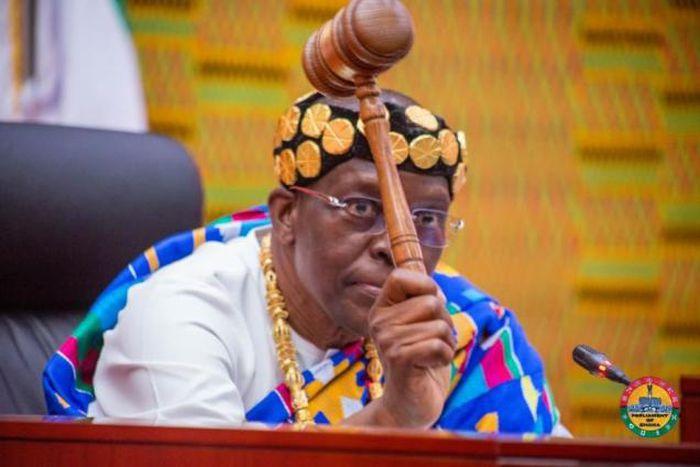
Speaker Alban Sumana Kingsford Bagbin announced the reversal after Parliament adopted a motion moved by Majority Leader James Agalga and seconded by Majority Chief Whip Nelson-Rockson Dafeamekpor. Bagbin explained that Parliament’s Legislation Drafting Department had discovered the discrepancies during its post-passage tracking process, which is designed to ensure that decisions taken by MPs during consideration are properly reflected in the final legislative text. He said the department could correct ordinary drafting or typographical mistakes on its own, but it could not alter provisions where the discrepancy involved a substantive decision already taken by the House. In such circumstances, the matter had to return to MPs themselves because only Parliament could amend or reverse its own formal decisions.
The Speaker subsequently put the rescission motion to a vote, and the House agreed to cancel the resolution through which the bill had passed its third-reading stage on May 29. That step is procedurally significant because the third reading is the point at which a bill is deemed passed by Parliament. By rescinding that decision, the House has reopened the legislation for further amendment before another third-reading vote can take place. The move therefore resets part of the legislative process without returning the bill to its starting point, allowing MPs to revisit specific provisions rather than beginning the entire process again.
The errors appear to be concentrated especially in the proposed penalties. Majority Leader James Agalga said shortly before the rescission that some of the penalty units had been computed incorrectly and that several penal provisions were not properly aligned with existing law. He warned that leaving those mistakes unresolved could create serious difficulties for judges attempting to enforce the legislation if it eventually becomes law. According to Agalga, Parliament’s intention is not to rewrite the entire policy substance of the bill but to repair provisions that could create legal contradictions or uncertainty during implementation.
That distinction is crucial because the parliamentary move has already generated confusion about whether lawmakers have rejected the bill. They have not. Bagbin has repeatedly said he remains committed to its passage, while Agalga has said Parliament expects the corrected version to reach President Mahama after the House completes the necessary work. In October, Bagbin told a public gathering that the earlier version had been rushed through while he was away on official duty and that he wanted Parliament to return to the legislation, correct the mistakes and ensure that the final measure reflected what he described as a broad national consensus rather than a hurried partisan process.
The bill has already travelled through an unusually complicated legislative history. An earlier version of the Human Sexual Rights and Family Values Bill was passed by the previous Parliament in February 2024 after years of debate, legal controversy and international criticism, but it never received presidential assent before the Eighth Parliament expired. Then-President Nana Akufo-Addo declined to act on the legislation while legal challenges were pending, and because the old Parliament ended before those issues were resolved, the measure lapsed and had to be reintroduced under the Ninth Parliament.
The revived bill was presented in July 2025 by Assin South MP Rev. John Ntim Fordjour on behalf of a cross-party group of sponsors that included Samuel Nartey George, Emmanuel Kwasi Bedzrah, Helen Adwoa Ntoso, Nurudeen Muhammed Mummuni, Vincent Ekow Assafuah, Alhassan Tampuli Sulemana, Rita Naa Odoley Sowah, Abdul-Karibu Tiah Mahama and Anthony Mmieh. Parliament referred it to the Committee on Constitutional and Legal Affairs, which considered the measure before it returned to the full House for debate, amendment and eventual passage in May 2026.
The May passage itself was controversial. Minority MPs accused the Majority of inserting a late amendment that had not been properly considered at committee stage and threatened to withdraw support from the process. Bagbin later said he was surprised that the bill had been taken through all remaining stages and passed on May 29 because he had expected MPs merely to begin consideration before he returned from other official assignments. He said the speed with which the House completed the process created concerns over whether all provisions had received the scrutiny required for legislation carrying potentially serious criminal penalties.
Those concerns eventually became more concrete when parliamentary drafters compared the decisions MPs had actually taken with the final text produced after the third reading. The discovery that some penalty provisions and amendments did not align properly forced Parliament to choose between transmitting a legally inconsistent bill to the Presidency or reopening the process and correcting it. Bagbin said the drafting department could not simply repair the contradictions administratively because that would have meant officials changing substantive decisions made by elected lawmakers without another vote.
The House therefore relied on its rules allowing an earlier decision to be rescinded through a substantive motion. Once that motion passed, Parliament regained the ability to take the bill through a second consideration stage, where clauses can be deleted, amended or added. After those corrections are completed, MPs will need to conduct another third reading before the Clerk of Parliament can transmit the final text to the President. That process ensures that the version reaching the Presidency accurately reflects the decisions approved by MPs and is internally coherent enough to be implemented by courts and law-enforcement agencies if signed into law.
The timing now places renewed attention on President Mahama, although Parliament has emphasized that the delay has so far been its responsibility rather than the President’s. Agalga rejected suggestions that Mahama had changed his position on the legislation, saying Parliament could not send the bill to him until the identified errors were corrected. The Majority Leader has said the House intends to complete its work and transmit the bill during the current parliamentary meeting.
Mahama’s eventual decision will carry major domestic and international significance. The legislation has consistently attracted strong support from many religious leaders, traditional institutions and sections of the Ghanaian public who argue that it is necessary to protect what they consider traditional Ghanaian family and sexual values. At the same time, human-rights organisations, LGBTQ+ advocates and several international bodies have warned that criminal provisions targeting same-sex relationships, advocacy or association could violate constitutional rights, increase discrimination and expose vulnerable people to harassment.
Those competing positions explain why Parliament’s drafting problems matter beyond procedure. A criminal statute must be precise enough for citizens to understand what conduct is prohibited and for courts to apply punishments consistently. Errors in penalty units or conflicting clauses can produce uncertainty over sentencing, create constitutional challenges and expose the legislation to judicial review after enactment. Correcting such inconsistencies before transmission therefore serves a legal purpose even for lawmakers strongly committed to the policy objectives of the bill.
Supporters of the measure have generally interpreted the rescission as a temporary procedural correction rather than a political retreat. The Ghana Catholic Bishops’ Conference, responding after the November 10 decision, urged Parliament and other constitutional institutions to act with urgency while maintaining legislative diligence and respect for constitutional requirements. The Bishops said the opportunity should be used to address outstanding problems carefully while taking account of moral, social, cultural and human-rights considerations.
The Bishops also reiterated the Catholic Church’s position on marriage, family and human sexuality while stressing the dignity of every person. Their intervention reflects the broader role religious institutions have played throughout the bill’s long history, with Christian and Muslim leaders frequently supporting stronger legal restrictions on LGBTQ+ activity while also differing over how punishments should be structured and how individual dignity should be protected.
Human-rights groups, by contrast, have consistently argued that the proposed law goes beyond regulating conduct and could criminalize advocacy, association and expression. Those objections are likely to intensify when Parliament reopens the bill because a second consideration stage creates another opportunity for lawmakers to alter provisions rather than merely repair mathematical errors in sentencing. Whether MPs use that opportunity only for technical corrections or make broader substantive changes will determine how significantly the final legislation differs from the version passed in May.
Agalga has indicated that major policy changes are not currently expected. His position is that the basic substance will remain largely intact and that the House is primarily seeking to align punishment provisions and ensure consistency with existing legislation. That suggests supporters still intend to preserve the core restrictions contained in the bill, although MPs remain legally capable of proposing further amendments once the measure is reopened.
The bill’s eventual wording will also matter economically and diplomatically. The previous 2024 legislation drew warnings from international financial institutions and foreign governments about possible implications for Ghana’s development relationships and international human-rights commitments. During that period, the World Bank publicly warned that discriminatory legislation could undermine Ghana’s development objectives, while the United States and other Western partners expressed concern over fundamental freedoms. Ghanaian supporters of the bill rejected what they saw as external pressure and argued that domestic legislation should reflect Ghanaian cultural and democratic choices rather than foreign preferences.
That tension has never disappeared. If the corrected bill again passes Parliament and reaches Mahama, the government may face competing pressure from domestic constituencies demanding assent and international partners urging caution. The President will have to assess the final legislation within the constitutional framework, including whether provisions raise legal concerns that could trigger further court challenges or require consultation with the Council of State.
The present parliamentary reversal may reduce one immediate source of legal vulnerability by ensuring that the text accurately reflects what MPs approved. It does not, however, resolve the larger constitutional questions surrounding freedom of expression, association, privacy, equality and the permissible limits of criminal law. Those issues could still become the subject of litigation even after the drafting errors are corrected.
The procedural episode also raises wider questions about legislative quality in Ghana. Bills carrying serious penalties require meticulous drafting because seemingly technical errors can have significant consequences. The fact that Parliament had already completed a third reading before the inconsistencies were identified demonstrates the importance of post-passage review but also raises questions about why the contradictions were not detected earlier during committee scrutiny and clause-by-clause consideration.
Bagbin’s explanation suggests the tracking process performed exactly the safeguard it was designed to provide. Rather than silently adjusting the final text, parliamentary drafters flagged the discrepancies and required lawmakers themselves to correct them. From an institutional perspective, that preserves the principle that unelected drafting officials cannot substitute their judgment for decisions formally adopted by Parliament.
Politically, however, the episode also reinforces Bagbin’s earlier criticism that the May passage was rushed. The Speaker had wanted more time for detailed consideration and was openly surprised when lawmakers completed the process while he was away. The discovery of sentencing and drafting errors now gives additional weight to his argument that controversial legislation should not be hurried simply to achieve passage.
The Speaker has nevertheless made clear that his criticism of the process should not be confused with opposition to the bill. In early November, he warned that he would publicly identify anyone he believed was obstructing Parliament’s efforts to complete the legislation and said he remained committed to using the House’s rules to secure another passage during the current meeting.
That position means the most likely immediate parliamentary development is renewed clause-by-clause consideration rather than abandonment. MPs will need to identify exactly which penalty provisions are inconsistent, reconcile the amendments adopted in May with the drafted text and determine whether any other provisions require clarification. Only after that process can another third-reading vote take place.
The decision also matters for people directly affected by the debate. LGBTQ+ Ghanaians and advocacy groups have spent years living with uncertainty over whether the bill will become law and what its final provisions will contain. Even without enactment, advocates have reported that intense public debate surrounding the legislation contributes to stigma and fear. Supporters of the bill, meanwhile, have expressed frustration over repeated delays and believe Parliament has a democratic obligation to complete legislation they consider strongly supported by the public.
Those two perspectives remain deeply divided, and the November rescission does not reconcile them. It simply ensures that Parliament must confront the disagreement again rather than sending a flawed text directly to the President.
For lawmakers, that renewed consideration creates an opportunity to decide whether the bill should remain as close as possible to the May version or whether its practical consequences require more significant amendment. The answer will determine whether the rescission proves to be a narrow technical exercise or a more substantial legislative reopening.
For Mahama, the key fact is that there is presently no completed bill awaiting his signature. Parliament reversed its third-reading approval before transmission, so presidential assent cannot occur until lawmakers repass the corrected legislation. Any claim that Mahama has already refused or delayed assent to the 2026 version is therefore inaccurate.
For Ghana’s courts, the process may eventually shift from parliamentary procedure to constitutional interpretation. Even a perfectly drafted bill can face legal challenges if opponents argue that its substance violates constitutional rights. Parliament can eliminate drafting inconsistencies, but it cannot prevent citizens from challenging the resulting law after enactment.
The wider debate will therefore continue regardless of what happens during the second consideration. Supporters will emphasize sovereignty, religion and cultural values, while opponents will focus on individual rights, discrimination and constitutional protections. International partners are also likely to monitor the process closely because the earlier bill became one of Ghana’s most internationally discussed domestic legislative issues.
The Catholic Bishops’ latest intervention illustrates how influential institutions may attempt to bridge those arguments by supporting the traditional understanding of marriage and sexuality while simultaneously calling for respect for human dignity and constitutional processes. Whether Parliament’s final text can satisfy those competing expectations remains uncertain.
What is clear is that the November 10 vote should not be reported as Parliament permanently rejecting the anti-LGBTQ+ bill. The House rescinded one specific procedural decision: its May 29 third-reading approval. The legislation remains alive, is expected to undergo a second consideration and could be passed again after the identified inconsistencies are corrected.
That distinction is especially important because the term “rescinded” can easily be interpreted to mean the bill has been withdrawn completely. In parliamentary procedure, however, the action has been taken precisely to allow MPs to reopen and repair a decision they had already completed.
The coming parliamentary sessions will therefore determine how quickly those corrections are made and whether lawmakers introduce amendments beyond the known problems involving penalties and drafting consistency. If the House completes the second consideration and again approves the bill at third reading, the next major decision will move from Parliament to the Presidency.
Until then, Ghana remains exactly where the November 10 decision placed it: with a politically powerful but legally unfinished bill, a Parliament still committed to revisiting it, a President who has not yet received the corrected text and a national debate over sexuality, culture, rights and constitutional governance that is far from concluded.
Parliament’s reversal is therefore significant not because it ends the anti-LGBTQ+ legislation but because it demonstrates how legal precision can interrupt even a bill with strong political support. The House is now being forced to reconcile its intentions with the exact language through which those intentions would become criminal law, and the quality of that work will determine the next stage of one of the most controversial legislative battles in Ghana’s recent history.