FOURTEEN MINERS KILLED AND SEVEN INJURED AFTER UNLICENSED GOLD MINE COLLAPSES IN COLOMBIA
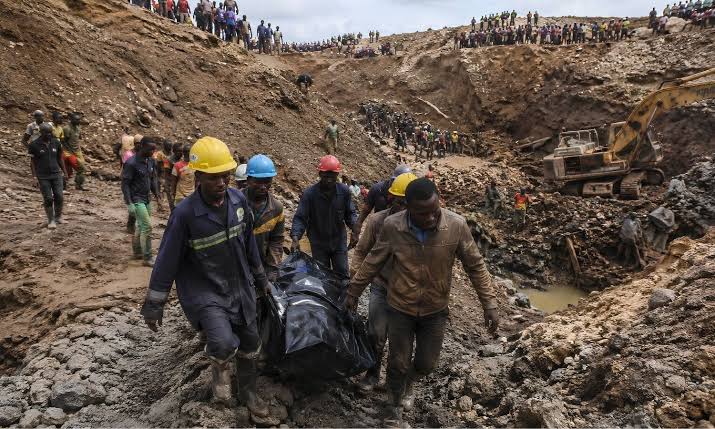
Fourteen miners have been killed and seven injured after an unlicensed open-pit gold mine collapsed in the rural Chambero area of Santa Bárbara de Iscuandé in Colombia’s Nariño department. The disaster triggered a difficult rescue operation in a remote rainforest region that can mainly be reached by boat or small aircraft and where armed groups operate. Nariño Governor Luis Alfonso Escobar said search operations had concluded and called for faster formalisation of informal miners to improve safety. The accident follows another mining disaster in Policarpa in August that killed 13 people, taking the combined toll from the two Nariño collapses to 27 in less than three months.
At least 14 people have been killed and seven others injured after an unlicensed open-pit gold mine collapsed in a remote part of southwestern Colombia, prompting a major rescue operation in an area where difficult terrain and the presence of armed groups complicated access for emergency teams. The disaster occurred on Monday, October 19, in the rural Chambero sector of Santa Bárbara de Iscuandé municipality in Nariño department on Colombia’s Pacific coast. Regional authorities said the search and rescue operation had concluded by Monday night after emergency workers, local residents and other responders spent hours recovering victims from the collapsed mining site.
Nariño Governor Luis Alfonso Escobar confirmed the final reported toll of 14 dead and seven injured and said rescue teams had completed their work at the site. The casualty figure rose throughout the day as teams reached people who had been buried beneath earth following the collapse, with authorities initially reporting nine deaths before later increasing the number to 14. Local officials said around 30 miners were believed to have been working in the area when the landslide struck, underscoring the scale of the operation and the difficulty emergency teams faced in determining how many workers had been caught beneath the debris.
The mine was operating without the required permits, according to regional authorities and international reporting on the disaster. The operation was described by Governor Escobar as informal, placing it within the large and often poorly regulated small-scale gold mining sector found across remote areas of Colombia. Mining of this kind frequently takes place with limited engineering oversight, unstable excavation walls and few of the safety systems normally required at licensed industrial sites, leaving workers especially vulnerable to landslides, flooding and sudden ground failure.
The collapse occurred during the morning in El Chambero, a rural community in the municipality of Santa Bárbara de Iscuandé. Local residents, firefighters, Civil Defence personnel and farmers joined the first response, with rescue activity beginning at around 8 a.m. as information emerged that numerous miners could be trapped. The isolation of the site made the response unusually difficult because Santa Bárbara de Iscuandé is surrounded by dense rainforest and is accessible principally by boat or small aircraft, limiting how quickly specialised rescue equipment and medical personnel could reach the affected community.
Colombia’s Ombudsman’s Office issued an urgent appeal during the emergency, calling on national and regional authorities to mobilise additional personnel, air support and medical assistance. The institution requested military aviation support to assist with the rescue and evacuation of injured people, activation of the hospital network and consideration of deploying the Benkos Biojó hospital ship stationed in nearby Guapi. The Ombudsman’s Office also called for forensic personnel to assist with the identification and dignified handling of the dead, reflecting the scale of the emergency while casualty figures were still being established.
Security conditions created an additional complication because illegal armed groups operate in parts of Nariño, a department that has remained strategically important for armed factions involved in territorial control, coca cultivation, drug trafficking and illegal mining. The Ombudsman’s Office specifically appealed to armed organisations in the area to guarantee safe passage for rescue teams and humanitarian workers, warning that emergency personnel needed unhindered access to reach those affected. The request demonstrated that the rescuers were dealing not only with difficult geography but also with a security environment in which humanitarian access could not automatically be taken for granted.
Authorities have not suggested that an armed group caused the mine collapse, and there is currently no evidence connecting the physical failure of the mine to the security situation. The presence of armed organisations is significant because it can make government oversight, rescue operations and the formalisation of mining activity considerably more difficult in isolated communities. Any reporting on the accident therefore needs to distinguish clearly between the apparent mining-safety failure that caused the disaster and the broader security conditions that complicated the response.
Governor Escobar used the tragedy to renew calls for Colombia’s national government, the National Mining Agency and the Ministry of Mines and Energy to accelerate the formalisation of informal and small-scale mining operations. He argued that miners working in communities such as Santa Bárbara de Iscuandé need safer operating conditions and a clearer route into the regulated mining sector rather than being left to work in dangerous conditions outside official supervision. His intervention reflects a long-running debate in Colombia over whether enforcement alone can solve illegal mining or whether authorities also need to help traditional and small-scale miners become licensed and subject to enforceable safety standards.
Formalisation can involve registering miners, obtaining environmental and mining permits, proving legal rights to exploit deposits and meeting occupational safety requirements that may be difficult for small operators to satisfy without technical and financial assistance. Supporters of formalisation argue that bringing miners into the legal system gives authorities greater ability to inspect sites, regulate working conditions and hold operators accountable. Critics warn that formalisation can take years, leaving workers in a legal grey zone in which they continue mining because they have few other sources of income while remaining outside many of the protections available in the formal economy.
The Nariño government had already been working on a new socio-environmental mining policy before Monday’s disaster. Only days earlier, officials held consultations in Samaniego involving miners, community organisations and local authorities to identify priorities including formalisation, environmental sustainability, responsible commercialisation and stronger territorial planning. Those discussions show that concerns about informal mining were already high in the region before the latest deaths placed renewed urgency behind demands for change.
The Santa Bárbara de Iscuandé collapse is particularly alarming because it is the second major deadly mining disaster reported in Nariño in less than three months. Thirteen people died in August in another mine collapse in Policarpa, meaning the two incidents together have killed 27 people in the department over a short period. Regional authorities have pointed to that repeated loss of life as evidence that mining safety cannot be treated as an isolated problem affecting only individual sites.
The August disaster had already raised questions about the vulnerability of miners operating in informal or unregulated conditions, and Monday’s collapse has intensified those concerns. Fatal mining accidents are not uncommon in Colombia, particularly at small gold and coal operations where workers may lack professional geological assessments, adequate ventilation, reinforced tunnel systems or carefully engineered slopes. In open-pit operations, heavy rainfall, unstable ground and poorly supported excavation walls can create conditions in which large sections of earth collapse with little warning.
Monday’s incident was reported as a landslide affecting an open-pit gold operation rather than the collapse of an underground shaft. In open-pit mining, workers remove large quantities of soil and rock to expose gold-bearing material, and the stability of the surrounding slopes becomes one of the most important safety considerations. Without proper engineering, drainage and continuous monitoring, weakened ground can fail suddenly and bury workers under enormous quantities of soil.
The available public reporting has not yet identified a definitive technical cause for the failure, and Colombian authorities have not released a detailed engineering investigation. It therefore remains unclear whether rainfall, excavation methods, slope instability, drainage problems or another factor triggered the collapse. Establishing that cause will be important if authorities want to prevent similar disasters rather than treating each accident as an unavoidable consequence of informal mining.
Investigators will also need to determine who operated the site, who financed it and whether officials had previously attempted to close or regulate the mine. Describing a mine as illegal or unlicensed does not by itself explain the structure behind it because informal gold operations can range from small community-run sites to larger businesses financed by organised networks with heavy machinery and commercial supply chains.
Illegal gold has become an important criminal economy in parts of Latin America because it can be highly profitable and easier to integrate into legal commercial markets than some other illicit commodities. Gold can be melted, mixed with legally produced metal or sold through intermediaries, making it difficult to trace its origin once it leaves the mining site. In areas where the state has limited control, armed organisations may tax miners, control access to mining territory or participate directly in production and trade.
Nariño is particularly vulnerable because of its geography. The department stretches from the Andes to Colombia’s Pacific coast and contains large areas of forest, rivers and isolated settlements with limited road access. Those conditions complicate government oversight and make communities heavily dependent on river transport and small aircraft, while also creating opportunities for armed groups to operate in areas where the permanent state presence is weak.
Santa Bárbara de Iscuandé sits within the Pacific coastal subregion known as Sanquianga, an area where communities depend heavily on river systems and natural resources. In remote communities, informal mining can become an important source of employment because alternative economic opportunities are limited, even when working conditions are extremely dangerous. That economic dependence helps explain why simply closing unlicensed mines can be difficult without providing workers with another legal route to earn an income.
Governor Escobar’s response focused heavily on this issue. Rather than calling only for punishment of illegal miners, he urged national institutions to review outstanding formalisation requests from mining communities and create safer conditions for people who depend on the activity. His comments indicate that regional authorities view the safety crisis partly as a consequence of the gap between traditional mining practices and the slow process required to bring those operations under formal state regulation.
That argument does not eliminate the responsibility of mine operators to protect workers. Informal status can explain why oversight is weak, but it does not make dangerous working conditions acceptable. Anyone controlling a mining operation has a responsibility to minimise foreseeable risks, while government institutions have an obligation to enforce safety standards when activities threaten lives.
The tragedy is also likely to revive debate over Colombia’s mining inspection capacity. The National Mining Agency oversees mining titles and safety matters, but controlling thousands of small operations scattered across mountains, forests and river valleys is an enormous logistical challenge. In places that cannot be reached easily by road, inspections require significant time, personnel and sometimes security support.
The armed conflict further complicates enforcement. Colombia’s 2016 peace agreement with the Revolutionary Armed Forces of Colombia significantly changed the country’s security environment but did not eliminate armed groups. Dissident organisations, criminal networks and other armed factions continue operating in parts of Nariño, fighting over drug routes, territory and illegal economies. Earlier this month, Colombia’s national government formally ended a dialogue process with the Coordinadora Nacional Ejército Bolivariano after saying there was insufficient evidence that the armed organisation was genuinely committed to peace and reintegration, highlighting the continuing instability in Nariño and neighbouring Putumayo.
For emergency responders, those broader security conditions can become life-and-death concerns during a disaster. Rescue personnel may need assurances that they will not be attacked, detained or prevented from moving through territory controlled by armed actors. The Ombudsman’s appeal for safe humanitarian access during Monday’s collapse demonstrates how ordinary disaster response can become entangled with Colombia’s unresolved conflict dynamics.
The end of search and rescue operations on Monday night suggests regional authorities believe everyone known to have been caught directly in the collapse has now been accounted for, even though preliminary reports during the emergency included higher estimates of potentially missing miners. Early figures in major disasters frequently change as workers who were initially thought to be trapped are located elsewhere or as authorities reconcile information from relatives, employers and survivors. The confirmed official toll reported after the operation ended stood at 14 dead and seven injured.
The seven injured miners will now become another focus of the emergency response, particularly because specialist medical care is difficult to access from the municipality. Authorities initially considered air transport and use of nearby medical facilities to ensure the most seriously injured could receive treatment outside the immediate area. The government has not yet publicly released detailed information about the severity of each survivor’s injuries.
Families of the dead also face the practical difficulties that follow disasters in isolated communities. Identification, recovery and transportation of bodies can take longer than in urban areas, while local authorities must coordinate funeral arrangements and provide psychosocial support to families who may have lost multiple relatives. Governor Escobar said entire families had been affected by the tragedy, describing the loss as particularly painful for the surrounding communities.
The human impact extends beyond the 14 miners who died because many households in rural mining communities depend directly on the daily income generated by gold extraction. When a miner is killed or severely injured, families can lose both a relative and their principal source of financial support. Long-term assistance may therefore become necessary even after the immediate rescue operation has ended.
Environmental issues surrounding illegal gold mining will also remain part of the wider investigation. Informal operations can damage river systems, remove forest cover and introduce toxic substances into local environments depending on the mining techniques being used. Mercury has historically been used in small-scale gold extraction in parts of Latin America, and environmental agencies have spent years trying to reduce its use because of the risks to workers, communities and aquatic ecosystems.
No public information has yet established whether mercury or other hazardous chemicals were used at the Chambero site, and the collapse itself remains the immediate cause of the fatalities. However, bringing informal miners into the regulated system could allow environmental authorities to inspect extraction methods as well as occupational safety conditions.
Colombia faces a difficult policy balance because gold contributes economically to both formal businesses and poor rural communities, but unregulated extraction can cause serious environmental and human damage. Heavy-handed enforcement without economic alternatives can push activity further underground, while weak enforcement leaves miners exposed to dangerous conditions and allows criminal groups to profit.
Formalisation is intended to bridge that gap, but the process has repeatedly been criticised for being slow and bureaucratic. Small miners may be required to meet legal, technical and environmental requirements that are expensive or difficult to navigate, particularly if they live far from administrative centres. Regional officials are now arguing that the deaths in Nariño demonstrate why those barriers cannot simply be ignored.
The national government will likely face pressure to respond quickly because two deadly mining incidents in one department within three months create the appearance of a recurring safety failure. Authorities could respond through stronger inspections, accelerated licensing programmes, technical assistance or emergency reviews of informal mines operating in similar geological conditions.
Mining unions and community organisations may also demand greater participation in any policy response. Workers who understand local conditions can provide information about unsafe sites and common mining practices, while communities are more likely to cooperate with regulation if they believe government policy recognises their need for employment.
Monday’s disaster also raises questions about whether workers were aware of the risks at the site. In informal mining, people may continue working even when conditions appear unsafe because missing a day of mining means losing income. Without an independent safety officer capable of ordering operations to stop, economic pressure can override warning signs.
A formal operation would normally be expected to maintain emergency plans, communication systems, safe access routes and procedures for responding to slope instability or other hazards. It is not yet known which of those protections were present at the Chambero mine, but its unlicensed status makes it unlikely that authorities had been able to enforce a complete regulatory safety regime.
The disaster has consequently become both an emergency and a policy warning. The immediate work of recovering victims may be finished, but the conditions that produced the accident have not necessarily changed. Other informal mines continue operating in Nariño and elsewhere in Colombia, meaning similar risks could remain unless authorities and mining communities act on the lessons from Santa Bárbara de Iscuandé.
For the Nariño government, the central message is that formalisation must happen faster. Governor Escobar has asked the national government and mining authorities to review pending applications and create a pathway that allows small miners to work legally under improved safety conditions. His administration has already been developing a regional mining strategy that includes sustainability and responsible commercialisation, giving officials a framework through which some of those reforms could be pursued.
For Colombia’s national authorities, the challenge extends beyond one municipality. Informal and illegal gold mining exists across several regions, often in communities where state institutions have limited reach. Effective regulation will therefore require more than writing stricter rules because inspectors, police, environmental officers and technical specialists must be able to reach the mining sites and operate safely.
The security dimension makes that particularly complicated in Nariño. Armed organisations can undermine regulation by controlling access, intimidating officials or profiting from illicit mining, while communities may be afraid to cooperate with authorities if they believe doing so could make them targets. The Ombudsman’s intervention during the rescue operation shows that these concerns are not theoretical but directly affect the state’s ability to respond when lives are at risk.
What remains clear is that Monday’s collapse has produced one of Colombia’s deadliest recent mining disasters. Fourteen miners are dead, seven people are injured and the affected community is mourning another tragedy only two months after 13 people died in a separate mine collapse elsewhere in Nariño.
The official investigation will now need to establish exactly why the slope failed, who was responsible for the unlicensed operation and whether authorities had previously identified safety problems at the site. Those findings will be important not only for possible legal responsibility but also for determining whether other informal mines in the region face similar structural risks.
The disaster also gives urgency to the debate over whether Colombia’s current approach to informal mining is protecting enough people. Workers cannot benefit from safety regulations that never reach their communities, while formalisation programmes accomplish little if applications remain unresolved for years. At the same time, legalisation cannot become a shortcut that permits dangerous mining to continue without proper technical standards.
For the families in Santa Bárbara de Iscuandé, those policy debates will not reverse what happened on Monday. The rescue operation has ended and authorities have confirmed the deaths of 14 people who went to work at an unlicensed gold mine and never returned. Seven others survived with injuries, while the community now faces the aftermath of a disaster that regional leaders say should force Colombia to confront the dangerous conditions under which thousands of informal and small-scale miners continue to earn their living.
The confirmed facts show a tragedy shaped by several of Colombia’s most difficult challenges at once: poverty, informal mining, weak state access, difficult geography and insecurity linked to armed groups. The immediate collapse may have occurred at one mine in Chambero, but the questions it raises extend far beyond that site. Unless authorities can improve safety, accelerate workable formalisation and maintain a permanent presence in remote mining regions, the danger is that Santa Bárbara de Iscuandé will become another entry in a long record of preventable deaths rather than the moment that finally forces stronger protection for Colombia’s informal miners.