"You Can Cheat Your Budget, but You Can't Cheat Quality": Bob Sam Jr Says Ghana's Film Industry Is Losing to Nollywood
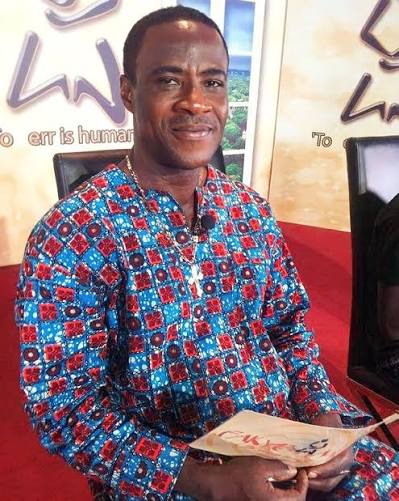
Veteran Ghanaian actor Bob Sam Jr, popularly known as "Diabolo Man," has offered a blunt assessment of Ghana's film industry. Speaking on the podcast "After The Fame," hosted by Ahuofe and available on V Nation TV's YouTube channel, he said Nollywood has pulled far ahead of Ghana's movie industry for two reasons. Nigerian filmmakers support one another, while Ghanaian filmmakers cut corners to save money. "You can cheat your budget, but you can't cheat quality," he said. His comments touch on a debate that has followed Ghollywood for more than a decade. Ghana once rivaled Nigeria in the West African video film boom and supplied Nollywood with some of its biggest stars. Today, Nollywood dominates in output, box office records, streaming deals and continental visibility. Bob Sam Jr's diagnosis points to production quality and industry solidarity. Other factors matter too, including market size, financing, distribution, piracy and the economic pressures Ghanaian producers face. Still, his central point carries weight. Audiences now compare local films with global content on the same screens, and low-budget shortcuts are easy to spot. For Ghana's film industry to compete, it will need deeper investment, stronger collaboration, better distribution and a shared commitment to quality. His remarks are less an insult than a challenge, and the industry's response will show whether it is ready to meet it.
Some interviews pass quietly. Others land like a slap.
Bob Sam Jr's appearance on "After The Fame" belongs in the second group. The veteran Ghanaian actor, known to many viewers as "Diabolo Man," sat down with host Ahuofe and delivered a verdict that many in Ghana's film industry have whispered but few have said so plainly on camera.
"Nollywood is far ahead of Ghana's movie industry because Nigerians support each other, while Ghanaian filmmakers are busy cutting corners to save money," he said. "You can cheat your budget, but you can't cheat quality!"
The line is short, memorable and easy to share. It is also loaded. In two sentences, he names two problems he believes are holding Ghollywood back: a lack of unity and a habit of saving money at the expense of the final product.
His words have reopened a debate that never really went away. Why did Nigeria's film industry become a continental powerhouse while Ghana's, once a close rival, struggled to keep pace? And is the gap really about money and solidarity, or is the story more complicated?
What Bob Sam Jr Said
The comments came during a candid conversation on "After The Fame," a podcast that invites entertainers to reflect on their careers, their industry and life beyond the spotlight. The full interview is available on V Nation TV's YouTube channel.
His argument rests on two claims.
The first is about solidarity. In his view, Nigerian filmmakers back one another. They promote each other's work, collaborate across projects and present a united front to audiences and investors. Ghanaian filmmakers, he suggests, do not do this well enough.
The second is about quality. He argues that many Ghanaian producers try to make films as cheaply as possible, cutting corners on equipment, crews, scripts, locations and post-production. The savings may look good on a budget sheet. They show up on screen as weaker films.
His closing line ties the two together. A producer can trim costs, delay payments or shoot fewer scenes. But audiences will notice. Quality cannot be faked.
Coming from an outsider, these comments might be brushed off. Coming from a veteran who has worked inside the industry, they are harder to ignore.
A Rivalry With a Long History
To understand why his words hit so hard, it helps to remember that Ghana and Nigeria once stood side by side in West African filmmaking.
In the late 1980s, Ghanaian producers helped pioneer the shift from celluloid to video. Low-cost video production allowed local stories to reach audiences quickly through home viewing and video centers. Nigeria's video boom took off in the early 1990s, with "Living in Bondage" in 1992 often cited as the film that launched modern Nollywood.
For years, the two industries fed off each other. Ghanaian films found audiences in Nigeria, and Nigerian films flooded Ghanaian markets. In the 2000s, collaborations between the two countries became common. Ghanaian actors such as Van Vicker, Majid Michel, Jackie Appiah, Yvonne Nelson, John Dumelo and Nadia Buari became household names across Nigeria and the wider continent, often through Nollywood productions.
Ghana also built its own distinct tradition. Kumawood, centered in Kumasi and largely produced in Twi, developed a loyal audience with fast, affordable productions rooted in local language and humor. Independent filmmakers in Accra pursued more polished, internationally minded work.
Yet over time, the balance shifted. Nollywood grew into one of the most prolific film industries in the world. Ghana's industry, by comparison, slowed. Many of its stars spent more time on Nigerian sets than Ghanaian ones.
Where Nollywood Stands Today
Nollywood's rise is not just about volume. It is about ambition.
In recent years, Nigerian films have set new box office records at home. Funke Akindele's "A Tribe Called Judah" became the first Nollywood film to gross more than ₦1 billion in Nigerian cinemas, and her "Everybody Loves Jenifa" pushed the record further. These films showed that local audiences will pay for local stories when the stories are well made and well marketed.
Nigerian productions have also attracted global streaming platforms. Netflix and Amazon Prime Video both invested in Nigerian content, licensing and commissioning films and series. Even as those platforms adjusted their African strategies, Nollywood's visibility on the global stage grew.
Behind that growth sits an ecosystem. Nigeria has a large domestic market, a growing cinema network, established distribution companies, marketing agencies, film schools and a deep pool of technical crew. Producers, directors and actors frequently work together across projects. Stars promote each other's releases on social media. Premieres become events that draw the whole industry.
That culture of mutual promotion is part of what Bob Sam Jr points to when he says Nigerians "support each other."
The State of Ghollywood
Ghana's film industry has not stood still. It has produced acclaimed work and talented filmmakers.
Shirley Frimpong-Manso built a reputation for stylish urban dramas. Leila Djansi earned international attention for socially conscious films. Peter Sedufia's "Keteke" won praise for its fresh storytelling and period setting. Kwabena Gyansah's "Azali" became Ghana's first official submission to the Academy Awards in the international feature category. These achievements show that Ghanaian filmmakers can compete when the conditions are right.
Kumawood also continues to serve a large audience that values local language and familiar themes. Many Ghanaian actors and producers have turned to YouTube and social media, building audiences directly without traditional distributors.
But the broader picture is uneven. Many Ghanaian films are made on very tight budgets. Cinema screens are limited, and much of the cinema calendar is filled with Hollywood and Nigerian releases. Piracy eats into revenue. Investors often see film as risky. Producers who cannot raise enough money may rush shoots, reuse locations, skip proper sound design or hire inexperienced crews.
That is the reality Bob Sam Jr is criticizing. When budgets shrink, quality often shrinks with them.
"Cutting Corners": The Cost of Saving Money
Every film industry faces budget pressure. The question is where producers choose to save.
Cutting corners can take many forms. A producer may shoot with poor lighting or cheap cameras. Audio may be recorded without proper equipment, leaving dialogue muffled or full of background noise. Scripts may be rushed or written around available locations rather than the story. Editing, color grading and sound mixing, all crucial for a polished film, may be done quickly or skipped. Actors and crew may be underpaid, which affects morale and commitment.
Each shortcut saves money. Together, they produce films that feel unfinished.
Audiences have also changed. Ghanaian viewers today watch Hollywood blockbusters, Korean dramas, Nigerian hits and high-budget streaming series on the same phone or television. They compare. A film with poor sound or weak visuals stands out immediately against that competition.
This is why Bob Sam Jr's line resonates. "You can cheat your budget, but you can't cheat quality" is not just a slogan. It describes how audiences judge films. Viewers do not see the budget. They see the result.
Why Quality Production Pays Off
Investment in quality is not only about pride. It is a business strategy.
Well-made films travel further. They attract streaming platforms, festival selectors and international distributors. They earn better reviews and stronger word of mouth. They help build the reputation of the people who made them, which makes it easier to raise money for the next project.
Quality also extends a film's life. A low-budget film may make a quick return on YouTube and disappear. A polished film can be licensed, re-released, dubbed and sold in new markets for years.
Nollywood's recent box office records show the effect. Producers who invested in stronger scripts, larger casts, better production values and serious marketing campaigns drew audiences into cinemas in numbers that once seemed impossible for local films.
For Ghana, the lesson is clear. Spending wisely on the right things, especially story, sound, picture and marketing, can produce returns that cheap production never will.
Industry Solidarity: Does Ghollywood Support Its Own?
Bob Sam Jr's second claim may be even more sensitive than the first.
Solidarity in a film industry shows up in many ways. Actors share each other's trailers and premiere posters. Producers co-finance projects. Directors recommend crews. Established stars appear in smaller films to help them gain attention. Industry members attend each other's premieres and speak well of each other in public.
In Nigeria, this kind of mutual support has become part of the culture. When a major film is released, a wave of promotion often follows across social media, driven not only by the film's cast but by peers across the industry.
Ghana's industry has often been described differently. Public disputes between actors, producers and industry groups have made headlines over the years. Some practitioners have complained of cliques, rivalries and a reluctance to promote others' work. Divisions between Kumawood and Accra-based productions have sometimes added to the sense of a fragmented industry.
This does not mean Ghanaian filmmakers never support each other. Many do. But the perception of disunity has stuck, and Bob Sam Jr's comments reinforce it. In an industry where publicity is often the difference between success and failure, a lack of solidarity carries a real cost.
Is the Comparison Fair?
Bob Sam Jr's diagnosis is compelling, but it is not the whole story.
Market size matters. Nigeria has a population of more than 220 million people. Ghana has around 34 million. A larger domestic market means more potential viewers, more cinema screens and more room for films to recover their costs. Nigerian producers can take bigger risks because the potential payoff is bigger.
Language plays a role. Nollywood produces films in English, Yoruba, Igbo and Hausa, reaching large audiences in each. Ghanaian films in English compete directly with Nigerian films, while Twi-language productions serve a strong but smaller audience.
Financing is harder in Ghana. Ghana's economy went through a severe crisis in 2022, with high inflation and a sharp fall in the cedi, followed by an IMF-backed recovery program. High borrowing costs and economic uncertainty make it difficult for producers to raise money. Cutting corners is sometimes not a choice but a survival strategy.
Infrastructure is limited. Ghana has fewer cinemas, fewer distribution companies and fewer training institutions than Nigeria. Without strong distribution, even well-made films struggle to recover their costs.
Ghanaian talent helped build Nollywood. Many Ghanaian actors became stars partly through Nigerian productions. That flow of talent strengthened Nollywood but also drew attention away from Ghana's own industry.
These factors do not cancel Bob Sam Jr's point. They complicate it. A smaller market and tougher finances make quality harder to achieve, but they also make it more important. When resources are scarce, every cedi needs to show up on screen.
The Role of Government and Institutions
Industry practitioners cannot carry the burden alone.
Ghana passed the Development and Classification of Film Act in 2016, which created the National Film Authority and laid a legal framework for supporting the industry. Practitioners have long called for that framework to deliver more practical support, including a dedicated film fund, tax incentives, stronger anti-piracy enforcement and help with distribution.
Nigeria's own government support has been uneven, but it has included financing initiatives and growing recognition of the creative economy as a source of jobs and exports. Nollywood's growth was driven mostly by private enterprise, yet periodic public support and a business-friendly attitude toward the industry helped.
For Ghana, policy could make a real difference. Incentives that attract foreign productions would bring money, equipment and training. A film fund with clear rules could support projects that meet quality standards. Partnerships with cinema operators and streaming platforms could create reliable outlets for Ghanaian films.
What Ghana's Film Industry Must Do to Compete
If Bob Sam Jr's remarks are taken as a challenge rather than an insult, several steps stand out.
Invest in the script. Strong films begin with strong stories. Paying experienced writers, developing scripts over time and testing ideas before production can raise quality without huge budgets.
Prioritize sound and picture. Audiences forgive many things, but poor sound and weak visuals are hard to overlook. Spending on audio equipment, lighting and post-production delivers some of the biggest improvements per cedi.
Pay people properly. Fair pay attracts skilled crews and committed actors. It also builds trust, which makes future collaboration easier.
Collaborate more. Co-productions between Ghanaian producers, and between Ghana and other countries, can pool money, talent and audiences. Ghana-Nigeria partnerships helped both industries before and can do so again.
Promote each other. Simple acts of solidarity, such as sharing trailers, attending premieres and speaking positively about peers, cost nothing and build momentum for the entire industry.
Train the next generation. Film schools, workshops and mentorship programs can grow the pool of technical talent, from cinematographers to editors to sound designers.
Think about distribution from day one. Producers should plan how a film will reach audiences before shooting begins, whether through cinemas, streaming, television or YouTube. A great film no one sees cannot pay for the next one.
Tell Ghanaian stories with confidence. Ghana's history, culture, languages, humor and landscapes offer rich material. Films that feel authentic and specific often travel further than those that imitate others.
A Wake-Up Call, Not a Funeral
It would be easy to read Bob Sam Jr's comments as a declaration that Ghollywood has failed. That would be a mistake.
His words are better understood as a wake-up call from someone who cares about the industry. Veterans who have seen its high points often feel its decline most sharply. When they speak bluntly, it is usually because they believe things can be better.
Ghana's film industry still has talent, history and an audience that wants to see its own stories on screen. Many of its actors remain beloved across Africa. Its young filmmakers are experimenting with new formats and platforms. The ingredients for a revival are there.
What is missing, in his view, is the commitment to put quality first and to stand together while doing it.
The Bottom Line
Bob Sam Jr, the veteran actor known as "Diabolo Man," has sparked a sharp conversation with his remarks on "After The Fame" with Ahuofe. He argues that Nollywood is far ahead of Ghana's movie industry because Nigerians support each other while Ghanaian filmmakers cut corners to save money. His closing line, "You can cheat your budget, but you can't cheat quality," captures a truth every filmmaker knows.
The gap between the two industries has many causes, including market size, financing, infrastructure, language and economic pressure. But those challenges make his message more urgent, not less. With limited resources, Ghanaian filmmakers cannot afford to waste money on films that fail to connect.
The answer is not to copy Nollywood. It is to learn from what works: invest in quality, back one another, plan for distribution and tell stories with confidence. If Ghana's film industry takes his criticism to heart, it could become the turning point the industry needs.
The question he leaves behind is simple. Is Ghana's movie industry ready to stop cutting corners and start building something that lasts?