MICHAEL JACKSON ESTATE NOW WORTH MORE THAN $2 BILLION AS PARIS JACKSON FIGHTS FOR $600 MILLION TRUST DISTRIBUTION
Forbes estimates Michael Jackson’s estate is now worth more than $2 billion and generated about $140 million over the past year. Paris Jackson has asked a Los Angeles court to order roughly $600 million transferred into the family trust for herself and brothers Prince and Bigi, arguing that the trust remains unfunded more than 17 years after their father’s death. The estate says unresolved IRS litigation and other legal liabilities prevent full funding and claims more than $200 million has already been distributed for the beneficiaries, a characterization Paris disputes.
More than 17 years after Michael Jackson’s death, the fortune built around the King of Pop has grown into an entertainment empire worth more than $2 billion, but a bitter legal dispute is intensifying over why the family trust created for his children has still not been fully funded. Forbes estimates that Jackson’s estate generated approximately $140 million over the past 12 months alone through music streaming, stage productions, licensing, investment income and the successful Michael biopic, yet his daughter Paris Jackson has gone to court demanding that roughly $600 million be transferred from the probate estate into the Michael Jackson Family Trust for herself and her brothers Prince and Bigi. The estate’s executor, longtime entertainment lawyer John Branca, says the money cannot be fully transferred while major tax and legal disputes remain unresolved, setting up one of the most consequential battles yet over the control and distribution of Jackson’s posthumous fortune.
Paris filed a petition in Los Angeles County Superior Court in early November asking a judge to order a partial distribution of approximately $600 million. Her legal team argues that the estate has accumulated enough cash to begin funding the trust while still retaining sufficient reserves to deal with outstanding liabilities. According to Forbes, estate records cited by Paris show approximately $850 million in cash and cash equivalents, an amount she says makes it unreasonable for the trust to remain unfunded after nearly two decades. Her filing argues that Michael intended his children to begin receiving income from the trust when they reached adulthood and later receive principal distributions at specified ages, but that the structure has still not been activated in the way she believes her father intended.
The estate strongly rejects the accusation that Branca is simply holding back money. A spokesperson told Forbes that Paris and her lawyers are fully aware that several legal hurdles remain, particularly continuing litigation with the Internal Revenue Service. The estate says those unresolved obligations prevent the executors from fully funding both the charitable provisions and the individual trusts established under Jackson’s estate plan. It has described claims that payments were deliberately withheld or reduced as false and insists that the probate process cannot be closed until the remaining tax and legal matters have been addressed.
The disagreement is partly about what it means for the beneficiaries to have already received money. The estate says more than $200 million has been distributed for the benefit of Jackson’s beneficiaries over the years and claims roughly $70 million of that amount has gone directly or indirectly to Paris. Her representatives dispute that characterization, arguing that payments made for expenses or support should not be confused with actually funding the family trust or providing the principal distributions contemplated under Michael Jackson’s estate plan. That disagreement has become one of the clearest examples of the broader conflict between Paris and Branca over transparency, control and the pace at which the estate should move out of probate.
Michael Jackson died in June 2009 with an estate that was financially troubled and burdened by nearly $500 million in debt obligations. At the time, there were serious questions about the value of his music assets, his name and likeness rights and his ability to generate future income. A long running tax dispute with the IRS eventually resulted in a federal tax court ruling that valued major parts of the estate at approximately $110 million at the time of death, far below the government’s earlier estimates. What followed, however, was one of the most dramatic financial turnarounds in entertainment history.
Under Branca and the late co executor John McClain, who died earlier this year, the estate sold major assets while also expanding Jackson’s brand into live entertainment, licensing and large scale media projects. In 2016, the estate sold Jackson’s interest in the Sony ATV publishing catalog for approximately $750 million. In 2024, Sony acquired about half of Jackson’s remaining music catalog interests in a deal valued at roughly $600 million. Those transactions generated enormous liquidity while still leaving the estate with substantial ownership in Jackson’s masters, publishing rights and other intellectual property.
Forbes estimates that the estate has generated more than $3.5 billion since Jackson’s death. He has ranked at or near the top of Forbes’ list of the highest earning dead celebrities for most of the years since 2009, demonstrating the extraordinary commercial durability of his music and image. His catalog remains one of the most valuable in the world, with streaming and physical consumption still outperforming most contemporary artists.
The past year was especially profitable because of the release of Michael, the major Hollywood biopic based on Jackson’s life and career. Forbes reported that the estate invested approximately $25 million of its own money into additional production work and reshoots before the film eventually grossed more than $1 billion worldwide. The estate is expected to receive more than $50 million in profit participation from the film over time, while the global publicity surrounding the movie also increased interest in Jackson’s music and related businesses.
That effect has spread across the entire Jackson entertainment portfolio. Streaming and physical sales of his music amounted to approximately 4.6 million album equivalent units over the past year, placing him among the most consumed artists tracked by Forbes. Ticket sales increased for the Cirque du Soleil production Michael Jackson ONE in Las Vegas as well as MJ The Musical on Broadway and its international productions. Those businesses do not simply generate direct revenue. They also keep Jackson’s music and image in front of younger audiences who were not alive during the height of his career.
The estate also benefits from investment income generated by its enormous cash reserves. Forbes estimates that the cash pile produces around $40 million a year in investment returns alone. That financial strength is one of the reasons Paris is arguing that a substantial partial distribution can be made without threatening the estate’s ability to meet its remaining obligations.
Her lawyers say there is no reasonable justification for keeping virtually all major assets inside probate after 17 years. Probate is normally the process through which an estate validates a will, settles debts and transfers property to beneficiaries or trusts. Complex celebrity estates can remain open for years when intellectual property, tax disputes and litigation continue, but legal experts quoted by Forbes said a 17 year probate period remains highly unusual even for a complicated estate.
The estate argues that the Michael Jackson case is anything but ordinary. In addition to the unresolved IRS matter, the estate continues to deal with litigation connected to allegations made against Jackson during and after his lifetime. Those cases create potential financial liabilities that executors say must be considered before permanently transferring hundreds of millions of dollars out of the probate estate.
One continuing dispute involves claims connected to siblings of former Jackson associate Frank Cascio. Their case was recently ordered into private arbitration, adding another layer of uncertainty to the estate’s future liabilities. The executors argue that until such matters are resolved, they must keep sufficient assets under their control to protect the estate from possible judgments, settlements and legal expenses.
Paris rejects the idea that those uncertainties justify leaving the family trust unfunded. Her representatives argue that the executors could transfer a portion of the assets while retaining substantial reserves. The $600 million request is therefore framed as a partial distribution rather than an attempt to empty the estate. Her filing suggests that even after such a transfer, hundreds of millions of dollars would remain available to address legal claims and tax obligations.
The legal fight has become increasingly personal. Paris has accused Branca and the estate management team of excessive spending, poor transparency and using estate money in ways she believes do not serve the beneficiaries. Her representatives have accused Branca of maintaining an expensive lifestyle through estate funds and have questioned private jet expenses, legal fees and management compensation. The estate has rejected those allegations and argues that Branca’s record should be judged by the extraordinary growth in value he and McClain produced after Jackson’s death.
Paris has already won at least one significant court victory. A judge previously ordered the return of approximately $625,000 in bonuses paid to outside law firms after those payments were found to be excessive. That ruling strengthened her argument that greater oversight is necessary, although she has not succeeded in every challenge she has brought against the estate’s leadership.
She also previously attempted to add another executor to the estate, an effort that Branca’s side characterized as an attempt to gain greater control over the administration. That request was unsuccessful. The latest $600 million petition therefore represents a different strategy because it focuses less on changing who runs the estate and more on moving assets out of probate and into the trust established for Jackson’s family.
The Michael Jackson Family Trust is central to the entire dispute. Under Jackson’s estate plan, his children are the primary long term beneficiaries, along with his mother Katherine, while 20 percent of the estate is ultimately reserved for charitable purposes. The children are expected to receive principal distributions in stages as they reach specified ages, including distributions at 30, 35 and 40. Prince is currently 29, Paris is 28 and Bigi is 24.
Paris argues that the trust should already be producing income for the children even if the staged principal distributions have not yet been fully triggered. Her filing says that the estate indicated as far back as 2011 that it planned to begin the process of funding the trust but that no such distribution plan has been completed. Her lawyers describe the delay as extraordinary and inconsistent with the purpose of Michael Jackson’s will.
The estate has responded by emphasizing that Michael’s will does not simply give the children unrestricted access to the entire fortune at age 21. It argues that the children’s interests are protected through the trust structure and that major distributions are deliberately delayed until they reach their thirties. That structure was designed to prevent a sudden transfer of enormous wealth at a young age and to preserve professional management of the underlying businesses.
Even after the estate eventually leaves probate, Branca is expected to remain deeply involved because Jackson’s estate plan also named him as trustee. That means the current battle is not simply about whether Branca continues to control the assets during probate. He is positioned to maintain substantial management authority over the businesses and trusts afterward as well.
That fact complicates the argument that Branca has a personal incentive to keep the estate trapped in probate forever. Probate specialists interviewed by Forbes pointed out that he can continue earning fees for managing the businesses and trusts even after assets are transferred. From that perspective, the dispute may be less about preserving control and more about disagreements over when the estate can safely move assets without exposing itself to unresolved liabilities.
Paris and her representatives remain unconvinced. They argue that the beneficiaries have repeatedly been forced to rely on the executors for information and that deadlines for financial reporting have not always been met. Her latest legal strategy seeks to force the court to intervene directly rather than continuing to wait for the estate to decide when distribution is appropriate.
The disagreement also reflects two very different ways of judging Branca’s performance. His defenders point to a remarkable financial record. Jackson died heavily indebted, yet his estate now holds assets Forbes values above $2 billion and generates more than $100 million annually across multiple businesses. Major asset sales have produced enormous cash proceeds, while stage productions, music royalties, licensing and film projects continue generating revenue.
Paris’s side argues that extraordinary financial growth does not excuse failures of fiduciary duty. An executor is required not only to increase value but also to act in the interests of beneficiaries, provide proper accounting and carry out the instructions contained in the deceased person’s estate plan. Her argument is that the estate’s financial success makes the continued delay more difficult to justify rather than easier.
That tension explains why the dispute has become so intense. Both sides can point to evidence supporting their broader narrative. The estate can show billions in revenue and enormous increases in asset value. Paris can point to a trust she says remains unfunded, legal fees she considers excessive and a probate process that has continued for almost two decades.
Prince and Bigi have been far less public than Paris in the current dispute. Paris has emerged as the family member most willing to challenge the executors openly and through the courts. Her filings seek money for all three siblings, but the public legal battle has largely been carried in her name.
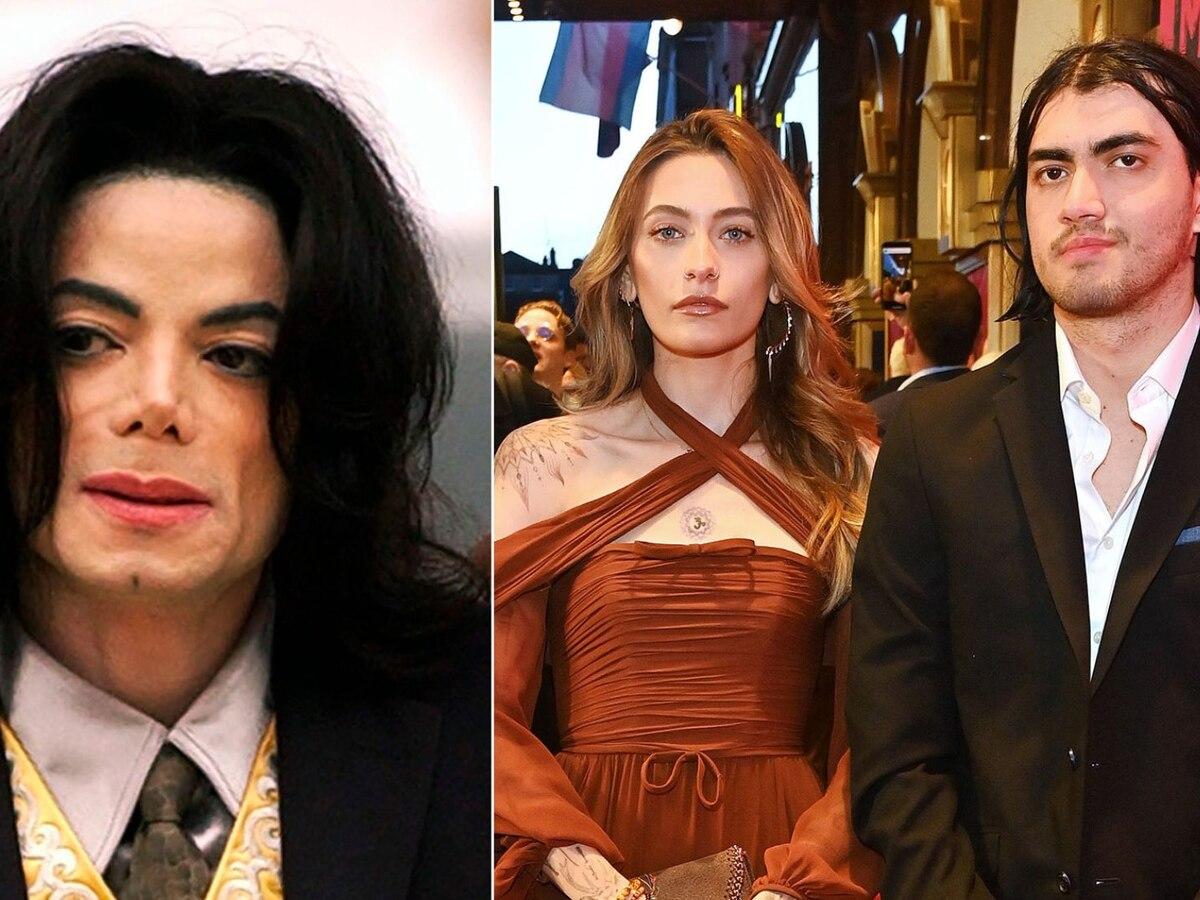
The siblings have occasionally appeared together publicly, including at events connected to their father’s legacy. They attended the London premiere of MJ The Musical together, offering a rare public image of the three adult children supporting one of the estate’s major entertainment properties. Their public unity around their father’s legacy has existed alongside a much more complicated private financial structure involving trustees, executors and long running litigation.
The success of MJ The Musical illustrates why control of the estate remains so valuable. The stage production has become a global commercial property with versions operating in multiple countries. Its continued success generates revenue directly while also increasing consumption of Jackson’s music, creating a feedback loop across different parts of the estate’s business.
The same effect occurred with the Michael biopic. A blockbuster film can introduce Jackson’s catalog to younger audiences, drive streaming and physical sales, increase demand for live shows and strengthen licensing opportunities. That interconnected portfolio is one reason Forbes believes the estate can continue generating more than $100 million annually for the foreseeable future.
Jackson’s continuing popularity has exceeded expectations made shortly after his death. In the federal tax case that valued the estate years ago, Judge Mark Holmes predicted that popular culture would eventually move on and that Jackson’s earning power would decline as copyrights expired and public interest faded. Instead, his commercial value has continued growing.
That unexpected durability is part of what makes the current dispute so significant. The children are not fighting over a shrinking inheritance that must be carefully preserved. They are connected to an entertainment business that has become more valuable with time and could potentially generate income for generations. How and when control of that wealth passes from the estate into the family trust will determine how much influence the beneficiaries have over one of the most valuable music legacies in the world.
The estate also faces the challenge of separating Jackson’s commercial popularity from the controversies that followed him throughout his life and after his death. Allegations of child sexual abuse continue to generate litigation and public debate. Jackson denied wrongdoing during his lifetime and was acquitted of criminal charges in 2005, but later civil allegations continue affecting the estate’s legal and reputational environment.
Those unresolved claims are among the reasons the executors argue that large cash reserves remain necessary. Even if the estate ultimately prevails, defending complex cases involving decades old allegations can cost millions of dollars in legal fees. If judgments or settlements arise, the financial exposure could be considerably larger.
Paris’s position is that such potential liabilities should not justify indefinitely postponing all meaningful funding of the family trust. Her request for $600 million leaves a substantial portion of the estate’s cash available, and she argues that the executors can manage future litigation without keeping the entire fortune locked inside probate.
The Los Angeles court will now have to assess those competing claims. A hearing on the latest petition is scheduled for December 4, according to reporting on the case. The judge could order a distribution, reject Paris’s request or seek additional financial information before deciding how much money, if any, should be moved into the trust.
The decision could have consequences beyond the immediate $600 million request. If the court agrees that the estate can safely begin funding the trust while litigation continues, it could accelerate the process of transferring more assets to the beneficiaries. If the judge sides with Branca and concludes that unresolved liabilities make distribution premature, the probate process could continue for considerably longer.
The case also raises broader questions about celebrity estate management. Intellectual property can generate enormous income long after an artist dies, meaning executors may effectively become chief executives of long term entertainment businesses rather than administrators carrying out a short probate process. That can create tension when beneficiaries want access to wealth while managers believe preserving and growing the business requires continued centralized control.
Michael Jackson’s estate is an extreme example because his posthumous business is larger than the lifetime businesses of most entertainers. According to Forbes, if Jackson were alive today and personally owned the assets controlled by his estate, his estimated fortune would make him one of the richest musicians in the world.
For Paris, however, the issue is not simply the headline valuation. Her legal argument is that the estate exists ultimately to carry out her father’s wishes for his family and charities, not merely to accumulate ever larger cash reserves. She says more than 17 years is long enough to begin transferring meaningful assets into the structure Michael created for his children.
For Branca and the estate, the answer is that responsible management requires patience. They argue that Jackson left behind enormous debts and complicated legal problems and that the dramatic financial recovery proves the value of the strategy they have followed. They say funding the trust fully before major liabilities are resolved could jeopardize assets that belong to all beneficiaries.
Both sides therefore agree on one thing that would have seemed almost impossible when Michael Jackson died in 2009. His estate is no longer financially distressed. It is now one of the most successful entertainment businesses built around any deceased artist in history.
The legal battle is about what should happen to that success. Paris wants a major portion of the wealth transferred now so that the family trust can finally begin operating as intended. Branca insists the estate must remain cautious until the IRS dispute and other legal matters are resolved.
Until the court decides otherwise, the fortune will remain largely under estate control. The children continue benefiting from distributions and expenses that the executors say already total more than $200 million, while Paris disputes how those numbers are being characterized and continues demanding greater access and transparency.
The fight therefore represents much more than a disagreement over inheritance. It is a struggle over control of Michael Jackson’s legacy, the responsibilities of the people entrusted to manage it and the point at which extraordinary business success should finally be converted into the generational wealth his children were meant to inherit.
Seventeen years after Michael Jackson’s death, the King of Pop remains one of the world’s biggest earning entertainers. His music is still being streamed by millions, his stage productions remain commercially successful, his biopic has become a global blockbuster and his estate continues adding tens of millions of dollars to its reserves. Yet the family trust at the center of his estate plan remains the subject of litigation, leaving his children and the executors fighting over when one of entertainment’s greatest posthumous fortunes should finally begin moving into the hands of the next generation.