MICHAEL BLOOMBERG, 84, MARRIES DIANA TAYLOR AFTER 26 YEARS TOGETHER
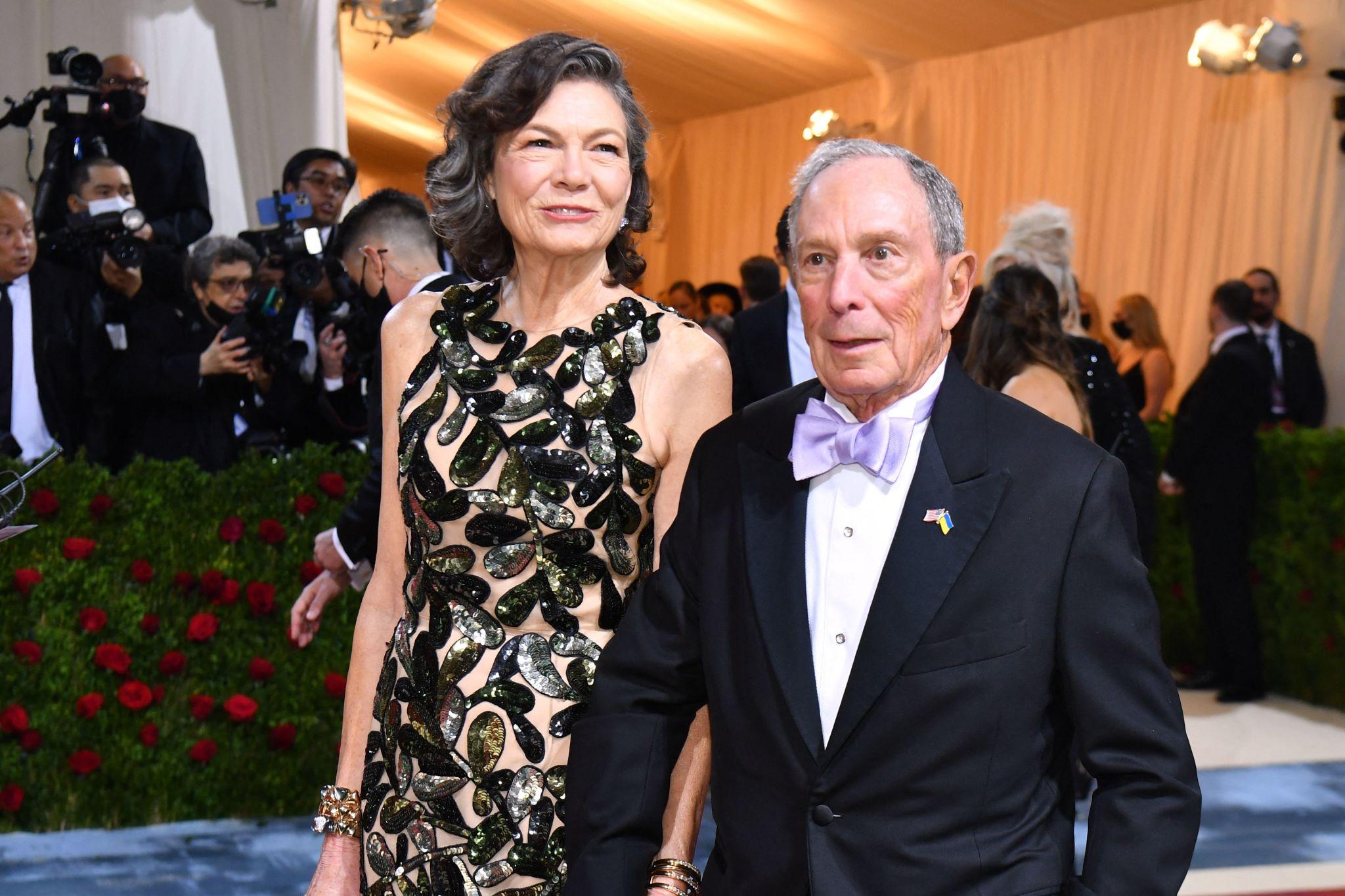
Michael Bloomberg, 84, and Diana Taylor, 71, married Monday in a small private ceremony at their Upper East Side home after 26 years together. Bloomberg’s daughters, Emma and Georgina, attended, and the couple later hosted a small celebratory lunch. The pair first met around 2000 after being seated next to each other at a Citizens Budget Commission meeting while Bloomberg was preparing his first campaign for New York City mayor.
Former New York City Mayor Michael Bloomberg has married his longtime partner Diana Taylor after 26 years together, formalizing one of New York’s most enduring high-profile relationships in a quiet ceremony at their Upper East Side home. Bloomberg, 84, and Taylor, 71, exchanged vows Monday in front of a small group of relatives, including Bloomberg’s daughters, Emma and Georgina, according to a spokesperson for the former mayor. The couple later hosted a private lunch for roughly 15 guests, keeping the celebration deliberately intimate despite Bloomberg’s decades-long prominence in politics, business, philanthropy and New York civic life.
The announcement came with little advance publicity and no large public celebration. Bloomberg’s spokesperson said the couple had married “26 years after a chance seating assignment,” referring to the circumstances in which they first met. They were seated next to one another at a Citizens Budget Commission meeting while Bloomberg was preparing for his first campaign for New York City mayor. Taylor later recalled that they encountered each other again at a restaurant that same day, where Bloomberg asked her to join him for a drink, beginning a relationship that would span his entire three-term mayoralty, a presidential campaign and decades of business and philanthropic activity.
Their decision to marry after more than a quarter-century together marked a change from the public position they had maintained for years. During interviews surrounding Bloomberg’s 2020 presidential campaign, both had indicated that marriage was not something they felt compelled to pursue. Taylor had already occupied an unusual but recognizable place in Bloomberg’s public life, frequently accompanying him to official events while resisting conventional descriptions of herself as a political spouse.
Throughout Bloomberg’s years at City Hall, Taylor was widely referred to as New York City’s “unofficial first lady,” although the title was never formal. She attended major civic functions, accompanied Bloomberg at public events and became familiar to New Yorkers without giving up a separate professional identity. Her own career included senior roles in finance, government, nonprofit organizations and the arts, giving the relationship a distinctly different character from the traditional political-spouse model.
Taylor served as superintendent of banks for New York State under Republican Gov. George Pataki, overseeing the state’s banking regulatory system. Her financial-sector background also included senior positions in private investment and public policy. In 2021, she became chair of the board of the New York City Ballet, further expanding a civic résumé that has included leadership roles across New York’s cultural and nonprofit sectors.
Bloomberg’s path into public life was similarly unconventional. Before politics, he built Bloomberg L.P. into a global financial-data and media company, making him one of the wealthiest people in the world. He entered New York politics after leaving the Democratic Party and won the mayoralty in 2001 as a Republican, succeeding Rudy Giuliani after the September 11 attacks transformed the city’s political and economic environment.
Bloomberg went on to serve three terms as mayor from 2002 through 2013. His administration became associated with aggressive public-health policies, major development projects, expanded bicycle infrastructure, rezoning efforts, school-system changes and an increasingly technocratic approach to city management. His record also generated sustained controversy, particularly over the New York Police Department’s use of stop-and-frisk, relationships with Wall Street and policies critics said disproportionately affected minority and lower-income communities.
Taylor remained at his side throughout those years but maintained a degree of independence uncommon among partners of elected officials. She was never a conventional campaign surrogate during most of Bloomberg’s mayoral career and rarely presented herself as an extension of his political identity. Friends and associates frequently described her instead as a successful professional with her own networks, interests and institutional responsibilities.
The couple’s relationship became more politically visible when Bloomberg entered the Democratic presidential primaries in 2020. By then, he had returned to the Democratic Party and spent hundreds of millions of dollars financing a late-entry campaign built around his managerial record and the argument that he could defeat President Donald Trump.
Bloomberg’s candidacy quickly revived scrutiny of comments he had made about women during his years in business and of nondisclosure agreements involving former Bloomberg L.P. employees. At a “Women for Mike” campaign event in Houston, Taylor defended him against accusations that past remarks reflected a broader pattern of sexism. Her comments themselves attracted attention because of how directly she addressed the culture in which Bloomberg had built his career.
Taylor told CBS News that some of the incidents being discussed dated back three decades and argued that social and workplace norms had changed substantially. She described the environment in finance and corporate America at the time as a “bro culture” and said Bloomberg had evolved with those changes. She also emphasized that the accusations involved comments rather than allegations of sexual assault or physical misconduct.
Her remarks were controversial, particularly the phrase “get over it,” which critics viewed as dismissive of women who had objected to Bloomberg’s behavior. Taylor’s broader argument, however, was that Bloomberg should be judged partly by how his conduct and public policies changed over time rather than solely by remarks attributed to him decades earlier. She said the man she knew privately did not correspond with the picture his political opponents were presenting during the campaign.
Bloomberg ultimately withdrew from the Democratic presidential race in March 2020 after poor results on Super Tuesday and endorsed Joe Biden. His campaign was among the most expensive self-funded presidential efforts in U.S. history and ended without producing the delegate support his advisers had expected.
Taylor returned to a less overtly political public role after the campaign, continuing her work in finance, philanthropy and the arts. The couple remained fixtures at cultural events, charity galas, political gatherings and high-profile New York functions, appearing together frequently while continuing to maintain separate professional identities.
Their 2026 marriage therefore came as a surprise largely because of its timing rather than because of any uncertainty about the durability of their relationship. They had already been together for 26 years, longer than many marriages, and had shared homes, travel, public appearances and decades of personal and professional life.
Bloomberg’s family was central to the ceremony. His daughters Emma and Georgina, from his first marriage to Susan Brown, were among those present at the Upper East Side home. Bloomberg and Brown divorced in 1993 but have remained connected through their children and family life. Public biographical sources differ slightly over whether that marriage began in 1975 or 1976, but they agree it ended in divorce in 1993.
Taylor was also previously married, though she has generally kept details of that marriage outside public attention. She and Bloomberg have no children together. In a 2020 interview, Taylor described her relationship with Bloomberg’s daughters in deliberately informal terms, resisting the conventional label of stepmother and portraying herself instead as a close friend and family presence.
That approach reflected her broader attitude toward the relationship. Taylor has often emphasized her own career and independence rather than defining herself principally through Bloomberg. In the same period, friends including Vogue editor Anna Wintour publicly described her as intelligent, independent and accomplished in her own right.
The wedding ceremony itself appeared consistent with that history. Rather than stage a high-profile political or social event, Bloomberg and Taylor chose their home and a small circle of relatives and close friends. People reported that approximately 15 guests attended the meal following the ceremony, while other accounts described roughly a dozen people participating in the celebration.
No elaborate explanation was provided for why the couple decided to marry after so many years. Bloomberg’s spokesperson focused instead on the longevity of the relationship and the chance meeting that began it, framing the wedding as the culmination of a partnership that had already endured multiple phases of public life.
The marriage also comes at a stage when Bloomberg’s influence is exercised less through elected office than through philanthropy, political spending and institutional leadership. Through Bloomberg Philanthropies, he has committed billions of dollars to public health, climate change, education, the arts, cities and other causes. He has also remained a major donor in Democratic politics and has continued using personal wealth to support candidates, ballot initiatives and policy campaigns.
His political identity has shifted repeatedly over the decades. Bloomberg was originally a Democrat, became a Republican to run for mayor in 2001, later became an independent and eventually rejoined the Democratic Party in 2018 before launching his presidential campaign. Those changes reflected a pragmatic political style centered more on policy and management than strong partisan identification.
Taylor’s own background has similarly crossed conventional political lines. She served under Republican Gov. George Pataki while later supporting Bloomberg as he became increasingly aligned with Democrats. Her public profile has largely remained rooted in financial administration, nonprofit work and New York civic institutions rather than partisan campaigning.
Their relationship therefore has always existed partly outside the usual categories applied to political couples. Taylor was neither a formal political spouse during most of Bloomberg’s mayoralty nor a private figure detached from his public life. She often appeared alongside him while continuing to hold major positions and pursue her own professional responsibilities.
That combination became especially visible in cultural institutions. As chair of the New York City Ballet’s board, Taylor has played a prominent role in one of the city’s most important arts organizations. She and Bloomberg have regularly appeared together at ballet galas and other major events, including the New York City Ballet’s 2026 Spring Gala at Lincoln Center.
Recent photographs from that gala, as well as a May 2026 Accion event and the September U.S. Open, show the couple continuing the same public pattern seen throughout their relationship: attending events side by side while Taylor maintains her own institutional responsibilities and Bloomberg remains active through philanthropy and business.
The decision to marry does not appear to signal a change in either person’s professional life. Bloomberg continues to oversee his philanthropic and political interests, while Taylor remains active across cultural and nonprofit organizations. No announcement indicated that she would take on a new formal role connected to Bloomberg’s business or philanthropic operations.
The wedding instead appears to have been primarily personal. After 26 years together, the couple chose to convert a long-established partnership into a legal marriage in the same city where they first met and where both built much of their public lives.
The location also carried symbolic significance. The Upper East Side has long been closely associated with Bloomberg’s social, philanthropic and political networks, and the decision to marry at home rather than at a hotel, club or public venue reinforced the private nature of the event.
Bloomberg’s age has naturally drawn attention in coverage of the marriage, but the story is less about a late-life romance than about the formalization of a relationship that already had a lengthy history. He was 58 when he and Taylor met around 2000, while she was in her mid-40s. They subsequently spent virtually the entirety of Bloomberg’s elected political career together.
Taylor was present through his first mayoral campaign, his three terms in office, his transition back into private life, his expansion of philanthropic work and his brief presidential run. Bloomberg, in turn, was alongside Taylor as she moved through major financial, regulatory and cultural roles.
Their public image was often one of partnership without traditional expectations. Taylor did not adopt a conventional first-lady platform, and Bloomberg rarely described their relationship in sentimental terms during political appearances. That discretion helped shield much of their private life from the intense scrutiny normally associated with political families.
Even their wedding announcement followed that restrained pattern. The statement was concise, focused on the circumstances of their meeting and emphasized the presence of family rather than political figures, celebrities or business leaders.
There has been no indication that the couple plans a larger ceremony or public celebration. Bloomberg’s representative did not offer additional details beyond the private ceremony and the family members present.
The story nonetheless attracted immediate national attention because of Bloomberg’s stature. As a former mayor of America’s largest city, founder of a global media and financial-information company, former presidential candidate and major philanthropist, he remains one of the most influential figures in U.S. public life.
Taylor is similarly well known within New York’s business and cultural establishment, although her public recognition has often been overshadowed by Bloomberg’s fame. The marriage brings renewed attention to her own career and to the independent identity she maintained throughout their relationship.
For New Yorkers who followed Bloomberg’s mayoralty, Taylor had long been treated informally as his partner in public life. She sat beside him at dinners and events, traveled with him, participated in civic organizations and represented the administration socially without holding an official government title.
That history makes Monday’s marriage less a beginning than a formal acknowledgment of a partnership that had already lasted through some of the most consequential periods of Bloomberg’s life.
There are no immediate political implications attached to the wedding, and neither Bloomberg nor Taylor used the announcement to discuss politics, philanthropy or policy. The ceremony remained deliberately personal, with no indication that the couple wanted it interpreted as anything more than a private family milestone.
Their relationship began through an accidental seating arrangement at a civic meeting 26 years ago and evolved alongside Bloomberg’s emergence from billionaire businessman to three-term mayor, national political figure and one of the world’s largest individual philanthropists. Taylor, meanwhile, built a parallel career in finance, regulation and cultural leadership while becoming a consistent presence beside him.
Monday’s ceremony closed one chapter of that story while leaving the larger relationship largely unchanged. Bloomberg and Taylor had already spent more than a quarter-century building a life together before exchanging vows at their Upper East Side home, surrounded by the family members who had known them as a couple for decades.
The most significant unresolved detail is simply why they chose to marry now after previously showing little interest in doing so. Neither has offered a public explanation, and their spokesperson did not elaborate. What is confirmed is that, after 26 years together, Michael Bloomberg and Diana Taylor are now legally married, formalizing a relationship that had long been one of New York’s most familiar and enduring political, business and social partnerships.