FELA KUTI ENTERS ROCK & ROLL HALL OF FAME IN HISTORIC HONOUR FOR AFROBEAT PIONEER
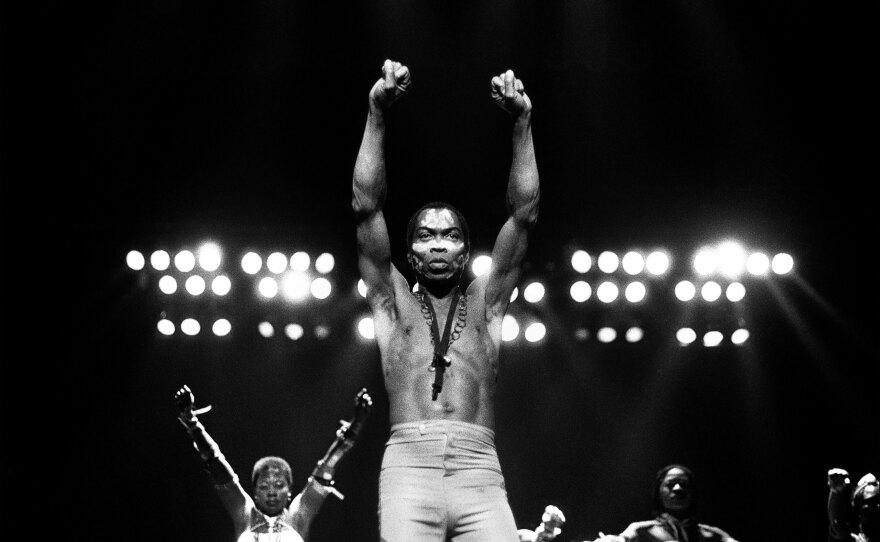
Fela Anikulapo Kuti will be formally inducted into the Rock & Roll Hall of Fame on Saturday, November 14, 2026, at the Peacock Theater in Los Angeles. The Nigerian Afrobeat pioneer is receiving the Early Influence Award, alongside Celia Cruz, Queen Latifah, MC Lyte and Gram Parsons. Fela was previously nominated for the Performer category in 2021 and finished second in that year’s fan vote with more than 545,000 votes but was not inducted. The Rock Hall says his fusion of West African music, jazz and soul pioneered Afrobeat and made him an enduring revolutionary voice whose influence stretches across generations.
LOS ANGELES — Nigerian music revolutionary Fela Anikulapo Kuti will be formally inducted into the Rock & Roll Hall of Fame on Saturday, November 14, nearly three decades after his death, in a landmark recognition of the Afrobeat pioneer whose fusion of West African rhythms, jazz, funk and political protest transformed global music. Fela is being honored posthumously with the Hall’s Early Influence Award at the 2026 induction ceremony at the Peacock Theater in Los Angeles, placing one of Africa’s most influential musicians permanently within an institution that has increasingly expanded its understanding of rock and roll beyond conventional guitar music to encompass the broader musical traditions that shaped popular culture around the world.
The honor represents a significant moment not only for Fela’s family and his enormous international following but also for Nigerian and African music. The Rock & Roll Hall of Fame officially describes Fela as a revolutionary voice who used innovative music to challenge injustice and provoke political change while pioneering Afrobeat through a combination of jazz, traditional West African sounds and American soul. His induction comes after decades in which his influence steadily expanded far beyond Nigeria, reaching hip-hop, funk, jazz, dance music, alternative rock and the contemporary Afrobeats movement that has since turned Nigerian popular music into one of the most important global cultural exports of the 21st century.
Fela is one of five artists receiving the Early Influence Award in the 2026 class, alongside Cuban salsa icon Celia Cruz, hip-hop pioneers Queen Latifah and MC Lyte and country-rock innovator Gram Parsons. The category recognizes artists whose music and performance styles directly influenced, inspired or helped evolve rock and roll and wider popular culture, rather than requiring them to fit the conventional definition of a rock performer. The distinction is particularly appropriate for Fela, whose music never belonged neatly to a single category and whose artistic identity developed from a mixture of African tradition, highlife, jazz, funk, soul, political theater and extended improvisational performance.
The 2026 Performer category includes Phil Collins, Billy Idol, Iron Maiden, Joy Division/New Order, Oasis, Sade, Luther Vandross and Wu-Tang Clan. Music-industry figures Linda Creed, Arif Mardin, Jimmy Miller and Rick Rubin will receive Musical Excellence Awards, while television pioneer Ed Sullivan will receive the Ahmet Ertegun Award. The ceremony brings together artists representing rock, R&B, soul, hip-hop, heavy metal, post-punk, Britpop and Afrobeat, underscoring how far the Hall’s definition of rock and roll has expanded from its original focus on American and British rock traditions.
Fela’s induction is especially significant because he will become the first African solo artist recognized in the Rock & Roll Hall of Fame, according to his music publisher BMG. The milestone comes amid growing international acknowledgment of his legacy. His work has influenced generations of African and international musicians, while songs recorded several decades ago continue to be sampled, performed and rediscovered by younger audiences. His political language, performance style and distinctive rhythmic structures have also remained relevant in debates about corruption, police power, inequality and African political leadership.
Born Olufela Olusegun Oludotun Ransome-Kuti in Abeokuta in 1938, Fela came from one of Nigeria’s most politically and intellectually prominent families. His father, Reverend Israel Oludotun Ransome-Kuti, was an educator and union leader who became the first president of the Nigeria Union of Teachers, while his mother, Funmilayo Ransome-Kuti, was one of Nigeria’s most celebrated anti-colonial activists and women’s rights campaigners. That combination of music, activism and political engagement would later become central to Fela’s own identity.
Fela traveled to London in the late 1950s to study music at Trinity College of Music and began developing the musical foundation that would eventually become Afrobeat. He formed Koola Lobitos and initially worked within highlife and jazz traditions before a transformative period in the United States exposed him more deeply to Black American political thought, soul and funk. Artists including James Brown and Sly and the Family Stone became important musical reference points, while encounters with Black Power politics strengthened his belief that African music could be a vehicle for political consciousness.
After returning to Nigeria, Fela and his bands gradually developed the sound now universally associated with Afrobeat: long compositions driven by interlocking percussion, powerful bass lines, horn sections, repeated guitar patterns, call-and-response vocals and extended instrumental passages. The music combined traditional Yoruba rhythmic structures and West African highlife with jazz improvisation and American funk, producing a sound sufficiently distinctive that Fela gave it its own name.
His compositions were rarely conventional three-minute songs. Many ran for 10, 20 or even 30 minutes, building through hypnotic grooves before Fela entered with lyrics delivered in English, Yoruba or Nigerian Pidgin. The length allowed musicians to create layered rhythmic structures while giving Fela space to deliver extended political commentary. Songs such as “Water No Get Enemy,” “Zombie,” “Expensive Shit,” “Sorrow Tears and Blood,” “Shakara,” “Teacher Don’t Teach Me Nonsense” and “Beasts of No Nation” became musical statements as much as entertainment.
Fela famously described music as a weapon, and his career increasingly became inseparable from his political confrontation with successive Nigerian governments. He criticized military rulers, police brutality, corruption, colonial influence and economic inequality, often naming institutions and officials directly in his songs. His outspoken politics resulted in repeated arrests, beatings, raids and confrontations with the authorities, turning him into one of Africa’s most recognizable dissident musicians.
One of the defining moments of his life came in 1977 after the release of “Zombie,” a song mocking military obedience. Nigerian soldiers raided Fela’s Lagos compound, known as the Kalakuta Republic, and severely assaulted residents. Fela himself was beaten, his property was destroyed and his mother was injured after being thrown from an upstairs window during the raid. She later died after suffering injuries connected to the attack.
Fela responded through music rather than retreating from political confrontation. His later work continued attacking Nigeria’s political establishment, and he famously carried his mother’s coffin to government offices in protest. Songs such as “Coffin for Head of State” transformed deeply personal experiences into political statements, strengthening his reputation as an artist prepared to challenge state power despite the risks.
That defiance became central to his international image. Fela was simultaneously a bandleader, saxophonist, composer, performer, political activist and provocateur. His concerts at the Afrika Shrine in Lagos combined music, political speeches and theatrical performance, creating an experience unlike conventional popular music shows. The venue became a meeting point for artists, activists, intellectuals, foreigners and young Nigerians drawn to his rejection of establishment authority.
His politics were frequently controversial even among supporters. Fela criticized both Western political influence and Nigerian elites while advocating Pan-Africanism and cultural independence. His personal life also generated criticism, particularly his relationships with women and his highly publicized marriage to 27 women in a single ceremony in 1978. Some scholars and fans who admire his political courage and musical brilliance have simultaneously questioned aspects of his gender politics and personal conduct, demonstrating the complexity of his legacy.
What has rarely been disputed is the scale of his musical influence. Afrobeat became an international genre rather than simply Fela’s personal style, with his sons Femi Kuti and Seun Kuti continuing the musical tradition while developing their own careers. Musicians including Tony Allen, Fela’s longtime drummer and musical collaborator, played a crucial role in creating the rhythmic foundation of Afrobeat and later influenced electronic music, jazz and alternative rock around the world.
International artists from different generations have cited Fela’s work as an influence. Hip-hop producers have sampled his recordings, jazz musicians have studied his horn arrangements and rock artists have drawn inspiration from the repetitive rhythmic structures and confrontational energy of his performances. The Rock Hall itself lists artists including Salif Keita, Ginger Baker and Burna Boy among musicians influenced by Fela, reflecting a legacy stretching across both African and Western popular music.
The relationship between Fela and British drummer Ginger Baker was particularly important in demonstrating Afrobeat’s ability to cross musical boundaries. Baker, already internationally famous through Cream, spent time in Nigeria and collaborated with Fela, helping expose his music to audiences accustomed to rock and jazz. Their work became one example of the cross-cultural exchanges that eventually made Fela a major reference point for musicians outside Africa.
His influence on contemporary Nigerian music is equally profound even though modern Afrobeats, with an “s,” is not musically identical to Fela’s Afrobeat. Today’s Afrobeats encompasses pop, R&B, dancehall, hip-hop, amapiano and numerous Nigerian and Ghanaian musical traditions, but Fela’s international breakthrough helped demonstrate that African artists could create globally influential music without abandoning African rhythmic identity.
Artists such as Burna Boy have openly drawn from Fela’s musical and political legacy. Burna Boy’s grandfather, Benson Idonije, was once Fela’s manager, creating a direct historical connection between one of Afrobeat’s foundational figures and one of the biggest stars of modern Afrobeats. Fela’s children and grandchildren also remain active across music, activism and cultural preservation, ensuring that his legacy continues as a living family tradition rather than merely a historical archive.
The Rock Hall honor arrives five years after an earlier campaign nearly brought Fela into the institution through the Performer category. He was nominated for the Class of 2021 and attracted extraordinary public support, finishing second in the fan ballot behind Tina Turner with more than 545,000 votes. Despite that showing, he was not included among the final inductees, leading to disappointment among African fans and renewed arguments that the Hall had historically overlooked major figures from outside North America and Europe.
The 2026 induction resolves that omission, although through the Early Influence Award rather than the competitive Performer ballot. Unlike the Performer category, recipients of the Early Influence Award are selected by the Hall’s committees to recognize foundational impact. The decision therefore places emphasis not simply on Fela’s popularity but on the argument that his innovations helped alter the direction of global music itself.
The Hall’s description of his career emphasizes precisely that point. It identifies Fela as a musician who fused African and Black American musical traditions while turning political consciousness into part of his artistic form. His lengthy compositions, complex polyrhythms and aggressive horn arrangements provided a model that musicians would continue adapting decades later.
The timing of the recognition is also notable because African music currently occupies an unprecedented position within the international industry. Nigerian stars routinely fill arenas in Europe and North America, Afrobeats songs appear on global charts, African producers collaborate with some of the world’s largest pop artists and major international labels have expanded operations across Lagos, Johannesburg, Accra and other African music centers.
That success has encouraged greater attention to the artists who created the foundations upon which contemporary African global music has grown. Fela’s induction effectively links today’s commercial Afrobeats boom to a much longer history of African musical innovation, reminding audiences that international influence did not begin when streaming platforms discovered Nigerian pop.
Fela died in Lagos on August 2, 1997, at the age of 58. His brother, Dr. Olikoye Ransome-Kuti, announced that complications from AIDS were responsible for his death. His funeral drew enormous crowds, with Nigerians filling streets around Lagos to honor a musician who had spent much of his career confronting the country’s political establishment. The scale of public mourning demonstrated that even after years of controversy and government confrontation, Fela had become embedded in Nigerian cultural identity.
Nearly 30 years later, his music remains unusually current. “Zombie” continues to resonate during discussions about military power and blind obedience, while “Sorrow Tears and Blood” is frequently invoked following episodes of state violence. “Water No Get Enemy” has become a global standard performed and sampled by musicians who may have been born long after the original recording.
His former Lagos home has become the Kalakuta Republic Museum, preserving personal possessions, photographs and artifacts connected to his life. The New Afrika Shrine, maintained by the Kuti family, continues the tradition of combining live Afrobeat performances with political discussion, while the annual Felabration festival brings musicians and fans together to celebrate his birthday and musical legacy.
Fela has also become the subject of books, documentaries, academic studies, exhibitions and stage productions. The Broadway musical “Fela!” introduced his story to new international audiences and received major theatrical acclaim, while exhibitions in Europe and Africa have explored the relationship between his politics, album artwork, fashion and performance.
His growing institutional recognition represents an unusual development for someone who spent much of his life deliberately positioning himself against authority. A musician repeatedly arrested by Nigerian governments and frequently portrayed as dangerous or disruptive by political leaders is now being celebrated by some of the world’s most prominent cultural institutions. That transformation illustrates how artists once considered radical can eventually become central figures in the historical narratives they originally challenged.
The Rock & Roll Hall of Fame induction follows other major recognition of Fela’s influence and comes at a time when the international music industry increasingly acknowledges African artists within its historical canon rather than treating them simply as regional figures. For Nigerian audiences, that shift carries particular significance because Fela developed Afrobeat primarily from Lagos while speaking directly to Nigerian political and social realities.
Saturday’s ceremony will itself contain a strong Nigerian presence even beyond Fela. Sade, the British band led by Nigerian-born singer Sade Adu, is entering the Performer category, although the group has confirmed it will not attend the event. Sade thanked supporters and collaborators while stressing that the absence should not be interpreted as diminishing the importance of the recognition.
Several other major inductees are also expected to miss the Los Angeles ceremony. Oasis brothers Liam and Noel Gallagher will not attend, with Noel scheduled to perform in Britain and Liam expressing little enthusiasm for awards ceremonies. Iron Maiden is touring Australia, while some members associated with New Order will also be absent. Phil Collins is expected to attend but is not expected to perform because of health limitations.
Billy Idol is scheduled to perform with longtime guitarist Steve Stevens, while Wu-Tang Clan, Queen Latifah and MC Lyte are among the artists expected to appear. Because Fela, Celia Cruz, Luther Vandross and Gram Parsons are being honored posthumously, the ceremony will necessarily rely on family representatives, presenters, archival material and musical tributes to connect audiences with their work.
The Rock Hall has deliberately kept many performance and presenter details secret ahead of the ceremony, meaning the precise form of Fela’s tribute has not been publicly confirmed. What has been established is that his induction forms part of the official Class of 2026 and that his name will permanently join the Hall’s roster of influential artists.
The ceremony at the Peacock Theater will not be streamed live. An edited version is scheduled for broadcast on ABC and Disney+ in December, allowing the Hall to package the performances, tributes and induction speeches into a television special after Saturday’s event. That means images and details from Fela’s actual induction tribute will emerge after the ceremony rather than being available in advance.
For the Kuti family, the honor adds another major institutional milestone to a legacy they have spent decades protecting. Femi and Seun Kuti have continued performing Afrobeat internationally, while other family members have managed archives, cultural initiatives and events connected to their father. Each new generation of listeners has therefore encountered Fela not solely through historical recordings but through an active cultural network maintaining his ideas and music.
The induction also places renewed attention on the people who worked alongside him. Afrobeat was not created by one musician in isolation, and figures such as Tony Allen, guitarist Oghene Kologbo and the members of Africa 70 and Egypt 80 helped develop its distinctive sound. Fela was its most recognizable leader, composer and political voice, but the music emerged through collective performance and experimentation over many years.
That broader history is increasingly important as international institutions celebrate African music. Recognition of Fela can serve as an entry point into the wider musical traditions that shaped him, including Yoruba percussion, Ghanaian and Nigerian highlife, jazz, funk and African diasporic music. Afrobeat itself demonstrates how cultural exchange can operate in multiple directions, with African sounds influencing American music and Black American music subsequently feeding back into African innovation.
The Rock Hall’s decision therefore carries significance beyond the symbolic addition of another famous name. It acknowledges an African musical form as part of the foundation of modern global popular music and positions Fela alongside artists from Latin music, hip-hop, soul, country and rock whose innovations crossed genre boundaries.
For Nigeria, the honor arrives at a moment when the country’s cultural influence frequently exceeds its political or economic profile abroad. Nigerian musicians, filmmakers, fashion designers and writers now reach global audiences at a scale unimaginable during much of Fela’s career. Yet many of the themes he addressed — corruption, inequality, police abuse, political accountability and dependence on foreign power — remain central to Nigerian public debate.
That continued relevance helps explain why Fela has never become merely a nostalgic figure. His music can be celebrated for its groove and musicianship while simultaneously functioning as political criticism. Young listeners discovering him decades after his death encounter songs whose subjects often remain recognizable in contemporary African life.
Saturday’s induction thus honors both a musical innovator and an uncompromising political artist. Fela did not create Afrobeat simply as a commercially distinctive sound; he built it around the idea that music could challenge authority, educate listeners and force uncomfortable conversations about power. That philosophy made him difficult for governments to tolerate and eventually helped make him impossible for musical history to ignore.
Nearly five years after narrowly missing induction through the Rock Hall’s 2021 Performer ballot, Fela Kuti now enters the institution through a category explicitly recognizing influence. The route may be different, but the result is permanent: the Nigerian musician whose extended grooves, saxophone lines and political attacks emerged from Lagos will now stand formally among the artists the Rock & Roll Hall of Fame considers essential to the development of global popular music.
For Africa’s music industry, the significance extends beyond Fela himself. His recognition demonstrates that the continent’s musical pioneers increasingly cannot be separated from the history of international popular culture, while creating an important precedent for other African artists whose influence has long exceeded the institutional recognition they received during their lifetimes.
As artists, executives and fans gather at the Peacock Theater in Los Angeles, Fela’s physical absence will be unavoidable, but the music that earned him the honor has outlived nearly every political figure he confronted. Twenty-nine years after his death, the Afrobeat pioneer who declared that music should serve as a weapon for social change is receiving one of popular music’s most prominent institutional honors, completing a journey from Lagos dissident to permanent member of the Rock & Roll Hall of Fame.