BEYONCÉ MAKES GRAMMY HISTORY WITH 100TH CAREER NOMINATION AS RAYE LEADS 2027 FIELD
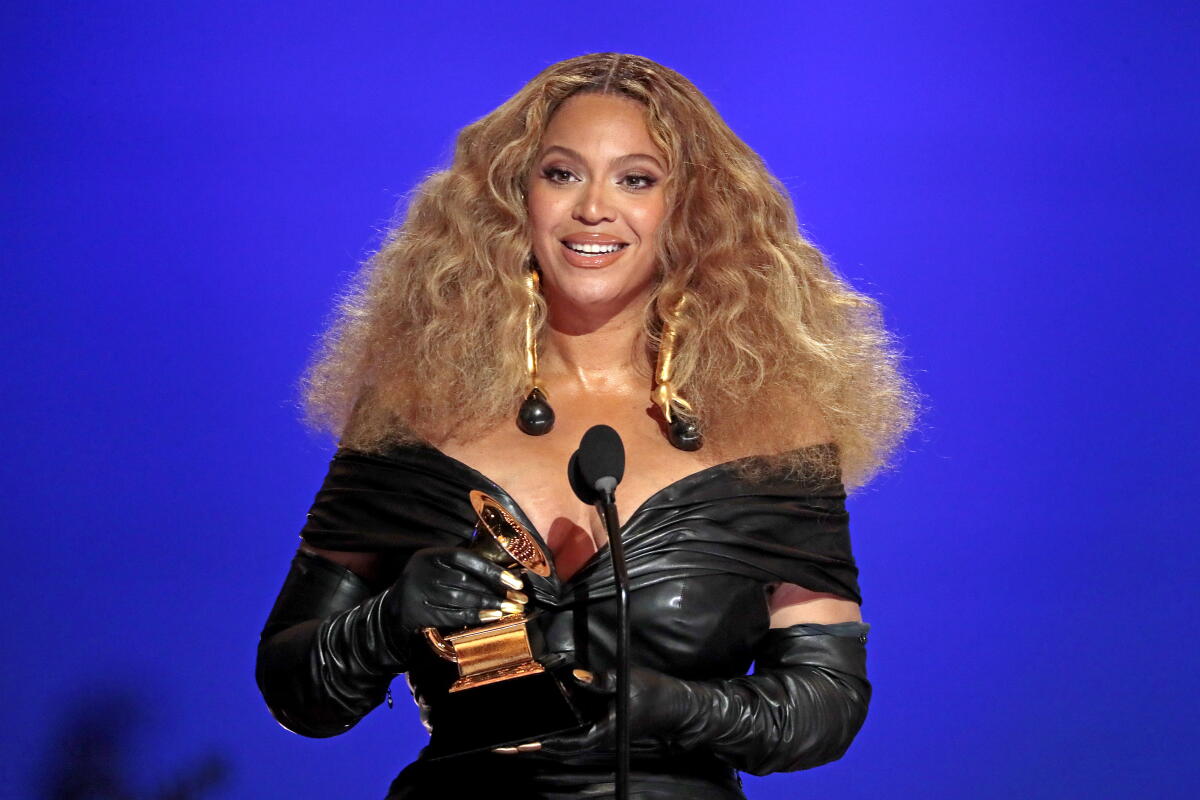
Beyoncé has made Grammy history by becoming the first artist to reach 100 career nominations, earning her landmark nod for “Morning Dew (Donk)” in the Best R&B Solo Performance category. The achievement further extends her record as the most-nominated artist in Recording Academy history and adds to an already unmatched Grammy legacy. RAYE leads the 2027 nominations with 11, tying Beyoncé’s record for the most nominations received by a female artist in a single year, while Rosalía follows with nine. Miranda Lambert, Olivia Rodrigo, Phoebe Bridgers and first-time nominee Ella Langley each received seven nominations, with Bruno Mars, Leon Thomas and Olivia Dean earning six. The 69th Annual Grammy Awards will take place February 7, 2027, at the Crypto.com Arena in Los Angeles, airing live on ABC and streaming on Disney+ and Hulu.
Beyoncé has added another extraordinary chapter to one of the most decorated careers in modern music, becoming the first artist in Grammy Awards history to reach 100 career nominations as the Recording Academy unveiled its nominees for the 69th Annual Grammy Awards. The latest milestone came through her nomination for “Morning Dew (Donk)” in the Best R&B Solo Performance category, extending a record that already placed her ahead of every other artist in the history of the awards and reinforcing her status as one of the most influential and consistently recognized performers of her generation.
The landmark nomination immediately became one of the defining stories of the 2027 Grammy season, not simply because of the round-number milestone but because it underscores the unusual longevity and breadth of Beyoncé’s relationship with the Recording Academy. From her early years as a member of Destiny’s Child to her decades-long solo career, Beyoncé has accumulated nominations across R&B, pop, dance, country, Americana, music film, visual media and the general field, demonstrating an ability to move between genres without losing either commercial relevance or critical recognition. Reaching 100 career nominations places her in a category no other artist has entered and further strengthens a Grammy legacy that has already produced the highest number of wins in the awards’ history.
Her latest nomination also arrives at a moment when the Grammy field is being shaped by a new generation of artists challenging established records of their own. British singer-songwriter RAYE leads the 2027 nominations with 11, tying the record Beyoncé set at the 2025 Grammys for the highest number of nominations received by a female artist in a single year. RAYE’s showing places her at the center of the upcoming ceremony and creates one of the most closely watched narratives of the season, as she enters several of the Recording Academy’s most prestigious categories after a period of remarkable artistic and commercial growth.
Beyoncé’s 100th nomination for “Morning Dew (Donk)” carries particular symbolic weight because of where she already stands in Grammy history. She is not only the most-nominated artist of all time but also the most-awarded, having built a trophy count unmatched by any performer before her. Her career has repeatedly crossed boundaries that once separated genres and audiences, and her Grammy record has expanded accordingly. The Recording Academy’s continued recognition of her work reflects not just the scale of her popularity but also the extent to which her projects have repeatedly reshaped expectations around album construction, visual presentation, live performance, genre, production and artistic ownership.
The milestone comes two years after Beyoncé dominated the 2025 Grammy nominations with 11 nods for work connected to “Cowboy Carter,” setting the single-year record that RAYE has now tied. That project marked another significant shift in Beyoncé’s musical trajectory, with its exploration of country, Americana and Black musical traditions sparking wider conversations about genre ownership and representation. The project ultimately delivered major victories, including Album of the Year, and expanded her presence in categories where she had historically received less recognition despite her broader influence.
By reaching 100 nominations in 2027, Beyoncé further separates herself from generations of celebrated artists whose careers have been measured partly by Grammy recognition. The figure is particularly striking because Grammy nominations are not awarded for longevity alone. Each nomination reflects recognition of a specific recording, performance, composition, album or production within an eligibility period, meaning the milestone represents decades of repeated success rather than a cumulative honorary distinction. It is a record built across changing musical eras, shifts in technology, streaming, audience behavior and industry structures, yet Beyoncé has remained consistently present at the highest level of Recording Academy voting.
The timing of the milestone is also significant because the 2027 nominations reflect one of the most internationally diverse and female-dominated fields in recent Grammy history. RAYE leads with 11 nominations, followed by Spanish singer Rosalía with nine, while Miranda Lambert, Olivia Rodrigo, Phoebe Bridgers and first-time nominee Ella Langley each received seven. Bruno Mars, Leon Thomas and Olivia Dean earned six nominations each, creating a broad field that brings together established global stars, emerging voices and artists moving between traditional genre boundaries.
RAYE’s 11 nominations represent perhaps the most dramatic breakthrough of this year’s Grammy cycle. Her rise to the top of the nominations table marks the culmination of a period in which she has transformed from a respected songwriter and performer into one of the most critically acclaimed artists in contemporary pop and R&B. Her nominations cut across major fields and specialist categories, reflecting a level of Recording Academy support that few artists achieve in a single year. By tying Beyoncé’s 11-nomination record for a female artist in one Grammy cycle, RAYE has placed herself in historic company before the ceremony has even taken place.
That comparison does not diminish the significance of Beyoncé’s own achievement. Instead, it illustrates the pace at which Grammy records are evolving at a time when female artists occupy many of the industry’s most powerful creative and commercial positions. Beyoncé’s 2025 nomination record was widely regarded as another extension of her dominance at the awards, and RAYE’s ability to equal it only two years later reflects the remarkable strength of the current field. The shared record now links two artists at very different stages of their careers: Beyoncé as the most-nominated artist in Grammy history and RAYE as an artist entering the biggest awards season of her career.
Rosalía’s nine nominations further reinforce the international character of the field. The Spanish singer has built a career around stylistic experimentation, blending flamenco, Latin music, electronic production, avant-pop and contemporary urban influences. Her presence near the top of the nomination count reflects the increasingly global reach of the Grammy Awards and the Recording Academy’s growing recognition of artists whose work moves across languages and markets. Rosalía’s nominations also demonstrate how the boundaries separating mainstream American pop from global music have continued to weaken as streaming platforms make international audiences more connected than ever.
Miranda Lambert, Olivia Rodrigo, Phoebe Bridgers and Ella Langley each secured seven nominations, placing all four firmly among the most prominent contenders heading into the February ceremony. Lambert’s recognition continues a career that has made her one of country music’s most consistent Grammy figures, while Rodrigo returns as one of pop’s dominant young voices. Bridgers, whose songwriting and alternative work have earned critical acclaim for years, remains a major presence across categories, while Langley’s seven nominations are particularly notable because she enters the ceremony as a first-time Grammy nominee.
The recognition of Langley is one of the strongest examples of how quickly an artist can move from relative newcomer to major awards contender in the streaming era. First-time nominees traditionally draw significant attention at the Grammys, particularly when they appear in multiple categories, but receiving seven nominations places Langley in unusually competitive territory. Her breakthrough adds another layer to a nominations list already defined by the contrast between established stars and new artists arriving with strong Recording Academy support.
Bruno Mars, Leon Thomas and Olivia Dean each earned six nominations, ensuring that the field remains highly competitive beyond the leading names. Mars has long been one of the Recording Academy’s most successful artists, with a record of converting major-category nominations into victories. His continued presence reflects the durability of his appeal across pop, R&B and traditional performance categories, while Leon Thomas and Olivia Dean represent the continued strength of contemporary R&B, soul and pop songwriting within the nominations.
Dean’s six nominations are especially significant following her previous Grammy success and growing international reputation. Her appearance across major categories positions her among the artists capable of producing one of the night’s biggest surprises, particularly if the vote becomes divided among heavily nominated performers. The Grammys have often produced unexpected results in years where multiple artists enter with strong general-field support, and the 2027 nominations suggest the possibility of a highly competitive ceremony rather than one dominated by a single performer.
The 2027 Grammy field also reflects a broader shift in the music industry, where commercial success, critical acclaim and cultural influence increasingly overlap across genres. In previous decades, many artists were strongly identified with one musical category, but today’s leading performers often move between pop, R&B, country, alternative, Latin, dance and global music. Beyoncé’s own career is perhaps the clearest example of this change, and her 100 nominations provide a historical record of how dramatically those boundaries have shifted during her time in the industry.
Her evolution from Destiny’s Child member to solo superstar has been accompanied by a steady expansion of artistic control. Over the years, Beyoncé has become increasingly involved in the conceptual, visual and production elements of her projects, turning album releases into broader cultural events. That approach has helped redefine expectations for what a major pop album can be, with music, fashion, film, performance and political symbolism often integrated into a single creative statement. Her Grammy recognition has followed that evolution, moving from early R&B and pop categories into a wide range of areas that reflect the scope of her work.
The Recording Academy’s relationship with Beyoncé has not always been free of controversy. Despite her dominance in nominations and total wins, there were years when critics and fans questioned why she struggled to secure Album of the Year despite receiving widespread acclaim. Those debates intensified after highly celebrated projects failed to win the top prize, leading to broader conversations about how the Recording Academy values genre, innovation and Black artistry. Her eventual Album of the Year victory therefore carried symbolic significance beyond a single trophy, and her 100th nomination now adds another major marker to that long-running relationship.
The Grammy Awards themselves have undergone significant changes during Beyoncé’s career. The voting membership has expanded, categories have been added and removed, genre definitions have changed, and the Academy has introduced reforms designed to improve transparency and representation. The institution has also had to respond to changing consumption habits, particularly the dominance of streaming and the declining importance of physical sales. Beyoncé’s ability to remain central to Grammy conversations throughout those changes is one reason the 100-nomination milestone is so significant.
The 2027 ceremony will also mark an important broadcasting change. The 69th Annual Grammy Awards are scheduled to take place on February 7, 2027, at the Crypto.com Arena in Los Angeles, beginning at 7 p.m. Eastern. The ceremony will air live on ABC for the first time since 1972 and will also stream through Disney+ and Hulu. The shift reflects the continued transformation of major awards broadcasting as traditional television networks increasingly integrate streaming platforms into live-event distribution.
For the Grammys, the move to ABC and Disney’s streaming ecosystem is particularly notable after decades in which the ceremony was associated with CBS. The change gives the Recording Academy access to a different broadcast infrastructure and could potentially expand its reach among younger viewers who increasingly consume live entertainment through streaming platforms rather than traditional television. The integration of Disney+ and Hulu also allows the ceremony to reach audiences beyond conventional broadcast television while maintaining the significance of a live national event.
The Crypto.com Arena remains one of the most recognizable venues associated with the Grammy Awards. Located in downtown Los Angeles, the arena has hosted numerous editions of the ceremony and has become closely linked with the visual identity of music’s biggest awards night. Returning there in 2027 provides continuity at a time when other elements of the broadcast are changing, and the venue is expected to host a wide range of performances, tributes and high-profile appearances.
The nominations also arrive during a period when the Grammys are placing increasing emphasis on international music. Rosalía’s nine nominations are a major part of that trend, while artists from outside the United States continue to appear across general and genre categories. The global expansion of streaming has made it easier for music in Spanish, Korean, French, Nigerian languages and other languages to compete for mainstream attention, and the Recording Academy has gradually adjusted its categories and voting structures in response.
Beyoncé’s global impact forms part of that broader context. While her career was built within the American music industry, her influence extends far beyond the United States, with major fan bases across Europe, Africa, Latin America and Asia. Her tours have repeatedly become global cultural events, and her releases routinely dominate international charts and social media conversations. The 100th nomination therefore carries significance not just within the American awards industry but among a worldwide audience that has followed her career for decades.
The milestone also highlights the importance of longevity in a music industry that often moves rapidly between trends. Many artists experience periods of enormous success but struggle to maintain relevance across decades. Beyoncé has managed to remain at the center of popular music while continually changing her sound, image and creative direction. That ability to evolve without losing her core audience has played a major role in the accumulation of nominations that now places her at 100.
Her career arc also parallels major changes in how artists build brands and control their work. Beyoncé has increasingly emphasized ownership, secrecy around releases, visual storytelling and direct communication with fans. Her surprise album releases helped reshape expectations around marketing, while her visual albums and concert films expanded the traditional concept of the music release. Each of those developments helped strengthen her reputation as an artist who does not simply participate in industry trends but often helps create them.
RAYE’s rise presents a different but equally compelling industry story. Her success has been closely associated with creative independence and a willingness to speak openly about the pressures artists face within record-label systems. Her breakthrough as a major Grammy contender therefore carries symbolic importance for artists seeking greater control over songwriting, ownership and career direction. The 11 nominations validate not only her music but also a career path that has increasingly become part of wider debates about artist autonomy.
The contrast between Beyoncé and RAYE makes the 2027 ceremony particularly interesting. Beyoncé represents sustained excellence across decades, while RAYE represents a newer generation establishing its own place in Grammy history. Their records intersect in the nomination count, yet the circumstances surrounding those achievements are very different. Beyoncé’s 100 career nominations reflect extraordinary longevity, while RAYE’s 11 in a single year reflect a concentrated surge of recognition.
Rosalía occupies another distinct position within the field, representing the increasing global reach of experimental pop. Her work has consistently challenged genre boundaries while drawing from deeply rooted musical traditions, and her nine nominations demonstrate that the Recording Academy is increasingly willing to recognize music that does not fit neatly into traditional American categories. Her presence near the top of the list adds another layer of diversity to a nominations field already notable for its range.
Olivia Rodrigo, meanwhile, continues to demonstrate remarkable consistency for an artist still relatively early in her career. Her ability to secure seven nominations reflects the enduring strength of her songwriting and the broad appeal of her work among both younger audiences and Grammy voters. Rodrigo’s career has developed rapidly since her breakthrough, and each new release has been treated as a major pop event, placing her among the most important artists of her generation.
Phoebe Bridgers’ seven nominations further underscore the strength of alternative and singer-songwriter music within the current Grammy landscape. Bridgers has built a reputation for emotionally detailed songwriting, understated production and collaborations that cross genre boundaries. Her continued Grammy recognition suggests that the Recording Academy’s voting base remains receptive to music that prioritizes narrative, intimacy and atmosphere alongside commercial success.
Miranda Lambert’s nominations ensure that country remains strongly represented at the top of the field. Lambert has spent years as one of the genre’s most respected performers and songwriters, and her Grammy presence reflects a career built on both commercial success and critical credibility. The 2027 field is particularly notable for the way country music intersects with broader pop and Americana trends, continuing a pattern that has become increasingly visible in recent years.
The nomination of Ella Langley as a first-time Grammy contender with seven nods adds another significant country storyline. First-time nominees often use the Grammys as a launching point for wider international recognition, and Langley enters the ceremony with far more momentum than most newcomers. Seven nominations immediately place her among the ceremony’s biggest names, making her one of the artists likely to attract significant attention during both the main broadcast and the Premiere Ceremony.
The Grammy Awards Premiere Ceremony, held before the televised event, will again present the majority of the awards. Although the televised ceremony receives most of the public attention, the Premiere Ceremony remains central to the Recording Academy’s structure, with winners announced across dozens of categories spanning genres, production, composition, engineering and performance. Many artists receive their most significant recognition during this earlier event, and the 2027 nominations ensure that several heavily nominated performers could begin accumulating wins before the prime-time broadcast starts.
The broader Grammy field also provides insight into the changing priorities of the music industry. Songwriting has regained prominence at a time when listeners increasingly focus on lyrical identity and personal storytelling, while production and genre experimentation remain important across both commercial and independent releases. Artists such as RAYE, Rosalía, Bridgers and Rodrigo represent different approaches to those trends, but all have built careers around strong creative identities rather than simply following established formats.
Beyoncé’s 100th nomination sits at the center of these developments because her career has intersected with nearly every major shift in popular music over the past quarter-century. She began her career in an era dominated by physical album sales, music television and radio, then successfully adapted to digital downloads, social media, streaming and direct-to-consumer releases. Few artists have remained equally relevant across all of those transitions.
That adaptability has helped make her Grammy record so difficult to match. Nominations accumulated early in her career through Destiny’s Child, but her solo work rapidly expanded her presence across categories. Over time, each artistic reinvention created new opportunities for recognition, whether through dance-oriented projects, R&B albums, visual releases, politically charged work or genre experiments. Rather than remaining confined to one area of the Grammy ballot, Beyoncé has repeatedly appeared across multiple fields.
The milestone also raises the question of how high the record could eventually go. At 100 nominations, Beyoncé has entered unprecedented territory, but there is little indication that her career is approaching its end. If she continues releasing music at her current level of visibility and critical attention, the record could expand significantly in future Grammy cycles. That possibility means the 100th nomination may ultimately become less of a final achievement and more of a symbolic checkpoint in an ongoing career.
For younger artists, Beyoncé’s record establishes a benchmark that may prove extremely difficult to reach. Modern Grammy careers are often fragmented by changing genre classifications, evolving voting patterns and intense competition, making sustained nomination totals difficult to maintain. Achieving 100 requires not just multiple successful albums but repeated recognition across decades, something only a small number of artists are likely to approach.
RAYE’s 11 nominations provide a reminder, however, that Grammy history can change quickly. Records that once appeared untouchable can be matched or broken as artists release increasingly ambitious projects and categories expand. Her ability to tie Beyoncé’s single-year record demonstrates how rapidly a breakthrough period can become historically significant, particularly when an artist receives support across both general and genre fields.
The 2027 nominations will therefore be remembered not only for individual artists but also for the records attached to them. Beyoncé reaches 100 career nominations, RAYE ties the female single-year nomination record, Rosalía secures one of the strongest international showings, and several younger artists position themselves for potentially career-defining victories. The combination creates a ceremony with both historical significance and genuine uncertainty.
Much of the attention between now and February will focus on how those nominations translate into wins. Grammy history is filled with examples of heavily nominated artists who dominated the night and others who left with fewer awards than expected. The distribution of votes across such a competitive field means predicting the final outcome will be difficult, especially in categories where several artists have strong critical and commercial support.
Beyoncé’s own Grammy career illustrates that unpredictability. There have been years when she entered with a large number of nominations and won several genre awards but missed major general-field categories, as well as years when she ultimately secured the Academy’s most important honors. That history means her 100th nomination is significant regardless of whether it produces another victory, because the nomination itself establishes the record.
The ceremony will also provide an opportunity for the Recording Academy to celebrate its own evolution. The introduction of new categories and the increasing diversity of nominees reflect efforts to respond to a globalized music industry in which listeners no longer consume music according to traditional genre or geographic boundaries. The 2027 field captures that transition more clearly than many previous nomination lists.
For Beyoncé, the nomination represents another milestone in a career that has been defined by them. She has already broken records for Grammy wins, nominations, touring revenue and cultural impact, and reaching 100 nominations adds another statistic that will be difficult for future generations to replicate. More importantly, it reflects continued relevance at a stage in her career when many artists would already be viewed primarily through the lens of legacy.
Instead, Beyoncé remains an active participant in contemporary music, competing with artists who grew up listening to her work and who now share Grammy categories with her. That generational overlap is one of the most striking aspects of the milestone. It demonstrates how long her influence has lasted and how effectively she has continued to operate within an industry that constantly replaces its leading stars.
RAYE’s emergence at the top of this year’s nominations provides the perfect counterpoint. While Beyoncé’s 100th nomination looks backward across decades of achievement, RAYE’s 11 nominations point toward the future of the Grammy Awards. Her rise reflects a new generation of artists who are building careers through a combination of independent thinking, genre flexibility, digital audiences and global reach.
Rosalía’s nine nominations reinforce that future as well. The fact that three of the most important stories of the 2027 Grammy nominations involve Beyoncé, RAYE and Rosalía speaks to an industry increasingly shaped by women with distinct artistic identities and international audiences. Their success reflects different career paths but a shared ability to command attention beyond conventional genre categories.
The same can be said of Rodrigo, Bridgers, Lambert, Langley and Dean, whose nominations ensure that women dominate much of the conversation heading into the ceremony. The 2027 Grammys therefore arrive during a period when female artists are not simply participating in the industry’s biggest awards but setting many of the records that define them.
The ceremony itself is expected to feature performances from several of the year’s leading nominees, although the full performance lineup will be announced closer to the event. Traditionally, Grammy performances play a major role in shaping the cultural impact of the night, often producing moments that become more memorable than the awards themselves. With such a diverse field, the Recording Academy will have an unusually broad range of artists and genres from which to build the broadcast.
Beyoncé’s possible participation will naturally attract major attention. Her Grammy performances have historically been among the ceremony’s most discussed moments, combining elaborate staging, choreography and visual storytelling. Whether she performs, presents or simply attends, her 100th nomination ensures that she will remain one of the central figures in the 2027 broadcast.
RAYE will also enter Grammy night under intense scrutiny. As the most-nominated artist of the year, every award announcement involving her will contribute to the larger question of whether she can convert her record-tying nominations into a historic number of wins. Even a partial sweep would significantly elevate her standing within the industry and could turn the ceremony into the defining moment of her career to date.
Rosalía, Rodrigo, Bridgers and the other heavily nominated artists will face similar opportunities. Grammy night has the ability to shift career narratives quickly, particularly when an artist wins a major general-field category. A single Album of the Year, Record of the Year, Song of the Year or Best New Artist victory can reshape global perception and dramatically expand an artist’s audience.
The nominations therefore set the stage for a ceremony where several different stories could emerge. Beyoncé could extend her all-time records, RAYE could complete a historic breakthrough, Rosalía could secure a major international victory, or one of the younger nominees could produce an unexpected upset. That uncertainty is one of the reasons the 2027 Grammys are likely to attract significant interest.
For the Recording Academy, Beyoncé’s 100th nomination is also a reminder of the institution’s own history. Grammy records become part of the organization’s identity, and artists who reach major milestones help connect different generations of voters and audiences. Beyoncé’s career now spans enough Grammy eras that her nominations effectively trace part of the awards’ modern history.
From Destiny’s Child through her solo breakthrough, from traditional album campaigns to surprise releases and visual albums, and from pop and R&B dominance to country and Americana experimentation, Beyoncé’s career has repeatedly intersected with the changing definition of mainstream music. Her 100 nominations serve as a numerical record of that evolution.
As the February 7 ceremony approaches, attention will remain focused on how the votes ultimately fall, but Beyoncé’s latest achievement is already secure. Whether or not “Morning Dew (Donk)” wins Best R&B Solo Performance, the nomination has taken her into territory no artist has previously reached.
The milestone also ensures that the 2027 Grammy nominations will be remembered as a historic moment before a single award is presented. Beyoncé has reached 100 career nominations, RAYE has tied the record for the most nominations by a female artist in a single year, Rosalía has emerged as one of the ceremony’s strongest international contenders, and a new group of artists has entered the awards conversation with significant momentum.
For Beyoncé, the story is not simply about accumulating another nomination. It is about the scale of a career that has remained competitive, influential and culturally central across decades of change. Reaching 100 Grammy nominations confirms what her record has increasingly made clear: her relationship with the Recording Academy is no longer just one of repeated success but one of historical permanence.
When the music industry gathers in Los Angeles on February 7, 2027, Beyoncé will arrive with a distinction no other artist has ever carried into Grammy night. One hundred career nominations now sit beside her record number of wins, adding another unprecedented achievement to a career already defined by them. At the same time, the presence of RAYE, Rosalía, Rodrigo, Bridgers, Lambert, Langley, Mars, Thomas, Dean and other major contenders ensures that the ceremony will look toward the future as much as it celebrates the past.
The result is a Grammy season shaped by history, transition and competition. Beyoncé’s 100th nomination provides its clearest headline, but the wider field shows an industry in motion, with established icons and emerging stars competing on increasingly equal terms. That combination has set the stage for one of the most closely watched Grammy ceremonies in recent years and guarantees that the conversation surrounding the 2027 awards will continue well beyond the nominations announcement.