
UEFA UNVEILS 14-POINT FIFA REFORM PLAN AND CALLS FOR NEW LEADERSHIP
UEFA and 54 of its 55 national associations have backed a 14-point plan for sweeping changes to FIFA’s governance, with Azerbaijan the only European association not endorsing the package. The proposals would reduce the FIFA president’s direct management role, strengthen the Bureau and Council, protect ethics and disciplinary bodies from executive interference, require broader approval for competition and calendar changes, protect FIFA Forward funding and release at least an additional $10 million to every member association from FIFA resources. UEFA has also called for new FIFA leadership, escalating its dispute with President Gianni Infantino ahead of the 2027 election. UEFA’s official reform annex confirms all 14 proposals, while Reuters reports that European associations have lost confidence in Infantino’s leadership.
UEFA and 54 of Europe’s 55 national football associations have endorsed a sweeping 14-point reform plan that would reduce the direct authority of the FIFA president, strengthen independent oversight, place tighter controls on major commercial and competition decisions and guarantee substantially more development funding to national associations, while making clear that they believe institutional changes should be accompanied by new leadership at world football’s governing body.
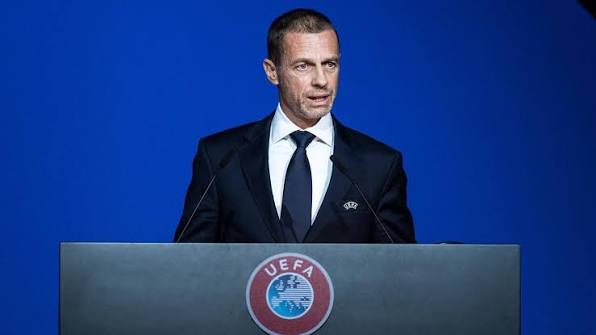
The proposals were agreed at a meeting of European football leaders in Berlin on Thursday, with Azerbaijan the only UEFA member association that did not endorse the package. UEFA said the plan was designed to prevent excessive decision-making power from being concentrated in the FIFA presidency and to create clearer separation between the organization’s political leadership, executive administration, Council, Bureau and independent ethics and disciplinary bodies. The European governing body also called for the next FIFA president to be a respected and unifying football figure committed to development, reform, integrity and institutional independence, placing the dispute firmly inside the political contest surrounding FIFA’s 2027 presidential election.
The plan represents the most detailed collective European challenge yet to the leadership model that has developed under FIFA President Gianni Infantino, whose relationship with several European associations deteriorated sharply during 2026 after a controversial attempt to bring private investors into a new commercial company connected to the World Cup and other FIFA competitions. That proposal was eventually withdrawn after opposition from UEFA, Concacaf, the Asian Football Confederation and numerous national associations, but the political fallout continued and broadened into demands for a more fundamental review of how FIFA makes major decisions.
UEFA’s Berlin package goes considerably beyond criticizing one abandoned commercial plan. Its 14 proposals attempt to redesign the balance of power within FIFA itself, defining which decisions should belong to the president, general secretary, Council, Bureau and Congress and proposing additional protections for bodies responsible for ethics, discipline, governance, audit and compliance. The document also seeks to prevent future FIFA presidents or senior executives from using the organization’s resources for personal or electoral purposes and calls for a formal policy governing FIFA’s multibillion-dollar financial reserves.
At the center of the reform plan is what UEFA describes as a clearer separation of powers. The proposal says FIFA Congress, the FIFA Council, the Bureau of the Council, the president and the general secretary should exercise distinct responsibilities, with no individual able to bypass the formal role of another body. UEFA argues that major decisions should move through an identifiable institutional process instead of being advanced through presidential authority and presented to the wider organization only after substantial work or commitments have already been made.
Under the proposal, the FIFA president would continue to chair the Council, represent the organization internationally and provide political leadership, but would not personally manage FIFA’s day-to-day administration. UEFA wants the general secretary to be responsible for running the organization and to be appointed and supervised by an empowered Bureau, with the FIFA Council retaining strategic oversight.
That would alter the practical relationship between the elected president and FIFA’s administration. FIFA’s current statutes already formally distinguish among Congress as the supreme legislative body, the Council as the strategic and oversight body and the general secretariat as the executive and administrative arm. UEFA’s argument is that those written distinctions need stronger institutional safeguards so that major decisions cannot become overly dependent on the authority or preferences of one officeholder.
The Bureau of the FIFA Council would receive greater importance under the European proposal. It currently consists of the FIFA president and the presidents of the six continental confederations and handles urgent matters between full Council meetings. UEFA wants the Bureau to exercise clearly defined executive powers and to serve as a stronger collective check on major initiatives.
The FIFA Council would also be reinforced. UEFA says it should set the organization’s overall direction, involve major stakeholders and shape significant proposals before commitments are made. That language reflects one of the principal complaints made during the dispute over the FIFA Forward Enterprise project earlier this year, when critics argued that a plan with potentially enormous consequences for the ownership and commercialization of FIFA tournaments had advanced without adequate consultation.
UEFA is also calling for a review of FIFA’s committee structure, saying committees should have clear purposes and provide identifiable value instead of existing as layers within an increasingly complicated governance system. FIFA has itself restructured its standing committees in recent years and says those changes have expanded member-association participation and technical expertise. UEFA’s proposals would add another layer of examination by connecting the committee system to the wider question of accountability.
The second major part of the 14-point plan concerns oversight and decision-making. UEFA wants FIFA’s ethics, disciplinary, governance, audit and compliance bodies to be protected from presidential or executive interference. The proposal does not accuse every current body of being directly controlled by FIFA’s leadership, but it makes institutional independence an explicit requirement and seeks structural protections designed to reduce the possibility of future interference.
FIFA currently describes its judicial bodies and Governance, Audit and Compliance Committee as independent. Members of the governance committee are elected by FIFA Congress and, under the existing rules, cannot simply be removed by the president. FIFA also maintains an internal compliance and audit framework that it says is designed to protect institutional integrity. UEFA’s position is that independence should be further insulated from the executive leadership and should form part of a wider restructuring of the organization.
The plan would also sharply restrict unilateral changes to the international match calendar and FIFA competitions. UEFA says changes involving existing tournaments, new competitions or the international calendar should require unanimity within the FIFA Bureau before advancing. That would give the presidents of the six continental confederations considerably greater influence over proposals affecting club and national-team football.
The calendar has become an increasingly contentious issue because FIFA, UEFA, domestic leagues, clubs and players all compete for limited space. The expansion of the World Cup, growth of the Club World Cup, additional international windows and larger continental competitions have increased the number of matches demanded from elite players, while leagues and player unions have raised concerns about workload.
Giving the Bureau a unanimity requirement could make it significantly harder for a FIFA president to push through a new global competition without broad confederation support. It could also slow decision-making and provide individual confederations with effective veto power, which supporters may view as a safeguard and critics may see as a potential source of paralysis.
UEFA’s plan would give national associations a new mechanism to place matters formally before the FIFA Council if a defined number of associations support the request. It would also require major decisions to follow a specified sequence of consultation, Bureau consideration and Council approval before implementation.
That proposal reflects another recurring criticism of the current system: that FIFA’s 211 national associations formally possess ultimate authority through Congress but often have limited ability to force particular subjects onto the decision-making agenda between annual meetings. UEFA wants member associations to have a stronger route for initiating Council discussion rather than functioning mainly as recipients of proposals developed by the central administration.
The third section of the reform program concerns development money and FIFA’s financial reserves, an issue with enormous political significance because development funding is one of the most important relationships between Zurich and national football associations.
UEFA wants each national association to define its development needs in cooperation with its continental confederation, with FIFA providing the money while the confederations assist with implementation. The proposal would make FIFA Forward funding a protected entitlement for associations that meet compliance standards, with distribution governed by transparent rules and insulated from political considerations.
That provision addresses a particularly sensitive concern in football politics. FIFA distributes hundreds of millions of dollars through its Forward development program, financing training centers, pitches, administration, youth football, women’s football and national-team projects around the world. For smaller associations, those payments can represent a substantial share of annual football revenue.
UEFA’s plan states directly that access to development funding should never depend on how an association votes in a presidential election, governance dispute or institutional debate. FIFA has similarly insisted that Forward payments are governed by objective rules and that no association’s access to funding is conditioned on political support.
The most financially significant proposal concerns FIFA’s reserves. UEFA wants a formal and transparent policy governing how much money the organization keeps, how those reserves are invested and when they should be released for football development. The plan calls for at least an additional $10 million for every FIFA member association on top of existing Forward allocations.
With 211 FIFA members, such a payment would amount to at least $2.11 billion if distributed universally. UEFA and Concacaf had already promoted a similar proposal in September, arguing that FIFA’s large reserves allow it to increase member-association funding without selling equity in its commercial competitions.
The funding dispute became central after FIFA explored creation of FIFA Forward Enterprise, a proposed commercial entity that would have included the World Cup and other FIFA competitions and could have sold a minority stake to private investors. The proposed business was reportedly valued at about $20 billion, with as much as 20 percent potentially available to outside investors, raising roughly $4 billion.
FIFA argued that private capital could unlock additional money for football development. Infantino later said the proposal was only exploratory, had not been formally approved and was withdrawn after it became clear that it lacked sufficient confidence among stakeholders.
UEFA reacted much more aggressively. Europe’s 55 associations initially rejected the plan unanimously and threatened not to participate in FIFA competitions if ownership interests in the World Cup and other tournaments were sold to private investors. Other confederations also expressed opposition, and FIFA abandoned the project at the end of July.
The episode significantly damaged trust between Infantino and European football officials. UEFA accused FIFA of developing a major proposal without adequate consultation, while FIFA pushed back against what it characterized as politically motivated attacks on its leadership.
Infantino subsequently wrote to all 211 national associations saying he was open to an independent external review of FIFA’s decision-making processes and broader discussions about governance reforms. He acknowledged that the commercial proposal had created the impression that important decisions were being taken before the institutional process had been completed and said FIFA needed stronger procedures for developing and communicating major ideas.
Several European associations considered that offer insufficient. Germany, the Netherlands, Sweden and Wales were among those calling for deeper changes, while Norway filed formal complaints with FIFA’s Ethics Committee and Governance, Audit and Compliance Committee over issues including the failed commercial initiative.
Thursday’s Berlin plan is the result of that escalation. Rather than waiting for FIFA leadership to define the scope of its own governance review, UEFA and 54 associations have now produced a detailed alternative specifying how the organization’s power structure should operate.
The final point in the plan states that FIFA resources should be used only for FIFA purposes and not for personal or electoral interests. That wording introduces an unmistakably political element because it comes months before the FIFA presidential election scheduled for March 2027.
UEFA’s accompanying call for new leadership goes further. The European body said structural reform by itself would not be enough and argued that FIFA requires a president capable of unifying world football and restoring confidence.
Although the statement does not present an official UEFA presidential candidate, its language amounts to a direct challenge to Infantino’s continuation in office.
Infantino, who first became FIFA president in 2016 after the corruption crisis that ended Sepp Blatter’s leadership, is expected to seek another term. His presidency has overseen a substantial increase in FIFA revenues, expanded World Cup formats and much larger development payments to national associations.
Those achievements remain a major source of political support outside Europe.
That contrast was visible on the same day UEFA released its reform agenda. In Cape Verde, representatives of the Confederation of African Football’s 54 member associations gave Infantino strong backing, while CAF President Patrice Motsepe praised FIFA’s investment in African football. Infantino said FIFA had invested approximately $1 billion in 124 African development projects over the previous decade and promised continued support.
The Union of Arab Football Associations, representing 22 national federations, has also publicly supported Infantino, while several individual associations across Asia and other regions remain favorable to his leadership.
The result is an increasingly clear division in world football politics. Europe is demanding governance reform and leadership change, while substantial blocs elsewhere continue to support Infantino based partly on development funding, expanded tournament opportunities and FIFA’s financial performance.
That matters because UEFA alone cannot determine the FIFA presidency. Each of FIFA’s 211 national associations has one vote regardless of population, commercial power or footballing strength. A small federation therefore has the same formal presidential vote as England, Germany, Brazil or Nigeria.
Europe controls only 55 votes, meaning any successful challenge to Infantino requires support from other confederations.
That helps explain why UEFA’s 14-point plan devotes so much attention to member-association development funding. The reform package is not simply an internal European governance manifesto; it is also an attempt to construct proposals capable of attracting associations in Africa, Asia, the Caribbean, Oceania and elsewhere.
A guaranteed $10 million additional payment to every association could prove particularly significant politically because many smaller federations rely heavily on FIFA funding. UEFA argues that this should come directly from FIFA’s existing reserves rather than requiring external investors or commercial restructuring.
FIFA will have an opportunity to address the proposals quickly. Its Council is due to meet in Zurich on October 15, and Infantino previously told associations that governance proposals submitted before that meeting could be considered. Changes requiring amendments to FIFA’s statutes would ultimately need approval through the organization’s formal Congress procedures.
UEFA’s plan therefore cannot simply be imposed from Berlin. It must either be accepted by FIFA’s governing bodies or become part of a political campaign to elect leadership willing to implement it.
That makes the upcoming presidential nomination deadline particularly important.
Former Switzerland international Ramon Vega has declared his intention to challenge Infantino, but the broader opposition camp has not yet settled around a single high-profile candidate with support across multiple confederations. UEFA President Aleksander Čeferin had been discussed as a possible challenger, but he announced in Berlin on Thursday that he would instead seek a final term as UEFA president.
Čeferin had previously said he would step down from UEFA in 2027. He has now reversed that decision after receiving unanimous requests from all 55 European associations to continue and intends to stand at the UEFA Congress in Astana on April 22.
His decision removes one of the most prominent potential candidates from the FIFA race while allowing him to remain at the center of Europe’s campaign for institutional reform.
It also creates an important distinction between UEFA’s call for a new FIFA president and the question of who that person should be. Europe has defined the characteristics it wants in a replacement but has not yet publicly identified a consensus candidate capable of assembling enough votes globally.
Azerbaijan’s refusal to endorse the Berlin reform package also prevents UEFA from presenting the plan as completely unanimous. The Association of Football Federations of Azerbaijan was the only one of UEFA’s 55 members not to join the statement. No confirmed public explanation for its decision accompanied Thursday’s announcement, and its position should not be interpreted beyond the fact that it did not endorse the package.
Azerbaijan has significant current ties with FIFA, including preparations to host FIFA’s new U-15 World Cup and Festival later this month and to co-host the 2027 U-20 World Cup with Uzbekistan. Infantino visited Baku in late September and publicly praised the country’s preparations, but there is no verified evidence establishing that those relationships explain Azerbaijan’s position on the UEFA reform document.
The confrontation now moves into a more formal institutional phase. FIFA already has structures intended to separate its legislative, strategic and administrative functions, and the organization maintains that its ethics, disciplinary and governance bodies are independent. UEFA is arguing that those protections are not sufficient in practice and should be reinforced through changes that more sharply constrain presidential authority.
Supporters of the reform package are likely to argue that requiring collective decision-making would prevent another major commercial proposal from advancing without broad consultation. Opponents may argue that unanimity requirements and expanded institutional vetoes could make FIFA less capable of taking timely decisions across an organization representing 211 associations with widely different interests.
The financial provisions will also require detailed examination. Distributing at least $10 million in additional money to every member association would represent a transfer of more than $2 billion from FIFA’s reserves, and any permanent reserves policy would need to account for the enormous cost of staging World Cups and other tournaments, future revenue risks and financial commitments already made.
UEFA’s position is that FIFA has accumulated sufficient reserves to increase direct investment without surrendering commercial interests to private investors. FIFA has argued that expanding development spending sustainably requires consideration of how future revenues are generated and protected.
Those arguments will now be tested through the Council, Congress and presidential-election process rather than simply through public statements.
Thursday’s plan is significant because it turns months of European criticism into a concrete institutional proposal. UEFA is no longer merely objecting to individual FIFA decisions; it is asking for a redistribution of authority inside the organization, guaranteed independence for oversight bodies, stronger control by the Bureau and Council, formal rights for national associations, protected development funding and explicit restrictions on the use of FIFA resources.
The immediate question is how much support those ideas can attract outside Europe. Infantino retains substantial backing among African and Arab associations and continues to emphasize FIFA’s increased development spending and financial strength, while Europe’s influence alone is insufficient to dictate the outcome of a presidential election or statutory vote.
The October 15 Council meeting will provide the first indication of whether the Berlin proposals can become the basis of a negotiated reform process or whether the dispute will deepen into a full political confrontation ahead of the March 2027 election. UEFA has said discussions will continue with other confederations and that its 55 associations will meet again before November 17, one day before the expected presidential nomination deadline.
What emerges from those meetings will determine whether the 14-point program becomes a broadly supported blueprint for FIFA governance or remains primarily a European challenge to the current administration. For now, the divisions are unusually explicit: 54 European associations have said FIFA needs both structural reform and new leadership, FIFA’s current president continues to command substantial support elsewhere, and the next several weeks will determine whether either side can turn its regional backing into the global coalition required to shape the future of world football.