
FIFA PRESIDENT PROMISES GREATER INVESTMENT IN AFRICAN FOOTBALL AT CAPE VERDE SUMMIT
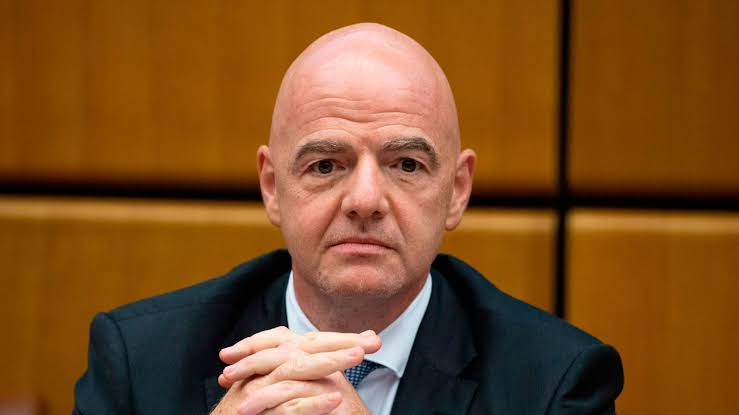
FIFA President Gianni Infantino has promised continued and increased development support for African football during a strategy symposium in Cape Verde attended by representatives of CAF’s 54 member associations. Infantino said FIFA has invested more than $1 billion in African football through the FIFA Forward programme since 2016 and cited 124 projects across the continent. He urged African associations to identify their priorities so FIFA can direct additional resources more effectively. FIFA did not, however, announce a specific new African funding package during Thursday’s remarks.
FIFA President Gianni Infantino has promised continued efforts to increase investment in African football, telling leaders of the continent’s 54 national associations that the world governing body intends to deepen its financial and development partnership with Africa after directing more than $1 billion into the continent through the FIFA Forward programmed over the past decade.
Speaking Thursday at an African football strategy symposium in Cape Verde, Infantino said FIFA’s development spending had supported 124 projects across Africa and urged the continent’s football associations to identify their most important priorities so FIFA could determine where additional resources and institutional support were needed. His remarks represented a renewed commitment to development spending rather than the announcement of a specific new funding package, and FIFA did not disclose a new continent-wide amount or binding financial allocation during the reported address.
The distinction is important because Infantino’s comments emphasized future cooperation and the search for additional resources without setting out a new African investment fund with a defined value, timetable or distribution formula. FIFA’s existing Forward programmed remains the principal mechanism through which member associations receive money for infrastructure, competitions, administration, youth development, national teams and other football projects.
Infantino told delegates that more than $1 billion had been invested in African football since the FIFA Forward programmed was launched in 2016. The programmed was introduced after he became FIFA president and has progressively increased the amounts available to the governing body’s 211 member associations, with national federations now able to access significantly more development funding than under earlier FIFA structures.
Africa has been one of the principal recipients because many national associations depend heavily on FIFA funding to construct training centers, renovate pitches, organize domestic competitions and meet the cost of national-team activity. In several countries, FIFA Forward funds have also supported headquarters, women’s football, youth competitions and technical-development programmed that national federations would otherwise struggle to finance independently.
Infantino used the Cape Verde meeting to argue that the relationship should become more responsive to the priorities identified by African football leaders themselves. Rather than FIFA determining development needs entirely from Zurich, he called on the 54 CAF member associations to state clearly what they require and where additional investment could have the greatest impact.
That approach reflects a recurring theme in FIFA’s development policy. The organization increasingly presents the Forward programmed as a partnership in which member associations propose projects and FIFA provides financing subject to governance, audit and implementation requirements.
The scale of the programmed has expanded substantially over the past decade. Globally, FIFA says billions of dollars have been redistributed to national associations through successive cycles of Forward funding, with infrastructure and football-development projects forming a major part of the expenditure.
For Africa, Infantino has repeatedly emphasized the need to convert development spending into stronger national teams, more competitive domestic leagues, better facilities and improved pathways for young players. His latest remarks in Cape Verde continued that argument, focusing on the need to move beyond broad statements about Africa’s football potential and toward more targeted investment.
The continent’s football authorities have long argued that Africa produces some of the world’s most talented players but does not consistently capture the full sporting or commercial value generated by that talent. Many leading African players develop at academies or clubs on the continent before moving to European leagues at relatively young ages, while domestic competitions often struggle with limited broadcast revenue, poor facilities and weak commercial structures.
That gap between playing talent and football infrastructure has remained one of the defining challenges facing African football.
FIFA’s development spending is intended to address part of that problem by strengthening the institutions that operate below the elite international level. Money directed toward pitches, youth academies, referee development and competitions can help national associations create more stable systems capable of developing players domestically rather than relying almost entirely on migration to foreign leagues.
Infrastructure remains one of the biggest areas of concern. Several African countries have faced periods in which national teams were forced to play home matches outside their own countries because stadiums failed to meet international standards. Poor playing surfaces, inadequate lighting, security deficiencies and outdated facilities have all affected domestic and international football.
FIFA and CAF have therefore placed considerable emphasis on stadium and training infrastructure, although responsibility for large national stadiums often lies with governments rather than football associations alone.
Cape Verde itself provides an example of how FIFA Forward money can be used. FIFA says its development programmed has supported infrastructure, national-team operations, competitions and other projects in the island nation. The country has invested in pitches, football administration and facilities while improving its international competitiveness.
That makes Cape Verde a symbolically appropriate location for a development-focused summit. Smaller associations frequently depend more heavily on FIFA funding because their domestic commercial markets cannot generate the same revenue available to larger football nations.
Infantino’s message, however, was directed across the entire continent rather than only to smaller federations.
Africa’s football landscape is extremely diverse. Countries such as Morocco, Egypt, South Africa and Nigeria operate in much larger commercial and population markets, while smaller associations may have limited sponsorship, television revenue or professional-league structures. A single investment model therefore cannot address every federation’s priorities.
By asking associations to define their own needs, FIFA is signaling that future support could continue to be tailored around individual development plans.
The meeting also comes during a period of significant growth in Africa’s representation at FIFA competitions. The expansion of the men’s World Cup has increased the number of places available to African teams, while FIFA has also expanded youth and women’s competitions.
Infantino has regularly cited increased World Cup access as part of FIFA’s broader strategy for developing football outside Europe and South America. More tournament places can create additional revenue and visibility for federations, although qualification alone does not solve domestic infrastructure and governance problems.
Africa’s performance at recent major tournaments has strengthened arguments that greater investment could produce stronger results. Morocco’s run to the semifinals of the 2022 World Cup was the best performance by an African country in the tournament’s history and demonstrated that teams from the continent can compete at the highest level when strong player development, infrastructure and administration are combined.
Other African countries have also invested heavily in academies and national-team structures, but progress remains uneven.
One of the major questions surrounding FIFA development funding is how effectively money is converted into long-term football capacity. Building a technical center or installing an artificial pitch can create visible results, but sustainability depends on maintenance, local competition structures, coaching and financial governance.
FIFA has increasingly emphasized oversight because the governing body has faced historical criticism over how development funds were distributed and monitored under previous leadership structures.
The Forward programme includes auditing and compliance requirements intended to ensure money is spent on approved projects. Associations can face restrictions if they fail to meet governance standards or account properly for funds.
Those controls are especially important as available development money increases. Larger allocations create more opportunity for federations to invest meaningfully in football but also raise the consequences of poor management.
Infantino’s request for African associations to identify their priorities therefore carries an accompanying responsibility. Federations seeking more money will need to demonstrate that projects can be properly planned, implemented and audited.
The 124 projects cited by Infantino offer one indication of the scale of FIFA’s involvement across the continent, although the number alone does not measure the success of each investment. Projects vary substantially in size and purpose, from infrastructure construction to administrative or competition support.
The more important measure will be whether those investments improve the quality and sustainability of domestic football over time.
African football administrators have also repeatedly argued that funding should not concentrate solely on national teams. Domestic leagues, women’s football, grassroots development and youth competitions all require stable financing if the continent is to build a broader football economy.
Many African national teams perform well despite domestic structures that remain financially fragile. Players may spend most of their professional careers abroad, leaving national associations dependent on foreign club development systems.
A stronger domestic ecosystem could allow African clubs to retain talent for longer, negotiate better transfer values and develop larger local audiences.
Commercial development is therefore likely to feature prominently in future discussions between FIFA, CAF and national associations. Infrastructure without viable competitions can become underused, while competitions without commercial revenue remain dependent on external subsidies.
FIFA’s role is also different from CAF’s. FIFA distributes development money globally and oversees international football, while CAF directly administers continental competitions such as the Africa Cup of Nations, the CAF Champions League and other regional events.
Effective development therefore requires cooperation between the two institutions and the national associations themselves.
Infantino emphasized that partnership in Cape Verde, presenting FIFA’s role as one of support rather than replacement for African football authorities. He said associations should communicate openly about the problems they face and the assistance they require.
That message comes at a time when Infantino himself is navigating wider governance questions within global football. His leadership has recently faced criticism from some European associations over FIFA decision-making, while disagreements have emerged over commercial initiatives and governance.
Those disputes were not the central subject of the Cape Verde symposium, but they form part of the broader environment in which FIFA is emphasizing its development record.
Investment in member associations has been one of the strongest political foundations of Infantino’s presidency. Smaller and developing football nations have generally benefited from much larger FIFA allocations than they received before 2016, strengthening relationships between the president and federations outside Europe’s richest markets.
African associations collectively hold substantial voting power within FIFA because each member association has a vote in presidential elections and Congress decisions regardless of population or commercial size.
That makes development policy both a football issue and an important part of FIFA’s political structure.
Still, the investment figures cited Thursday should be understood as cumulative spending from the existing Forward programmed rather than a newly announced $1 billion package. Infantino said approximately that amount had already been invested since 2016.
His new commitment was to seek additional resources and deepen support, not to immediately allocate another $1 billion.
That clarification matters because large development figures can easily be misinterpreted when announced alongside future promises. FIFA’s reported remarks did not establish a fresh continent-wide pot of money comparable to the cumulative amount already spent.
The next stage will therefore depend on how FIFA’s upcoming funding cycles are implemented and what projects African associations submit for support.
FIFA has already approved higher global Forward allocations for the next development cycle, meaning member associations worldwide are expected to have access to increased resources. African federations will be positioned to benefit from that expansion if they meet eligibility and governance requirements.
The challenge will be ensuring additional money addresses specific structural weaknesses rather than simply increasing annual transfers.
National associations may prioritize different areas. Some need better stadiums and training centers, while others require domestic competition funding, women’s football development, coaching education, youth academies or stronger administrative systems.
Transport is another major challenge in African football. The continent’s size and limited direct air connections can make regional and international fixtures unusually expensive, particularly for smaller federations.
Cape Verde itself faces those logistical issues because its national teams frequently travel long distances between islands and across the continent.
FIFA development money can help meet those operational expenses, but transport costs also demonstrate why football development in Africa cannot be measured only by physical infrastructure.
Women’s football is another area likely to compete for resources. African women’s teams have become increasingly competitive internationally, while domestic women’s leagues continue to operate with far less money and visibility than men’s competitions.
FIFA has invested globally in women’s development and has encouraged associations to create stronger domestic structures. African federations seeking additional funding may therefore be expected to demonstrate how women’s and girls’ football fits within their national strategies.
Youth development is equally central. Africa has one of the world’s youngest populations, creating an enormous potential player base but also placing pressure on federations to provide organized competition, qualified coaching and safe facilities.
Without those structures, talented players may be identified inconsistently or become dependent on informal agents and unregulated pathways abroad.
Greater development spending could help associations professionalize that process.
The ultimate measure of FIFA’s investment will not simply be whether African national teams qualify for more tournaments. A successful development strategy would also produce financially healthier federations, stronger domestic clubs, better-maintained infrastructure and more opportunities for players, coaches, referees and administrators.
Infantino’s Cape Verde address acknowledged that further work is required despite the scale of investment already made.
His decision to invite national associations to state their needs suggests FIFA wants the next phase of development to be more targeted and collaborative.
The absence of a specific new funding announcement means African football authorities will still need to wait for detailed allocations before the financial significance of Thursday’s pledge can be fully measured.
What is clear is that FIFA intends to continue presenting Africa as a major priority within its development programmed.
More than $1 billion in cumulative Forward investment and 124 projects demonstrate the scale of FIFA’s existing involvement, but significant gaps remain between the continent’s playing talent and the resources available to many domestic football systems.
The next test will be whether additional FIFA resources can be converted into measurable improvements across infrastructure, competitions, governance and grassroots development rather than simply expanding the headline value of development spending. Infantino has now committed publicly to seeking more support and has asked Africa’s 54 football associations to identify what they need; the substance of that promise will ultimately depend on the funding levels, projects and accountability mechanisms that follow Thursday’s summit.