
PUTIN ENVOY AND US OFFICIALS DISCUSS ENDING UKRAINE WAR AND FUTURE ENERGY DEALS
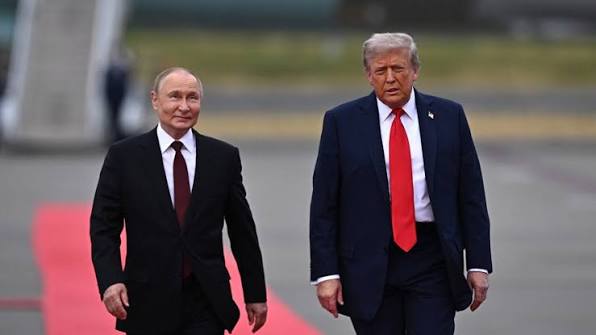
Russian President Vladimir Putin's envoy Kirill Dmitriev has held what a U.S. official described as constructive talks in Washington on efforts to end the war in Ukraine. The discussions also covered possible U.S. Russia energy initiatives after the war, signaling that Washington and Moscow are exploring potential economic cooperation alongside negotiations aimed at resolving the conflict.
Russian President Vladimir Putin's envoy Kirill Dmitriev has held talks with U.S. officials in Washington on efforts to end the war in Ukraine, with discussions extending beyond immediate peace negotiations to possible future energy cooperation between the United States and Russia.
A U.S. official described the discussions as constructive and said Dmitriev traveled to Washington to continue talks on a peaceful resolution to the Russia Ukraine conflict.
The discussions also included possible U.S. Russia energy initiatives that could be pursued after the war ends.
Reuters reported that Dmitriev met representatives of the U.S. Treasury and Energy departments during his visit, citing sources familiar with preparations for the meetings.
No specific energy agreements were announced, and the discussions remain preliminary.
ENERGY COOPERATION DISCUSSED FOR POSTWAR PERIOD
The inclusion of energy in the discussions adds a significant economic dimension to diplomatic efforts surrounding the Ukraine war.
Russia remains one of the world's largest producers of oil and natural gas, but its energy industry has faced extensive Western sanctions and restrictions since Moscow launched its full scale invasion of Ukraine in February 2022.
The United States and European allies have imposed measures targeting Russian oil exports, financial institutions, technology and other sectors in an effort to restrict Moscow's ability to finance the war.
Any substantial restoration of U.S. Russia energy cooperation would therefore involve complicated questions surrounding sanctions, investment and the political conditions attached to a potential peace settlement.
The U.S. official did not disclose details of the possible projects discussed or indicate that Washington had agreed to lift sanctions.
Instead, the energy discussions were described as possible initiatives that could take place after the war ends.
DMITRIEV HOLDS TALKS IN WASHINGTON
Dmitriev serves as Putin's special envoy and is also chief executive of the Russian Direct Investment Fund, Russia's sovereign wealth investment organization.
His involvement places a figure with extensive experience in international investment and economic negotiations at the center of Moscow's engagement with Washington.
According to Reuters, Dmitriev's visit took place on Monday.
Sources familiar with preparations for the trip said he held meetings with representatives from the U.S. Treasury and Energy departments.
The talks follow a series of diplomatic contacts involving senior American, Russian and Ukrainian officials as efforts continue to find a possible path toward ending the war.
TRUMP AND ZELENSKYY DISCUSSED ENERGY CEASEFIRE
Dmitriev's Washington visit followed a meeting between U.S. President Donald Trump and Ukrainian President Volodymyr Zelenskyy in New York last week.
Zelenskyy said the two leaders discussed the possibility of a ceasefire covering attacks on energy infrastructure.
Energy facilities have repeatedly become targets during the war, with attacks affecting electricity generation, fuel infrastructure and other critical systems.
A halt to attacks on energy infrastructure could potentially form part of broader negotiations, although no comprehensive agreement has been announced.
Trump's envoys Steve Witkoff and Jared Kushner also met Putin in Moscow earlier in September as Washington continued its diplomatic engagement with the Kremlin.
PEACE TALKS AND ECONOMIC INTERESTS BEGIN TO INTERSECT
The latest discussions indicate that diplomatic contacts are increasingly considering what economic relations between Washington and Moscow could look like if the conflict is eventually brought to an end.
For Russia, renewed access to Western investment and energy markets could carry significant economic benefits.
For the United States, any future commercial relationship would depend heavily on the terms of a peace settlement, sanctions policy and Washington's broader relationship with Moscow.
Ukraine and its European allies will also remain central to any negotiations concerning the conflict and its aftermath.
The discussions involving Dmitriev do not mean a peace agreement or energy deal has been reached.
They do, however, show that U.S. and Russian officials are discussing not only how the war might end but also what economic cooperation could potentially follow it.
With negotiations continuing across several diplomatic channels, the possibility of future energy cooperation has now emerged as another element in the wider effort to define what relations between Washington and Moscow could look like after the war.