

DEEPSEEK AND HUAWEI TEAM UP AS CHINA PUSHES TO REDUCE DEPENDENCE ON NVIDIA
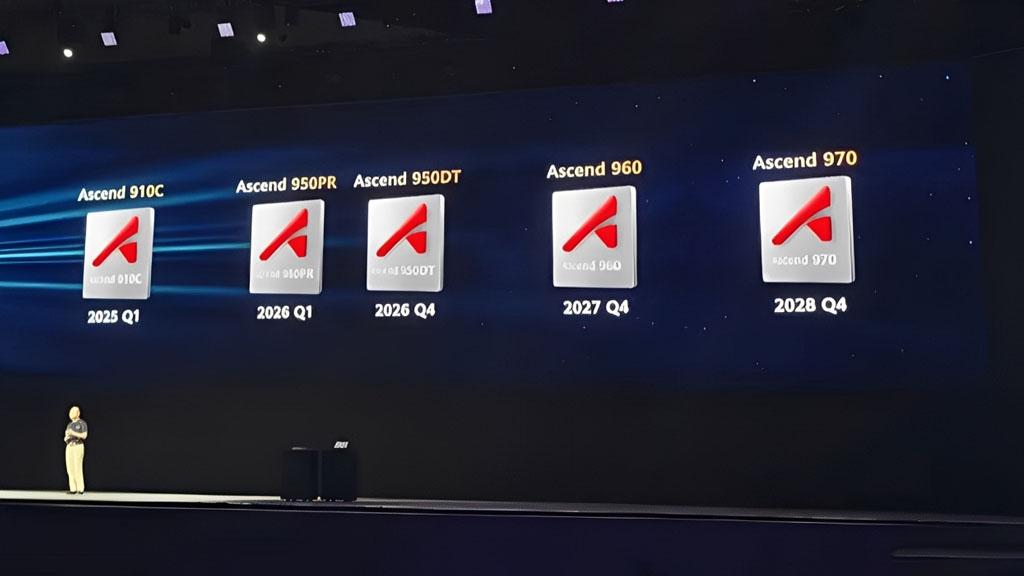
Chinese artificial intelligence company DeepSeek has partnered with Huawei Technologies to develop and open source programming infrastructure optimized for Huawei's Ascend artificial intelligence chips. The collaboration includes a 128 chip Ascend 950 supernode and new software tools designed to make it easier for developers to build artificial intelligence systems outside Nvidia's dominant CUDA ecosystem. The partnership represents another important step in China's effort to develop a more independent artificial intelligence hardware and software ecosystem as restrictions continue to limit Chinese access to some of the world's most advanced American chips.
Chinese artificial intelligence company DeepSeek is deepening its partnership with Huawei Technologies in a significant effort to build programming tools for Huawei's Ascend processors and reduce China's dependence on Nvidia's artificial intelligence ecosystem.
DeepSeek announced on Wednesday that it is open sourcing programming infrastructure developed for Huawei's Ascend platform, including tools used for computation and communication between artificial intelligence processors.
The two Chinese technology companies have also jointly worked on a new supernode solution using 128 Huawei Ascend 950 chips, optimizing how the processors perform calculations and communicate with each other.
The development matters because the global artificial intelligence race is increasingly about much more than manufacturing powerful chips.
The software that allows developers to efficiently use those chips is equally important.
For years, Nvidia has benefited from CUDA, its widely adopted computing platform and programming environment that has become deeply embedded in artificial intelligence research and development.
China is now attempting to develop alternatives that could make domestic processors more competitive.
DEEPSEEK OPENS ITS ASCEND SOFTWARE TO DEVELOPERS
At the center of DeepSeek's announcement is TileLang, a high level open source programming language designed for artificial intelligence chips.
DeepSeek says TileLang can simplify the process of programming high performance artificial intelligence hardware while still allowing developers to take advantage of the underlying processor's capabilities.
The company said the Ascend version wraps lower level Ascend C instructions and provides developers with a higher level programming environment.
DeepSeek has also released several important computing and communication components for Huawei's platform.
These include DeepGEMM, which accelerates general matrix operations that are fundamental to artificial intelligence workloads, and DeepEP, which supports communication across large numbers of processors.
Other components include TileKernels for vector computing and memory operations, FlashMLA for sparse attention operations used in long context artificial intelligence processing and DeepSelect for efficient data selection.
Together, the tools represent an attempt to provide developers with more of the infrastructure required to train and operate sophisticated artificial intelligence models on Huawei hardware.
DeepSeek said the newly released Ascend components correspond with tools it previously developed for Nvidia's platform.
That could be particularly important for developers seeking to move workloads between different hardware environments without rebuilding large portions of their software.
WHY NVIDIA'S CUDA MATTERS
Nvidia's advantage in artificial intelligence has never rested solely on the performance of its graphics processors.
CUDA has been under development for nearly two decades and has accumulated a huge ecosystem of software libraries, development tools and engineers familiar with the platform.
Artificial intelligence researchers and technology companies have built enormous amounts of software around it.
That creates what is sometimes described as a software moat around Nvidia's hardware.
A competitor therefore cannot necessarily challenge Nvidia simply by producing a powerful artificial intelligence processor.
Developers also need software that makes the competing processor practical and efficient to use.
DeepSeek's collaboration with Huawei directly addresses that problem.
DeepSeek said building an independent and controllable graphics processing software ecosystem requires a high level language that is broadly usable, easier to program and capable of extracting strong performance from the underlying hardware.
The company says TileLang was developed to help meet that requirement.
DeepSeek also says TileLang offers a simpler programming model than CUDA.
That is DeepSeek's characterization of its technology and does not by itself establish that the platform matches CUDA's overall performance, maturity or developer ecosystem.
DEEPSEEK AND HUAWEI BUILD 128 CHIP SUPERNODE
The hardware component of the partnership is equally significant.
DeepSeek says Huawei provided extensive support during development of the new programming infrastructure.
The companies have jointly advanced a supernode based on 128 Ascend 950 processors, with engineers working to optimize both computing performance and communication between the chips.
Connecting large numbers of processors efficiently is increasingly important as artificial intelligence models require enormous computing resources.
Huawei has been pursuing a strategy of connecting large numbers of domestic processors into powerful computing systems.
That approach could help compensate for limitations China faces in obtaining or manufacturing individual chips that match the most advanced processors available to American artificial intelligence companies.
Huawei recently unveiled another generation of artificial intelligence processors and large scale computing systems, saying it expects its infrastructure to become increasingly important for model training.
The company has also been expanding its broader Ascend software ecosystem.
Huawei says Ascend now supports more than 90 major third party open source projects and has become an officially supported accelerator backend for PyTorch.
UNITED STATES EXPORT RESTRICTIONS CHANGED CHINA'S AI MARKET
The DeepSeek and Huawei partnership is developing against the backdrop of years of United States restrictions on exports of advanced semiconductor technology to China.
Those restrictions have limited Chinese companies' access to some of Nvidia's most advanced artificial intelligence processors.
The measures were introduced over concerns that advanced computing technology could contribute to China's military and technological capabilities.
China has criticized the restrictions and accelerated investment in domestic semiconductor production and artificial intelligence infrastructure.
The restrictions have also created a significant commercial opportunity for Huawei.
Reuters reported earlier in September that Huawei has effectively become China's primary domestic supplier for advanced artificial intelligence workloads as access to Nvidia's highest end processors has become increasingly constrained.
Huawei's strategy has focused partly on system level performance.
Rather than relying exclusively on individual processor performance, the company is developing systems capable of connecting large numbers of Ascend processors through advanced networking technology.
The DeepSeek collaboration adds another important piece to that strategy by improving the software developers use to access those processors.
CHINA WANTS ITS OWN COMPLETE AI STACK
The broader objective extends beyond replacing one American chip with one Chinese chip.
China is attempting to establish a complete domestic artificial intelligence technology stack.
That includes processors, networking systems, data centers, programming languages, model development frameworks and the artificial intelligence models themselves.
DeepSeek occupies an important position in that effort because of its work developing advanced artificial intelligence models and its emphasis on open source technology.
Huawei provides the hardware and computing infrastructure.
Closer integration between companies developing frontier artificial intelligence models and companies building domestic processors could accelerate improvements across China's artificial intelligence industry.
It could also make it easier for other Chinese companies to adopt Huawei hardware.
By releasing the software as open source, DeepSeek is allowing developers outside the company to inspect, modify and potentially build upon the infrastructure.
A larger developer community could help identify problems, improve performance and expand the number of applications that can run effectively on Ascend processors.
NVIDIA REMAINS A FORMIDABLE COMPETITOR
Despite the significance of the partnership, Huawei and DeepSeek still face substantial challenges.
Nvidia has spent years developing CUDA and building relationships with artificial intelligence laboratories, universities, cloud providers and software developers around the world.
Its ecosystem includes extensive libraries and tools optimized for machine learning and high performance computing.
Huawei must also contend with semiconductor manufacturing constraints created partly by United States technology restrictions.
The ability to design competitive processors does not automatically guarantee that they can be manufactured at sufficient scale or with sufficiently high production yields.
Reuters reported this month that questions remain over whether Huawei can scale manufacturing and improve production yields enough to satisfy China's enormous demand for artificial intelligence computing power.
China also continues to operate with less access to cutting edge computing resources than leading American artificial intelligence laboratories.
That makes software efficiency especially important.
WHAT HAPPENS NEXT
The next test will be whether developers widely adopt DeepSeek's open source Ascend tools and whether Huawei's new processors can deliver competitive performance at scale.
DeepSeek's involvement could accelerate adoption because the company is developing tools based on the requirements of sophisticated artificial intelligence models rather than treating hardware and software development as completely separate processes.
Huawei is also continuing to develop newer generations of Ascend processors and increasingly powerful supernode systems.
If the software ecosystem matures alongside the hardware, Chinese artificial intelligence companies could gain greater freedom to train and deploy models without depending as heavily on Nvidia technology.
That would not mean Nvidia has been displaced.
CUDA's maturity, Nvidia's global developer base and the performance of its hardware remain major competitive advantages.
But the DeepSeek and Huawei partnership demonstrates how rapidly China is attempting to build an alternative.
The artificial intelligence competition between China and the United States is therefore increasingly becoming a contest between entire technology ecosystems rather than simply a race to produce the fastest individual chip.