
OIL REBOUNDS ABOVE $103 AFTER TRUMP SAYS HE OFFERED IRAN NOTHING ON SANCTIONS
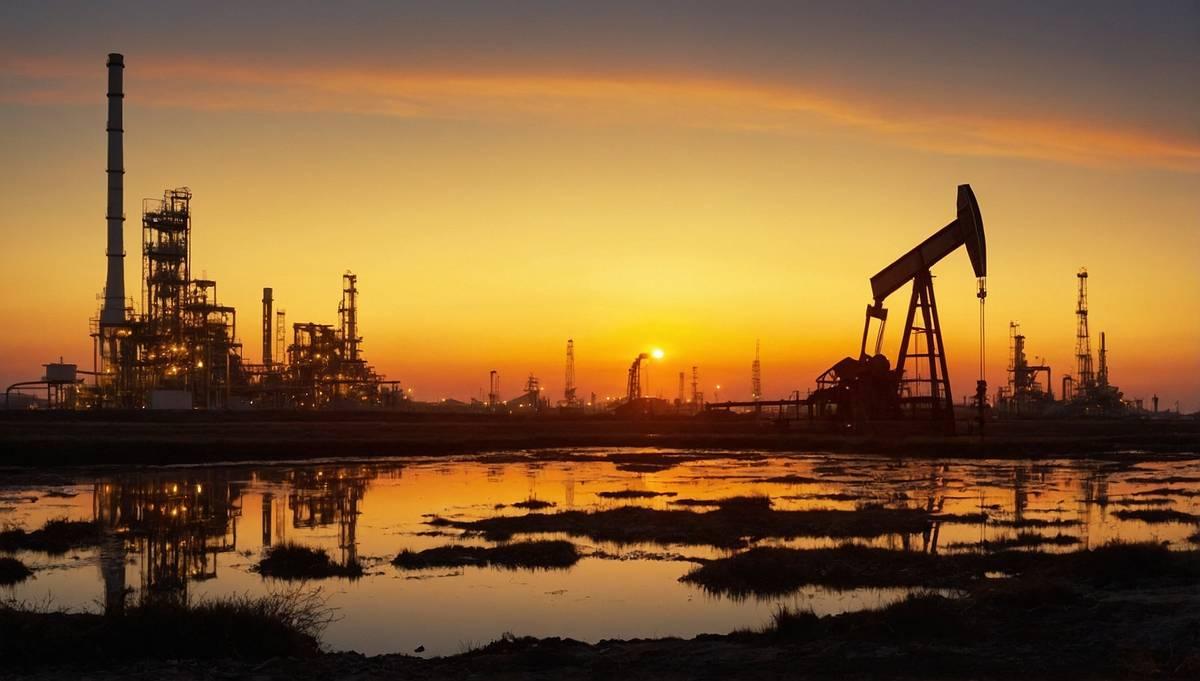
Oil prices turned higher on Wednesday after United States President Donald Trump denied reports that he was prepared to ease sanctions on Iran as part of diplomatic efforts to reduce tensions between Washington and Tehran. The expiring November Brent crude contract climbed above $103 a barrel, while West Texas Intermediate crude approached $90. The rebound underscores how strongly developments involving Iran, sanctions and Middle Eastern oil flows continue to influence global energy markets, with Brent heading toward an approximately 14 percent gain for September.
Global oil prices rebounded on Wednesday after United States President Donald Trump denied reports that his administration was prepared to ease sanctions on Iran, injecting fresh uncertainty into diplomatic efforts aimed at reducing tensions between Washington and Tehran.
The expiring November Brent crude futures contract rose 84 cents, or 0.82 percent, to $103.43 a barrel by 06:50 GMT, according to Reuters.
United States West Texas Intermediate crude gained 25 cents, or 0.28 percent, to $89.63 a barrel.
The more actively traded December Brent contract was significantly lower at $96.35 a barrel, an important distinction as the November contract expires on Wednesday.
Prices had fallen in the previous session as Middle Eastern crude supplies showed signs of recovery, but Trump's comments pushed sanctions and geopolitical uncertainty back to the center of the market.
TRUMP DENIES SANCTIONS RELIEF REPORT
The latest move followed a report that the Trump administration could consider sanctions relief and the release of frozen Iranian funds if Tehran took concrete steps concerning its nuclear program.
Trump publicly rejected that account.
“This is untrue. I offered them NOTHING,” the president wrote on Truth Social.
His statement reduced expectations that Washington was preparing an immediate relaxation of economic pressure on Tehran.
For energy markets, the issue matters because sanctions affect Iran's ability to export oil and participate fully in the international petroleum market.
Any credible movement toward sanctions relief could change expectations about the amount of Iranian crude available to global buyers.
Conversely, continued restrictions increase uncertainty around future Iranian supplies and contribute to the geopolitical risk premium already affecting oil prices.
QATAR CONTINUES MEDIATION
Trump's denial comes as Qatar continues shuttle diplomacy between the United States and Iran.
Qatar's Ministry of Foreign Affairs confirmed on Tuesday that Doha is continuing mediation efforts between the two countries and attempting to establish common ground.
Qatari Foreign Ministry spokesperson Majed bin Mohammed Al Ansari said messages had been exchanged between the parties and that several meetings had taken place in recent days.
Some discussions occurred in New York during the United Nations General Assembly.
Qatar says its objective is to help establish a basis for an agreement capable of reducing the consequences of the conflict.
The diplomatic effort remains fluid.
Iranian Foreign Minister Abbas Araghchi has also received United States feedback through Qatari mediators concerning a proposed seven day confidence building arrangement intended to reduce tensions and address restrictions affecting maritime traffic.
However, no final agreement has been announced.
OIL MARKET REMAINS HIGHLY SENSITIVE TO IRAN
The immediate price reaction demonstrates how sensitive oil markets remain to developments involving Iran.
The conflict has disrupted normal energy flows and forced traders to repeatedly reassess how much crude can reach international markets.
Brent is heading toward an approximately 14 percent gain in September, which would be its largest monthly increase since July.
West Texas Intermediate is on course for a gain of roughly 4 percent for the month.
The United States benchmark briefly moved above $106 a barrel earlier in September, its highest level since May, before retreating.
Those movements show how quickly sentiment has shifted as traders respond to military developments, diplomacy, sanctions policy and changes in Middle Eastern supply.
MIDDLE EAST OIL EXPORTS ARE RECOVERING
Trump's sanctions comments are not the only factor affecting prices.
Oil flows from the Middle East have been recovering.
Saudi Arabia resumed tanker loadings from its Red Sea port of Yanbu after restarting operations on the East West Pipeline.
The route is strategically important because it allows Saudi crude to move from production areas in the east of the country to the Red Sea without relying entirely on normal Gulf export routes.
Middle Eastern crude exports climbed to approximately 16.328 million barrels per day in September, according to data cited by Reuters.
That represents the highest level since the United States and Israeli conflict with Iran began in late February.
Recovering supply has provided some downward pressure on prices, creating a contest between improving physical oil availability and continued geopolitical risk.
The result has been considerable market volatility.
BRENT HEADING FOR A STRONG SEPTEMBER
Despite those recovering flows, Brent remains on course for a substantial monthly increase.
An approximately 14 percent September gain would underline the extent to which geopolitical instability has reshaped energy prices.
The difference between Brent and West Texas Intermediate has also widened to its largest level in four months.
Another factor being watched is possible United States action involving diesel exports.
Traders are assessing proposals that could restrict American diesel exports as Washington looks for ways to manage domestic fuel prices.
A restriction could leave more diesel inside the United States but could also alter refinery economics and potentially encourage American refiners to process less crude.
The Trump administration is also considering alternatives, including allowing sales of red dyed diesel, which is normally intended for off road uses.
No final decision has been announced.
UNITED STATES INVENTORIES ALSO IN FOCUS
American petroleum inventories could provide another signal for prices.
Market sources citing data from the American Petroleum Institute said United States crude oil inventories increased by approximately 1.02 million barrels during the week ending September 25.
Gasoline inventories also increased, while distillate stocks declined.
Official inventory figures from the United States Energy Information Administration are expected later Wednesday.
Inventory data can significantly influence short term oil prices because it provides traders with information about supply and demand conditions in the world's largest oil consuming economy.
WHY THIS MATTERS BEYOND THE OIL MARKET
Persistently high crude prices have consequences far beyond energy trading.
Oil affects transportation, aviation, shipping, manufacturing and food production costs.
Countries that rely heavily on imported petroleum can also experience pressure on foreign exchange reserves and domestic fuel prices when international crude remains elevated.
Higher energy costs can contribute to inflation, potentially complicating decisions by central banks already balancing economic growth against price pressures.
For African economies that import large quantities of refined petroleum, sustained increases can place additional pressure on government budgets, businesses and consumers.
Oil producing countries, meanwhile, may benefit from higher export revenues, although instability in global shipping and energy infrastructure can create additional risks.
WHAT HAPPENS NEXT
Attention will remain focused on the indirect negotiations involving the United States, Iran and Qatari mediators.
A credible diplomatic breakthrough that reduces sanctions or improves the outlook for Iranian oil exports could change market expectations rapidly.
Failure to reach an agreement, or another escalation in the conflict, could push traders in the opposite direction.
Markets will also watch the continuing recovery in Middle Eastern crude exports, the operation of Saudi Arabia's East West Pipeline, United States petroleum inventory figures and Washington's decision on possible measures affecting diesel exports.
For now, the oil market is receiving competing signals.
Physical supplies from the Middle East are recovering, which should reduce some pressure on prices.
But Trump's rejection of reports that he is prepared to ease sanctions on Iran has reminded traders that the political and diplomatic risks surrounding one of the world's most important energy regions remain unresolved.
That uncertainty is helping keep a geopolitical premium embedded in global crude prices as September comes to an end.