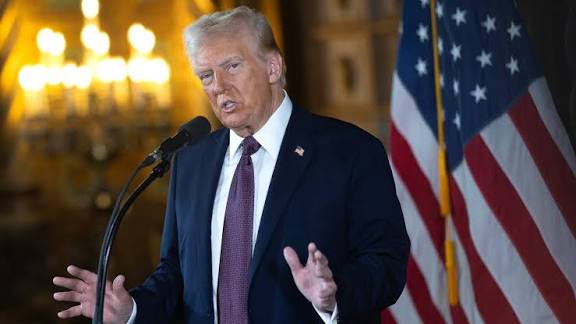

PARAGUAYAN PRESIDENT SANTIAGO PEÑA RESIGNS AFTER UENO BANK COLLAPSE FREEZES MILLIONS OF ACCOUNTS
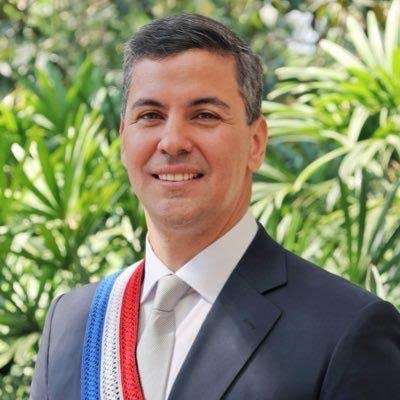
Paraguayan President Santiago Peña resigned on November 5, 2026, following the collapse of Ueno Bank, a major digital lender whose intervention left approximately three million customers unable to access their accounts. The crisis triggered protests, allegations of conflicts of interest and questions over the bank's links to Peña and his administration. Paraguay's lower house subsequently voted unanimously to impeach him, while Vice President Pedro Alliana emerged as his expected successor. Authorities have begun arrangements to protect eligible deposits, investigate alleged financial misconduct and recover public funds, but uncertainty remains over larger deposits and the wider consequences of the collapse.
Paraguayan President Santiago Peña resigned on Thursday, November 5, 2026, after the collapse of Ueno Bank triggered widespread protests, froze access to the accounts of approximately three million customers and plunged the South American country into one of its most serious political and financial crises in recent years. Peña announced his decision in a recorded address as lawmakers in Congress prepared to begin impeachment proceedings against him, following growing public anger over the bank's failure and questions about the government's relationship with the financial institution.
The resignation followed several days of escalating turmoil after Paraguay's central bank intervened in Ueno Bank, a rapidly expanding digital lender that had become one of the country's most prominent financial institutions. The intervention left millions of customers unable to access their money through the bank's mobile application, cards, transfers and branches, creating immediate uncertainty for households, pensioners, workers and businesses that depended on the institution for their daily financial transactions. The crisis quickly moved beyond banking operations, becoming a national political controversy over financial supervision, public funds, alleged conflicts of interest and the government's responsibility to protect depositors.
In his resignation announcement, Peña said he had decided to leave office with the stability of Paraguay, social peace and the preservation of democratic institutions in mind. He described the moment as one of the most difficult periods of his life and said his priority was to ensure that Paraguayans who had entrusted their savings to the financial system could regain peace of mind. He also expressed a desire for the return of affected funds, the proper functioning of the country's deposit guarantee system and the protection of public resources.
Peña acknowledged that he may have failed the public but stopped short of accepting direct responsibility for Ueno Bank's collapse or the regulatory decisions that allowed the institution to expand. He apologized to Paraguayans for any failure on his part, saying he had never intended to betray the trust placed in him. His departure, however, did not immediately resolve the political uncertainty surrounding his administration, as lawmakers continued to pursue impeachment proceedings and questions remained over the constitutional process required to complete the transfer of power.
The crisis reached a decisive political moment on Thursday when Peña's own conservative Colorado Party withdrew its support for him. The party has dominated Paraguayan politics for decades and controls the country's political establishment, making the loss of its backing particularly damaging to a president who had previously enjoyed support from influential figures within the ruling movement. Opposition lawmakers had already been pushing for impeachment, but the movement gained momentum when members of the governing party also indicated they would support efforts to remove him.
The lower house of Congress subsequently voted 78-0 to impeach Peña, sending the charges to the Senate. The vote came only minutes after the president announced his resignation, demonstrating how rapidly the banking scandal had transformed into a political crisis. Congressional leaders were expected to address the resignation and the constitutional arrangements for succession, while opposition senators argued that the impeachment process should continue rather than allow Peña to leave office without facing a full political trial.
The dispute over whether impeachment should proceed is significant because of the possible legal and political consequences of Peña's departure. Opposition lawmakers argued that allowing him to resign could preserve certain privileges and eligibility associated with a lifetime Senate seat, potentially complicating future efforts to hold him accountable. They therefore wanted the impeachment process to continue through the Senate, where a trial could determine the political consequences of the allegations against him. These arguments remain part of the broader dispute and should not be confused with a criminal conviction or a judicial finding that Peña personally committed wrongdoing.
Vice President Pedro Alliana is positioned to succeed Peña under Paraguay's constitutional arrangements, although the precise timing and formal completion of the transition depend on the decisions taken by Congress. Alliana's expected elevation comes at a particularly difficult moment for the governing party, which must now manage the financial emergency, respond to public anger and restore confidence in institutions whose credibility has been damaged by the controversy.
At the center of the crisis is Ueno Bank, a lender that grew from a relatively obscure financial business into a major player in Paraguay's banking sector in a remarkably short period. The institution attracted customers through digital banking services, promotional offers and an expanding physical presence, while also becoming a familiar name through commercial sponsorships and its association with major sporting events. It claimed to serve approximately three million people, representing around 60 percent of Paraguay's adult population, giving the institution an unusually significant position in the country's everyday financial life.
Ueno's rapid growth had made it an increasingly important destination for deposits from private customers and public institutions. According to information reported before the intervention, the bank managed approximately $800 million to $850 million in public funds, representing roughly a quarter of its deposits. Those funds included substantial resources associated with Paraguay's state pension and health system, as well as money connected to public-sector institutions and operators of the country's major hydroelectric facilities. The scale of those deposits meant that the bank's difficulties could affect more than individual account holders, raising concerns about public finances and the ability of government institutions to recover money placed with the lender.
The Central Bank of Paraguay intervened after examining the bank's financial position and identifying serious problems with its capital adequacy. The regulator determined that Ueno's solvency ratio had fallen below half the minimum level required by law. A bank's solvency ratio is an important measure of its ability to absorb financial losses in relation to the risks associated with its assets. When that capital cushion falls below regulatory requirements, the institution may no longer have sufficient resources to withstand losses or meet the standards necessary to continue operating safely.
The central bank's investigation also identified concerns involving loans to companies connected to Ueno's owners, as well as expenses that had been incorrectly counted as assets. Regulators said the bank's financial position deteriorated significantly after adjustments were made to its accounts during the supervisory process. Once the relevant figures were corrected, its capital position was found to be far weaker than previously represented. The central bank consequently placed the institution under official intervention and began a resolution process intended to protect recoverable assets, address outstanding obligations and facilitate the transfer of deposits to other financial institutions where possible.
The problems were not entirely unexpected. The Associated Press reported that the central bank had warned Ueno in June about lending practices involving companies linked to its owners. Such related-party lending can create serious risks when a financial institution channels depositors' money to businesses associated with those who control the bank. Banking regulations generally impose restrictions on these transactions because they can create conflicts of interest, weaken lending standards and expose customers' savings to risks that may not be adequately disclosed or independently assessed.
Concerns about the institution's financial practices also attracted attention from credit-rating analysts. Fitch Ratings reportedly changed its outlook on Ueno to negative in October, citing the rapid expansion of its balance sheet and the high proportion of intangible assets. Ueno had also announced plans to raise approximately $100 million in additional capital shortly before the intervention, with funding expected from its holding company and private investors. The subsequent regulatory action raised questions about whether the proposed capital injection would have been sufficient to address the weaknesses identified by supervisors.
Peña's relationship with the business interests connected to Ueno has become one of the most politically sensitive aspects of the controversy. Before becoming president, he had been a business partner in Grupo Vázquez, the conglomerate associated with the ownership of Ueno. The Associated Press reported that he retained a stake in a company linked to the group until March 2025. That history has intensified scrutiny of decisions taken during his administration, particularly the bank's rapid expansion and the appointment of senior officials responsible for supervising the financial sector.
One appointment has drawn particular attention. After taking office in 2023, Peña appointed Carlos Carvallo to lead Paraguay's central bank. Carvallo had previously headed Financiera Ueno, the predecessor to Ueno Bank, creating questions about the potential for conflicts of interest in the supervision of an institution with which he had professional ties. Critics argued that the appointment undermined confidence in the independence of the regulator. The central bank, however, maintained that Carvallo had recused himself from decisions involving Ueno.
Carvallo's position became increasingly difficult as the bank's financial condition deteriorated. Before Peña's resignation, the president had asked him to step down, while Carvallo indicated that he had already signed his resignation but would remain temporarily to help oversee the intervention. The departure of the central bank chief added another layer of instability to an already strained regulatory environment, raising concerns about institutional continuity at the moment when the country most needed a credible and effective supervisory response.
The government's handling of public deposits has also become a central issue. Ueno's reported holdings included approximately $380 million connected to Paraguay's state pension and health fund, a significant amount of money belonging to a system responsible for supporting retirees and financing public health services. The presence of such funds in an institution now under resolution has intensified public anxiety because the consequences of the bank's failure extend beyond private savings to resources intended for essential public obligations.
The crisis has created immediate hardship for customers who suddenly lost access to their accounts. For many households, the problem is not simply uncertainty about the long-term value of their deposits but the inability to withdraw money needed for food, transportation, rent, medical expenses and other daily commitments. Workers who received salaries through Ueno and retirees who depended on the institution for pension payments were among those affected by the disruption. Businesses also faced uncertainty over payments, transfers and other transactions that depended on the bank's systems.
The state pension system said it was working to move approximately 32,000 retirees who received their pensions through Ueno to another bank. Authorities also moved to reassure the public that pension payments would continue, even as the institution's financial position was being assessed. The effort to redirect those payments is important because a prolonged interruption could have serious consequences for older people and households that rely on regular pension income.
Paraguayan authorities have taken steps to prevent the crisis from becoming an even larger depositors' emergency. Congress approved legislation intended to accelerate repayments to affected customers through the country's deposit guarantee system. Under the scheme, eligible deposits are protected up to approximately 228.3 million Paraguayan guaraníes, equivalent to around $38,000 per depositor. Preliminary estimates indicated that the guarantee could cover the full balances of approximately 97 percent of Ueno's customers, although the position of individuals and institutions holding larger deposits remains more uncertain.
The authorities also outlined an initial payment process for smaller accounts, with eligible customers expected to receive up to approximately 10 million guaraníes, or around $1,600 to $1,700, subject to deductions for outstanding debts owed to the bank. The first payments were expected to begin after the emergency legislation took effect. The broader process involves transferring deposits and recoverable assets to other financial institutions before the remaining assets of Ueno are dealt with through the resolution and liquidation process.
The existence of deposit insurance does not mean that every customer will immediately regain access to all the money held in the bank. Customers with balances above the guaranteed limit face greater uncertainty, and the amount ultimately recoverable will depend on the bank's assets, outstanding liabilities and the legal process governing the resolution. The central bank has indicated that it would seek the greatest possible protection for depositors, but the final outcome for larger balances cannot be assumed until the relevant financial assessments and recovery procedures are completed.
The criminal investigation has further deepened the crisis. Prosecutors have pursued allegations involving breach of trust, attempted fraud and questionable lending practices. Authorities ordered the arrest of bank executives and directors, including Ueno President Juan Manuel Gustale and chief executive Federico Miguel Vázquez Villasanti. The Associated Press reported that prosecutors had charged 27 bank officials and associates, while six executives, including founder Miguel Vázquez and Gustale, were ordered jailed pending trial. Two others were placed under house arrest.
The allegations concern claims that large loans were made to companies connected to the bank's owners without adequate guarantees and that some funds were diverted to other businesses within the wider corporate group. These are serious accusations, but they remain matters for the courts to determine. The fact that executives have been arrested or charged does not establish guilt, and the individuals involved are entitled to due process. Gustale's lawyer disputed the suggestion that senior executives were personally responsible for individual lending decisions, arguing that such decisions were handled by staff. The legal proceedings are expected to examine how the loans were approved, who authorized them, whether regulatory requirements were breached and whether depositors' funds were improperly exposed.
The political fallout has been accompanied by demonstrations in the capital, Asunción, where customers, pensioners, bank employees and other protesters have demanded answers and the return of their money. Demonstrators gathered outside government buildings and Congress, directing anger at Peña and officials associated with the banking crisis. Protesters accused the administration of failing to protect ordinary citizens while allowing a financial institution with powerful business and political connections to expand rapidly.
Police were deployed as demonstrations intensified, and reports described confrontations between protesters and security forces, including the use of pepper spray and rubber bullets to disperse crowds. The anger was not limited to depositors. Employees connected to Ueno and its associated businesses also raised concerns about their jobs, unpaid wages and possible severance payments. Paraguay's Labor Ministry estimated that the collapse could affect approximately 7,000 direct and indirect jobs across the bank and related businesses, adding an employment crisis to the financial and political consequences.
The impact has also extended to confidence in Paraguay's wider economy. The country had sought to attract foreign investment by promoting economic stability, competitive taxation and opportunities for manufacturing and regional trade. Its recent achievement of investment-grade credit ratings had been presented as evidence of improving economic credibility. The Ueno crisis has challenged that narrative by raising questions about the strength of financial supervision, the independence of regulators and the extent to which political relationships may influence decisions affecting major private institutions.
Paraguay's currency also came under pressure as the crisis intensified. The guaraní weakened against the U.S. dollar, falling nearly 4 percent on Thursday and recording losses of close to 7 percent over the week, according to exchange-rate data cited by the Associated Press. Currency movements can be influenced by several factors, but the sharp decline during the banking turmoil reflected growing uncertainty among investors and market participants about the country's political and financial outlook.
The controversy has also exposed deeper concerns about the relationship between Paraguay's political establishment, business interests and regulatory institutions. The Colorado Party has governed the country for most of the period since 1947, including during a lengthy military dictatorship, and remains a powerful force in national politics. The party's influence over public institutions and its close relationships with sections of the business community have long been subjects of political debate. The Ueno crisis has brought those concerns into sharper focus because the bank's expansion involved public deposits, regulatory decisions and business relationships connected to figures within the governing establishment.
Peña, a former International Monetary Fund economist who presented himself as a modernizing figure when he took office in August 2023, had sought to position Paraguay as an increasingly attractive destination for international investment. His government promoted economic growth and institutional modernization while maintaining the support of influential Colorado Party figures. The banking scandal has damaged that political image, particularly because the institution at the center of the crisis had become deeply connected to the country's financial infrastructure during his administration.
The president's resignation is therefore unlikely to end the controversy. The immediate priorities are to establish a credible process for returning eligible customer deposits, determine how much public money can be recovered, protect pension payments and provide clarity to employees whose livelihoods have been affected. At the same time, prosecutors must establish whether criminal offences occurred, while regulators will face scrutiny over how Ueno was allowed to expand despite concerns about its lending practices and financial position.
The transfer of presidential power will also be closely watched. Vice President Pedro Alliana is expected to assume the presidency, but the constitutional and congressional steps surrounding Peña's resignation and impeachment remain important to the transition. Lawmakers must determine how the resignation is formally handled and whether the impeachment proceedings will continue, particularly given opposition concerns about the legal protections that may accompany Peña's departure from office.
For Paraguay, the crisis presents a test of whether its institutions can respond transparently when a major financial institution fails and powerful political and commercial interests become part of the public debate. The country's ability to protect depositors, recover public funds and ensure that investigations are conducted independently will influence how citizens assess the government's response and how international investors view its regulatory environment. Peña's resignation has removed the president from the immediate center of executive power, but it has not answered the central questions surrounding Ueno's growth, the supervision of its lending practices or the handling of public money.
As the investigation and bank-resolution process continue, millions of customers remain concerned about when they will regain access to their funds and whether larger deposits can be recovered in full. The criminal cases will determine whether individuals connected to the bank face legal consequences, while the political process will establish whether Peña's resignation brings an end to impeachment efforts or whether lawmakers pursue further accountability. The next phase of the crisis will depend not only on the succession in the presidency but also on the government's ability to demonstrate that the financial system can protect ordinary customers and public resources, regardless of the political or commercial influence of those involved.