IRAN EXEMPTS INDIA, CHINA, IRAQ AND QATAR FROM STRAIT OF HORMUZ RESTRICTIONS AS US BLOCKADE REMAINS IN FORCE
Iranian lawmaker Amir Hayat Moqaddam says ships from India, China, Iraq and Qatar are exempt from Iran’s Strait of Hormuz restrictions. He linked India’s exemption to medicine imports, China’s to political support, and said Indian and Chinese vessels pay transit fees while Qatari ships pass without charge. He did not clarify whether Iraqi vessels pay. The exemptions do not automatically override the separate US blockade of Iranian ports, and the eligibility rules and practical arrangements remain unclear.
VNTV | INTERNATIONAL NEWS | NOVEMBER 6, 2026
Iran has exempted ships from India, China, Iraq and Qatar from its restrictions on the Strait of Hormuz, according to a senior Iranian lawmaker, who said the arrangements were based on Tehran’s economic and political interests with the four countries. The announcement indicates that Iran is allowing selected commercial vessels to use the strategic waterway while maintaining restrictions on other shipping, but it does not establish that the strait has reopened to unrestricted international traffic or that the exempted vessels are protected from every form of military intervention.
Amir Hayat Moqaddam, deputy chairman of Iran’s parliamentary National Security and Foreign Policy Committee, disclosed the exemptions in an interview with the Iranian Students’ News Agency on November 3. He said ships from India, China, Iraq and Qatar were permitted to pass through the strait and claimed that American forces were not intercepting vessels from those countries. He also outlined different arrangements for each country, saying India’s access was connected to Iran’s need to import medicines, while the exemption for Chinese vessels was intended to secure political support from Beijing. According to Moqaddam, Iran collects transit fees from Indian and Chinese ships but allows Qatari vessels to pass without charge. He did not explain whether Iraqi vessels are required to pay.
The announcement has raised questions about how Iran is applying its restrictions, what the four countries are expected to provide in return and whether the exemptions can operate alongside the separate naval blockade imposed by the United States on maritime traffic entering and leaving Iranian ports. The distinction is important because Iran’s restrictions on passage through the strait and Washington’s blockade of Iranian ports are separate measures. A ship may receive permission from Tehran to cross the waterway but still face American enforcement if its voyage involves an Iranian port or coastal area covered by the US blockade.
The statement also requires careful interpretation because it was made by a senior member of Iran’s parliament rather than presented as a detailed international shipping agreement. No comprehensive public document setting out the exemptions, eligibility requirements, transit procedures or payment arrangements was included in the announcement. It is therefore not yet clear whether the exemptions apply to vessels registered in the four countries, ships owned by companies based there, vessels operated by their shipping companies or ships carrying cargo for their governments and businesses. The lawmaker’s assertion that American forces are not intercepting the exempted vessels has also not been independently established for every voyage.
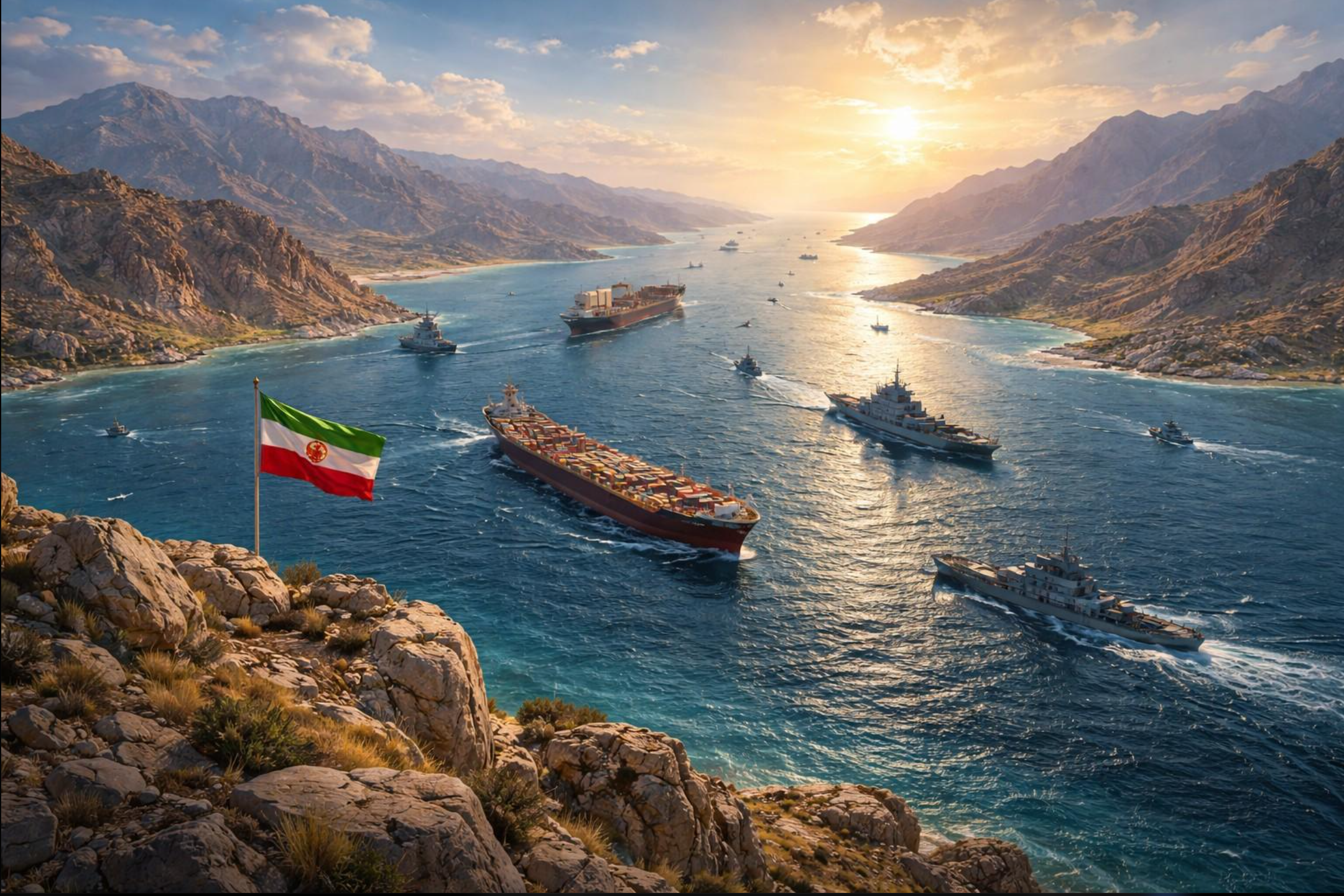
The Strait of Hormuz is a narrow maritime passage between Iran and Oman connecting the Persian Gulf with the Gulf of Oman and the Arabian Sea. It is one of the most important routes for international energy transportation because major oil and gas producers in the Gulf rely on it to send exports to customers in Asia, Europe and other markets. The route is particularly important to China and India, which purchase large quantities of energy from the region, while Iraq and Qatar depend on the waterway for significant parts of their energy exports.
The current restrictions developed during the war involving Iran, the United States and Israel, which began on February 28, 2026. Iran imposed severe limits on shipping through the strait during the conflict, disrupting commercial movements and increasing uncertainty for governments, energy companies, shipowners and insurers. A ceasefire was reached in April, but fighting between Washington and Tehran resumed in July after diplomatic efforts to end the conflict stalled. The United States subsequently resumed its naval blockade of Iranian ports on July 14, adding a separate layer of restrictions to the maritime situation.
The four exemptions appear to reflect Iran’s attempt to maintain selected trade and diplomatic relationships despite the wider confrontation. Each country has a different reason for seeking access to the waterway, and each has a different relationship with Tehran and Washington. India is an important supplier of medicines and a major energy importer, China is a major purchaser of Iranian oil and Gulf energy, Iraq depends heavily on oil exports through the Gulf, and Qatar is a major natural gas exporter that has also been involved in mediation between Iran and the United States.
India’s access and Iran’s need for medicines
Moqaddam said Iran was facilitating the passage of Indian ships to allow the country to import medicines from India. The explanation reflects the importance of India’s pharmaceutical industry to Iran, which has faced years of economic sanctions and restrictions affecting its access to international trade and financial services.
India is one of the world’s major producers of generic medicines and pharmaceutical products. Its manufacturers supply domestic and international markets with a wide range of medicines and medical ingredients. For Iran, maintaining access to those products is important because restrictions on banking, payments and international business relationships can make procurement more complicated, even where particular humanitarian goods are not themselves prohibited by sanctions.
Iran’s interest in Indian medicines gives Tehran an economic reason to maintain a channel for Indian shipping. The arrangement described by Moqaddam appears to connect access through Hormuz with the ability to obtain supplies that Iran considers necessary. However, the lawmaker did not provide details about the specific medicines involved, the companies expected to supply them or whether the exemption is limited to vessels carrying pharmaceutical cargo.
The arrangement is also relevant to India’s own energy requirements. India imports most of the crude oil it consumes, and the Gulf has historically been a major source of those supplies. A substantial volume of energy shipments destined for India normally passes through the Strait of Hormuz, making the restrictions a concern for Indian refiners, energy companies and the government.
According to figures from Kpler cited by Al Jazeera, approximately 10.23 million barrels of Gulf crude passed through the strait in October. Around 13 percent of that volume was destined for India, compared with approximately 42 percent for China. The figures demonstrate the continuing importance of the route to the two Asian economies, even as the conflict has changed shipping patterns and encouraged some buyers to seek alternative supplies.
India has also diversified its crude oil purchases in recent years, including through supplies from Russia, the United States, West Africa and other sources. That diversification can reduce its dependence on a single route or supplier, but it does not eliminate the importance of the Gulf. Disruptions to Hormuz can still affect the availability and cost of crude, particularly when alternative supplies must be secured quickly.
New Delhi must also consider its relationship with Washington. India has developed significant strategic and economic ties with the United States while maintaining relations with Iran and other Gulf countries. The Iranian exemption may help protect Indian commercial interests, but it does not mean India has endorsed Tehran’s wider policies or agreed to challenge American restrictions. The Indian government’s position on the specific exemption and the reported transit-fee arrangement was not established in the lawmaker’s statement.
Moqaddam said Indian vessels pay transit fees to Iran despite being exempt from the country’s broader restrictions. He did not disclose the amount charged, how the payments are collected or whether the fee depends on the size of a vessel or the value of its cargo. Those details are important because shipping companies would need to understand the financial and legal terms before relying on the arrangement for regular commercial operations.
China’s energy relationship with Iran
China’s exemption is closely connected to its economic relationship with Iran and its importance as a buyer of Gulf energy. Moqaddam said the arrangement for Chinese vessels was intended to secure political support from Beijing. The explanation suggests that Tehran sees the exemption as part of a wider relationship in which access to the waterway may be exchanged for diplomatic backing and continued economic cooperation.
China is one of the largest importers of crude oil in the world and depends on supplies from several Gulf producers. Its energy trade with the region is therefore particularly vulnerable to disruption in the Strait of Hormuz. The Kpler figures cited by Al Jazeera show that approximately 42 percent of the 10.23 million barrels of Gulf crude passing through the strait in October was destined for China. That makes Beijing one of the countries with the greatest commercial interest in the continued movement of vessels through the waterway.
China is also a major purchaser of Iranian oil. Security analyst Wolfgang Pusztai, a former Austrian defence attaché to Libya, told Al Jazeera that China buys nearly 90 percent of Iran’s total oil exports. That estimate illustrates the importance of the Chinese market to Tehran, particularly given the restrictions Iran faces in selling oil through conventional international channels.
The relationship provides Iran with an economic incentive to protect Chinese shipping, while Beijing has an interest in preserving access to Gulf supplies and maintaining its commercial ties with Tehran. The reported transit fees charged to Chinese vessels could also provide Iran with revenue at a time when sanctions and the conflict have placed pressure on its economy.
However, China’s position is more complicated than simply accepting Iran’s terms. Beijing maintains extensive economic relations with the United States and other countries affected by the conflict. It has an interest in avoiding a wider disruption to international shipping and does not necessarily want to become directly involved in the military confrontation. If the Iranian exemption requires Chinese companies to take steps that Washington considers a violation of its restrictions, those companies could face diplomatic or commercial consequences.
Rouzbeh Parsi, an Iran analyst and affiliated researcher at Lund University’s Department of History and Human Rights Studies, told Al Jazeera that China may be the country most capable of crossing American interests, but the question is whether Beijing considers the potential political cost worthwhile. His assessment reflects the uncertainty surrounding the arrangement. China may seek to use the exemption to protect its commercial interests while avoiding a direct confrontation with Washington.
Moqaddam’s statement does not establish whether the exemption applies to all Chinese-flagged ships or only vessels engaged in particular trade with Iran and other Gulf countries. It is also unclear whether a vessel owned by a Chinese company but registered under another country’s flag would qualify. International shipping frequently involves separate companies for ownership, registration, operation and chartering, meaning that nationality cannot always be determined by the flag alone.
Iraq’s dependence on Gulf shipping
Iraq’s exemption is closely connected to its dependence on maritime oil exports and its relationship with neighboring Iran. Iraq is one of the region’s major oil producers, and revenue from oil sales is central to its public finances. A significant portion of its exports moves through the Gulf, making access to the Strait of Hormuz important to the government’s ability to sell crude to international customers.
Iran had already indicated that Iraq would receive special treatment before the November announcement. Al Jazeera reported that Tehran began allowing some vessels from countries it considered friendly to pass through the strait within weeks of the war beginning. In April, Iran’s military command also announced that Iraq, which it described as a brotherly country, was exempt from the restrictions.
The latest statement therefore appears to reaffirm an existing arrangement rather than introduce a completely new exemption. The decision is consistent with Iran’s interest in maintaining relations with a neighboring country that has extensive economic, political and social connections with the Islamic Republic.
The two countries share a long border and maintain significant trade links. Their relationship is also shaped by religious and political connections, as well as the influence of Iran-backed political and armed groups within Iraq. Although Baghdad maintains its own government and foreign policy, its relationship with Tehran remains an important factor in regional diplomacy.
The economic importance of the strait to Iraq is reflected in recent shipping data. Kpler figures cited by Al Jazeera showed that Iraqi crude transits through Hormuz increased from approximately 1.69 million barrels per day in August to 2.65 million barrels per day in October. The increase indicates that significant volumes of Iraqi oil continued moving through the waterway during the period, despite the restrictions and wider security concerns.
Wolfgang Pusztai told Al Jazeera that Iran probably intended to support the economic recovery of its western neighbor through the exemption. The reasoning is that a prolonged interruption to Iraqi oil exports could create financial difficulties for Baghdad and increase instability in a country with which Iran has close ties.
Moqaddam did not explain whether Iraqi vessels are required to pay transit fees. His comments specifically identified charges for Indian and Chinese ships and said Qatari vessels were allowed to pass without charge. The omission leaves the Iraqi arrangement unclear, including whether Baghdad receives the same financial terms as Qatar or whether its vessels are subject to a separate agreement.
There is also no detailed public explanation of whether the exemption applies to Iraqi oil tankers alone or to all commercial vessels connected to Iraq. A tanker carrying Iraqi crude could be owned and operated by an international company, while its cargo is purchased by a foreign buyer. Without a clear definition of eligibility, shipping companies cannot assume that every vessel transporting Iraqi goods automatically qualifies.
Qatar’s energy trade and diplomatic role
Qatar’s exemption has both commercial and diplomatic significance. The country is a major exporter of liquefied natural gas and depends on maritime routes through Hormuz to deliver energy to international customers. It also maintains diplomatic channels with both Iran and the United States and has been involved in mediation efforts aimed at ending the conflict.
Moqaddam said Qatari vessels were allowed to pass through the strait without paying transit fees. That is different from the reported arrangements for Indian and Chinese vessels, which are required to pay charges. The lawmaker did not provide a detailed explanation for the decision, but Qatar’s role in regional diplomacy and its relationship with Iran may help explain why Tehran is willing to grant it more favorable terms.
Qatar shares the world’s largest natural gas field with Iran. The resource, known as the North Field on the Qatari side and South Pars on the Iranian side, is central to both countries’ energy industries. Their geographical proximity and shared interest in the field give them an enduring reason to maintain communication, even when relations are affected by wider regional tensions.
Qatar is also an important diplomatic intermediary. Its ability to communicate with Tehran and Washington has made it relevant to efforts to negotiate an end to the conflict. Al Jazeera reported that Qatar was leading mediation efforts between the two governments, with discussions involving an Iranian proposal to reopen the strait under a set of conditions that include the lifting of the American blockade and sanctions.
The country’s commercial interests are equally significant. Qatar’s LNG exports depend on ships being able to pass through Hormuz, and interruptions can affect delivery schedules and contractual commitments. Kpler data cited by Al Jazeera showed that Qatar shipped no LNG through the strait in August but moved approximately 1.8 million tonnes in October. Its crude oil transits reportedly declined from about 517,000 barrels per day in August to approximately 193,000 barrels per day in October.
Those figures show that some Qatari energy shipments resumed or increased during the period, but they do not establish that all restrictions had been lifted or that shipping had returned to normal. The exemption may help Qatar maintain trade, but its effectiveness depends on the security conditions and the willingness of shipping companies to operate in the area.
The risks were illustrated on October 30, when the Qatari LNG carrier Al Mayeda was struck by unidentified objects in the Gulf, according to its owner, Qatar Gas Transport Company. The available reporting did not identify who was responsible for the incident. The reported strike demonstrates that an exemption from Iranian restrictions does not necessarily protect a vessel from other dangers in a conflict zone.
Qatar’s position also involves balancing its relationships with competing powers. It maintains a close security partnership with the United States while sharing a major gas field and extensive regional interests with Iran. The exemption may help preserve its commercial and diplomatic position, but it does not remove the risk that the conflict could place pressure on Doha to take a clearer position.
The American blockade operates under separate rules
The question of whether vessels from the four countries can sail freely depends partly on what they are transporting and where they are travelling. The United States has imposed a naval blockade on maritime traffic entering and leaving Iranian ports and coastal areas. That measure is separate from Iran’s restrictions on passage through the Strait of Hormuz.
US Central Command announced on April 12 that American forces would begin implementing a blockade of all maritime traffic entering and leaving Iranian ports from April 13. CENTCOM said the measure would apply to vessels of all nationalities entering or departing Iranian ports and coastal areas, including Iranian ports on the Arabian Gulf and the Gulf of Oman. The command also stated that it would not impede freedom of navigation for vessels transiting the Strait of Hormuz to and from non-Iranian ports.
On July 13, CENTCOM announced that it would resume the blockade on July 14 at 4 p.m. Eastern Time. It said American forces would enforce the restrictions against vessels travelling to or from Iranian ports and coastal areas while continuing to support traffic flow through regional waters for vessels not violating the blockade.
The distinction means that an Indian, Chinese, Iraqi or Qatari vessel does not automatically become exempt from American enforcement because Iran has granted it permission to pass. If a ship is entering or leaving an Iranian port, it may still be subject to the American blockade. The nationality of the vessel does not remove that restriction under the policy described by CENTCOM.
A vessel travelling between non-Iranian ports is in a different position. For example, a tanker carrying oil from a Gulf producer to a Chinese port could pass through Hormuz without necessarily entering Iranian territory. Under CENTCOM’s published description, such a voyage is not automatically prohibited by the blockade simply because it uses the strait. The same principle would apply to vessels travelling between other non-Iranian ports, subject to any other applicable restrictions.
Humanitarian shipments are also relevant to the distinction. CENTCOM has said that humanitarian aid vessels, including those carrying food and medical supplies essential to civilian survival, may be allowed through the blockade following inspection. This could be relevant to Iran’s stated interest in importing medicines from India, but it does not mean every shipment described as medical or humanitarian will automatically be permitted. The cargo, destination, inspection process and applicable restrictions remain relevant.
The Iranian lawmaker’s claim that American forces are not intercepting ships from the four countries should therefore be understood as his description of the current arrangement, not as proof that Washington has formally recognized a general exemption for those countries. CENTCOM’s public statements describe the blockade in terms of whether a vessel is entering or leaving an Iranian port, rather than providing a nationality-based exemption for India, China, Iraq or Qatar.
Wolfgang Pusztai told Al Jazeera that the scope of Iran’s exemption could have wider implications if it includes vessels travelling to and from Iran rather than only ships trading with other Gulf countries. He said that interpretation could affect other Gulf states, including Saudi Arabia, and could make the continuation of the American blockade more difficult if Washington accepts the arrangement.
The uncertainty is significant because the two governments are not operating under a single agreed maritime framework. Iran is describing which ships it will allow through its restrictions, while the United States is enforcing its own rules against vessels entering or leaving Iranian ports. A shipowner considering a voyage must account for both positions rather than relying on an announcement from either government alone.
Questions over fees, vessel ownership and enforcement
The Iranian announcement leaves several practical questions unanswered. One concerns the meaning of a vessel being from India, China, Iraq or Qatar. In international shipping, a vessel’s flag, ownership, operator, charterer and cargo owner may all be connected to different countries. A ship registered in one country may be owned by a company in another and carry cargo purchased by a third country.
If Iran’s exemption is based on the flag a ship flies, the rules would be different from an arrangement based on ownership or the nationality of the commercial operator. If it depends on the cargo or destination, a vessel could qualify for one journey but not another. Moqaddam did not provide enough detail to establish which criteria are being used.
The lack of clarity may affect insurance and commercial decisions. Shipping companies operating in a conflict zone need to know whether a vessel can pass, whether it will be inspected, whether it may be delayed and whether it can obtain insurance cover for the voyage. Even if Iran permits a ship to use the strait, the owner may decide not to proceed if the security risks or financial costs are too high.
The reported transit fees also require clarification. Moqaddam said India and China pay fees while Qatar does not, but he did not identify the amounts, payment methods or legal basis for the charges. He also did not state whether the fees are fixed charges or calculated according to the size of the ship or value of its cargo. No fee arrangement for Iraq was specified.
Iran’s ability to collect revenue from the arrangement would depend on whether shipping companies accept the charges and whether they can make the payments without violating other restrictions. Companies may also need to consider whether payments to Iranian authorities or entities create sanctions-related risks. These issues cannot be resolved solely by a political announcement.
Rouzbeh Parsi told Al Jazeera that Iran had long used barter and reciprocal arrangements in response to sanctions and restrictions on conventional trade. He said the current situation involved attempts to secure essential goods and services while creating openings in an embargo. His assessment suggests that the exemptions may be part of a broader effort to maintain commercial activity through alternative arrangements.
Nader Hashemi, an associate professor of Middle East politics at Georgetown University, told Al Jazeera that Iran may be charging a transit fee or a percentage of the value of cargoes in return for allowing ships to pass without interference. That was an assessment of the likely financial arrangement, rather than confirmation of a published Iranian tariff system.
Implications for the wider Gulf and energy markets
The exemptions could help maintain some commercial traffic through the strait, but they do not by themselves restore normal conditions for global energy markets. Shipping volumes remain affected by military developments, the American blockade, Iran’s restrictions, insurance costs and uncertainty over whether vessels will be able to complete their voyages.
The Gulf remains a major source of crude oil and natural gas for Asian economies. Any prolonged disruption to the strait can affect fuel prices, industrial costs and the availability of energy supplies. Even when some vessels are allowed to pass, restrictions affecting other ships can reduce the volume of trade and force buyers to compete for alternative supplies.
The situation also creates different pressures for Gulf producers. Iraq and Qatar have received exemptions, according to the Iranian lawmaker, but other major exporters, including Saudi Arabia, the United Arab Emirates and Kuwait, have not been named in the announcement. Those countries also depend on the waterway, although some have alternative infrastructure that can move a portion of their exports through routes that bypass Hormuz.
If Iran continues to distinguish between countries, governments not included in the exemptions may seek their own arrangements or look for ways to protect their exports. That could increase diplomatic pressure on Tehran and complicate regional relations. It may also encourage greater investment in pipelines, storage facilities and alternative export routes, although such infrastructure cannot quickly replace the capacity of the strait.
For the United States, the exemptions present a separate policy question. Washington has said its blockade is directed at maritime traffic entering and leaving Iranian ports, while allowing vessels travelling between non-Iranian destinations to use the regional waters. If Iran’s exemptions are limited to that type of trade, the arrangements may not directly conflict with the stated scope of the American blockade. If they also permit vessels to enter or leave Iranian ports, the potential for confrontation with US forces becomes greater.
The economic impact of the exemptions may remain limited while the broader conflict continues. Chris Beauchamp, chief market analyst at IG Group, told Al Jazeera that the arrangements were likely to make only a limited difference to markets at present. He said market attention remained focused on the prospects of a wider peace agreement and warned that an escalation could make it difficult for Iranian commanders to distinguish between vessels from different countries.
That risk is particularly relevant in a crowded maritime environment where commercial ships and military forces operate in close proximity. A vessel may have received permission from Iran but still be exposed to an incident involving another actor, an unidentified object or a military force that does not recognize the exemption. The reported strike on the Qatari carrier Al Mayeda demonstrates why shipping companies cannot treat the announcement as a guarantee of safety.
Al Jazeera reported that more than 120 commercial vessels had been hit in the region since the war began, citing data from the International Maritime Organization and the United Kingdom Maritime Trade Operations. October was reported as the worst month. The figures underline the extent of the security problem facing shipping companies and help explain why a formal exemption may not immediately translate into a return to regular commercial operations.
Negotiations remain central to the future of the strait
The exemptions are being announced while diplomatic efforts continue to address the wider conflict. Qatar has been involved in mediation between Washington and Tehran, and discussions have included proposals linked to reopening the Strait of Hormuz and ending the American blockade. Al Jazeera reported that Qatar-mediated talks were focused on an Iranian proposal containing seven conditions, including an end to the blockade and the lifting of sanctions.
The broader negotiations are also expected to involve Iran’s nuclear program. The dispute over the nuclear issue has been a central point of tension between Tehran and Washington for years, and the war has made the prospects of a comprehensive agreement more complicated. Iran’s willingness to allow selected ships through the strait does not, by itself, resolve the nuclear dispute or establish that the two governments have agreed on a permanent maritime arrangement.
Pusztai told Al Jazeera that Iran appeared to be trying to separate the questions of passage through Hormuz and oil exports from the nuclear negotiations. That approach would allow Tehran to pursue practical arrangements over shipping and trade without first reaching agreement on every issue in the wider conflict. Whether Washington accepts that separation remains an important question.
For the four countries named in the exemption, the immediate priority is likely to be maintaining access to essential trade while avoiding direct involvement in the confrontation. India has an interest in securing medicines and energy supplies, China wants reliable access to Gulf oil and continued commercial relations with Iran, Iraq needs to maintain oil exports, and Qatar has a strong interest in protecting LNG shipments and preserving its diplomatic role.
The exemptions may provide some relief for those countries, but their effectiveness will depend on the conditions applied at sea and the response of the United States. The Iranian lawmaker’s statement does not establish that every ship connected to the four countries can pass without inspection, nor does it confirm that all voyages to and from Iranian ports are permitted under the American blockade. The distinction between a vessel’s nationality, its destination and the nature of its cargo will remain important.
For now, Iran’s announcement describes a selective system of access based on the country’s stated economic and political interests. It does not amount to a general reopening of the Strait of Hormuz, and it does not remove the American restrictions on maritime traffic entering and leaving Iranian ports. The next developments will depend on whether the exemptions are implemented consistently, whether shipping companies are prepared to use them, and whether Washington accepts the arrangements without changing its enforcement policy. Until those issues are clarified, commercial access through the strait will remain subject to competing restrictions and the security conditions created by the continuing conflict.