
“MY SKIN IS CROCODILE SKIN” MAHAMA SAYS INSULTS DON’T MOVE HIM AS TIKTOK ARRESTS IGNITE FREE SPEECH BATTLE
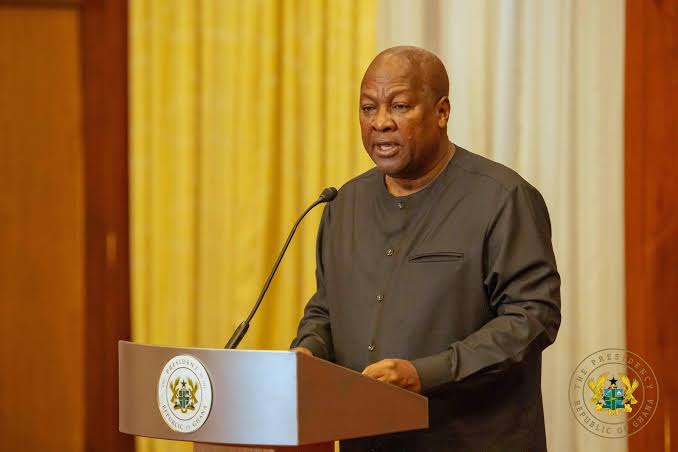
President John Dramani Mahama says political insults do not easily affect him, declaring that his “skin is crocodile skin” as Ghana debates arrests and legal action arising from social media posts. But the President also warned that TikTok's powerful algorithms can turn material posted by almost anyone with a phone into content reaching massive audiences.
President John Dramani Mahama says he can take the insults.
But whether Ghana's laws and public institutions should simply ignore everything posted on TikTok is becoming a far more difficult question.
As controversy grows over arrests and legal action connected to online speech, Mahama has waded directly into the debate, declaring that years in politics have given him an unusually thick skin.
“My skin is crocodile skin,” the President said.
The remark came as Mahama discussed concerns surrounding TikTok, insults, defamatory content and the extraordinary ability of social media algorithms to amplify material created by virtually anyone carrying a smartphone.
Mahama said that personally, he has become accustomed to insults during his long political career.
But his concern extends beyond whether politicians can tolerate offensive comments.
The President pointed to a fundamental change in how information now spreads.
In the past, newspapers, radio and television stations operated through editors, producers and other professional gatekeepers who exercised some degree of control over what reached large audiences.
TikTok has dramatically changed that model.
A person does not need a newsroom, broadcasting license or professional media organization to reach hundreds of thousands of people.
All that may be required is a smartphone, internet connection and an algorithm willing to push the content.
Mahama warned that this has created a situation where almost anyone can become a mass communicator.
And that, he suggested, comes with consequences.
The President said his administration does not intend to criminalize speech.
But he also stressed that freedom of expression does not eliminate the rights of people who believe they have been defamed.
“If somebody defames you, you have a right to go to court,” Mahama said.
That distinction now sits at the Centre of one of Ghana's most politically sensitive debates.
The question is no longer simply whether insulting a politician is acceptable.
It is whether police should become involved when online speech crosses alleged legal boundaries, and where Ghana should draw the line between offensive political commentary, misinformation, defamation and criminal conduct.
The debate has intensified following recent arrests connected to social media activity.
One of the most controversial cases involves senior nursing officer Salomey Awiti Bafoh, who was arrested over her alleged connection to the Ghana Jollof TikTok account.
Bafoh has pleaded not guilty to abetment of crime relating to the alleged publication and circulation of false news.
Her case has generated significant political and legal debate over the continued use of criminal law in cases involving online expression.
Critics argue that aggressive arrests over social media posts could intimidate citizens and produce a chilling effect on political speech.
Others maintain that social media cannot become a lawless space where people can knowingly spread false information, make threats or damage reputations without consequences.
Mahama's intervention attempts to position his government between those competing arguments.
On one hand, the President says insults directed at him personally do not trouble him.
On the other, he is unwilling to accept the argument that everything posted online should automatically be protected simply because it appears on TikTok.
His comments about algorithms are particularly significant.
TikTok does not distribute information in the same way traditional media does.
Its recommendation system can push a previously unknown creator's video to enormous audiences based largely on engagement rather than the creator's professional credentials or the accuracy of the information being shared.
That can democratize public debate.
It can also allow misinformation, insults and allegations to travel at extraordinary speed.
For politicians, that creates a new reality.
They no longer control public debate through press conferences, radio interviews and television appearances.
A single viral TikTok video can sometimes dominate the national conversation before an official response is even prepared.
But the government's response to that new reality is where the controversy becomes dangerous politically.
If authorities respond too aggressively, they risk being accused of using state power to silence criticism.
If they do nothing, victims of genuine threats, deliberate falsehoods or damaging allegations may argue that the state has abandoned them.
Mahama's “crocodile skin” remark therefore carries a message larger than its humorous wording.
The President is essentially saying that political leaders should be able to tolerate criticism and even insults.
But he is not saying that social media users have unlimited immunity from Ghanaian law.
That position will not automatically satisfy critics.
Private legal practitioner Oliver Barker-Vormawor has argued that Ghana's security agencies must carefully distinguish between speech that is genuinely criminal and speech that is merely offensive.
That distinction becomes especially important when the person being criticized is a powerful public official.
Democracy necessarily protects speech that politicians dislike.
But Ghanaian law also provides avenues for people who believe they have been defamed or subjected to unlawful conduct.
The unresolved argument is over when those disputes should remain civil matters and when the police should enter the picture.
Mahama's own words may now raise expectations about how his government handles future cases.
If the President's skin really is as tough as he says, critics will inevitably ask whether arrests should follow when citizens insult him or other powerful political figures.
And if his administration insists it will not criminalize speech, every future arrest connected to an online post is likely to be measured against that promise.
For now, Mahama is presenting himself as a politician prepared to absorb the punches of social media.
“Crocodile skin,” as he puts it.
But the bigger question facing Ghana is not how thick the President's skin is.
It is how much freedom ordinary citizens should have to attack, mock and criticize powerful people online before the state decides that a line has been crossed.
TikTok has made everyone with a smartphone a potential broadcaster.
Ghana must now decide whether its laws are ready for what happens when millions of those broadcasters refuse to behave like traditional journalists.