
GHANA’S NAME IS ON THE LINE” COCAINE SEIZURES TRIGGER FEARS EXPORTERS COULD PAY THE PRICE ABROAD
Pressure is mounting over a series of major cocaine seizures linked to Ghana, with lawyers, security analysts and civil society warning that the country risks developing an international reputation as a narcotics transit route. Concerns are also growing that legitimate Ghanaian exporters and travelers could eventually face tougher scrutiny abroad, while NACOC says investigations must be allowed to proceed without being turned into a partisan political battle.
The cocaine may belong to traffickers, but lawyers and security experts are warning that the consequences could eventually be paid by millions of innocent Ghanaians.
A growing series of major narcotics seizures involving consignments linked to Ghana has triggered an increasingly uncomfortable national debate over whether the country risks acquiring an international reputation as a transit point for the global drug trade.
And the potential consequences extend far beyond arrests and criminal prosecutions.
Lawyers and civil society groups are warning that if Ghana becomes regarded internationally as a high-risk origin or transit country for narcotics, legitimate Ghanaian exporters could face more aggressive inspections abroad, shipments could encounter delays and ordinary travellers could face greater scrutiny.
The concerns featured prominently in discussions on JoyNews' Newsfile on Saturday as Ghana continues to confront questions surrounding recent cocaine seizures and the effectiveness of the country's narcotics enforcement system.
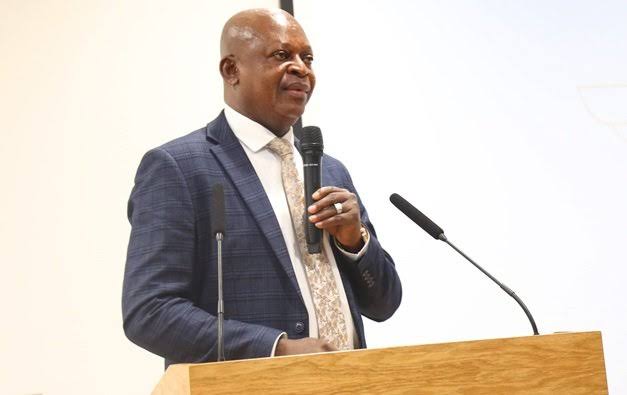
Ghana School of Law lecturer and private legal practitioner Bobby Banson warned about the reputational consequences that could follow repeated international cases involving narcotics linked to Ghana.
The concern is straightforward.
Drug-trafficking networks do not need to control an entire country to damage its reputation.
They simply need to establish routes that foreign authorities begin identifying with that country.
Once that happens repeatedly, the consequences can spread beyond criminals.
Containers carrying legitimate Ghanaian products could receive additional attention.
Exporters could face delays.
Businesses could encounter additional compliance costs.
And passengers arriving from Ghana could potentially be subjected to greater scrutiny.
That is why the cocaine debate is rapidly becoming an economic and reputational issue as much as a criminal one.
The Centre for Democratic Movement has issued a similar warning, arguing that repeated narcotics seizures involving consignments linked to Ghana could undermine decades of work building the country's reputation as a credible international trading partner.
The group says legitimate businesses and travelers could suffer if international authorities increasingly associate Ghanaian trade routes with narcotics trafficking.
THE 3.9-TONNE SHIPMENT THAT INTENSIFIED THE PRESSURE
Much of the current controversy intensified after French authorities intercepted nearly 3.9 tonnes of cocaine at the Port of Dunkirk.
The suspected narcotics were reportedly concealed in a container carrying plastic waste that had departed from Ghana.
French authorities valued the consignment at approximately €225 million.
The sheer size of the shipment immediately raised questions in Ghana.
How could tonnes of suspected cocaine allegedly travel through a commercial shipping chain connected to Ghana without being intercepted before reaching Europe?
And was the shipment an isolated breach or evidence of a larger trafficking network?
Ghanaian authorities have since made arrests in connection with the case.
NACOC says suspects are being investigated and that authorities are working to trace the wider network, financial interests and assets allegedly connected to the trafficking operation.
But the Dunkirk seizure is not the only case driving public concern.
In August, authorities discovered 866 parcels of substances suspected to be cocaine in sacks of gari at a warehouse within the Tema Harbour enclave.
In September, police in Wa also reported seizing 192 compressed wraps of suspected cocaine during an intelligence-led operation.
Earlier cases have involved substantially larger quantities.
Those incidents have fueled warnings from security analysts that both the frequency and magnitude of Ghana-linked narcotics cases require serious attention.
Security analyst Adib Saani has described the recent pattern as worrying and warned of potential consequences for Ghana's international reputation.
FROM GOLD COAST TO “COCAINE COAST”?
The political language surrounding the controversy has become increasingly provocative.
NPP legal team member Enoch Anhwere Afoakwa has claimed that Ghana risks being viewed internationally as a “cocaine coast” rather than the Gold Coast historically associated with the country.
That is a political characterization rather than an official international designation.
There is no evidence that Ghana has formally been classified internationally as a “cocaine coast.”
But the phrase captures the reputational fear now driving part of the national conversation.
The Ghana Catholic Bishops' Conference has also expressed concern, warning that drug-trafficking cases are damaging Ghana's international image and calling for urgent national action.
The bishops have urged authorities to go beyond arresting alleged couriers and pursue the financiers and networks behind large-scale trafficking operations.
COULD ORDINARY GHANAIAN BUSINESSES SUFFER?
For legitimate exporters, the consequences of a damaged national reputation could become expensive.
International customs authorities use risk assessments to determine which cargo requires additional examination.
If shipments originating from a particular route become repeatedly associated with narcotics seizures, authorities can increase scrutiny.
That does not mean Ghanaian exports are currently subject to a blanket international restriction because of the recent cases.
No such broad measure has been established.
But lawyers and civil society groups are warning about what could happen if the pattern continues.
Additional inspections can mean delays.
Delays can mean storage costs.
For exporters dealing in perishable products, delays can mean lost goods.
And for businesses trying to build long-term relationships with international buyers, persistent association between Ghanaian shipping routes and narcotics trafficking could create reputational complications.
That is why critics argue that stopping cocaine at Ghana's ports is not simply a police responsibility.
It is also an economic priority.
NACOC SAYS DON'T RUSH THE INVESTIGATION
NACOC, however, is cautioning against turning complex narcotics investigations into a political race for instant answers.
Deputy Director-General Alexander Twum-Barimah says investigators must be allowed to follow evidence carefully.
“We don't have to rush,” he said, warning that rushing an investigation could result in innocent people being wrongly accused or important evidence being lost.
NACOC says investigations surrounding the major cocaine shipment are continuing and could identify additional suspects.
The Commission is also examining assets and financial interests potentially associated with the alleged network, which could become subject to confiscation if criminal convictions are eventually secured.
That position comes as the cocaine controversy increasingly becomes entangled in Ghana's fierce NDC-NPP political rivalry.
Opposition figures have accused the government of failing to prevent major drug shipments from passing through Ghana.
Government supporters counter that increased seizures and arrests demonstrate stronger enforcement rather than evidence that the government is facilitating trafficking.
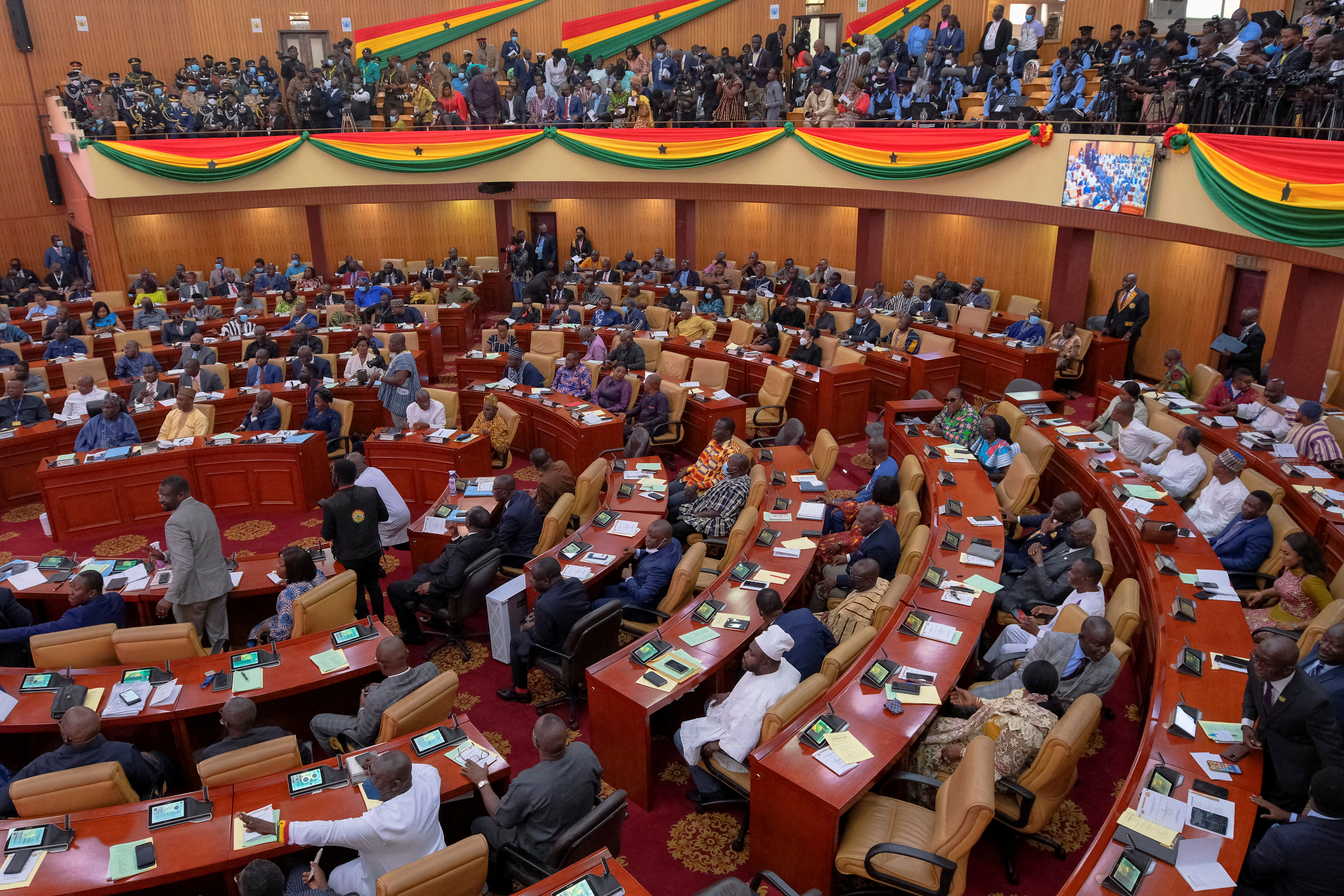
The Majority in Parliament has argued that increased narcotics arrests reflect improved enforcement by NACOC and other security agencies.
The Minority, meanwhile, has characterized the situation as a growing narcotics crisis and demanded stronger parliamentary scrutiny.
Those are competing political interpretations of the enforcement data, not established conclusions about why seizures have increased.
THE PORT SECURITY QUESTION
Another major part of the controversy concerns NACOC's role at Ghana's ports.
The Commission's routine role in physical container inspections was affected by changes introduced under the paperless port system in 2018.
Government figures now argue that the decision weakened Ghana's ability to detect narcotics moving through ports.
President John Dramani Mahama has directed that NACOC return to joint container inspections and has established an inter-agency process to strengthen the country's response to drug trafficking.
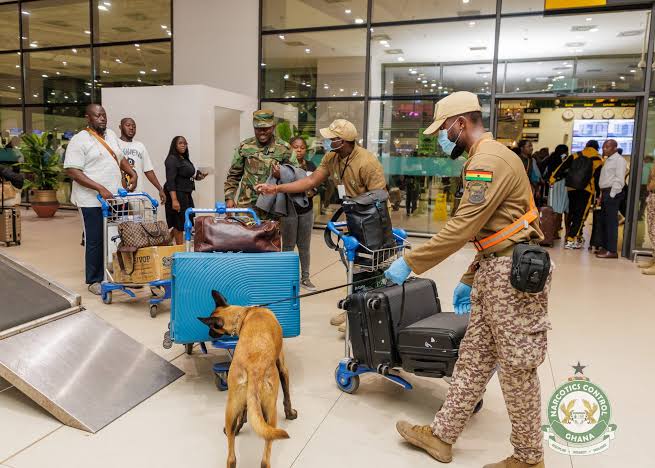
The President has also ordered an inter-agency task force to develop a roadmap for preventing narcotics from moving through Ghana's ports, airports and land borders.
The challenge now is determining whether those measures are enough.
Drug-trafficking organisations operate across borders, use sophisticated financial networks and constantly adapt their methods when authorities close existing routes.
That makes Ghana's response dependent not only on searching containers but also on intelligence gathering, financial investigations and cooperation with foreign law-enforcement agencies.
THE POLITICAL FIGHT COULD DISTRACT FROM THE BIGGER PROBLEM
The danger is that Ghana's cocaine debate becomes another argument in which both major parties spend more time blaming each other than examining how trafficking networks are operating.
There are legitimate political questions.
Governments are responsible for national security.
Parliament has an oversight role.
And security agencies must explain failures where evidence establishes that failures occurred.
But narcotics trafficking networks do not necessarily operate according to election cycles.
A weakness created under one administration can be exploited under another.
A trafficking network established years earlier can continue operating after governments change.
That makes institutional reform potentially more important than partisan blame.
The central question is whether Ghana's ports, airports, borders, intelligence services and narcotics investigators are capable of making the country too difficult and too risky for international traffickers to use.
Because once foreign customs authorities begin distrusting cargo simply because it came from Ghana, the damage will no longer belong only to the traffickers.
It could reach farmers.
Manufacturers.
Exporters.
Freight companies.
Travellers.
And Ghanaian businesses that have absolutely nothing to do with cocaine.
That is why the warning emerging from today's debate matters.
The drugs can be seized.
The suspects can be arrested.
But rebuilding a damaged national reputation can take much longer.