
ARRESTS, COCAINE AND A $235 MILLION WATER BILL: FOUR CONTROVERSIES PUT GHANA’S GOVERNMENT UNDER FRESH SCRUTINY
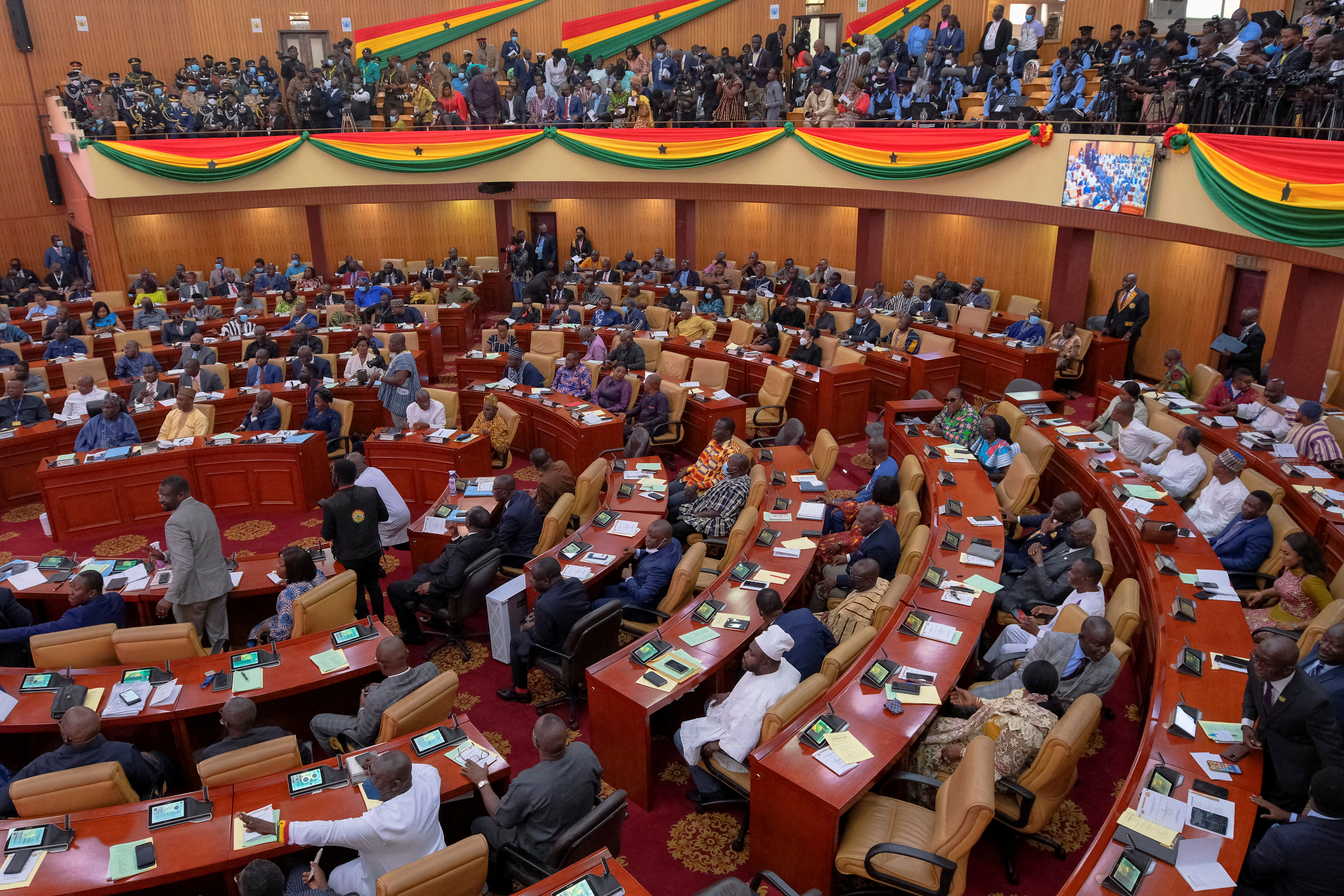
Four explosive national controversies are dominating discussion in Ghana today: EOCO's attempted arrest of Manhyia South MP Nana Agyei Baffour Awuah, mounting concerns over drug trafficking, arrests linked to online speech and a $235 million arbitration award arising from the troubled Teshie-Nungua desalination project.
Ghana wakes up this weekend with four uncomfortable questions hanging over its politics, security agencies and public finances.
Why did EOCO attempt to arrest a sitting opposition MP at a courthouse?
Is Ghana facing a worsening cocaine-trafficking problem?
How far should the state be allowed to go in arresting people over what they publish online?
And how did a water project meant to serve hundreds of thousands of people end with an international tribunal ordering Ghana Water to pay $235 million?
Those controversies are at the centre of national discussion today, with JoyNews' Newsfile dedicating its Saturday programme to examining the issues.
But behind the television debate are disputes with potentially serious implications for the rule of law, national security, freedom of expression and the public purse.
EOCO VERSUS AN MP
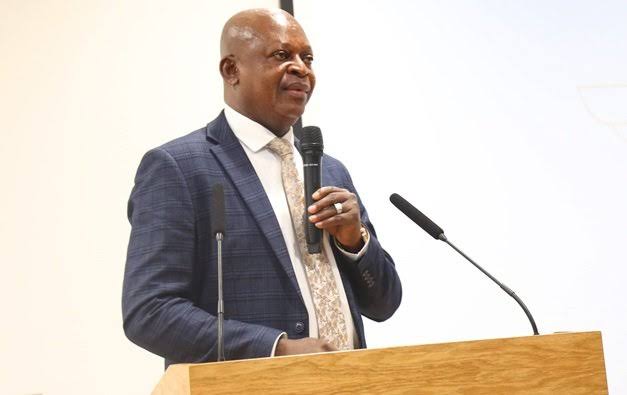
Perhaps the most politically explosive is the confrontation involving the Economic and Organised Crime Office and Manhyia South MP Nana Agyei Baffour Awuah.
EOCO has confirmed that its officers attempted to arrest Baffour Awuah at the Accra High Court complex on Wednesday, September 23.
The incident was captured on video and quickly spread across social media.
EOCO says the MP had failed to honour two invitations issued in February as part of an ongoing investigation.
The agency insists that being a Member of Parliament does not automatically place anyone beyond investigation or the reach of the law.
Baffour Awuah strongly disputes EOCO's account.
He maintains that he was never personally the subject of the investigation and says the correspondence concerned his former law firm and one of its clients.
According to the MP, a representative of the firm subsequently cooperated with EOCO on several occasions and provided the requested information.
The confrontation has now moved beyond an argument between one MP and one state agency.
The Ghana Bar Association has expressed concern about the manner in which EOCO attempted to take Baffour Awuah into custody.
The GBA said the incident raised questions about due process and the rule of law, particularly because the confrontation occurred at a court complex where Baffour Awuah had appeared as a lawyer.
Madina MP Francis-Xavier Sosu has also challenged EOCO's justification for the attempted arrest.
Meanwhile, the NPP in Manhyia South has accused EOCO of intimidation and demanded an investigation.
Baffour Awuah has gone further.
He alleges that the entire confrontation was designed to shift public attention away from Ghana's growing cocaine controversy.
That allegation has not been independently established, and EOCO has not accepted that characterisation.
But the MP's accusation has ensured that two already explosive controversies are now politically intertwined.
THE COCAINE QUESTION GHANA CANNOT SHAKE
Drug trafficking has become another major source of political argument.
A series of cocaine-related cases linked to Ghana has generated questions about border controls, ports, airports and the country's vulnerability to international trafficking networks.
Security analyst Adib Saani recently warned that the frequency and scale of reported trafficking cases could damage Ghana's international reputation.
Opposition figures have seized on the issue.
Former Deputy Defence Minister Kofi Amankwa-Manu has called for Parliament to be recalled to discuss the situation, arguing that the problem is getting out of hand.
NPP communications figure Dennis Miracles Aboagye has separately demanded answers over reports involving 80 bags of cocaine and questioned how such a shipment could allegedly pass through Ghana's ports.
Former Defence Minister Dominic Nitiwul has called for Ghana Ports and Harbours Authority Director-General Paul Tanye-Kulono to step aside while investigations continue.
Government supporters reject suggestions that the authorities are ignoring the problem.
NDC Deputy Director of Elections and IT Rashid Tanko-Computer has argued that the administration is confronting drug trafficking rather than covering it up.
The competing claims have turned what should primarily be a national security problem into an increasingly fierce political battle over responsibility and accountability.
WHEN DOES SPEECH BECOME A CRIME?
Running alongside the security debate is another argument: how much power should the state have to arrest citizens over speech and social media activity?
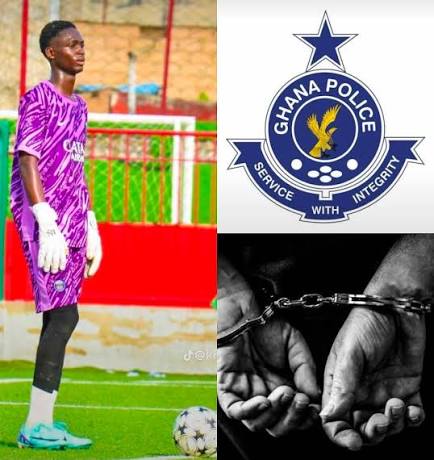
The issue intensified following the arrest of senior nursing officer Salomey Awiti Bafoh over her alleged connection to the controversial Ghana Jollof TikTok account.
Bafoh pleaded not guilty to abetment of crime relating to the alleged publication and circulation of false news.
Her case has generated a wider debate over Ghana's false-news laws and whether criminal prosecution is an appropriate response to offensive, misleading or politically provocative online content.
Private legal practitioner Oliver Barker-Vormawor has argued that police must distinguish between genuinely criminal speech and content that is simply offensive or unpleasant.
That distinction is becoming increasingly important as political debate migrates onto TikTok, Facebook, X and other digital platforms.
Governments have a legitimate responsibility to address threats, incitement and criminal conduct.
But critics fear that broadly applied speech laws could become tools for intimidating political opponents, journalists or ordinary citizens who publish material authorities dislike.
The government and security agencies therefore face a difficult question.
Where exactly should Ghana draw the line between protecting society from harmful conduct and protecting citizens from excessive state interference in political expression?
A WATER PLANT THAT ENDED WITH A $235 MILLION BILL
Then comes the money.
Ghana is confronting the consequences of a desalination agreement originally intended to solve chronic water shortages in Teshie, Nungua and surrounding communities.
The project was supposed to produce 60,000 cubic metres of water every day for roughly 500,000 people.
Instead, fifteen years after the agreement was signed, the plant is idle and an international arbitration tribunal has ordered Ghana Water to pay $235 million.
The figure is particularly striking because the plant itself reportedly cost approximately $126 million to construct.
In other words, the arbitration award is approaching twice the original construction cost.
The financial structure of the project has raised serious questions.
Ghana Water reportedly purchased desalinated water at GH¢6.75 per unit while the regulated tariff allowed it to sell that water for GH¢1.47.
That meant the utility was losing money on every unit sold.
It was also required to pay a fixed monthly capacity charge of approximately $1.4 million whether the plant was operating or not.
According to the project's 2024 accounts cited by JoyNews Research, Befesa invoiced $16.93 million that year alone, including $14.94 million in capacity charges.
Two final awards from the International Chamber of Commerce arbitration court were issued on September 17, 2026.
They ordered Ghana Water to pay $235 million, net of taxes, with interest running from April 1.
The Republic of Ghana was also found liable under the state guarantee.
The tribunal substantially rejected Ghana Water's counterclaims, including one worth $144.5 million.
The result leaves taxpayers confronting an uncomfortable reality.
A project designed to provide water to approximately half a million people has instead become another massive financial liability for the state.
FOUR STORIES, ONE BIGGER QUESTION
On the surface, these controversies appear unrelated.
One concerns an attempted arrest.
Another concerns cocaine.
Another involves speech and social media.
And the fourth involves a failed water arrangement and hundreds of millions of dollars.
But together they raise essentially the same question.
How accountable are Ghana's institutions when things go wrong?
EOCO must explain why attempting to take an MP into custody at a courthouse was necessary and lawful.
Political leaders must demonstrate that cocaine trafficking is being confronted without turning the issue into another partisan shouting match.
Police and prosecutors must show that criminal law is being used to protect society rather than simply punish unpopular speech.
And the government must explain how Ghana became exposed to a $235 million arbitration award from a water project that was supposed to solve a public problem.
Newsfile will debate those questions today.
But when the cameras go off, the controversies will remain.
Because behind the political arguments are matters involving public money, individual liberty, national security and the credibility of institutions that exercise enormous power over ordinary Ghanaians.
And those questions cannot be settled simply by winning the argument on television.