
ALMOST EVERYBODY CAN AFFORD AN IPHONE NOW” NDC’S IBRAHIM ALI CREDITS MAHAMA AS CLAIM IGNITES AFFORDABILITY DEBATE

NDC Communications Team member Ibrahim Ali has sparked political debate after claiming that economic improvements under President John Mahama have made iPhones affordable to “almost everybody” in Ghana. Ali pointed to falling phone prices as evidence that the government's economic policies are working, but his sweeping affordability claim is a political argument rather than an independently established measure of household purchasing power.
Has Ghana's economy improved so dramatically that almost everybody can now afford an iPhone?
A member of President John Dramani Mahama's National Democratic Congress believes the falling price of the popular smartphone is evidence that things are moving in the right direction.
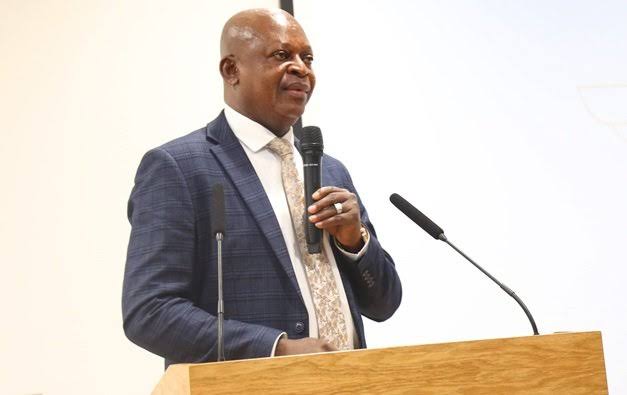
NDC Communications Team member Ibrahim Ali has triggered a politically charged conversation after declaring that “almost everybody in Ghana can now afford an iPhone” because of improvements he attributes to the Mahama administration.
Ali made the remarks during an appearance on Pan Africa Television's Good Morning Africa, where he defended the government's economic performance and pointed to changes in the prices of imported consumer products.
His example was Apple's iPhone.
According to Ali, an iPhone that previously sold for about GH¢14,000 can now be found for approximately GH¢8,000.
He argued that such a substantial price reduction reflects improvements in Ghana's economic conditions.
“Almost everybody in Ghana can afford an iPhone now,” Ali said.
He went further, presenting the price change as evidence that the NDC government is performing.
It is the kind of political statement almost guaranteed to provoke a reaction.
Because while the price of a smartphone can certainly be affected by inflation, exchange rates, import costs, model age, retailer pricing and broader economic conditions, saying that “almost everybody” in a country can afford one is a much bigger claim.
And it is not supported by an official affordability measure.
There is no government statistic showing that almost every Ghanaian household can now comfortably purchase an iPhone.
Ali's statement should therefore be understood for what it is: a political argument about the economy, using the price of a popular consumer product as an example.
But the economic picture behind the argument is more complicated.
Ghana has recorded significant improvements in some important macroeconomic indicators.
Year-on-year consumer inflation stood at 5.0 percent in August 2026, according to the Ghana Statistical Service.
That was substantially below the 11.5 percent recorded in August 2025.
Average prices also declined by 1.0 percent between July and August.
Food inflation eased to 3.0 percent, although non-food inflation rose to 6.8 percent.
Those figures provide the Mahama administration and its supporters with evidence for their argument that price pressures have moderated significantly.
The Bank of Ghana has also pointed to improvements in the wider economy.
Real GDP expanded by 6.0 percent in the second quarter of 2026.
Average lending rates have declined, while private-sector credit growth has accelerated.
But that does not mean every economic indicator is moving in the government's favour.
The Ghana cedi had depreciated approximately 9.5 percent against the US dollar in the interbank market by September 2026.
Bank of Ghana data put the currency at around GH¢11.55 to one US dollar, compared with approximately GH¢10.45 at the end of December 2025.
That matters because iPhones are imported products whose Ghanaian prices can be heavily influenced by the exchange rate.
There is another problem with using an iPhone as a national economic measuring stick.
Not all iPhones are the same.
The price of a brand-new current-generation model cannot simply be compared with an older model, used device or refurbished handset without considering differences in specifications, storage capacity, condition and release year.
Retail prices can also differ significantly between sellers.
So while Ali says an iPhone that previously cost approximately GH¢14,000 can now be purchased for GH¢8,000, that comparison alone does not establish that iPhones generally have fallen by that amount across Ghana.
Nor does it establish that an GH¢8,000 smartphone has suddenly become affordable to the average Ghanaian.
And that is where the politics begins.
For supporters of the Mahama administration, Ali's argument offers a simple and relatable way to explain improving economic indicators.
Inflation statistics can feel abstract.
GDP growth can feel distant from everyday life.
But the price of something millions of people recognise immediately, such as an iPhone, is easier to turn into a political message.
If imported goods become cheaper, supporters can argue that ordinary people are finally feeling economic improvement directly.
Opponents can turn exactly the same statement against the government.
They can ask whether the ability to purchase an expensive smartphone is really an appropriate test of economic wellbeing in a country where households must also pay for food, rent, transport, electricity, healthcare and education.
That makes Ali's choice of an iPhone politically provocative.
It shifts the conversation away from charts and economic reports and into everyday purchasing power.
The underlying question is therefore bigger than Apple.
When politicians say the economy is improving, what should ordinary Ghanaians actually expect to see?
Should economic recovery be measured by GDP?
Inflation?
The exchange rate?
Jobs?
Wages?
Food prices?
Rent?
Fuel?
Or the amount of money required to buy a smartphone?
Ali has chosen his example.
An iPhone.
And his argument is that falling prices show the Mahama administration is delivering tangible economic benefits.
Official figures do show significantly lower inflation than a year earlier and continued economic growth.
But Ghana's currency has also weakened against the dollar during 2026, and affordability ultimately depends not only on whether prices fall but on how much disposable income people have available after meeting essential expenses.
That is why “almost everybody can afford an iPhone” is likely to travel much further politically than an ordinary discussion about inflation.
It takes an argument normally conducted with percentages and turns it into something millions of Ghanaians can immediately understand.
Look at your salary.
Look at your expenses.
Then look at the price of an iPhone.
Whether that calculation supports Ibrahim Ali's argument is ultimately a question individual Ghanaian households can answer for themselves.