MAHAMA SENDS FOUR NEW ENVOYS OUT WITH ONE MESSAGE: BRING HOME INVESTMENT, OPEN MARKETS AND MAKE GHANA’S DIPLOMACY PAY
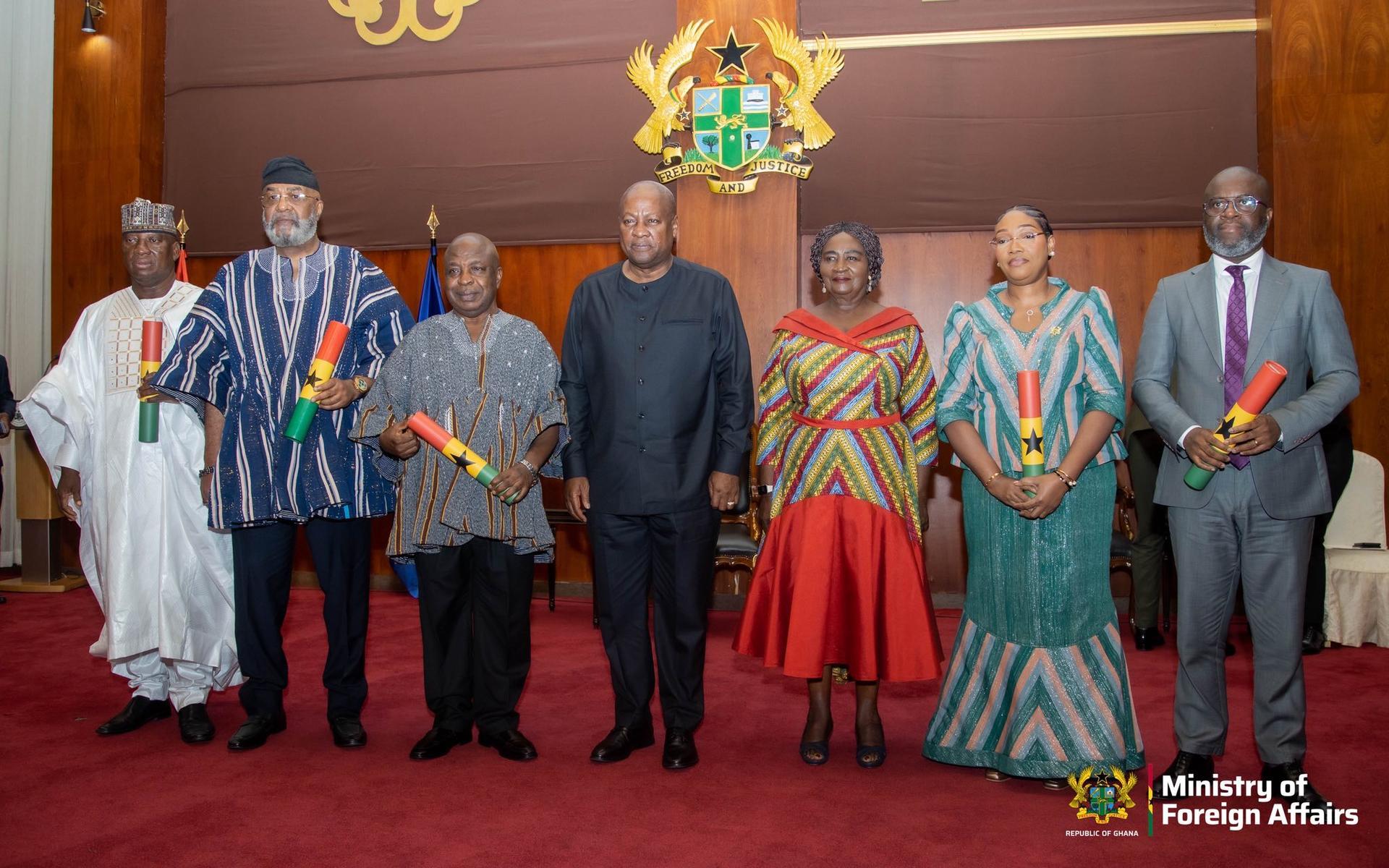
President John Dramani Mahama has commissioned four new Ghanaian envoys at the Jubilee House, directing them to make investment attraction, trade expansion, industrialisation and economic opportunities central to their diplomatic assignments. Nana Antwiwaa Dodoo will serve as Ambassador to Angola, Louis Kwame Obeng as Ambassador to Qatar, Evelyn Korantemaa Ofosu-Amable as Ambassador to Israel, while Jedidiah Reuben Adogla becomes Ghana’s Permanent Representative in Geneva, Switzerland. Mahama also instructed the envoys to protect Ghanaians abroad, promote local processing of Ghana’s natural resources, explain the country’s BRICS partnership strategy to international partners and align their work with the Resetting Ghana Agenda.
President John Dramani Mahama has commissioned four new Ghanaian envoys and handed them a clear economic assignment, directing the diplomats heading to Angola, Qatar, Israel and Ghana’s Permanent Mission in Geneva to move beyond traditional diplomacy and use their offices to attract investment, expand markets for Ghanaian businesses, build strategic partnerships and turn the country’s international relationships into measurable economic opportunities at home. The President administered the oaths to the four career diplomats at the Jubilee House in Accra on Friday, October 16, 2026, as his administration continued to frame foreign policy around what it describes as results driven economic diplomacy under the Resetting Ghana Agenda. The newly commissioned officials are Nana Antwiwaa Dodoo, Ghana’s Ambassador to Angola, Louis Kwame Obeng, Ambassador to Qatar, Evelyn Korantemaa Ofosu-Amable, Ambassador to Israel, and Jedidiah Reuben Adogla, Ghana’s Permanent Representative to the United Nations Office and other international organisations in Geneva, Switzerland.
Mahama used the ceremony to tell the new representatives that Ghana’s diplomatic missions can no longer be judged simply by formal engagements, ceremonial appearances, bilateral meetings or the number of agreements signed abroad. Instead, he said their success must increasingly be measured by what those engagements produce for Ghanaian workers, businesses and communities. His charge places the envoys at the centre of the government’s attempt to use diplomacy as an economic instrument at a time when Ghana is seeking foreign capital, technology, markets and industrial partnerships while trying to consolidate macroeconomic stability and create jobs. The President said Ghana’s missions have an important responsibility to identify investors whose priorities match the country’s development agenda, help Ghanaian companies enter new markets and build relationships with institutions capable of supporting research, technology transfer and skills development.
The instruction reflects a broader shift the Mahama administration has repeatedly emphasised since returning to office, with the government seeking to present Ghana’s diplomatic network not merely as a system for political representation but as an extension of national economic policy. The President told the ambassadors that Ghana’s efforts to restore fiscal discipline and macroeconomic stability must ultimately produce growth, industrial development and decent employment rather than remain statistical achievements. He therefore expects the country’s missions abroad to actively pursue investors and partnerships that can contribute to sectors tied to the government’s flagship programmes, including the 24 Hour Economy initiative, infrastructure development, health reforms and industrial expansion.
Mahama also linked the diplomats’ mandate to the government’s efforts to extract more value from Ghana’s natural resources before they leave the country. For decades, Ghana has exported substantial quantities of gold, cocoa and other commodities while policymakers across successive administrations have complained that too much of the value chain remains outside the country. The current government has similarly argued for greater domestic processing of minerals and other resources, and Mahama told the new envoys that attracting foreign expertise should not simply mean bringing companies to extract and export raw materials. He wants diplomatic missions to seek investors capable of helping Ghana turn resources into productive industries that create employment and retain more economic value locally.
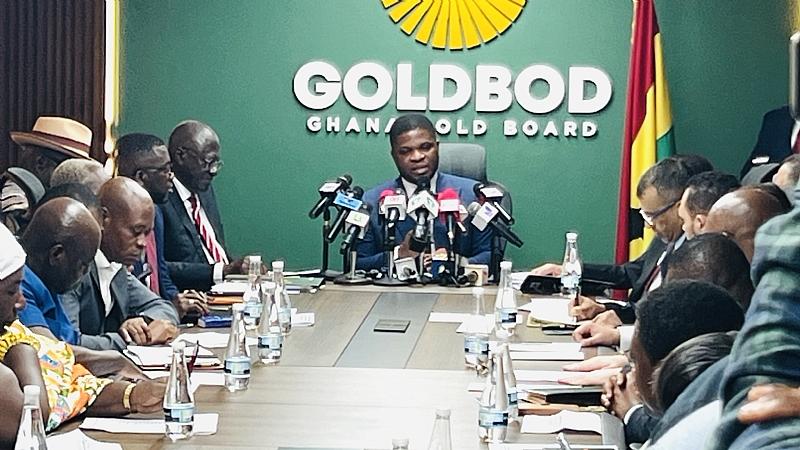
He pointed to the government’s Ghana Gold Board and efforts surrounding the processing of critical minerals such as lithium, bauxite and manganese as examples of the direction in which the administration wants the economy to move. For the envoys, that means investment promotion will involve more than organising business receptions or directing potential investors to ministries in Accra. Mahama wants Ghanaian missions to follow proposed investments through, identify obstacles that could prevent projects from materialising and work with the Foreign Affairs Ministry and relevant state agencies to address those problems. His message was that a memorandum of understanding or high level meeting should not be treated as the final achievement if it never becomes a functioning project, expanded market or new source of employment.
The President’s remarks also came against the background of what he described as a changing international environment characterised by shifting alliances, protectionist trade measures, growing competition over strategic minerals and technology, climate pressures and international insecurity. He argued that Ghana must protect its ability to make independent decisions while building partnerships that strengthen the country’s capacity to produce and compete. That position has become increasingly relevant as the government expands ties not only with Ghana’s longstanding partners in Europe and North America but also with countries in the Gulf, Asia, Africa and the wider Global South.
A major part of that strategy is Ghana’s application for partnership with the BRICS grouping, an issue Mahama raised directly with the four envoys. He said Ghana’s engagement with BRICS should be understood as an attempt to broaden development options and deepen South South cooperation rather than as an abandonment of established Western partners. According to the President, Ghana wants access to wider opportunities in trade, investment, industrialisation and value addition while retaining its long standing working relationships with traditional partners. He instructed the diplomats to explain that position clearly in their host countries because Ghana’s attempt to diversify its international partnerships is likely to attract questions about how Accra intends to navigate an increasingly divided geopolitical environment.
The instruction is especially relevant to the envoys being deployed to Qatar and Angola, both of which occupy important positions in energy and investment markets. Qatar is one of the world’s major natural gas producers and manages substantial global investments through state backed institutions. For Ghana, stronger relations with Doha could potentially create opportunities in infrastructure financing, energy, aviation, hospitality, agriculture and other sectors where Gulf capital has expanded internationally. Louis Kwame Obeng will therefore enter the assignment at a time when Mahama wants Ghanaian diplomacy in the Gulf to be judged increasingly by the commercial and investment opportunities it delivers.
Angola presents a different but equally strategic assignment. Nana Antwiwaa Dodoo has been asked to deepen bilateral ties with Luanda while also working to expand trade, investment and private sector cooperation between the two African economies. Mahama has additionally charged her to work with Angola to sustain international attention on reparatory justice, an issue both governments have supported within broader African and diaspora discussions about slavery, colonial exploitation and the economic consequences of historical injustice. Ghana and Angola are also expected to use their relationship to coordinate more closely on African political and economic priorities, particularly as Ghana prepares for a more prominent continental diplomatic role.
Mahama specifically asked Nana Dodoo to work towards convening the seventh session of the Ghana Angola Joint Commission for Cooperation in 2027. The President wants that engagement to focus on practical areas of collaboration and, importantly, sustained implementation after agreements are reached. That instruction mirrors his wider message to all four envoys that diplomacy should not end with communiqués and ceremonial handshakes. The government wants missions to track commitments and ensure that agreements negotiated abroad eventually produce tangible results.
The Israel posting carries a more politically sensitive mandate. Mahama directed Evelyn Korantemaa Ofosu-Amable to uphold Ghana’s established position on the Israeli Palestinian conflict, stating that Ghana recognises the State of Palestine and supports a viable two state solution in which Israel and Palestine exist side by side in peace and security within internationally recognised and secure borders. The President also emphasised that Ghana’s international engagements should uphold international law, protect civilians and respect human dignity. His instruction means the new ambassador will have to manage Ghana’s bilateral relationship with Israel while at the same time communicating Accra’s position on one of the most contentious conflicts in international diplomacy.
Ghana and Israel have long maintained diplomatic and economic relations involving agriculture, security, technology, education and trade, but the war in Gaza and wider regional tensions have made relations with Israel increasingly politically sensitive for governments around the world. For Ofosu-Amable, the assignment will therefore require balancing practical bilateral cooperation with Ghana’s public support for Palestinian statehood and the application of international humanitarian principles. Mahama’s decision to spell out the government’s position during the commissioning ceremony leaves little ambiguity about the policy framework within which the ambassador is expected to operate.
The Geneva assignment given to Jedidiah Reuben Adogla is different from the three bilateral postings because it places him at the centre of multilateral diplomacy. Geneva hosts major international institutions whose decisions affect trade, public health, labour, intellectual property, humanitarian affairs and human rights. Mahama told Adogla to ensure Ghana’s positions in those institutions are clearly articulated and supported by sustained engagement with other delegations. He also asked him to build coalitions with African countries and other partners where interests overlap, particularly when international rules could affect developing economies differently from wealthier states.
The President’s instructions to the Geneva mission are closely connected to Ghana’s recent re election to the United Nations Human Rights Council for the 2027 to 2029 term. Mahama commended the Foreign Affairs Ministry and Foreign Minister Samuel Okudzeto Ablakwa for the campaign that secured the seat and said Ghana’s return to the council comes with a responsibility to contribute credibly and consistently. He expects the Geneva mission to represent the country not only on human rights but also on international discussions involving health, trade and labour.
Mahama also wants Adogla to promote the Accra Reset initiative in Geneva, particularly in conversations concerning health sovereignty, access to medicines and medical products and the ability of developing countries to build stronger domestic healthcare capacity. The Accra Reset has become one of the administration’s international policy platforms, advocating a development model in which countries in the Global South strengthen their own institutions and production capacity instead of remaining excessively dependent on unpredictable external aid. Geneva, where several of the world’s most influential health and development bodies are headquartered, will therefore be an important arena for advancing those ideas.
Beyond the economic and geopolitical assignments, Mahama told all four diplomats to pay close attention to the welfare of Ghanaians living abroad. Consular services remain one of the areas through which ordinary citizens most directly experience the work of an embassy, particularly when they face immigration problems, detention, deaths abroad, employment disputes, document issues or emergencies. The President said Ghana’s missions must be accessible, responsive and professional, reinforcing the government’s view of the diaspora as an important national constituency and economic resource.
Mahama has previously referred to Ghanaians abroad as the country’s 17th Region, highlighting their role in remittances, investment, skills transfer and international connections. During the latest commissioning, he again urged the envoys to strengthen relationships with diaspora communities and make it easier for Ghanaians living abroad to contribute their expertise and capital to national development. The challenge for the new missions will be converting that political language into practical improvements in consular delivery and more structured engagement with diaspora professionals and investors.
The President also reminded the ambassadors that their work must remain within the policy direction of the government and in close coordination with the Ministry of Foreign Affairs. Diplomats often operate far from Accra and have significant discretion in daily engagements, but Mahama stressed that they represent one government and one national interest. He also urged responsible use of public resources and reminded the envoys of the constitutional principles governing Ghana’s international relations, including Article 40 of the 1992 Constitution.
That focus on accountability is consistent with an approach Mahama has taken with previous batches of ambassadors appointed under his administration. The government has introduced performance expectations for diplomatic missions and has said measurable outcomes should form part of how ambassadors are assessed. The administration argues that maintaining missions abroad is expensive and that taxpayers should be able to see economic, diplomatic and consular value from those investments. Critics of the broader concept of economic diplomacy often note that ambassadors cannot single handedly overcome domestic regulatory problems, infrastructure gaps or investor concerns, but the government’s position is that missions should at least actively identify opportunities and help remove obstacles rather than operate primarily as ceremonial outposts.
Nana Antwiwaa Dodoo, speaking on behalf of the newly commissioned diplomats, thanked Mahama for the confidence placed in them and pledged that they would work to mobilise investment and develop strategic partnerships capable of supporting the government’s major programmes. She specifically referenced initiatives including the Big Push infrastructure programme, the 24 Hour Economy and MahamaCares, signalling that the envoys understand their postings as closely connected to the administration’s domestic development agenda.
Their commissioning also adds another layer to the diplomatic team Mahama has been assembling since returning to office. Earlier groups of ambassadors and high commissioners were given similar instructions to prioritise Ghana’s economic interests and to demonstrate measurable performance. Friday’s ceremony suggests that the President intends to continue that model, with diplomacy increasingly tied to trade numbers, investment commitments, job creation, market access and the ability of Ghanaian businesses to establish themselves abroad.
The strategy comes as Ghana attempts to reposition itself following years of economic pressure, debt restructuring and negotiations with international creditors. Government officials have argued that macroeconomic stabilisation must now be followed by an investment led recovery capable of expanding production and employment. Foreign missions can contribute to that effort by identifying companies seeking new markets, introducing Ghanaian businesses to potential partners and helping policymakers understand what international investors consider obstacles to entering the Ghanaian market.
Whether the strategy produces significant results will ultimately depend on factors far beyond the work of the four diplomats. Investors will consider taxation, exchange rate stability, energy supply, infrastructure, regulations, political risk and the ease of moving capital before committing major resources. Ghanaian exporters will similarly need competitive products, financing, standards certification and reliable logistics if new diplomatic relationships are to translate into actual sales. The missions can open doors and negotiate partnerships, but domestic agencies and the private sector will have to follow through.
That reality appears to be part of why Mahama placed particular emphasis on follow up. His instruction was not simply for ambassadors to attract proposals but to track them, identify implementation problems and work with ministries and agencies in Accra until obstacles are addressed. In effect, he wants the missions to act as economic problem solvers as well as diplomatic representatives.
The four assignments also demonstrate the different fronts on which Ghana’s foreign policy is now operating. In Angola, the emphasis combines African political cooperation, trade and reparatory justice. In Qatar, the focus is expected to include investment, capital and economic partnerships. In Israel, the ambassador will navigate commercial and bilateral relations while upholding Ghana’s stated support for Palestinian statehood and a negotiated two state solution. In Geneva, Ghana will engage some of the world’s most influential multilateral institutions on trade, labour, health and human rights.
For Mahama, however, those very different postings are tied together by one central expectation: Ghana’s diplomacy must produce something tangible for Ghanaians. The President told the envoys that the ultimate measure of successful economic diplomacy should be the opportunities they are able to bring back to the country. That means more foreign investment, stronger markets for Ghanaian businesses, useful technology and expertise, jobs and more effective support for citizens overseas.
The four diplomats now leave Jubilee House with prestigious titles but also with performance expectations attached to them. Their work will take place thousands of kilometres apart and in very different political environments, but the message delivered by Mahama was essentially the same in every case. Ghana wants diplomacy that can be translated into economic value rather than diplomacy that ends at the conference table.
As Nana Antwiwaa Dodoo heads for Angola, Louis Kwame Obeng takes up the Qatar assignment, Evelyn Korantemaa Ofosu-Amable prepares for Israel and Jedidiah Reuben Adogla assumes responsibility for Ghana’s multilateral representation in Geneva, attention will now turn to whether the government’s economic diplomacy strategy can produce the investment, trade links and strategic partnerships Mahama says Ghana needs. The President has made the assignment clear. The next test will be the results.