ABLAKWA CHALLENGES MINORITY TO NAME ANY SOUTH AFRICA EVACUEE DENIED GH¢5,500 ALLOWANCE
Foreign Affairs Minister Samuel Okudzeto Ablakwa has challenged the Minority in Parliament to identify any Ghanaian evacuated from South Africa who failed to receive the government’s GH¢5,500 support package, comprising a GH¢5,000 reintegration grant and GH¢500 transport allowance. The government says all 1,964 evacuees were paid and that the entire GH¢49,721,786 evacuation expenditure is documented. The Minority says its review of payment records could match only 824 names across the two allowance registers and has called for an independent audit, while also raising separate questions about other expenditure categories.
Foreign Affairs Minister Samuel Okudzeto Ablakwa has challenged the Minority in Parliament to identify even one Ghanaian evacuated from South Africa who did not receive the government’s GH¢5,500 reintegration and transportation support, escalating a growing political dispute over the GH¢49.72 million spent on bringing nearly 2,000 citizens home during a period of heightened anti-immigrant tension and attacks in South Africa. Ablakwa rejected suggestions that part of the money remains unexplained and accused his critics of attempting to create a scandal around an evacuation exercise that the government says was fully documented from the flights and accommodation to the individual payments made to returning citizens.
Speaking as questions over the evacuation expenditure continued to dominate political discussion, Ablakwa said he had been waiting for any evacuee to publicly state that he or she failed to receive the promised money after arriving in Ghana. Each returnee was entitled to GH¢5,000 as a reintegration grant and an additional GH¢500 for transportation, bringing the direct financial support to GH¢5,500 per person. The minister argued that the absence of a beneficiary publicly claiming non-payment undermines the Minority’s suggestion that government records do not adequately demonstrate that the full amount was distributed.
Ablakwa’s challenge follows allegations by the New Patriotic Party Minority in Parliament that documentation released by the Foreign Affairs Ministry contains discrepancies requiring an independent audit. The Minority has not simply alleged that money was stolen or conclusively gone missing. Its stated position is that figures in the records it reviewed do not fully reconcile and that government must produce sufficient documentation to explain the differences before Parliament and the public can be satisfied that every expenditure was properly accounted for.
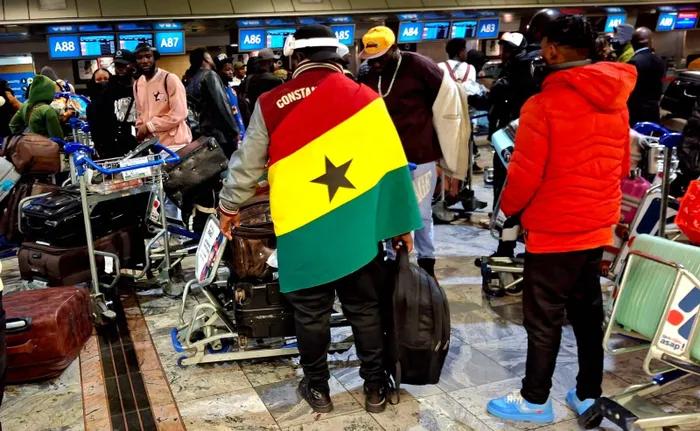
The dispute centers on the evacuation of 1,964 Ghanaians from South Africa between May 27 and September 4, 2026, following a period of rising hostility toward foreign nationals and reported attacks affecting African migrants. Ghana organized chartered flights and commercial tickets to bring citizens home while also arranging accommodation, feeding, medical care, ground transportation and other logistical support for people waiting to leave South Africa. The final batch of 41 evacuees arrived in Ghana on September 4, officially ending an operation that had lasted more than three months.
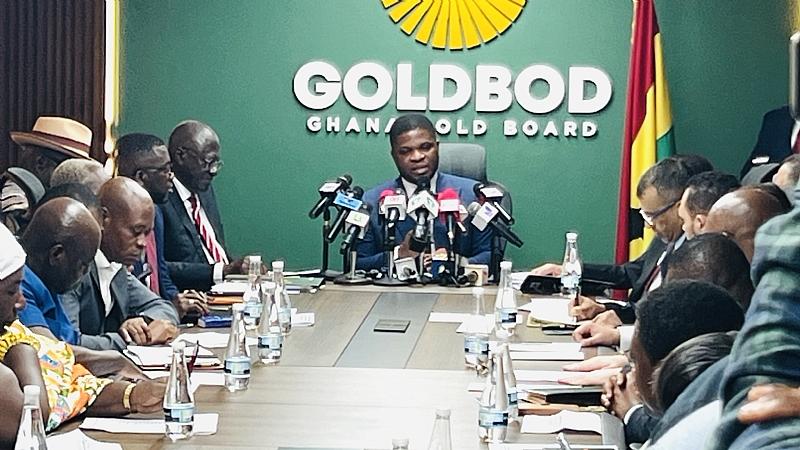
Three days after the evacuation concluded, Ablakwa held a public briefing in Accra and announced that the entire exercise had cost GH¢49,721,786. According to the government’s breakdown, GH¢33,721,786 came directly from public funds while Engineers and Planners, the company associated with businessman Ibrahim Mahama, contributed GH¢16 million to support the operation. The government said there were no outstanding liabilities after the exercise and that all obligations connected to the evacuation had been settled.
The official breakdown showed that GH¢38,835,512 went toward chartered flights, commercial airline tickets, transportation, feeding, hotel accommodation, medical treatment and related logistical expenses in South Africa. Another GH¢10,802,000 was reported as expenditure on reintegration and transportation allowances, while GH¢84,274 was spent on returning two mortal remains to Ghana. The individual support package for evacuees consisted of the GH¢5,000 reintegration payment and GH¢500 transportation allowance that has now become one of the central points of contention between the government and the Minority.
The Minority’s concerns emerged after Nana Asafo-Adjei Ayeh, the Deputy Ranking Member on Parliament’s Foreign Affairs Committee and Member of Parliament for Bosome-Freho, used the Right to Information process to request itemized expenditure records, flight manifests, payment registers and other documentation related to the operation. The Ministry subsequently provided a response running to more than 200 pages, containing information on evacuees and expenditures connected to the exercise.
After examining the documents, the Minority said it found inconsistencies that required further explanation. One of its most prominent claims concerns the two registers relating to the GH¢5,000 reintegration grant and GH¢500 transportation payment. According to the Minority’s analysis, it could match only 824 names appearing across both registers against the government’s total of 1,964 evacuees, leaving 1,140 people whose corresponding entries could not be reconciled in the manner used by the Minority.
At GH¢5,500 for each of those 1,140 people, the Minority calculated approximately GH¢6.27 million requiring additional documentation or clarification. That figure is important because it represents one specific area of disagreement within the wider review and should not be confused with the Minority’s broader claim that more than GH¢16.4 million across multiple expenditure categories requires reconciliation. The wider figure also includes questions concerning flight records, duplicate entries, payments involving minors and other financial items identified during the opposition’s review.
The Minority has therefore called for an independent audit rather than presenting its calculations as a final finding of theft. Its position is that an external examination should compare the Ministry’s expenditure claims with supporting documents, passenger records, signed payment registers, flight invoices and other evidence to determine whether the full GH¢49.72 million was spent exactly as reported. That distinction is important because discrepancies in documentation do not by themselves establish that public money was stolen, diverted or fraudulently paid.
Ablakwa has strongly rejected the Minority’s interpretation. He argues that focusing on differences between particular registers while ignoring the full documentation supplied by the Ministry creates a misleading impression that evacuees were denied money. In his latest response, the minister challenged the opposition to move beyond spreadsheet analysis and identify an actual beneficiary who returned from South Africa but failed to receive either the GH¢5,000 reintegration payment or the GH¢500 transportation allowance.
He said he had been searching for even one Ghanaian willing to say publicly that the promised money was not received. Ablakwa questioned why, if more than a thousand people had genuinely been denied their allowance as the Minority’s interpretation of the registers might suggest, none had emerged to complain. He characterized the controversy as an effort to manufacture a scandal around an operation that the government believes was both necessary and successfully executed.
That argument, however, does not by itself settle the accounting question raised by the Minority. The fact that no evacuee has publicly complained of non-payment can support the government’s claim that beneficiaries received their money, but public financial accountability also requires expenditure records to reconcile independently of whether recipients come forward. The competing positions therefore address different aspects of the controversy, with Ablakwa emphasizing whether beneficiaries were actually paid and the Minority emphasizing whether the documentation it received fully demonstrates those payments.
The Majority side of Parliament’s Foreign Affairs Committee has backed Ablakwa’s position and says it has reviewed a comprehensive report from the Ministry covering all 1,964 evacuees. Committee Chairman Dr Alfred Okoe Vanderpuije said the documents contained names, dates of birth, passport numbers, professions, contact information, amounts received and signatures. For minors, he said parents or guardians provided the necessary attestations, giving the committee documentation that the Majority says accounts for every individual evacuated.
The Majority also says it received extensive supporting records covering chartered flights, commercial tickets, feeding, accommodation, transportation and logistical arrangements handled through Ghana’s diplomatic mission in South Africa. Vanderpuije said documentation was also provided concerning the GH¢16 million contribution from Engineers and Planners, including correspondence related to the donation and acknowledgments from the government.
On that basis, the Majority has maintained that the GH¢49,721,786 figure represents the true expenditure on the evacuation and that there is no missing money. It has also pointed to the absence of complaints from evacuees concerning the GH¢5,500 support package, echoing the argument now being made directly by Ablakwa. The Majority’s position is that the Minority has taken particular sections of a large body of records and presented them in a manner that creates suspicion without considering the complete documentation available to the committee.
The Minority disputes that interpretation and says requesting an independent audit is a legitimate exercise of parliamentary oversight rather than an attempt to undermine the evacuation itself. Its members have stressed that they are not questioning the need to rescue Ghanaian citizens facing insecurity in South Africa but want the government to provide a clear reconciliation of expenditure because public resources were involved. The opposition argues that even a successful humanitarian operation must remain subject to the same scrutiny as other government spending.
The government has also sought to strengthen its transparency argument by involving the Auditor-General. According to the Majority on the Foreign Affairs Committee, the Foreign Affairs Ministry wrote to the Auditor-General on September 17 requesting an examination of evacuation exercises dating back to 2017. Such a review would extend beyond the 2026 South Africa evacuation to previous operations involving Ghanaians affected by the COVID-19 pandemic, the war in Ukraine and the conflict in Sudan.
That broader audit request has introduced another political dimension because the governing side has argued that scrutiny should apply equally to evacuation expenditure under previous administrations. Majority members have questioned spending associated with earlier operations, particularly the costs linked to quarantine arrangements during the COVID-19 pandemic, while maintaining that the current government has provided an unusually detailed level of documentation for the South Africa exercise.
The Minority has nevertheless focused on the 2026 operation because it says its questions are based on the government’s own records. Its analysis followed an RTI request rather than anonymous allegations, and the documents supplied by the Ministry form the basis of the opposition’s call for further reconciliation. The central issue is therefore likely to be resolved most conclusively through an independent examination of the records rather than competing press conferences.
The evacuation itself began after conditions deteriorated for some foreign nationals in South Africa, particularly amid anti-immigrant sentiment and incidents of intimidation and violence. Ghanaian authorities said they decided to facilitate voluntary returns after assessing the security environment and consulting citizens who wanted to leave. Ablakwa also traveled to South Africa during the crisis and said the government concluded that evacuation was necessary to protect nationals who felt unsafe or had been directly affected.
When evacuees arrived in Ghana, the government provided more than cash assistance. Returnees were offered medical screening, registration under the National Health Insurance Scheme, food packages and telecommunications support, while psychologists and trauma counselors were made available to people requiring assistance after their experiences abroad. Authorities also said employment and reintegration assistance would continue beyond the immediate arrival period.
The GH¢5,000 reintegration payment was intended to help returning citizens restart their lives after leaving employment, homes or businesses in South Africa, while the GH¢500 transportation payment was meant to help beneficiaries reach their communities after arriving in Ghana. Government officials have repeatedly emphasized those two components because they were among the most visible forms of direct assistance received by the evacuees.
Using the government’s reported figure of 1,964 returnees, payments of GH¢5,500 per person would amount to approximately GH¢10.8 million, broadly matching the GH¢10,802,000 officially reported for reintegration and transportation support. The controversy is therefore not primarily about whether the arithmetic of the total is possible. It concerns whether the individual payment records supplied to Parliament demonstrate conclusively that the stated amounts went to all of the intended recipients.
The Minority says matching only 824 names across the registers raises a legitimate question about the remaining beneficiaries. The government and Majority respond that additional documentation exists and that the entire list of 1,964 returnees is accounted for, complete with identifying information and signatures. An independent audit would be able to determine whether the apparent difference results from the way separate registers were maintained, different payment procedures, payments made to parents or guardians, duplicated data or an actual documentation gap.
It would also help clarify the Minority’s broader GH¢16.4 million concern, which extends beyond the reintegration allowance. Presenting that larger figure as already missing would be premature because it remains an allegation based on the opposition’s reconciliation of the documents rather than a finding by an auditor or court. Equally, the government’s insistence that everything is accounted for remains a claim that can be tested through the audit process.
The political dispute has become increasingly sharp because both sides are framing the documentation differently. Ablakwa has accused his critics of searching for a scandal where none exists and has challenged them to produce a beneficiary who was denied support. The Minority says the issue is not whether someone has appeared on television to complain but whether nearly GH¢50 million in public and donated funds can be traced through documentation that independently reconciles.
Those positions are not mutually exclusive. It is possible for evacuees to have received their payments while errors or inconsistencies exist in the registers, just as complete-looking documentation does not automatically establish that every transaction occurred exactly as recorded. That is why an external audit could move the controversy beyond political claims and establish what the records actually show.
The Foreign Affairs Ministry’s decision to provide more than 200 pages of documents under the RTI request has already placed a significant volume of material in the hands of Parliament. The dispute now concerns the interpretation and completeness of those records rather than an absence of documentation altogether. That distinction matters because the current controversy is fundamentally a reconciliation dispute, not a proven finding that GH¢16.4 million or any other amount has been stolen.
Ablakwa’s latest challenge shifts the focus back toward the individual evacuees. If the Minority can produce returnees who were officially listed as beneficiaries but say they never received the GH¢5,500 support, that would materially strengthen questions about the government’s payment records. If no such beneficiaries emerge and an independent audit confirms the Ministry’s documentation, the government would have stronger grounds for rejecting the allegations.
The episode also highlights the difficulty of managing emergency evacuations involving hundreds or thousands of citizens across international borders. Governments must often arrange flights, accommodation, medical support and emergency payments quickly while still maintaining records capable of withstanding later parliamentary and audit scrutiny. Speed can be essential during a security crisis, but emergency circumstances do not eliminate the obligation to account accurately for public expenditure.
For Ablakwa, the controversy has become a test of the transparency claims he has made throughout the operation. He has repeatedly argued that the government voluntarily disclosed the total cost, provided detailed information to Parliament and invited additional scrutiny instead of concealing the expenditure. The Minority is effectively testing those claims by asking whether every figure in the publicly presented total can be reconciled with the underlying records.
For Parliament, the question extends beyond party politics. Nearly GH¢50 million was mobilized through government funding and a major private contribution to bring citizens home, and establishing exactly how the money was used would strengthen confidence in future emergency operations. A clear audit could also produce better record-keeping standards for evacuations involving allowances, flights and assistance to minors.
The immediate disagreement remains unresolved. Ablakwa says all 1,964 evacuees received the GH¢5,500 support and is challenging the Minority to identify anyone who did not. The Minority says its examination of the supplied registers could reconcile only 824 names across the two allowance lists and wants independent auditors to examine that and several other discrepancies.
Until an audit or similarly authoritative review is completed, neither the Minority’s disputed figures nor the government’s rejection of them should be treated as the final determination. What is established is that GH¢49,721,786 was reported as the total cost of evacuating 1,964 Ghanaians, GH¢10,802,000 was reported for reintegration and transport support, and the government says each evacuee received GH¢5,000 for reintegration plus GH¢500 for transportation.
The next important development will therefore be documentary rather than rhetorical. If the payment registers, signatures, flight manifests and supporting records all reconcile, the government will be able to demonstrate that the funds were accounted for as claimed. If an independent review identifies genuine gaps, the Ministry will have to explain them and establish where the affected money went.
Ablakwa has now placed the issue in stark personal terms by asking his critics to find one evacuee who was denied the allowance. The Minority has placed it in equally clear accounting terms by asking the government to reconcile the names and figures contained in its own records. Resolving both questions through an independent audit would provide a stronger answer than either side can achieve through political accusations alone.