MAHAMA ANNOUNCES 2KM FOR REGIONS WITHOUT AIRPORTS AS GOVERNMENT TARGETS EMERGENCY LANDINGS AND MEDICAL EVACUATIONS

President John Dramani Mahama has announced plans to construct approximately two-kilometre airstrips in every Ghanaian region that does not already have an airport. The facilities will include small control offices and are intended principally to provide landing sites for aircraft during emergencies and urgent medical evacuations. Western North Region has been specifically identified as one of the beneficiaries. The government has not yet announced the total cost, construction timetable or complete list of locations under the programme.
President John Dramani Mahama has announced plans to construct approximately two-kilometre airstrips in every region of Ghana that does not already have an airport, introducing a new domestic aviation initiative designed primarily to support emergency aircraft operations and urgent medical evacuations. The President said the proposed facilities would include landing strips capable of receiving suitable aircraft together with small control offices to support basic flight operations, giving regions without functioning airports the ability to receive aircraft during emergencies. Western North Region, which currently has no operational commercial airport, has been specifically identified as one of the beneficiaries of the programme.
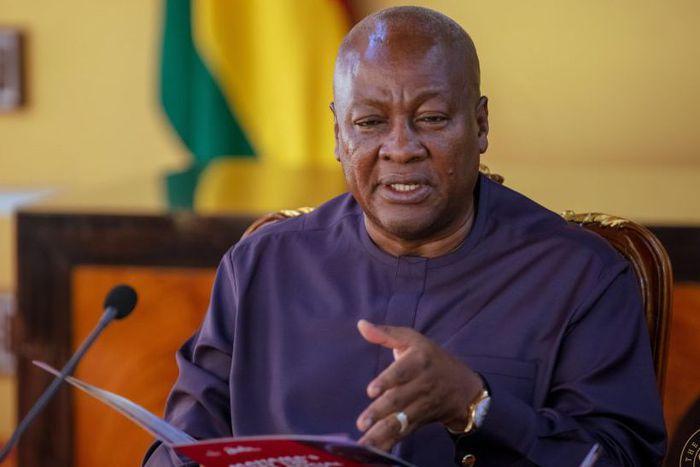
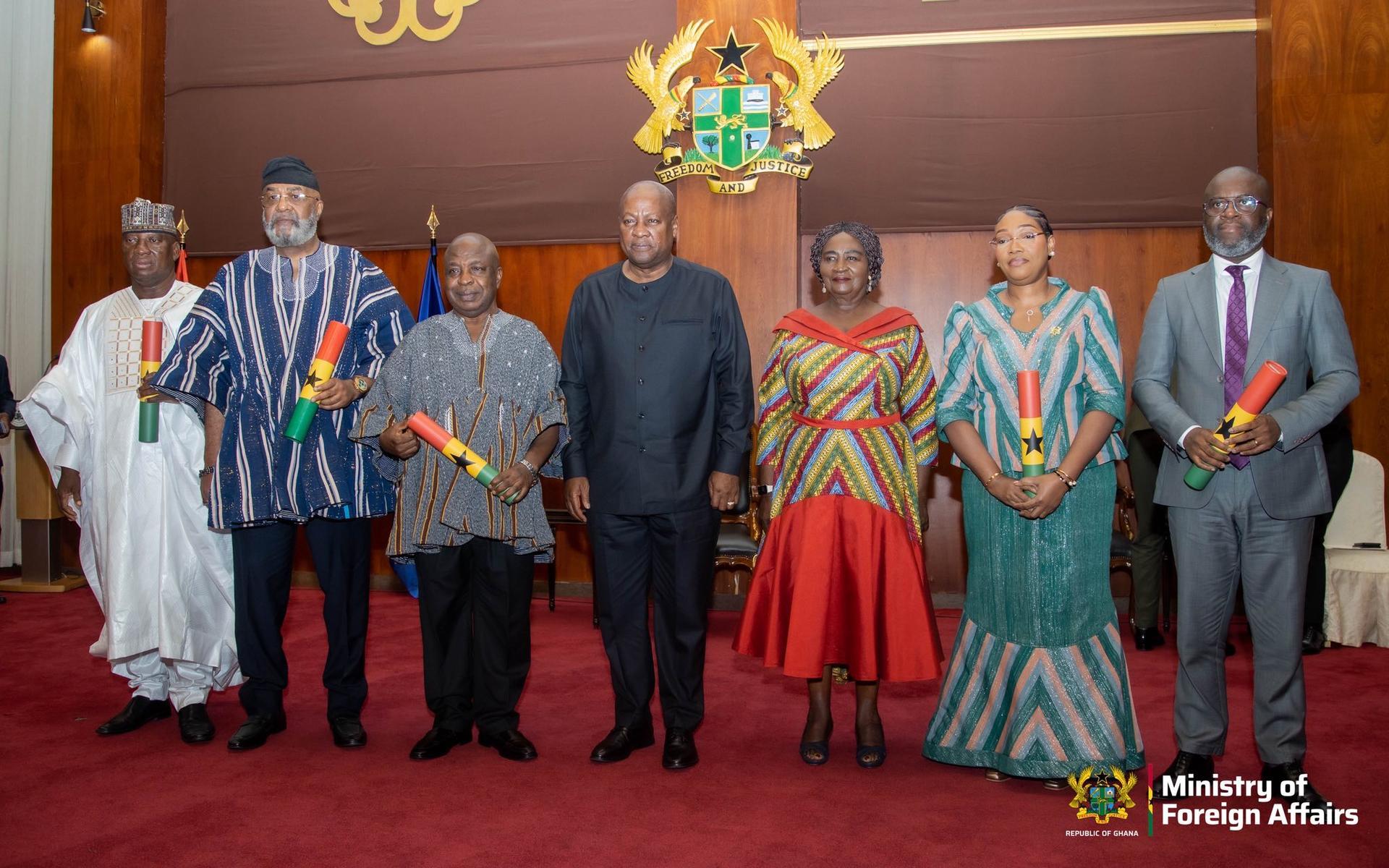
President Mahama disclosed the plan while addressing chiefs from the Western North Region during a courtesy engagement at the Presidency. He explained that the lack of suitable aircraft landing facilities in some parts of Ghana becomes particularly serious when emergencies occur and patients have to be transported quickly to advanced medical facilities elsewhere in the country. His proposal is therefore not centred initially on building large passenger terminals in every region, but on establishing practical aviation infrastructure that can allow aircraft to land when time and accessibility become critical.
Under the President’s description of the initiative, each qualifying region would receive an airstrip measuring roughly two kilometres in length alongside a small control office. A runway of that length could potentially accommodate a range of light and medium aircraft depending on its engineering specifications, pavement strength, elevation and aviation certification. The government has not yet published detailed technical designs, aircraft categories, project costs or construction timelines for the proposed network, meaning the announcement should currently be understood as a policy commitment rather than a completed aviation programme.
Mahama said regions that already have airports would not require the additional airstrips because they already possess aviation facilities capable of receiving aircraft. The focus would instead be on parts of Ghana where no suitable landing facility currently exists. Western North was the only beneficiary specifically identified in the latest announcement, and the government has not yet released a complete list of all regions expected to receive the new airstrips.
The proposal could significantly change emergency transportation in parts of the country where long road journeys remain the only realistic option for moving critically ill patients. In regions without airports, a medical emergency requiring specialist treatment in Accra, Kumasi or another major urban centre can involve several hours of road travel before the patient reaches an appropriate hospital. In cases involving severe trauma, complications during pregnancy, stroke, major burns or other time-sensitive conditions, that delay can become medically significant.
An emergency airstrip cannot replace a functioning hospital, ambulance service or road network, but it can provide another transport option when specialised treatment is unavailable locally. Aircraft could potentially be deployed to receive critically ill patients, medical personnel, blood supplies, medicines or emergency equipment during situations in which road transport would take too long.
President Mahama highlighted this medical evacuation role when explaining the proposal. He said emergencies sometimes arise in regions that currently have no place where an aircraft can safely land, making it difficult to use aviation when a rapid evacuation becomes necessary. The new facilities are intended to close that gap by ensuring that each region has at least a basic aviation access point.
Western North provides a clear example of the challenge the President is trying to address. The region was created in 2019 and includes important agricultural, mining and commercial communities, but it does not have an operational commercial airport. Travellers generally depend on roads to reach neighbouring regions or major cities before connecting to domestic air services.
For residents of remote communities, the problem is not simply the absence of scheduled passenger flights. It is the absence of aviation infrastructure that could become useful during disasters, medical emergencies or other urgent situations. Establishing a controlled landing strip would mean aircraft could potentially reach the region directly instead of requiring patients or emergency personnel to make the entire journey by road.
The proposal also fits into the Mahama administration’s broader effort to expand Ghana’s domestic aviation infrastructure. The government is already pursuing more substantial airport projects in several regions, including plans for a new airport near Bolgatanga in the Upper East Region, a new facility for Wa in the Upper West Region and a replacement airport serving the Bono Region near Sunyani.
Those airport projects are significantly more ambitious than the newly announced airstrips. In August, Mahama said the planned Bolgatanga airport near Sumbrungu would have a 2,200-metre runway capable of handling domestic passenger jets and cargo aircraft, together with a terminal building and an adjoining airport city development. The Presidency said the project was expected to be completed within approximately 24 months once construction begins.
The government has also said work on a new Wa airport would begin after funding and procurement arrangements were secured. Mahama explained during a September visit that the existing Wa facility began as an airstrip and was no longer suitable for modern aviation requirements, making the construction of a new airport necessary rather than simply upgrading the old site.
In the Bono Region, Mahama has similarly announced plans for a new regional airport at Nsoatre near Sunyani because the existing Sunyani Airport has limited expansion possibilities. The proposed facility is expected to have a runway of about 2.4 kilometres, longer than the approximately two-kilometre emergency airstrips now being proposed for regions without airport infrastructure.
These different projects illustrate an important distinction between a regional airport and the smaller airstrips announced in the latest policy. A full commercial airport normally requires passenger terminals, baggage facilities, security screening, aircraft parking areas, firefighting capacity, navigation systems and other infrastructure necessary to manage scheduled passenger and cargo operations. An emergency airstrip can be substantially simpler if its main role is to provide a safe runway, basic operational support and an access point for occasional aircraft.
That distinction could also make the airstrip programme considerably less expensive than constructing full airports in every region. Building and maintaining commercial airports can cost large sums, and facilities with limited passenger demand may struggle to generate enough revenue to cover operating costs. A more modest airstrip designed around medical evacuation and emergency access could provide some of the strategic benefits of aviation without requiring every region to operate a large terminal complex.
However, even basic airstrips require serious planning and investment. A two-kilometre runway must be constructed to appropriate safety standards if it is expected to handle regular aircraft movements. Engineers must consider drainage, runway orientation, surrounding terrain, visibility, wind conditions, obstacles, pavement strength and access for emergency vehicles.
Land acquisition could also become an important issue. A runway measuring approximately two kilometres needs significantly more land than the runway surface alone because aviation regulations generally require safety areas around the facility. The final land requirement would depend on the type of aircraft expected to use each site and the specifications established by Ghana’s aviation regulators.
The Ghana Civil Aviation Authority would be expected to play an important role in determining whether proposed sites meet aviation safety requirements. Aircraft cannot simply land on a newly constructed road-like surface without appropriate certification, operational procedures and safety controls. Even relatively small airfields need clearly defined rules governing take-offs, landings, communications and emergency response.
Mahama’s reference to small control offices suggests that government is considering at least some level of local flight coordination rather than constructing unattended strips. The details have not yet been announced, including whether those offices would be permanently staffed, what communication systems they would operate and which agency would manage the facilities.
The Ghana Airports Company is responsible for the management of major airports in the country, while the Ghana Civil Aviation Authority regulates aviation safety. It remains unclear whether the proposed airstrips would be operated directly by the Airports Company, regional authorities or another public institution.
Those operational questions will become increasingly important if the policy moves from announcement to implementation. Building a runway is only the first stage. Government would have to determine who maintains the surface, clears vegetation, controls access, provides security and ensures the facility remains safe enough to receive an aircraft at short notice.
Maintenance is particularly important because an emergency facility may go for long periods without regular aircraft movements. A poorly maintained strip can deteriorate through heavy rainfall, vegetation growth or surface damage and become unavailable precisely when an emergency occurs. For the programme to achieve its intended purpose, the facilities would have to remain operational even when they are not being used frequently.
Weather infrastructure may also be required. Pilots need reliable information on visibility, wind and other conditions before using unfamiliar airfields. Depending on the level of operation proposed, some facilities could require basic meteorological equipment or coordination with national weather services.
Night-time operations would create another question. If a medical emergency occurs after dark, an airstrip without runway lighting may not be usable by many aircraft. Government has not yet said whether the proposed facilities will include lighting or whether they will initially operate only during daylight hours.
The medical evacuation concept will also require coordination with Ghana’s healthcare system. A functioning airstrip alone does not move a patient. Hospitals and ambulance teams would need procedures for deciding when an air evacuation is medically necessary, identifying an available aircraft and transferring the patient safely between hospital, airstrip and receiving facility.
Ghana could therefore eventually need a more formal emergency aviation framework if the airstrip network expands. Such a system might involve the Ghana Armed Forces, National Ambulance Service, Ghana Health Service, private aviation operators or specialised air ambulance providers depending on the circumstances.

Military aircraft could potentially be particularly useful during national emergencies because the Ghana Armed Forces already possesses aviation capabilities that can support transport and disaster response. Civilian aircraft operators could also play a role if contractual or emergency arrangements are established.
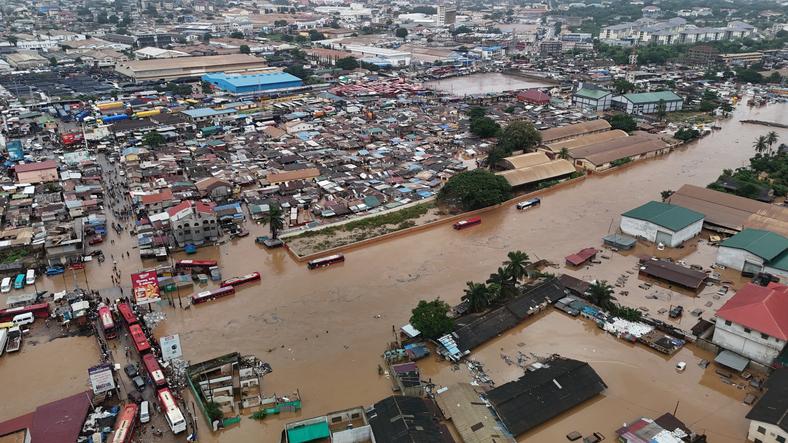
The airstrips could provide value beyond medical evacuations. Natural disasters, major road accidents or other emergencies can require rapid movement of rescue personnel and equipment. Flooding can cut road access to communities, while damaged bridges or landslides can isolate areas temporarily. Having aviation access in every region would give emergency authorities another way to reach affected populations.
Ghana’s experience with floods and other emergencies demonstrates the importance of having multiple transport options. Road networks remain essential, but severe weather can make some routes unusable exactly when emergency access is most urgently required.
An aircraft landing facility could also support national security operations when rapid deployment is required. However, Mahama’s public explanation of the initiative focused principally on emergencies and medical evacuation rather than presenting the programme as a military project.
The economic impact could eventually become broader if some of the airstrips attract enough demand to support limited charter, business or specialised cargo operations. Agricultural regions producing high-value or time-sensitive goods could potentially benefit from faster transport, although no such commercial expansion has yet been formally announced as part of the initiative.
Western North has significant agricultural resources, including cocoa and other crops, as well as mining activity. Improved aviation access could therefore become useful for government officials, investors, emergency services and specialised transport even if scheduled passenger flights are not immediately introduced.
The region’s chiefs have been pressing the government on a range of development issues during their recent engagement with the President. Their delegation to Jubilee House discussed infrastructure, employment and the fight against illegal mining, with Mahama outlining several programmes intended to expand economic opportunities in Western North.
The airstrip announcement adds aviation connectivity to that development conversation. For a relatively new region, infrastructure that connects it more directly with other parts of the country can carry both practical and symbolic significance.
Mahama’s broader regional development strategy has repeatedly emphasised the need to reduce disparities between Ghana’s regions. His administration has announced roads, healthcare facilities, industrial investments and airport projects as part of efforts to improve access to services and economic opportunities outside Accra.
Domestic aviation is particularly relevant because Ghana’s geography means some regional capitals and remote districts remain several hours from major airports. Tamale, Kumasi, Takoradi and Accra currently provide some of the most important aviation hubs, but residents outside those areas may still face lengthy road journeys before reaching an airport.
A network of emergency airstrips would not eliminate that problem for ordinary passenger travel, but it could ensure that the absence of a commercial airport does not prevent urgent aircraft access altogether.
The success of the programme will depend heavily on how sites are selected. Building an airstrip near a regional capital may offer administrative convenience, but the government must also consider road connections from hospitals and population centres. An airstrip located too far from major healthcare facilities could reduce the time advantage gained through air evacuation.
Environmental assessments may also be necessary, depending on the locations selected. Large areas of cleared land can affect drainage, agriculture or surrounding communities, and government will need to balance accessibility with environmental and social considerations.
Compensation could become necessary where private or traditional lands are acquired. Ghana’s experience with other infrastructure projects has shown that delays in compensation can create disputes and slow construction. Early engagement with chiefs and landowners may therefore become an important part of implementation.
Financing is another major unanswered question. The President has not yet announced a total budget for the proposed airstrip programme or identified whether the facilities will be funded through the national budget, the Ghana Airports Company, development partners or another mechanism.
The absence of a published budget does not invalidate the policy announcement, but it means the scale and timing of implementation cannot yet be independently assessed. A nationwide programme covering several regions could require substantial investment even if individual airstrips are much cheaper than full airports.
Government will also need to explain whether all facilities will be constructed simultaneously or delivered in phases. A phased approach could prioritise regions with the greatest distance from existing airports or the strongest emergency healthcare need.
Western North’s inclusion provides the first confirmed example, but additional beneficiaries are expected because Mahama specifically said every region without an existing airport would receive a landing strip. The eventual beneficiary list will depend on how government categorises regions with airport projects already planned or under development.
Upper East, for example, currently lacks an operational commercial airport but already has a more ambitious regional airport project in development near Bolgatanga. Upper West is also moving towards a new airport in Wa. Bono has plans for a new airport near Sunyani. Those regions may therefore be treated differently from areas where no airport development has yet been announced.
Government will need to clarify whether regions awaiting new airports will first receive temporary airstrips or simply proceed directly with their planned commercial airport projects. Mahama’s statement that regions with airports are already covered does not fully answer how areas with airports under construction will be classified.
The aviation industry will also be interested in what aircraft the two-kilometre strips are designed to accommodate. Runway length alone does not determine aircraft suitability. Altitude, temperature, surface composition, obstacles and aircraft weight all influence take-off and landing requirements.
A properly constructed two-kilometre paved runway could potentially support considerably more than very small aircraft, but the President described the facilities mainly as emergency landing sites rather than commercial airports. It would therefore be premature to suggest that scheduled airlines will automatically begin serving them.
The initiative nevertheless represents a notable shift in how government is thinking about regional aviation. Instead of assuming that every region needs an expensive full-scale airport, the administration is proposing a lower-level aviation network where the immediate requirement is emergency accessibility.
That approach could prove practical if the facilities are designed carefully and maintained consistently. It could also become wasteful if airstrips are constructed without aircraft arrangements, medical evacuation procedures or the operating resources required to keep them functional.
The challenge for government will therefore be to connect infrastructure with an actual service. A runway has value during an emergency only if an aircraft can be mobilised quickly, medical teams know how to use the system and the destination hospital is ready to receive the patient.
Aviation experts and health authorities are likely to seek further details as planning advances, particularly regarding cost, runway specifications, staffing, emergency response and the aircraft fleet expected to use the network.
For residents in regions currently without aviation access, however, the basic objective is straightforward. Mahama wants to ensure that geographical location does not automatically prevent an aircraft from reaching a region during a critical emergency.
Western North has now been publicly promised such a facility, giving residents and traditional leaders a specific infrastructure commitment they can monitor as the government develops its plans.
The announcement also fits a wider pattern in Mahama’s current infrastructure policy, in which regional aviation projects are being tied not only to passenger convenience but also to healthcare, trade, agriculture and economic integration. The proposed Bolgatanga airport, for example, has been presented as a facility for both passenger and cargo traffic and as a way of reducing the long journey residents currently make to Tamale before catching flights.
The new emergency airstrips represent a smaller but potentially wider layer of that strategy. Commercial airports would continue handling scheduled passenger services, while basic regional landing facilities could provide access where building a full airport is not immediately justified.
Much will depend on the details that follow the President’s announcement. Ghana will need clear budgets, locations, construction standards and operational plans before the initiative can be judged fully.
For now, the policy establishes a clear government objective. Regions without airports are expected to receive approximately two-kilometre landing strips and basic control facilities so aircraft can reach them when emergencies arise, with medical evacuations identified as one of the principal reasons for the investment.
If implemented effectively, the programme could reduce one of the disadvantages faced by communities located many hours from Ghana’s major aviation and specialist medical centres. Its ultimate value, however, will be measured not simply by the number of runways constructed, but by whether those runways remain operational and can actually help save time and lives when emergencies occur.