IRAN ACCUSES IAEA OF BIAS AS NUCLEAR WATCHDOG DEMANDS RETURN OF INSPECTORS
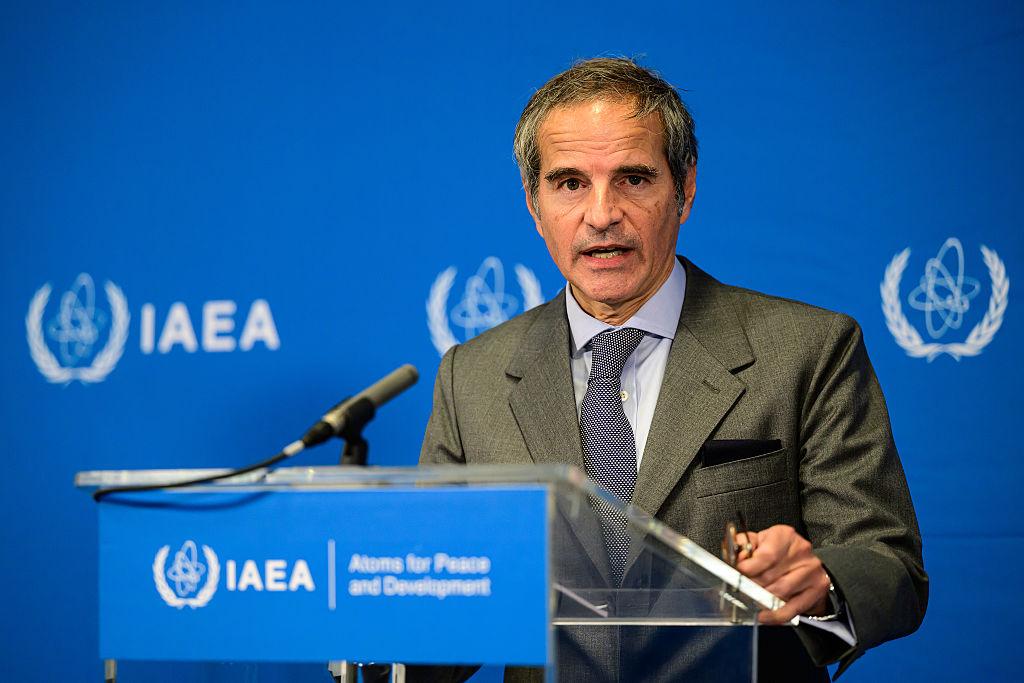
Iranian Foreign Ministry spokesman Esmaeil Baghaei accused the IAEA on November 15 of issuing “one-sided” reports influenced by the United States and European powers. He argued that the agency has failed to adequately account for U.S. and Israeli strikes that disrupted its own inspections and said relations with the watchdog cannot normalize while the current conditions persist.
TEHRAN/VIENNA — Iran has sharply escalated its confrontation with the International Atomic Energy Agency, accusing the United Nations nuclear watchdog of issuing “one-sided and biased” reports under pressure from the United States and European governments after the agency again demanded access to nuclear facilities it has largely been unable to inspect since U.S. and Israeli strikes began hitting Iranian nuclear infrastructure in June 2025. Foreign Ministry spokesman Esmaeil Baghaei said on Sunday that the IAEA had damaged its credibility by failing, in Tehran’s view, to adequately condemn attacks on safeguarded nuclear sites while simultaneously demanding that Iran restore normal inspection access despite what the government describes as an unprecedented and continuing military threat.
Speaking at his weekly press conference in Tehran, Baghaei said Iran viewed the latest report by IAEA Director General Rafael Mariano Grossi as further evidence that the agency had allowed political pressure to influence what Tehran argues should be an exclusively technical safeguards process. He complained that sensitive IAEA reports concerning Iran were repeatedly reaching Western media before their formal release and described that pattern as a structural problem that, in his view, had become deliberate rather than accidental. Baghaei said the agency must decide whether it intends to function as an independent technical institution or remain, as Tehran alleges, under the influence of the United States and European powers.
The Iranian spokesman also argued that the IAEA’s renewed demand for inspectors to return cannot be separated from the military environment created by strikes on Iranian facilities. Iran says the agency itself has acknowledged that the attacks created unprecedented conditions and disrupted its normal safeguards work, yet Tehran believes Grossi has failed to assign sufficient responsibility to Washington and Israel for creating those circumstances. Baghaei said the breakdown in inspection access was a consequence of military attacks and continuing threats rather than evidence that Iran had abandoned its obligations under the Nuclear Non-Proliferation Treaty.
The IAEA presents the situation very differently. In its latest confidential report circulated to member states, the agency said it remains unable to carry out the safeguards activities necessary to independently verify Iran’s declared nuclear material at several of its most important facilities. Grossi has repeatedly said inspectors have been ready to return for months and that nothing can replace physical access to nuclear sites when determining whether material remains where Iran says it is, whether facilities have been repaired or reconstructed and whether nuclear material has been diverted from peaceful activities.
The disagreement has become one of the most serious verification crises in the history of Iran’s nuclear program. Before the strikes of June 2025, the IAEA maintained extensive safeguards operations inside the country, even amid longstanding disputes over undeclared nuclear material, access to particular locations and Tehran’s decision to withdraw the designation of some experienced inspectors. Once the attacks began, however, the agency withdrew its personnel for security reasons, and Iran later adopted legislation suspending broad cooperation until new security arrangements could be established.
Since then, inspection activity has been extremely limited. The IAEA says the Bushehr nuclear power plant was inspected between September 12 and 15, 2026, demonstrating that some controlled cooperation remains possible. Bushehr, however, is not the facility at the center of international concern over uranium enrichment. Its operating reactor uses Russian-supplied uranium enriched to approximately 4.5 percent, far below the levels accumulated by Iran at facilities associated with its enrichment program.
The agency remains particularly concerned about Natanz, Fordow and Isfahan, sites that have played central roles in Iran’s uranium-enrichment and nuclear-fuel activities and were among facilities struck during the conflict. Inspectors have not been able to return and conduct the verification work required to establish the current condition of equipment, nuclear material and enriched uranium inventories at those locations.
That information gap has become increasingly serious because Iran had accumulated a large quantity of uranium enriched to 60 percent before inspectors lost access. The IAEA’s latest figures put the stockpile at approximately 440.9 kilograms. Uranium enriched to 60 percent is substantially above the level required for most civilian nuclear-energy applications and comparatively close, in technical terms, to the roughly 90 percent enrichment generally associated with weapons-grade material.
Iran has consistently insisted that it has no nuclear-weapons program and says its enrichment activities are intended for peaceful scientific, medical and energy purposes. Tehran remains a party to the Nuclear Non-Proliferation Treaty and Baghaei reiterated on Sunday that as long as Iran remains in the NPT, it considers itself bound by the treaty’s obligations. The IAEA, however, says treaty membership also requires Iran to provide the information and access necessary for safeguards verification.
The dispute therefore is not simply about whether Iran says it remains committed to non-proliferation. It is about whether the international system can independently verify that commitment at a time when inspectors cannot account for some of the most sensitive nuclear material in the country.
Grossi has tried to frame the solution as a gradual technical process rather than an immediate return to the pre-war inspection regime. The IAEA has encouraged Tehran to consider incremental measures that would allow inspectors to return safely, beginning with specific facilities and safeguards tasks before normal verification is restored more broadly. Grossi has said such steps could rebuild confidence while taking legitimate Iranian security concerns into account.
Iran argues that even gradual cooperation requires fundamental changes in the security environment. In correspondence cited by the IAEA, Tehran said discussions about normal monitoring could not proceed while it was facing what it described as persistent and explicit threats of further American military attacks, particularly threats involving nuclear installations. Iranian officials also insist that confidential safeguards information must not be disclosed or misused in ways that could assist military planners.
That fear has become central to Tehran’s criticism of the agency. Iranian officials have repeatedly accused Western governments of using IAEA reporting as political and intelligence material rather than purely for non-proliferation verification. The agency rejects accusations that it provides targeting information or functions on behalf of individual governments and maintains that its safeguards work is impartial and based on legal agreements between the agency and member states.
Baghaei’s criticism on Sunday went beyond technical access and questioned the institutional credibility of the IAEA itself. He said repeated leakage of confidential reports to Western news organizations had undermined Iranian confidence and argued that the agency had shown unequal treatment by focusing heavily on Iran’s obligations while failing to respond strongly enough to military strikes against safeguarded nuclear facilities.
The IAEA has acknowledged the exceptional nature of attacks against facilities under safeguards and has repeatedly warned about the nuclear-safety and security risks associated with military action. Grossi has also maintained, however, that the agency’s responsibility is to verify nuclear material and cannot be suspended indefinitely because a state objects to the political or military conduct of other countries.
That difference goes to the heart of the current standoff. Iran says the security environment changed the conditions under which safeguards were originally designed to operate and requires a new framework. The IAEA says unusual security conditions can justify practical adjustments but do not eliminate Iran’s underlying legal obligations.
The conflict has also reopened questions about the future of the NPT in Iran. Iranian officials and lawmakers have periodically raised the possibility of leaving the treaty if pressure continues, although Baghaei said on Sunday that any decision on NPT membership would have to be taken by the appropriate Iranian institutions. His statement stopped short of threatening an immediate withdrawal and instead emphasized that Iran currently considers itself bound by the treaty.
Any Iranian withdrawal from the NPT would represent a far more serious escalation. The treaty is the legal foundation that permits the IAEA to verify Iran’s declared nuclear material, and leaving it would remove one of the most important international mechanisms for monitoring the program. North Korea remains the most prominent example of a country that withdrew from the NPT and later developed nuclear weapons.
For that reason, Russia and China have repeatedly encouraged continued engagement between Tehran and the agency even while rejecting or criticizing Western-led pressure on Iran. Baghaei noted on Sunday that Moscow and Beijing have disagreed with portions of the approach taken by the United States and European powers at the IAEA and United Nations, using those divisions to support Tehran’s argument that the agency’s position does not represent an uncontested international consensus.
Western governments, by contrast, argue that Iran’s rapidly expanded enrichment program and reduced transparency make restored inspections increasingly urgent. They say the issue is not whether Iran has announced a political decision to build a bomb but whether the world can independently verify the status and location of material that could potentially be further enriched relatively quickly.
That concern became more acute after the collapse of the 2015 nuclear agreement. Under the Joint Comprehensive Plan of Action, Iran accepted significant restrictions on uranium enrichment, stockpile size and centrifuge activity in exchange for sanctions relief. The arrangement began unraveling after the United States withdrew from the agreement in 2018 and reimposed sanctions, after which Iran progressively exceeded many of the deal’s nuclear limits.
Iran argues that its expansion of enrichment was a response to Washington’s withdrawal and the failure of European governments to deliver the economic benefits promised under the agreement. Western governments maintain that whatever the political history, Iran’s current nuclear activities must still comply with its separate safeguards obligations under the NPT.
The military attacks beginning in June 2025 transformed that long-running diplomatic dispute into a much more dangerous confrontation. Nuclear infrastructure was damaged, inspectors were removed for their safety and the question of what happened to Iran’s highly enriched uranium became increasingly difficult to answer.
The IAEA says that uncertainty cannot continue indefinitely because safeguards depend on what it calls “continuity of knowledge.” Inspectors need to know how much nuclear material exists, where it is stored, whether seals and surveillance equipment remain intact and whether facilities have undergone changes that affect nuclear-material accounting.
Once that continuity is broken for a prolonged period, reconstructing the full picture becomes more difficult. Inspectors may need access to records, surveillance systems, physical inventories and environmental samples before they can restore confidence in earlier declarations.
The Isfahan Fuel Enrichment Plant has become a particularly important concern. Iran notified the IAEA about the facility shortly before the June 2025 attacks, and inspectors had been preparing to visit when military action forced the inspection to be cancelled. The agency says it still does not know the precise status of the site or whether nuclear material is currently present there.
That uncertainty illustrates why satellite imagery alone cannot replace inspectors. Commercial and intelligence satellites can identify construction, vehicle movements and visible damage, but they cannot directly measure uranium inventories inside underground facilities or determine whether material has been moved between containers and locations.
Iran, meanwhile, argues that granting access without new safeguards against military exploitation could create its own national-security risk. Tehran has repeatedly accused Israel and the United States of gathering intelligence on nuclear facilities before strikes and says it must be certain that information supplied for safeguards purposes cannot contribute to future military targeting.
The IAEA has rejected suggestions that its inspections facilitate military attacks and has emphasized its confidentiality rules. Nevertheless, restoring Iranian trust after strikes on safeguarded facilities has become an additional obstacle on top of the already difficult technical negotiations.
The controversy also comes amid continuing uncertainty over renewed nuclear diplomacy between Tehran and Washington. Iranian officials say negotiations cannot be meaningful while military threats continue, while the United States argues that a diplomatic agreement requires credible limits and verification of Iran’s nuclear activities.
Baghaei used Sunday’s press conference to accuse Washington of hollowing out diplomacy while continuing coercive pressure. He said Iran judges the United States by its actions rather than changes in personnel or public statements and suggested that threats of renewed strikes make meaningful nuclear negotiations more difficult.
Iranian parliamentary speaker Mohammad Baqer Ghalibaf has nevertheless indicated that Tehran has not closed the door entirely to an agreement, suggesting that a path remains available if Washington accepts conditions set by Iran. That leaves diplomacy alive in principle even as the inspection dispute grows more confrontational.
The central unresolved problem is that diplomacy becomes harder when neither side possesses an independently verified picture of the nuclear program. Negotiators can debate enrichment limits, sanctions relief and future monitoring arrangements, but any durable agreement eventually requires a reliable baseline establishing how much enriched uranium Iran has and where it is located.
That is precisely the information the IAEA says it currently cannot verify.
The 440.9-kilogram estimate for uranium enriched to 60 percent therefore carries enormous strategic significance. It reflects the agency’s last established accounting rather than a continuously verified present-day inventory. Without access, inspectors cannot independently determine whether all of that material remains intact, whether some was damaged in attacks, whether quantities have been moved or whether additional enrichment has occurred.
Iran has not publicly declared that the material has been diverted for weapons use, and the IAEA has not announced evidence proving that Tehran has built a nuclear weapon. The concern is instead that the monitoring gap prevents the agency from making the independent assurances that safeguards are designed to provide.
That distinction is essential because nuclear verification operates on evidence rather than assumptions. Lack of access is not proof of weaponization, but it prevents inspectors from ruling out scenarios that would otherwise be checked through physical verification.
Iran’s current confrontation with the IAEA therefore carries risks even if neither side formally abandons cooperation. The longer inspectors remain absent from sensitive sites, the more difficult it becomes to rebuild confidence, and the greater the likelihood that governments will rely on intelligence estimates rather than mutually accepted international verification.
That shift could increase the danger of further military action. Israel has repeatedly said it will not allow Iran to acquire nuclear weapons and has demonstrated a willingness to strike nuclear and military infrastructure. The United States has also warned that it retains military options if it concludes diplomacy cannot prevent Iran from crossing a nuclear threshold.
Tehran argues that such threats create the very conditions making inspections impossible, producing a circular crisis in which Western governments demand verification because they fear Iran’s nuclear intentions, while Iran restricts verification because it fears Western and Israeli military action.
The IAEA is attempting to break that cycle through technical engagement. Grossi has said the agency is willing to consider legitimate safety and security concerns and has urged Iran to begin with gradual measures capable of restoring some inspection activity without requiring an immediate return to every pre-war arrangement.
Iran’s limited cooperation at Bushehr demonstrates that inspectors have not been completely excluded from the country. Baghaei himself pointed to that inspection earlier this month as evidence that Iran has not abandoned its relationship with the agency and said Tehran’s mission in Vienna continues professional communications with IAEA officials.
Bushehr, however, does not answer the questions causing the current international concern. The power reactor operates with Russian fuel under arrangements very different from Iran’s indigenous enrichment program, and inspectors still lack access to the facilities associated with the 60-percent stockpile.
That gap explains why the IAEA continues pressing Iran even while acknowledging the exceptional security environment.
The agency’s credibility is also now part of the contest. Tehran believes the watchdog has allowed itself to become politicized, while Grossi and Western governments argue that demanding access required by safeguards agreements is precisely what an independent nuclear inspector should do.
Russia and China have provided Iran with diplomatic support against some Western resolutions but have not called for the permanent end of IAEA verification. Both countries have an interest in preventing an uncontrolled nuclear arms race in the Middle East, which means they may eventually become important intermediaries if a compromise on inspections becomes possible.
The consequences of failure would extend far beyond Iran. Saudi Arabia and other regional governments have closely followed Tehran’s nuclear development, and any collapse of the NPT safeguards system around Iran could intensify regional debate over whether other countries need independent nuclear capabilities of their own.
A prolonged inspection vacuum could therefore weaken the wider global non-proliferation system even without Iran producing a weapon.
For the IAEA, the principle at stake is that safeguards cannot depend entirely on the political climate. If military confrontation can indefinitely prevent inspection of significant quantities of highly enriched material, the agency’s ability to provide credible assurances to the international community becomes severely constrained.
For Iran, the principle is different. Tehran argues that an international body cannot demand business as usual after nuclear facilities under its safeguards were attacked and while political leaders continue threatening additional strikes.
Both positions now confront the practical reality that the nuclear material still has to be accounted for.
Baghaei’s comments on Sunday show that Tehran is not yet prepared to accept the IAEA’s demand for a straightforward return to full inspections. His language was confrontational, questioning the agency’s impartiality and warning that relations cannot improve while Iran believes the underlying security and political conditions remain unchanged.
The IAEA, however, is equally clear that the current situation is unsustainable. It cannot verify Iran’s nuclear material from outside the country, and Grossi has repeatedly warned that physical access is indispensable.
That leaves both sides locked in a dispute in which each says the other must address the underlying problem first. Iran wants recognition of its security concerns, accountability for attacks and stronger guarantees on confidentiality. The IAEA wants the access and information necessary to fulfill its verification mandate.
The diplomatic challenge is finding a sequence in which neither side believes it is surrendering its core position.
A gradual return of inspectors may offer the most realistic path, particularly if initial access is limited to technically urgent safeguards tasks and accompanied by security arrangements negotiated with Tehran. Grossi has explicitly endorsed incremental steps, while Iran has demonstrated through Bushehr that restricted inspection activity remains possible under agreed circumstances.
Whether that opening can expand will depend increasingly on events outside the IAEA itself. Further military strikes or explicit threats against nuclear facilities would make Iranian cooperation harder, while evidence that Iran is rebuilding sensitive installations without notification could intensify international demands for access and increase pressure for military action.
For now, the inspection dispute is widening rather than narrowing. Tehran is accusing the nuclear watchdog of bias, the agency says it cannot verify a highly sensitive uranium stockpile, and both sides are invoking international law to defend incompatible positions.
The situation therefore presents one of the most consequential nuclear-security questions facing the international community: not simply whether Iran intends to build a nuclear weapon, but whether the world still possesses a trusted mechanism capable of determining what is actually happening inside the country’s nuclear program.
Until inspectors regain meaningful access, that question will remain unanswered. Iran says military attacks and political pressure created the monitoring crisis and must be addressed before normal safeguards can resume. The IAEA says the very uncertainty created by that loss of access makes the return of inspectors more urgent.
Baghaei’s latest attack on the agency makes clear that Tehran is not prepared to accept the IAEA’s interpretation without challenge, leaving diplomacy, verification and the future of Iran’s nuclear relationship with the international community increasingly bound together in a confrontation that neither side has yet found a way to resolve.