BAHRAIN SAYS AIR DEFENCES INTERCEPT MULTIPLE IRANIAN ATTACKS AS GULF TENSIONS RISE
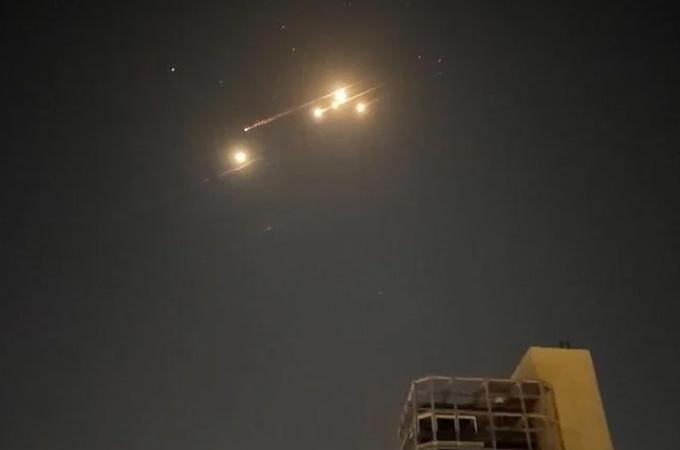
The Bahrain Defence Force confirmed on Sunday, November 15, that its air-defence systems intercepted and destroyed several Iranian aerial attacks before they reached their intended targets. The military did not immediately disclose the exact number or type of projectiles involved and did not announce casualties or confirmed damage from the latest wave.
MANAMA, BAHRAIN — Bahrain’s military says its air-defence systems intercepted and destroyed several Iranian aerial attacks on Sunday, November 15, preventing the incoming threats from reaching their intended targets as a fresh round of confrontation between Tehran and U.S.-aligned Gulf states raises fears of renewed regional escalation. The Bahrain Defence Force said its units acted with what it described as a high level of combat readiness and accused Iran of continuing a “systematic hostile approach” against the kingdom, while the Interior Ministry issued repeated public alerts urging residents to seek shelter and remain calm as incoming aerial threats were detected.
The Bahrain Defence Force did not immediately disclose the exact number or type of weapons intercepted in Sunday’s statement, nor did it announce casualties or confirmed damage resulting from the latest attacks. Its wording was deliberately broad, referring to “several Iranian aerial attacks” that were intercepted and destroyed before achieving their objectives. The absence of a detailed breakdown means it is not yet possible to state independently how many missiles, drones or other projectiles were involved or whether every incoming weapon was successfully intercepted.
The latest alert came shortly after Iran’s Islamic Revolutionary Guard Corps claimed it had launched six drones against a U.S. air-defence radar installation at Bahrain’s Al-Rifaa, or Riffa, Helicopter Base. The IRGC said the operation targeted an American radar site and described it as retaliation for what Tehran says are continuing U.S. military attacks against Iran. At the time of publication, neither Bahrain nor the United States had confirmed that the radar was struck or damaged.
That distinction is critical because Iranian and American accounts of recent attacks in Bahrain have repeatedly conflicted. On Friday, November 13, the IRGC claimed it had successfully attacked and destroyed a U.S. early-warning radar in Bahrain in retaliation for an American strike on a telecommunications facility in Iran’s Hormozgan province. U.S. Central Command rejected that version, saying American forces intercepted two Iranian one-way attack drones headed toward Bahrain and reporting no injuries or damage.
Sunday’s events therefore represent a new episode rather than confirmation of Friday’s Iranian claim. Bahrain’s military has confirmed that Iranian aerial threats were detected and intercepted on Sunday, while Iran says six drones were launched specifically at a U.S. air-defence radar at Al-Rifaa. Whether any of those drones penetrated Bahraini or American defences remains unresolved.
The Bahrain Interior Ministry issued two warnings during the morning about potential threats to the kingdom’s territory, advising citizens and residents to move to safe locations and follow instructions from official authorities. Warning sirens were heard in parts of Bahrain, reflecting the seriousness with which officials treated the incoming threat even before the military announced its interception operation.
Bahrain’s Defence Force subsequently said all of its branches and units remained at the highest levels of readiness and were prepared to continue defending the country. The military described the latest activity as part of Iran’s continuing pattern of attacks on Bahrain, language that reflects months of repeated missile and drone incidents since the current conflict involving Iran, the United States and Israel began earlier this year.
Bahrain is one of the most strategically important U.S. military partners in the Gulf. The kingdom hosts the headquarters of the United States Navy’s Fifth Fleet, which is responsible for maritime operations across the Persian Gulf, Arabian Sea, Red Sea and parts of the Indian Ocean. That presence has made Bahrain a particularly sensitive target during the broader confrontation with Iran.
The Fifth Fleet plays a central role in protecting commercial shipping and monitoring the Strait of Hormuz, one of the world’s most important energy corridors. A substantial portion of globally traded oil and liquefied natural gas moves through the narrow waterway between Iran and Oman, meaning attacks on U.S. or allied facilities in Bahrain can carry consequences far beyond the kingdom itself.
Iran has repeatedly warned that American military facilities across the Gulf will remain targets as long as U.S. strikes against Iranian territory continue. Tehran argues that countries hosting American forces cannot expect immunity if their territory is used to support attacks on Iran. Gulf governments, however, have rejected Iranian attacks on their territory and have insisted that hosting U.S. bases does not justify strikes against sovereign states.
The latest Bahrain Defence Force statement uses unusually strong language, accusing Iran of continuing deliberate and hostile attacks on the kingdom. The government has made similar accusations repeatedly during 2026, including in formal complaints to the United Nations Security Council.
In an April letter to the Security Council, Bahrain said its air-defence systems had intercepted 194 ballistic missiles and 523 hostile drones since Iranian attacks began on February 28. Those figures were already substantially higher than earlier military counts released in March, demonstrating how sustained the aerial threat had become during the first months of the conflict.
Bahrain’s earlier public figures showed a rapidly escalating defensive campaign. By March 10, authorities said 102 ballistic missiles and 171 drones had been destroyed. Six days later, the tally had risen to 125 missiles and 211 drones, while a March 20 military infographic listed 141 missiles and 242 drones intercepted. Bahrain’s April submission to the United Nations increased the cumulative count further.
Those historical figures should not be confused with Sunday’s attack. The Bahrain Defence Force did not immediately release an updated cumulative total on November 15, and it would be inaccurate to treat the April totals as the number of weapons involved in the current incident.
What the earlier data demonstrates is the scale of the air-defence burden Bahrain has already faced. A country with a population of roughly 1.5 million and a relatively small land area has been forced to maintain continuous readiness against ballistic missiles and attack drones because of its strategic location and military relationship with Washington.
Bahrain has invested heavily in U.S.-made air-defence technology, including Patriot missile systems, and benefits from wider American radar and command networks operating across the Gulf. Those systems are designed to detect, track and intercept ballistic missiles, cruise missiles, aircraft and drones before they reach critical infrastructure or populated areas.
Defending against repeated Iranian attacks, however, creates significant operational pressure. Advanced interceptors are expensive and finite, and military planners must decide which incoming threats require high-cost defensive missiles and which can be engaged through aircraft, shorter-range systems, electronic warfare or other methods.
Iran’s use of drones complicates that calculation. One-way attack drones can be produced and launched at far lower cost than many advanced air-defence interceptors, creating an economic imbalance in which the defender may spend substantially more to destroy an incoming weapon than the attacker spent to manufacture it.
Iran has used that dynamic throughout the conflict, combining drones with ballistic and cruise missiles to create complex attack patterns. Cheap drones can force defenders to activate radar and expend ammunition, while faster or more destructive missiles may follow in the same wave.
Targeting radar installations can further complicate defensive operations. Radar systems provide early warning, tracking and targeting information to missile-defence networks. If a radar is disabled or damaged, a defence system can lose part of its ability to identify and engage later threats, particularly if backup sensors do not fully cover the same area.
That helps explain why the IRGC has repeatedly claimed attacks on radar systems and air-defence sites in Bahrain and other Gulf states. Iran appears to be prioritizing infrastructure that supports U.S. and allied interception capabilities rather than simply trying to strike runways or personnel.
The United States and Bahrain have not confirmed that Sunday’s alleged Al-Rifaa target was hit. Without physical evidence, satellite imagery or an official damage assessment, the IRGC’s statement remains an attributed claim rather than a verified battlefield result.
The Bahrain Defence Force’s own announcement supports one important part of Iran’s account: Iranian aerial threats did approach the kingdom on Sunday. It does not, however, establish that the drones reached the radar or that any military target was damaged.
That uncertainty mirrors a recurring pattern in the wider war. Iran frequently announces successful strikes, while U.S. and Gulf military authorities report that incoming weapons were intercepted or caused little damage. In some cases independent satellite imagery has later confirmed damage; in others it has supported official claims that defences prevented the attack.
The most recent confrontation occurs against a wider strategic debate over Iran’s remaining military capability. U.S. intelligence officials cited by The Wall Street Journal estimate that Tehran still possesses between 1,500 and 2,500 missiles despite months of American and Israeli attacks on production facilities, launch sites and storage infrastructure.
The estimate carries low confidence because intelligence agencies cannot determine exactly how many weapons remain operational, how many are stored underground or how quickly Iran can rebuild from existing components. Even the lower end of the range, however, would leave Tehran with enough missiles to continue threatening U.S. bases and regional partners during another prolonged exchange.
The combination of a surviving missile stockpile and large drone inventories is particularly important for Bahrain. The kingdom’s small size means many military, energy, residential and government facilities are within relatively short distances of one another, increasing the danger that even intercepted weapons or falling debris can affect civilian areas.
Authorities have repeatedly warned residents not to approach suspicious objects or fragments following interception operations. Missile and drone debris can remain dangerous after falling to the ground because unexploded warheads, fuel or propulsion components may still ignite or detonate.
Bahrain’s previous alerts have also urged people not to film military operations or circulate unverified information online. Officials argue that real-time photographs and videos of interception sites could reveal defensive positions or create unnecessary panic during ongoing attacks.
The public warning system has therefore become an important part of Bahrain’s wartime response. Shelter alerts, sirens and mobile notifications are intended to reduce casualties when incoming weapons are detected while allowing air-defence units to operate without large numbers of civilians outdoors.
Sunday’s two Interior Ministry alerts demonstrate that authorities believed the latest threat justified immediate protective measures. Reuters reported that Bahrain advised residents to remain calm and seek safe places as its defences responded to the attacks.
No official casualty announcement accompanied the latest Bahrain Defence Force statement. That is significant because several earlier Iranian attacks across the Gulf caused damage even where most incoming weapons were intercepted.
Bahrain’s April submission to the United Nations said members of the Bahrain Defence Force and United Arab Emirates armed forces had been injured during earlier defensive operations. It also reported the death of a Moroccan national serving with UAE forces while supporting Bahrain’s defence against Iranian attacks.
Those incidents demonstrate that missile defence itself carries risks. Interceptors can malfunction, debris can fall into populated areas and personnel handling downed weapons may be exposed to unexploded ordnance.
The broader war has already produced casualties among American troops and regional forces during interception and disposal operations. In July, the U.S. military said one service member was killed during a controlled detonation of unexploded ordnance from a downed Iranian drone in northern Iraq.
That history means even apparently successful interception operations can involve substantial danger after the immediate aerial threat has passed.
Iran’s attacks on Bahrain also carry a diplomatic cost because the kingdom is among the Gulf states pushing Washington and Tehran toward de-escalation. Bahrain joined Qatar, Saudi Arabia, Kuwait and the United Arab Emirates in urging the Trump administration to avoid another broad round of strikes on Iran.
President Donald Trump said earlier this month that he would hold off on new attacks for the moment following appeals from regional governments, while maintaining U.S. military pressure and the naval blockade associated with the Strait of Hormuz confrontation.
Sunday’s attacks could complicate those diplomatic efforts. Washington may view continuing Iranian attempts against U.S.-linked installations as evidence that Tehran is exploiting restraint rather than responding to it, while Iran argues that it is retaliating against ongoing U.S. actions.
Trump has said American forces remain prepared to respond if Iran carries out further provocations, leaving military commanders with substantial flexibility depending on the scale and effect of any attack.
Iran’s Revolutionary Guard has repeatedly presented its strikes as retaliatory rather than offensive. Tehran argues that U.S. and Israeli attacks initiated the conflict and says its missile and drone operations are legitimate acts of self-defence.
The United States and its allies reject that characterization, arguing that Iran has targeted sovereign Gulf states and military installations far beyond the immediate locations from which strikes were launched.
Bahrain has formally raised that argument at the United Nations, describing Iranian attacks as violations of international law and of its territorial sovereignty. In April, the kingdom told the Security Council that Iranian attacks had continued despite a previous ceasefire announcement and despite a Security Council resolution condemning attacks on Gulf states.
Iran has rejected many of those accusations and accuses Gulf governments of enabling American military operations against Iranian territory.
The competing legal and political narratives have made a negotiated settlement more difficult. Tehran wants sanctions relief, an end to U.S. strikes and changes to American maritime pressure, while Washington continues to demand restrictions on Iran’s nuclear activities and military capabilities.
The Strait of Hormuz remains central to those negotiations. Iran has sought to exert greater control over shipping through the waterway, while the United States has increased naval operations intended to guarantee freedom of navigation.
Bahrain’s Fifth Fleet role places the kingdom directly inside that contest. U.S. naval commanders based there coordinate many of the operations designed to protect tankers, commercial cargo vessels and military ships moving through the Gulf.
That makes attacks on Bahrain strategically meaningful even if the physical damage is limited. Every missile or drone forces defensive systems into action, increases operational costs and reminds Gulf governments that their security relationship with Washington also exposes them to Iranian retaliation.
Iran may calculate that repeated low-level attacks can impose pressure without triggering the level of American response that a mass-casualty strike might provoke. Whether that calculation succeeds depends heavily on Washington’s threshold for retaliation and on whether future attacks cause casualties.
The United States has already demonstrated that it will respond militarily to attacks it believes cross that threshold. American strikes against Iranian radar, military and coastal facilities have followed earlier incidents involving U.S. forces and shipping.
The danger is that a relatively small attack can escalate unexpectedly if one drone penetrates defences and kills personnel or damages a strategically important facility. The sheer volume of weapons already used throughout 2026 means the probability of such an incident remains significant.
Gulf governments are therefore investing in greater integration between national air-defence networks. Shared radar coverage, communication links and warning systems can allow countries to identify incoming threats earlier and coordinate interceptions more efficiently.
The United States has strongly supported that integration, arguing that no single Gulf country can independently defend against large and complex Iranian missile salvos.
Bahrain’s defence relationship with the United States also includes military training, naval cooperation and intelligence sharing. The kingdom has long been designated a major non-NATO ally of Washington, giving it access to certain forms of defence cooperation and equipment.
That relationship has become increasingly operational during the Iran conflict rather than remaining primarily diplomatic. U.S. and Bahraini systems have both participated in interceptions, while American forces stationed in the kingdom have been directly targeted by Iran.
Sunday’s incident also comes at a moment when the wider regional conflict shows little evidence of a durable political settlement. Efforts by Qatar and other mediators have produced discussions but no comprehensive agreement ending the confrontation.
Shipping through the Strait of Hormuz remains substantially below pre-war levels, while military warnings and attacks continue around the Gulf.
Regional economies are paying a price through higher insurance costs, disrupted trade, additional security spending and uncertainty surrounding energy infrastructure.
Bahrain is especially exposed economically because of its small domestic market and heavy dependence on regional commerce, financial services and investment. Sustained security alerts can affect aviation, tourism and business activity even when individual attacks cause no physical damage.
The kingdom has previously closed or restricted airspace during major attack waves, forcing airlines to reroute flights and creating broader disruption across Gulf aviation networks.
Authorities had not announced a new full airspace closure in the immediate Sunday statement, although residents were advised to seek shelter while the threats were active.
The Bahrain Defence Force’s emphasis on readiness appears designed partly to reassure the public and markets that military systems remain capable of handling incoming attacks.
Its statement said all branches and units remain fully prepared to protect the kingdom, language similar to earlier announcements issued during the heaviest phases of Iranian missile and drone activity.
The statement also avoids revealing operational details that could assist Iran. Military authorities generally do not disclose which specific air-defence batteries engaged an incoming weapon, how many interceptors were fired or where defensive gaps may exist.
Iran, for its part, is likely to continue assessing Bahrain’s air-defence performance through its own intelligence collection. Even failed attacks can provide information about radar activation, interceptor trajectories and response times.
That intelligence value is one reason small drone operations can serve purposes beyond immediately destroying a target. They can probe defensive systems, reveal sensor locations and test whether previous attacks have changed military procedures.
The IRGC’s claim that six drones were used against the Al-Rifaa radar may therefore carry significance even if none reached the installation.
The target itself also matters. Helicopter and air-defence facilities play an important role in protecting American personnel and supporting rapid military movement across the Gulf.
If Iran can force the United States to disperse radar systems and defensive assets across multiple locations, it may complicate American operational planning even without achieving a decisive strike.
The U.S. military has already repositioned some assets during the conflict in response to threat assessments. Such movements are intended to reduce vulnerability and ensure that no single attack can eliminate a critical capability.
The continuation of attacks on Bahrain suggests Iran still sees Gulf bases as valuable pressure points despite months of fighting.
For Bahrain, there is little indication that it intends to weaken its security partnership with Washington in response. The kingdom has instead increased its military readiness and repeatedly accused Tehran of violating international law.
At the diplomatic level, however, Manama continues supporting regional efforts to prevent the war from expanding further.
That dual approach — strong defence combined with support for negotiation — is common across the Gulf. Governments want protection from Iranian missiles without becoming the battlefield for an open-ended U.S.-Iran war.
Sunday’s events illustrate how difficult that balance has become. Bahrain can urge restraint diplomatically while still facing incoming Iranian drones that must be intercepted within minutes.
The immediate question is whether further details emerge about the weapons destroyed and whether the IRGC’s claimed Al-Rifaa target suffered any damage.
Satellite imagery, official U.S. military statements and Bahrain Defence Force updates may provide clearer evidence in the coming hours or days.
Until then, three points can be stated with confidence. Bahrain has confirmed that Iranian aerial attacks approached the kingdom on Sunday. Its military says those threats were intercepted before reaching their intended targets. Iran separately claims it launched six drones at a U.S. air-defence radar, but that claimed hit remains unverified.
The latest confrontation therefore reinforces a broader strategic reality already evident throughout 2026: Iran retains the ability and willingness to launch aerial attacks across the Gulf, while Bahrain and its allies remain capable of intercepting many of them but cannot eliminate the threat entirely.
That continuing exchange keeps the Gulf in a fragile condition where deterrence and escalation coexist. Every successful interception prevents immediate casualties, but every new attack increases the possibility that the next weapon will penetrate defences and trigger a larger response.
For Bahrain’s population, Sunday’s alerts were another reminder that the regional conflict has become part of daily life. Residents were again told to seek safety while air-defence units engaged threats overhead, even as governments publicly discuss diplomacy and ceasefire possibilities.
For Washington and Tehran, the incident adds another unresolved calculation. The United States must decide how long it can tolerate repeated attacks on bases without expanding its offensive operations, while Iran must judge how much pressure it can apply without provoking another devastating round of strikes.
Bahrain sits directly between those competing calculations. Its military says Sunday’s attacks were stopped. The larger conflict that produced them, however, remains far from resolved.