
GUINEA BISSAU MILITARY LEADERS BLOCK OUSTED PRESIDENT FROM RETURNING
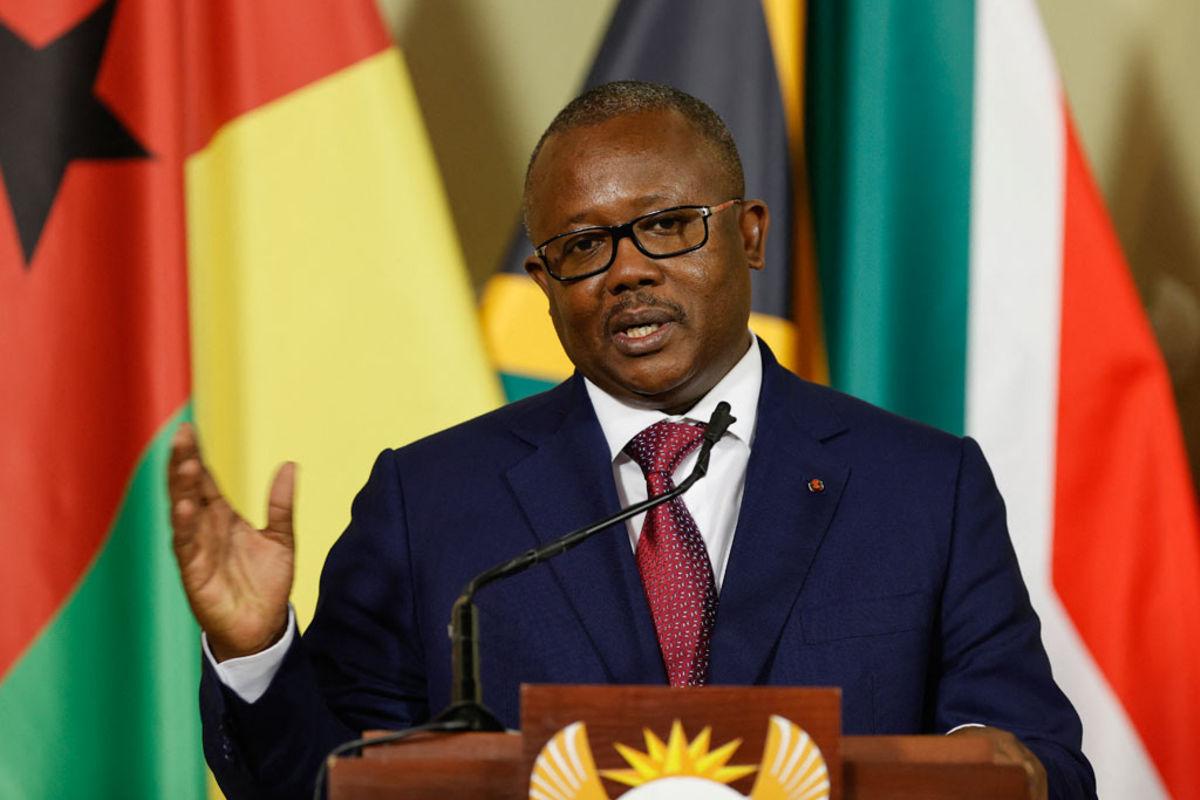
Guinea Bissau’s military authorities have blocked former president Umaro Sissoco Embaló from returning to the country, citing concerns over national security, public order and social stability. Embaló had planned to return on October 4 and contest the presidential election scheduled for December 6. The former leader has been living in exile in Morocco since he was removed from power during a military takeover in November 2025. The decision adds fresh uncertainty to Guinea Bissau’s transition back toward civilian rule and raises questions over whether Embaló will be allowed to participate in the coming election.
Guinea Bissau’s military authorities have blocked former president Umaro Sissoco Embaló from returning to the country, deepening uncertainty over the West African nation’s political transition ahead of a presidential election scheduled for December.
The military leadership said the security conditions required to guarantee Embaló’s return were not currently in place.
In a statement issued by the High Military Command responsible for national security and public order, authorities said the decision was based on national security concerns, preservation of public order and the need to prevent instability.
Embaló had planned to return to Guinea Bissau on October 4.
He intended to contest the presidential election scheduled for December 6.
EMBALÓ HAS BEEN IN EXILE SINCE 2025 COUP
Embaló has lived in exile in Morocco since military officers seized power in November 2025.
The takeover occurred shortly before results from presidential and legislative elections were due to be announced.
Senior military officers suspended the electoral process and installed Major General Horta Inta A as transitional president.
The military authorities said at the time that intervention was necessary to preserve stability.
The takeover interrupted Guinea Bissau’s electoral process and triggered concern among regional and international partners.
RETURN PLAN NOW BLOCKED
Earlier this week, a source familiar with Embaló’s plans told Reuters that he intended to return on October 4 and formally re enter domestic politics.
His proposed return immediately raised questions over how the military authorities would respond.
That question has now been answered.
The authorities have said they will not permit his return under current conditions.
The decision is therefore more than a travel restriction.
It directly affects Embaló’s ability to campaign physically inside the country ahead of the December election.
MILITARY CITES SECURITY CONCERNS
The High Military Command says its decision is based on security concerns rather than political competition.
Authorities said they had assessed the national environment and concluded that conditions were not yet suitable to guarantee Embaló’s safe return.
The statement also referred to the need to preserve public order and social stability.
Political demonstrations and gatherings remain restricted under the current transitional arrangements.
The military has warned that violations of those restrictions could face legal consequences.
EMBALÓ STILL WANTS TO CONTEST DECEMBER ELECTION
Despite being in exile, Embaló has indicated that he intends to participate in the coming presidential election.
The December 6 vote is intended to return Guinea Bissau to elected civilian government following the 2025 military takeover.
Whether Embaló can legally remain a candidate is now uncertain.
His physical absence creates one problem.
A recently approved constitutional provision may create another.
NEW CONSTITUTION COMPLICATES HIS CANDIDACY
Guinea Bissau approved a new constitution in an August referendum.
The revised constitution expanded presidential powers and changed several electoral rules.
One provision requires presidential candidates to have lived continuously in the country for the previous five years.
It is not yet clear how authorities or the courts will interpret that rule in Embaló’s case.
Because he has been in exile since the November 2025 coup, the residency requirement could become a significant legal issue.
The final decision may depend on judicial interpretation.
A LEGAL BATTLE COULD FOLLOW
If Embaló attempts to register as a candidate while remaining outside the country, electoral authorities may be forced to decide whether his candidacy satisfies the new constitutional requirements.
That could lead to legal challenges.
Embaló has said he wants the judicial authorities to assess his candidacy fairly.
Any court decision would carry significant political weight.
If he is excluded, supporters may argue that the transition is being managed to prevent him from returning to power.
If he is permitted to run, the military leadership would then face the question of whether he can campaign effectively while being barred from entering the country.
REGIONAL DIPLOMACY COULD BECOME MORE COMPLICATED
The situation is likely to attract attention from ECOWAS.
The regional bloc has repeatedly been involved in Guinea Bissau’s political crises.
ECOWAS has historically pushed for constitutional order and peaceful transitions in member states affected by military intervention.
A former elected president being prevented from returning ahead of an election could create new diplomatic pressure.
Regional leaders may seek clarification over the conditions under which the December election will take place.
GUINEA BISSAU HAS A LONG HISTORY OF MILITARY INTERVENTION
The latest crisis fits into a much longer pattern of political instability.
Since independence from Portugal in 1974, Guinea Bissau has experienced repeated military coups, attempted coups and government crises.
No president completed a full elected term for many years after independence.
Political institutions have often struggled against military influence.
That history makes any military role in the current transition especially sensitive.
NOVEMBER 2025 COUP INTERRUPTED ELECTION RESULTS
The timing of the coup added further controversy.
Military officers seized power shortly before election results were expected to be announced.
That meant the country never completed the electoral process underway at the time.
Supporters of Embaló questioned the legitimacy of the takeover.
The military leadership defended its actions as necessary for stability.
Those competing interpretations remain unresolved.
TRANSITION AUTHORITIES PROMISE RETURN TO CIVILIAN RULE
The transitional administration has said it intends to restore civilian government.
The December election is central to that promise.
Its credibility will depend heavily on whether political competition is open and whether major candidates are allowed to participate under clear legal rules.
International observers will also pay close attention to media access, campaign freedoms, voter registration and security conditions.
The treatment of Embaló will therefore become one of the key tests of the transition.
POLITICAL GATHERINGS REMAIN RESTRICTED
The military authorities continue to restrict public political demonstrations and gatherings.
They argue that those measures are necessary to preserve security.
Critics may view such restrictions as limiting normal democratic activity.
The tension between security and political freedom is likely to intensify as the election approaches.
Campaigns normally require rallies, meetings and direct voter contact.
Restrictions could make those activities difficult.
PUBLIC ORDER IS THE MILITARY’S CENTRAL ARGUMENT
The authorities have repeatedly emphasized public order.
Their statement blocking Embaló’s return said the decision was intended to prevent situations capable of undermining stability.
That wording suggests officials fear his arrival could trigger large demonstrations or confrontation between supporters and opponents.
No specific evidence of an imminent security threat has been publicly detailed.
The government's justification therefore remains an official security assessment rather than an independently verified threat.
WHY EMBALÓ’S RETURN WOULD BE POLITICALLY SIGNIFICANT
Embaló remains one of Guinea Bissau’s most recognizable political figures.
He served as president from 2020 until his removal in 2025.
Before becoming president, he also served as prime minister and held senior national security positions.
His return would likely reshape the election campaign immediately.
Supporters could rally around him as a former elected leader removed by force.
Opponents could argue that the country needs a different political direction.
HIS MILITARY BACKGROUND ADDS ANOTHER LAYER
Embaló himself has a military background.
He rose to the rank of general and studied national security and defense.
That makes his relationship with the current military leadership more complicated than that of a purely civilian political figure.
The conflict is therefore not simply between military rulers and a civilian outsider.
It also involves competing political and security networks within the country.
ECONOMIC STABILITY IS ALSO AT STAKE
Political instability carries economic consequences.
Guinea Bissau is one of West Africa’s smaller economies and depends heavily on cashew exports.
Uncertainty can discourage investment and complicate international financial support.
Political crises can also delay infrastructure projects and weaken government services.
A credible transition could help improve confidence.
Another disputed election could create the opposite effect.
DRUG TRAFFICKING REMAINS A LONG RUNNING CONCERN
Guinea Bissau has also been identified for years as a transit point for cocaine moving from Latin America toward Europe.
Weak institutions and political instability have historically made the country vulnerable to trafficking networks.
International organizations have repeatedly emphasized the importance of stronger governance and judicial institutions.
A stable political transition is therefore relevant not only domestically but also to regional security.
ECOWAS WILL FACE A DIFFICULT BALANCE
Regional leaders may need to balance several objectives.
They will want to avoid another cycle of military confrontation.
They will also want the December election to be credible.
At the same time, they may be cautious about actions that could provoke instability inside Guinea Bissau.
This creates a difficult diplomatic challenge.
Pressuring military authorities too aggressively could lead to confrontation.
Failing to insist on clear democratic rules could undermine the legitimacy of the transition.
THE DECEMBER ELECTION IS NOW EVEN MORE IMPORTANT
The election was already significant because it is meant to restore elected government.
The dispute over Embaló’s return now gives it an additional layer of uncertainty.
The key questions will include who is permitted to run, how the residency requirement is interpreted and whether opposition figures can campaign freely.
International observers may also focus on whether the electoral commission operates independently.
SECURITY JUSTIFICATION WILL FACE SCRUTINY
The military says its decision is temporary and security based.
That claim will likely face continued scrutiny.
Observers will want to know what conditions must change before Embaló can return.
If no clear standards are provided, the restriction could be viewed by critics as politically motivated.
If authorities can demonstrate credible security concerns and provide a path for return later, their argument may receive more acceptance.
Transparency will therefore matter.
EMBALÓ’S SUPPORTERS MAY PUSH BACK
Supporters of the former president may challenge the ban politically or legally.
They could argue that preventing his return damages his right to participate in the election.
They may also question the constitutionality of applying new residency rules to a leader forced into exile by a coup.
Those arguments could eventually reach the courts.
Any legal ruling will be politically sensitive.
WHAT HAPPENS NEXT
The immediate question is whether Embaló attempts to travel to Guinea Bissau despite the prohibition.
If he does, authorities may need to decide whether to deny entry at the airport or another border point.
Such a confrontation could create significant tension.
The next major issue is candidate registration for the December election.
Electoral and judicial authorities may have to determine whether Embaló satisfies the legal requirements to run.
ECOWAS and other regional organizations will also be watching closely.
For now, the military’s decision has created a new obstacle in Guinea Bissau’s political transition.
The country is supposed to be moving toward civilian rule.
But one of its most prominent political figures is being prevented from returning.
That contradiction is likely to become a central issue in the weeks leading up to the December election.