
ETHIOPIAN FORCES CLOSE IN ON TIGRAY CAPITAL AS CONFLICT ESCALATES
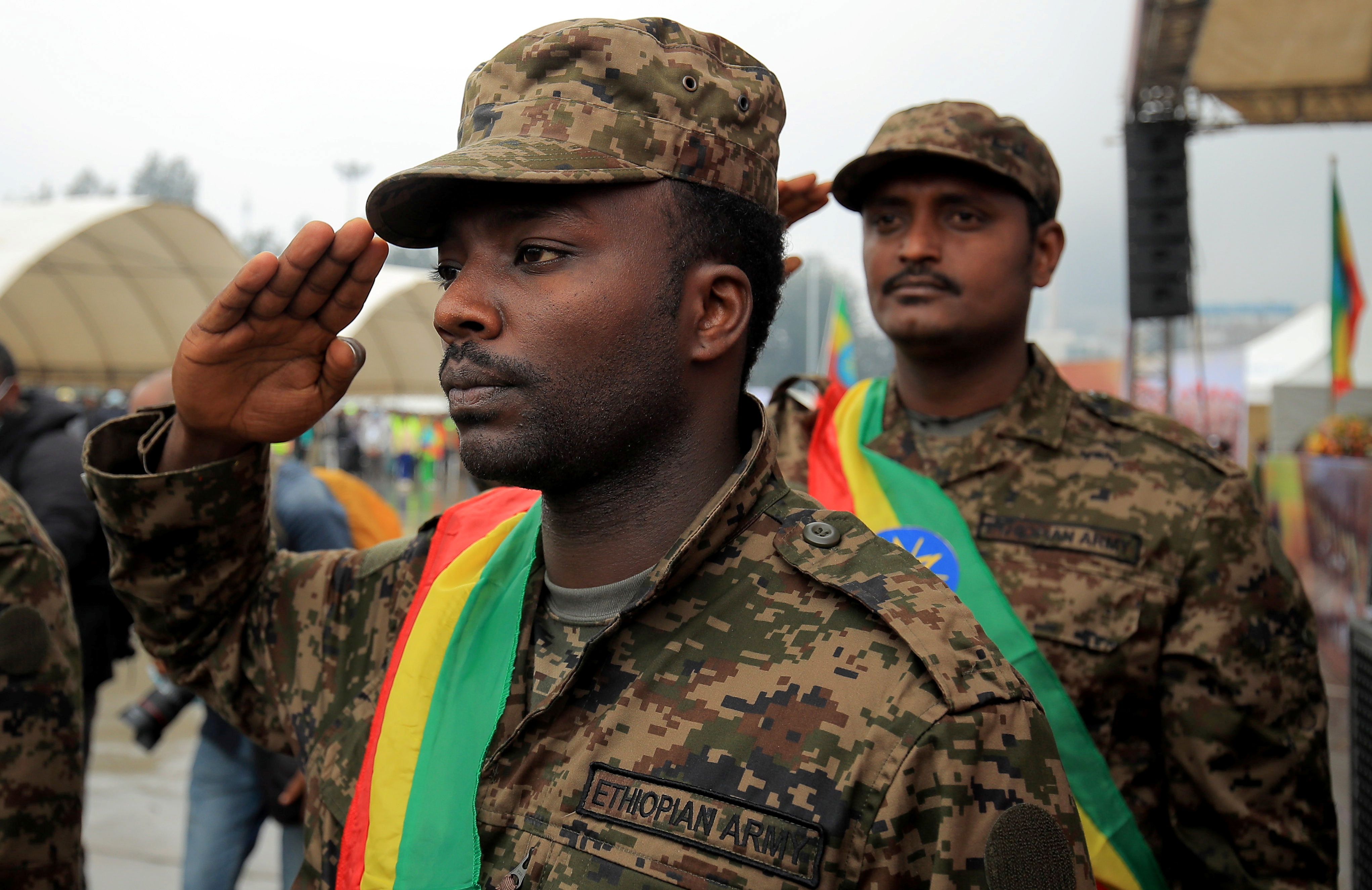
Ethiopian federal forces and allied militias have advanced toward Mekelle, the capital of the northern Tigray region, in one of the most significant military escalations since renewed fighting broke out last week. The pro government Tigray Peace Forces says it has captured Milazat, about 20 kilometers southeast of Mekelle, while residents in the regional capital report shuttered banks and shops as fears grow that the conflict could reach the city itself. TPLF leader Debretsion Gebremichael has said his forces are preparing a counteroffensive. The advance comes as Ethiopia’s confrontation with Eritrea and Egypt deepens, raising fears that what began as renewed fighting in northern Ethiopia could expand into a broader regional conflict.
Ethiopian government forces and allied militias are advancing toward Mekelle, the capital of the northern Tigray region, marking one of the most serious military escalations since fighting resumed between the federal government and a TPLF led opposition alliance.
A pro government militia known as the Tigray Peace Forces said on Friday that it had captured the town of Milazat, approximately 20 kilometers southeast of Mekelle.
The claim has not yet been independently confirmed by Ethiopia’s military or the Tigray People’s Liberation Front.
Reuters reported that video posted on social media and said to have been filmed in Milazat showed militia fighters chanting about advancing toward Mekelle.
Reuters could not independently verify that video.
The federal government, Ethiopian military and TPLF had not immediately responded publicly to requests for comment on the claimed capture at the time of reporting.
ADVANCE BRINGS FIGHTING CLOSER TO MEKELLE
If confirmed, the capture of Milazat would place pro government forces unusually close to Tigray’s regional capital.
Mekelle is the political and administrative center of Tigray.
It was also one of the most strategically important cities during the 2020 to 2022 civil war.
The prospect of renewed fighting near the city has triggered fear among residents who remember the destruction and humanitarian crisis of the previous conflict.
Residents told Reuters that some banks and shops had closed.
People have also been attempting to secure cash and essential supplies as uncertainty grows.
WHY MEKELLE MATTERS
Mekelle is more than a large regional city.
It is the political center of Tigray and the seat of the regional administration.
Control of the city would carry major military and symbolic significance.
During the previous civil war, federal forces captured Mekelle before Tigrayan forces later retook the city.
That experience means any renewed battle for Mekelle would immediately revive memories of the earlier war.
A full assault on the city could also have severe humanitarian consequences because of its large civilian population.
TPLF LEADER PROMISES COUNTEROFFENSIVE
TPLF leader Debretsion Gebremichael has said Tigrayan forces intend to launch a counteroffensive.
His statement indicates that the opposition does not intend to accept federal advances without resistance.
The TPLF is leading a wider alliance of armed groups that recently announced a campaign against Prime Minister Abiy Ahmed’s government.
The alliance includes forces from several parts of Ethiopia.
That makes the renewed conflict more complicated than the earlier Tigray war, which was largely defined by fighting between federal forces, Eritrean troops and Tigrayan forces.
FEDERAL FORCES HAVE MADE QUICK GAINS
The federal government and allied militias have made significant gains in recent days.
Earlier this week, pro government forces claimed the capture of Alamata, a strategically important town about 120 kilometers south of Mekelle.
Alamata sits on important transport and supply routes.
Its capture gave federal forces a stronger position for operations farther north.
The latest reported advance toward Milazat suggests government aligned forces are continuing to push deeper into Tigray.
NEW WAR HAS ESCALATED QUICKLY
The latest fighting began after Tigrayan forces launched a major offensive against federal positions in late September.
Tigray’s leadership described its actions as defensive.
Federal officials accused the TPLF and its allies of attempting to overthrow the government.
The renewed conflict has spread across Tigray, Afar and Amhara.
Flights to several northern areas have been suspended or disrupted.
Telecommunications have also been affected.
The speed of the escalation has raised concern that the country could be sliding back toward a conflict similar to the war that ended in 2022.
THE PRETORIA PEACE DEAL IS UNDER SEVERE PRESSURE
The 2022 Pretoria Agreement formally ended the earlier war between the federal government and the TPLF.
The African Union brokered the agreement.
It was intended to establish a framework for disarmament, humanitarian access and political normalization.
However, implementation remained incomplete.
Disputes involving territory, displaced communities, security arrangements and political authority continued.
Tigray’s regional politics also became increasingly divided.
By 2026, those unresolved tensions had contributed to the breakdown that led to renewed fighting.
THE HUMAN COST OF THE PREVIOUS WAR
The 2020 to 2022 conflict was one of the deadliest wars in recent African history.
Hundreds of thousands of people are estimated to have died from combat, hunger and lack of medical care.
Millions were displaced.
Basic services collapsed across large parts of northern Ethiopia.
Hospitals and schools were damaged.
Banking and communications were frequently disrupted.
Humanitarian organizations struggled to reach affected communities.
That history explains why renewed fighting near Mekelle is causing such alarm.
CIVILIANS ARE AGAIN STOCKPILING SUPPLIES
Residents in Tigray have reportedly begun storing food and withdrawing cash.
These actions reflect concern that transportation, banking and markets could be disrupted if fighting intensifies.
During the previous war, residents faced severe shortages.
Some communities were cut off from electricity, communications and banking for extended periods.
People therefore have strong reasons to prepare early.
DIPLOMATIC CRISIS WITH ERITREA IS DEEPENING
The military advance is occurring at the same time Ethiopia’s diplomatic relationship with Eritrea has collapsed.
Ethiopia closed its embassy in Asmara and expelled 10 Eritrean diplomats.
Eritrea responded by severing all diplomatic relations with Ethiopia.
The breakdown is especially significant because Eritrea fought alongside Ethiopian federal forces during the previous Tigray war.
The two governments are now openly hostile.
ETHIOPIA ACCUSES ERITREA OF SUPPORTING ITS OPPONENTS
Addis Ababa has accused Eritrea of supporting the TPLF led alliance.
Eritrea denies the allegation.
Ethiopia has also accused Egypt and Sudan of assisting anti government forces.
Both countries have rejected those accusations.
These claims remain disputed and have not been independently established.
But the allegations themselves demonstrate how the war is becoming entangled with broader regional rivalries.
EGYPT HAS ALSO ENTERED THE DIPLOMATIC CONFRONTATION
Relations between Ethiopia and Egypt are already strained by years of disagreement over the Grand Ethiopian Renaissance Dam.
Ethiopia recently expelled an Egyptian diplomat.
Egypt responded by declaring an Ethiopian embassy official persona non grata.
The reciprocal expulsions show that the crisis is no longer limited to Ethiopia and Eritrea.
Egypt’s involvement raises the political stakes because Cairo is one of the region’s most powerful states.
SUDAN IS ANOTHER COMPLICATING FACTOR
Ethiopia has also accused Sudan of supporting the opposition alliance.
Sudan denies the allegation.
Sudan itself remains deeply affected by civil war.
Its military and paramilitary forces have been fighting since 2023.
That conflict has already drawn in outside actors and reshaped regional alliances.
Any deeper involvement in Ethiopia’s conflict would add another dangerous layer to an already unstable region.
AFRICAN UNION CALLS FOR RESTRAINT
The African Union has urged Ethiopia, Eritrea and Egypt to exercise maximum restraint.
The organization says the countries should avoid actions or statements that could worsen tensions.
It has called for diplomatic dialogue.
The AU has also said it is prepared to support de escalation efforts.
That intervention is becoming increasingly urgent as the military situation worsens.
THE RISK OF A REGIONAL WAR IS GROWING
The current conflict differs from the earlier Tigray war because the regional environment has changed.
Eritrea is no longer aligned with Ethiopia.
Egypt and Ethiopia remain divided over the Nile.
Sudan is already at war.
Gulf states have strategic interests across the Red Sea and Horn of Africa.
Israel, Saudi Arabia and the United Arab Emirates also maintain regional relationships that could become relevant if the conflict expands.
These overlapping interests create the risk that an internal Ethiopian war could pull in outside powers.
RED SEA ACCESS REMAINS A MAJOR SOURCE OF TENSION
Ethiopia’s desire for greater access to the Red Sea has become another major source of tension with Eritrea.
Ethiopia has been landlocked since Eritrea gained independence.
Prime Minister Abiy Ahmed has repeatedly argued that sea access is important to Ethiopia’s long term economic and strategic future.
Eritrea views such discussions with suspicion.
The port of Assab is especially sensitive.
Any perception that Ethiopia might seek control over Eritrean territory could dramatically worsen relations.
MEKELLE COULD BECOME THE DECISIVE BATTLE
If federal forces continue advancing, Mekelle could become the central military objective.
Capturing the city would give the government an important political victory.
But doing so could require intense fighting.
Urban warfare is particularly dangerous for civilians.
Buildings, roads and utilities can become battle zones.
Humanitarian access can also become extremely difficult.
The government has not publicly announced a plan to attack Mekelle.
That distinction is important.
The current confirmed development is that pro government forces say they are advancing closer to the city.
COMMUNICATION BLACKOUTS MAKE VERIFICATION DIFFICULT
Independent verification remains difficult.
Telecommunications disruptions have affected parts of Tigray.
Journalists face restricted access.
Both sides also use social media to promote battlefield claims.
This means reports of captured towns, casualties or military victories require caution.
Images and videos may be authentic but still lack reliable location or timing.
VNTV should therefore continue distinguishing confirmed developments from claims by either side.
DRONE WARFARE HAS ADDED A NEW DIMENSION
The renewed conflict has also raised concern about the use of drones.
Explosions were recently reported in Addis Ababa.
Opposition linked sources claimed drones had targeted military facilities.
Those claims have not been independently confirmed.
Authorities later restricted drone flights over the capital.
If opposition forces are confirmed to possess longer range strike capability, that would represent an important change from earlier phases of the conflict.
HUMANITARIAN ORGANIZATIONS ARE ALREADY CONCERNED
Aid groups have reported growing pressure on medical facilities and civilian populations.
Renewed fighting threatens humanitarian access.
Roads can become unsafe.
Fuel shortages can limit operations.
Hospitals may struggle to obtain medicine and equipment.
Humanitarian agencies are especially concerned because many communities in Tigray have not fully recovered from the previous war.
DISPLACEMENT COULD GROW RAPIDLY
Any battle near Mekelle could trigger a new wave of displacement.
People may attempt to move toward rural areas or neighboring regions.
Others could try to cross international borders.
Eritrea and Sudan are both nearby.
Large population movements could place additional pressure on already stretched humanitarian systems.
WHAT THE FEDERAL GOVERNMENT WANTS
The Ethiopian government says it is defending the country against armed groups seeking to overthrow the constitutional order.
Government officials have accused the TPLF led alliance of restarting war.
Addis Ababa has emphasized national unity and state authority.
It has also accused foreign governments of supporting its opponents.
Those allegations remain disputed.
WHAT THE TPLF SAYS
The TPLF and allied forces describe their campaign differently.
They say they are responding to federal aggression and violations of the Pretoria Agreement.
They accuse the government of failing to resolve political disputes peacefully.
They also cite grievances involving territory and displacement.
The TPLF says its forces are now preparing to resist the federal advance.
BOTH SIDES BLAME EACH OTHER FOR THE WAR
The competing narratives are central to the conflict.
The federal government says the TPLF launched the renewed war.
The TPLF says it acted in self defense.
Independent observers have documented months of escalating political tension before fighting resumed.
Determining responsibility for individual military incidents requires evidence beyond public statements from either side.
WHY THE NEXT 48 HOURS MATTER
The military position around Mekelle could change quickly.
If pro government forces consolidate their claimed capture of Milazat, they would be positioned very close to the city.
If Tigrayan forces launch a successful counteroffensive, the advance could slow or reverse.
Any direct fighting around Mekelle would mark a major escalation.
International pressure for a ceasefire would likely increase immediately.
WHAT HAPPENS NEXT
Attention is now focused on several questions.
Will federal forces continue moving toward Mekelle?
Will the TPLF launch the counteroffensive Debretsion has promised?
Will Eritrea, Egypt or Sudan become more directly involved?
Can the African Union reopen a diplomatic process before the fighting reaches a larger urban center?
And will humanitarian organizations be able to reach civilians if the conflict intensifies?
The diplomatic crisis covered earlier this week has now been overtaken by a rapidly changing battlefield.
Eritrea has severed relations with Ethiopia.
Egypt and Ethiopia have expelled diplomats.
The African Union is calling for restraint.
And federal forces are now reported to be only about 20 kilometers from Tigray’s capital.
The prospect of another major battle for Mekelle is no longer theoretical.
It has become one of the most important developments to watch in the Horn of Africa.