
ERITREA SEVERS ALL DIPLOMATIC TIES WITH ETHIOPIA AS HORN OF AFRICA CRISIS ESCALATES
Eritrea has severed all diplomatic relations with neighboring Ethiopia, marking a dramatic collapse in relations between two countries that restored ties only eight years ago. Asmara announced the decision after Ethiopia ordered the closure of its embassy in Eritrea and gave 10 Eritrean diplomats 48 hours to leave, accusing them of activities threatening Ethiopian national security. Eritrea denies Ethiopia's accusations and says it is responding in kind. The diplomatic rupture comes as renewed fighting intensifies in northern Ethiopia and concerns grow that the conflict could expand beyond Ethiopia's borders into a wider Horn of Africa crisis.
Eritrea has severed all diplomatic relations with Ethiopia, pushing relations between the neighboring Horn of Africa states to their lowest point in years as renewed fighting in northern Ethiopia raises fears of a broader regional confrontation.
Eritrea's Foreign Ministry announced the decision after Ethiopia ordered the closure of its embassy in Asmara and declared 10 Eritrean diplomats persona non grata.
The diplomats, including Eritrean representatives accredited to the African Union, were given 48 hours to leave Ethiopia.
Ethiopia said its actions were taken in response to what it described as direct and indirect hostility from Eritrea.
Addis Ababa also accused the expelled diplomats of involvement in activities threatening Ethiopia's national security.
Eritrea rejected the accusations and announced that it would reciprocate by ending diplomatic relations entirely.
The rupture represents a significant escalation beyond the deterioration in relations that had already been unfolding between the two governments.
ERITREA RESPONDS IN KIND
Eritrea's government strongly criticized Ethiopia's decision.
Asmara said Ethiopia's actions left it with no option other than to respond reciprocally and terminate diplomatic relations.
The two governments are now openly accusing each other of supporting forces intended to destabilize the other.
Ethiopia has accused Eritrea of supporting an opposition alliance led by the Tigray People's Liberation Front, which has been fighting Ethiopian federal forces since renewed conflict erupted in northern Ethiopia.
Eritrea denies supporting the alliance.
Asmara has made counter allegations, accusing Ethiopia of supporting Eritrean opposition groups and pursuing policies hostile to Eritrea.
These are serious allegations from both governments, but they remain competing claims and should not be treated as independently established facts.
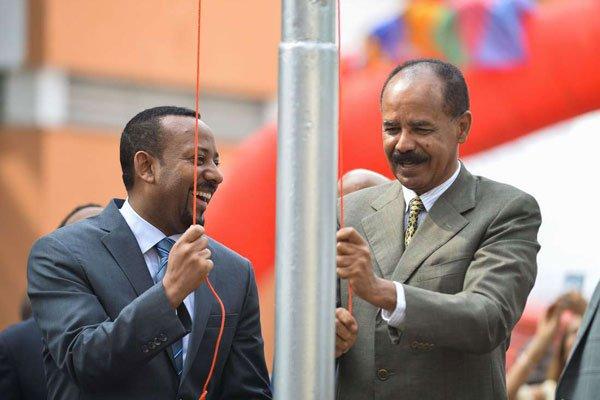
A FRIENDSHIP THAT HAS COLLAPSED
The speed of the diplomatic breakdown is particularly striking because Ethiopia and Eritrea were once presented as an example of historic reconciliation in the Horn of Africa.
Eritrea became independent from Ethiopia in 1993 following decades of conflict.
Relations subsequently deteriorated, eventually producing a devastating border war between 1998 and 2000.
Tens of thousands of people were killed before major fighting ended.
The two countries nevertheless remained bitterly divided for almost two decades.
That changed dramatically in 2018.
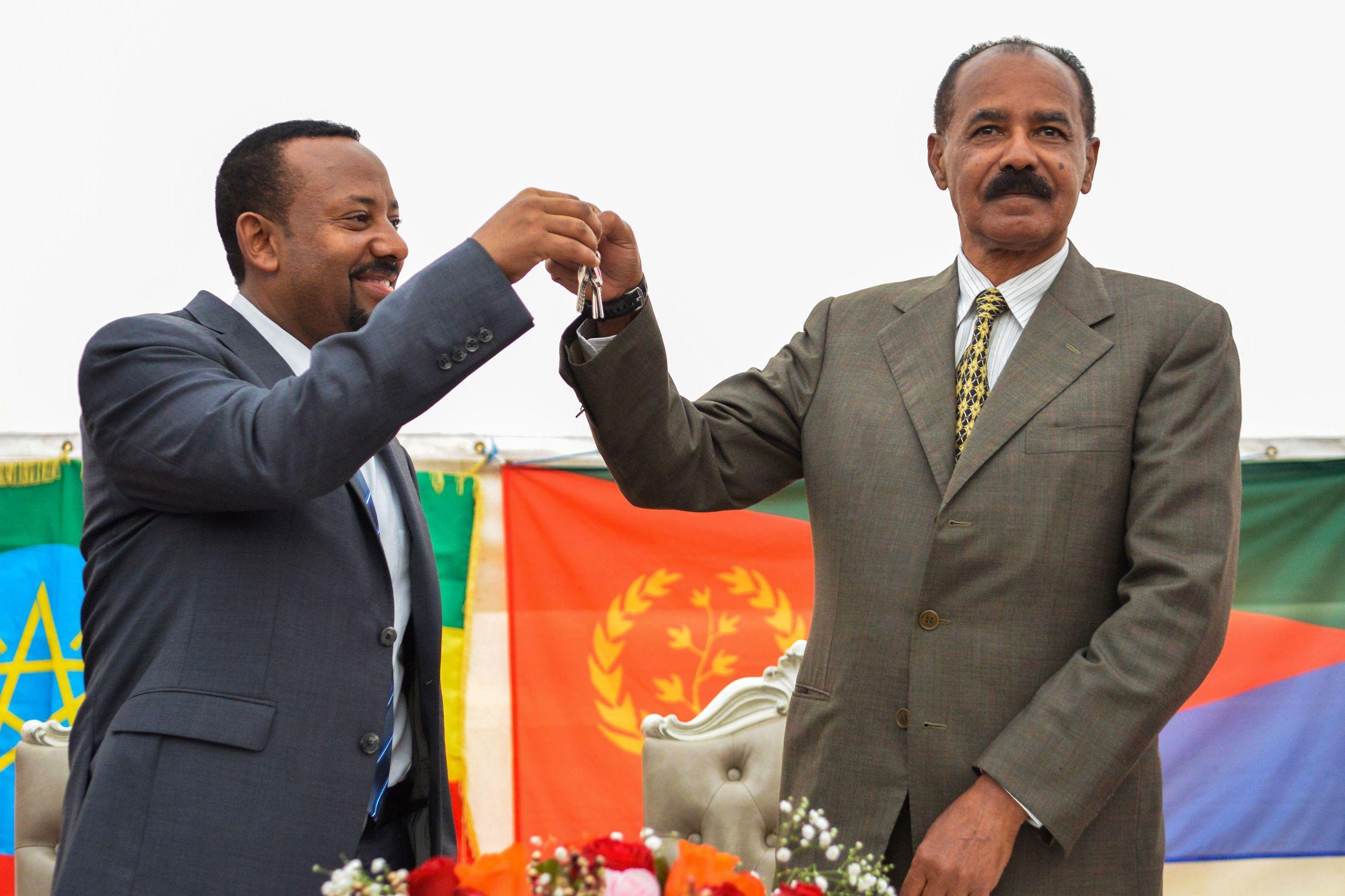
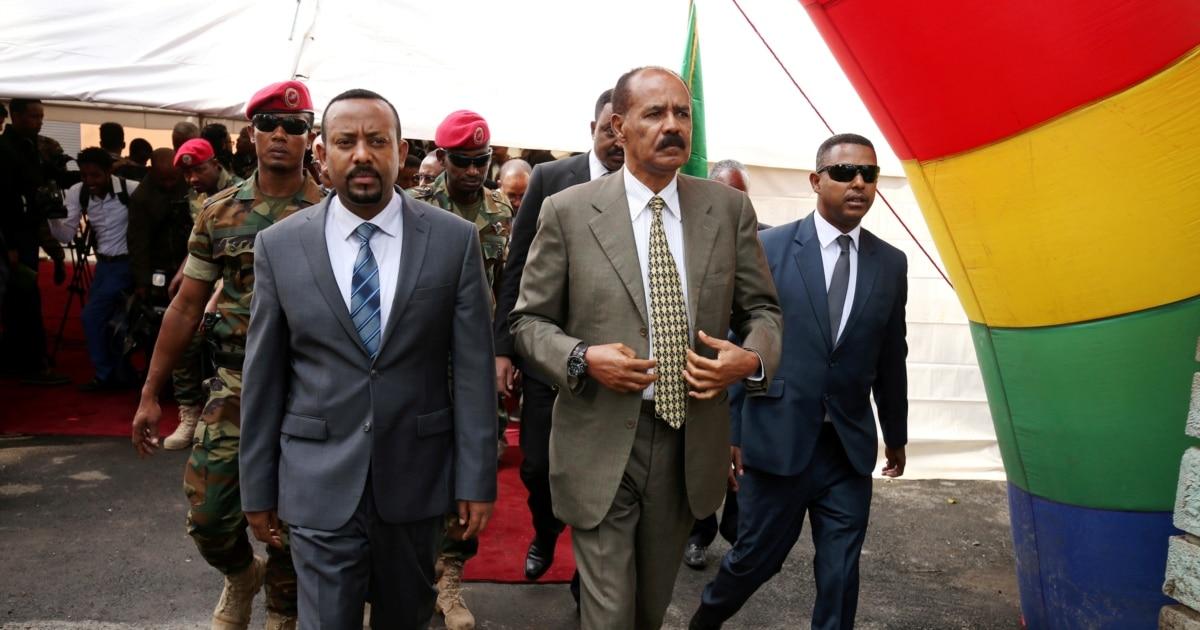
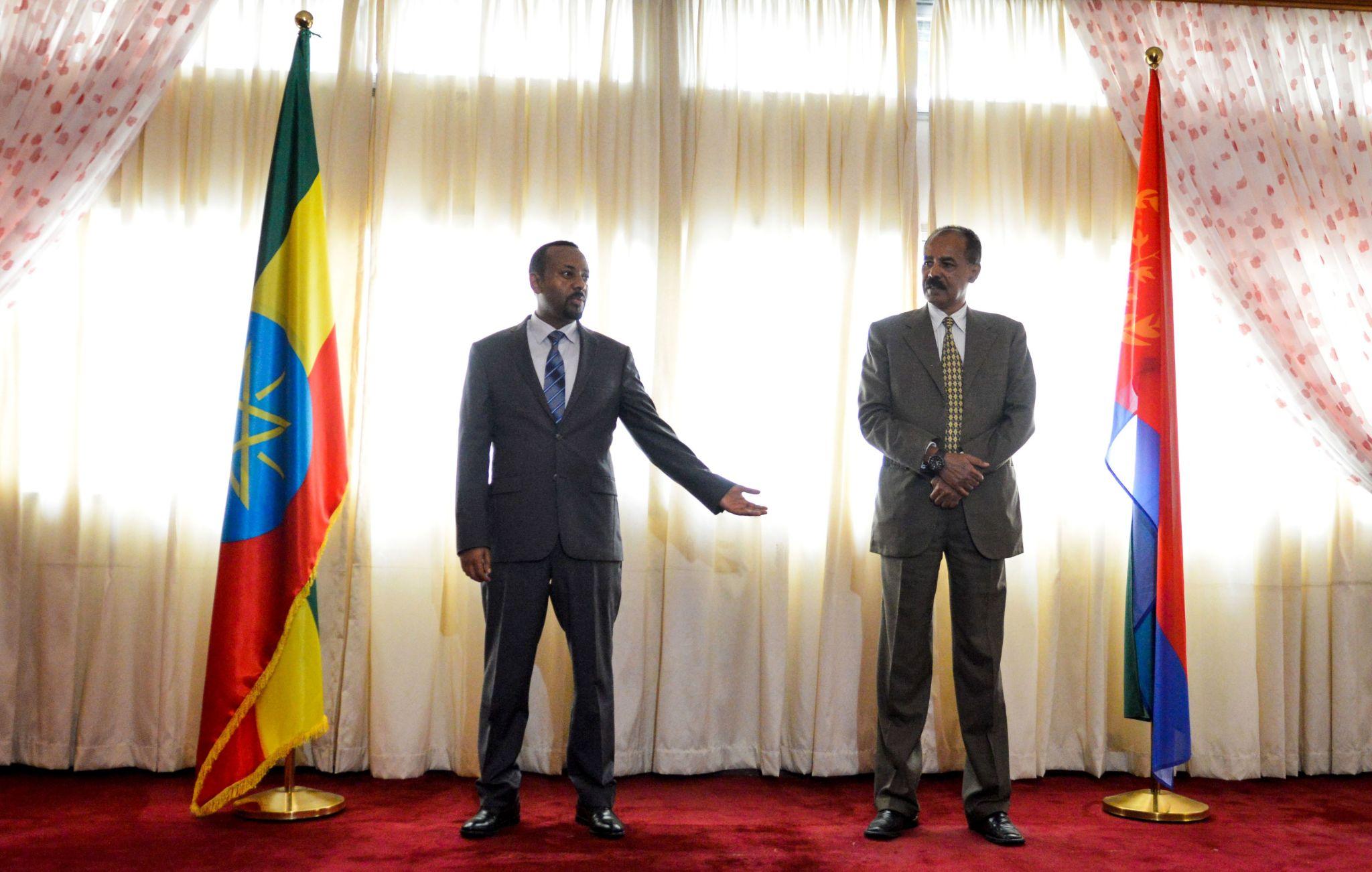
Ethiopian Prime Minister Abiy Ahmed and Eritrean President Isaias Afwerki restored diplomatic relations, reopened borders and ended what had effectively been years of hostility between their governments.
Ethiopia reopened its embassy in Asmara as part of that rapprochement.
Abiy's role in reaching peace with Eritrea contributed significantly to his being awarded the 2019 Nobel Peace Prize.
Eight years later, the embassy is closing again and diplomatic relations have collapsed.
FORMER ALLIES IN THE TIGRAY WAR
The relationship between Ethiopia and Eritrea became even more complicated during the Tigray war that began in 2020.
Ethiopian federal forces and Eritrean troops fought against the TPLF during the conflict.
The war became one of Africa's deadliest conflicts in recent decades.
Large numbers of civilians were killed or displaced, while humanitarian organisations documented severe food shortages and widespread disruption across northern Ethiopia.
The conflict formally eased after the Ethiopian government and Tigrayan authorities signed the Pretoria peace agreement in November 2022.
Eritrea, however, was not a party to that agreement.
Relations between Addis Ababa and Asmara subsequently deteriorated.
The former battlefield allies increasingly found themselves on opposite sides of political and security disputes.
RENEWED FIGHTING HAS SHATTERED AN ALREADY FRAGILE PEACE
The diplomatic crisis is unfolding alongside renewed fighting in northern Ethiopia.
Federal forces and opposition fighters have been battling across areas of Tigray and neighbouring Afar.
The renewed hostilities represent the most serious deterioration in northern Ethiopia since the end of the 2020 to 2022 war.
Reports from affected communities indicate that civilians are again being displaced.
People who had already been forced from their homes during the previous conflict are facing the possibility of being uprooted again.
Economic disruption is also spreading.
Residents in Tigray have reported problems accessing banking and other essential services, while shortages and rising prices are adding pressure to communities already affected by years of instability.
The humanitarian consequences could worsen considerably if the fighting expands.
EXPLOSIONS IN ADDIS ABABA RAISE THE STAKES
The regional crisis intensified further after explosions were heard overnight in Addis Ababa.
Diplomatic sources confirmed hearing blasts in the Ethiopian capital.
One was reported near Ethiopia's military headquarters.
The precise cause of the explosions has not been officially established.
A source linked to the opposition alliance claimed that drones had been used to attack military targets in Addis Ababa.
That claim has not been independently confirmed.
If armed opposition forces are eventually confirmed to have carried out drone attacks on Addis Ababa, it would represent an important change in the conflict because the Ethiopian capital lies hundreds of kilometres from the principal northern battlefronts.
Authorities have banned drone flights over Addis Ababa and surrounding areas as security concerns increase.
ETHIOPIA ACCUSES OTHER COUNTRIES
The confrontation is no longer limited to Ethiopia and Eritrea.
Addis Ababa has also accused Sudan and Egypt of supporting the opposition alliance.
Both countries deny the allegations.
Ethiopia has additionally expelled an Egyptian diplomat, declaring him persona non grata and ordering him to leave the country within 48 hours.
Egypt responded by ordering an Ethiopian embassy official to leave.
The diplomatic exchanges demonstrate how Ethiopia's internal conflict is becoming increasingly entangled with existing regional disputes.
THE RED SEA QUESTION
One of the major sources of tension between Ethiopia and Eritrea involves access to the Red Sea.
Ethiopia has been landlocked since Eritrea gained independence in 1993.
With a population exceeding 100 million people and one of Africa's largest economies, Ethiopia relies heavily on neighbouring countries for access to international maritime trade.
Prime Minister Abiy Ahmed's government has repeatedly argued that reliable access to the sea is strategically and economically important for Ethiopia.
Those statements have caused concern in Eritrea.
Asmara has expressed fears that Ethiopia's maritime ambitions could eventually threaten Eritrean sovereignty, particularly around the strategically important port of Assab.
Ethiopia has said it seeks peaceful arrangements for maritime access.
The issue nevertheless remains highly sensitive.
WHY ASSAB MATTERS
Assab sits on Eritrea's Red Sea coastline near one of the world's most strategically important maritime corridors.
Ships travelling between Europe and Asia pass through the Red Sea and the Bab el Mandeb before entering the Gulf of Aden and the wider Indian Ocean.
For landlocked Ethiopia, dependable access to a nearby port could reduce dependence on existing trade routes.
For Eritrea, control over its coastline is inseparable from the independence it fought decades to achieve.
That makes any discussion involving Ethiopian access to Eritrean territory politically explosive.
A WIDER HORN OF AFRICA CRISIS
The Horn of Africa already contains several overlapping security challenges.
Sudan remains affected by conflict.
Somalia continues to confront armed groups.
Red Sea security has become increasingly important to international powers because of attacks on commercial shipping and wider Middle Eastern tensions.
Ethiopia itself has faced multiple internal conflicts and ethnic tensions.
A direct confrontation between Ethiopia and Eritrea would therefore have consequences extending beyond their border.
It could create additional refugee movements, disrupt regional trade and place further pressure on humanitarian organisations.
It could also draw neighbouring governments more deeply into competing alliances.
AFRICAN UNION CALLS FOR RESTRAINT
The African Union has responded to the escalating diplomatic confrontation by calling for restraint.
The organisation has urged Ethiopia, Eritrea and Egypt to avoid actions or statements that could further worsen tensions.
It has called on the countries to resolve their disagreements through established diplomatic channels and peaceful dialogue.
That appeal takes on greater significance now that Ethiopia and Eritrea no longer maintain normal diplomatic relations.
Embassies are not simply symbolic institutions.
They provide governments with direct channels for communication, negotiation and crisis management.
When those channels disappear during a military confrontation, misunderstandings can become more dangerous.
WHY BREAKING DIPLOMATIC RELATIONS MATTERS
Countries can experience serious political disagreements while still maintaining embassies and diplomatic communication.
Severing relations goes considerably further.
It signals that normal government to government engagement has effectively broken down.
Diplomats can play an important role during crises by communicating intentions, clarifying military movements and helping prevent misunderstandings from escalating.
Without those direct channels, governments may have to communicate through third countries, international organisations or other intermediaries.
That becomes particularly dangerous when military forces are operating near contested areas.
FROM PEACE AGREEMENT TO DIPLOMATIC RUPTURE
The deterioration of Ethiopia and Eritrea's relationship represents a dramatic reversal of the optimism surrounding their reconciliation in 2018.
At that time, families separated by decades of hostility were reunited, flights resumed and diplomatic missions reopened.
The rapprochement was celebrated internationally as a breakthrough for regional peace.
The relationship survived long enough for Ethiopian and Eritrean forces to become military partners during the Tigray war.
But the political landscape changed after the Pretoria agreement.
Disagreements involving Tigray, border security and Ethiopia's search for maritime access gradually widened the gap between the governments.
The decision to close embassies and sever diplomatic relations shows how far that deterioration has now progressed.
CIVILIANS FACE THE GREATEST RISK
Behind the diplomatic statements and military developments are communities that have already experienced years of conflict.
Northern Ethiopia has not fully recovered from the previous war.
Many displaced people remain dependent on humanitarian assistance.
Infrastructure and local economies were severely damaged.
A renewed prolonged conflict could reverse the limited recovery that has taken place.
If fighting spreads across borders, communities in Eritrea could also face increased insecurity.
The possibility of another major war therefore carries humanitarian consequences far beyond the political confrontation between Addis Ababa and Asmara.
WHAT HAPPENS NEXT
The immediate question is whether the diplomatic rupture remains political or develops into a wider military confrontation.
Eritrea and Ethiopia have not announced a formal state of war.
Severing diplomatic relations does not automatically mean that military conflict between the two countries is inevitable.
However, the combination of renewed fighting in northern Ethiopia, mutual accusations of supporting armed groups, the breakdown of diplomatic communication and unresolved disputes over regional security has created an increasingly dangerous environment.
Attention will now turn to the African Union and other international actors attempting to prevent further escalation.
Developments on the battlefield will also be critical.
Evidence of direct military involvement by neighbouring states would fundamentally change the nature of the conflict.
For now, what began as renewed fighting inside northern Ethiopia has developed into a diplomatic crisis involving several countries.
The collapse of relations between Ethiopia and Eritrea represents the clearest warning yet that instability inside Ethiopia risks becoming a much wider Horn of Africa crisis.