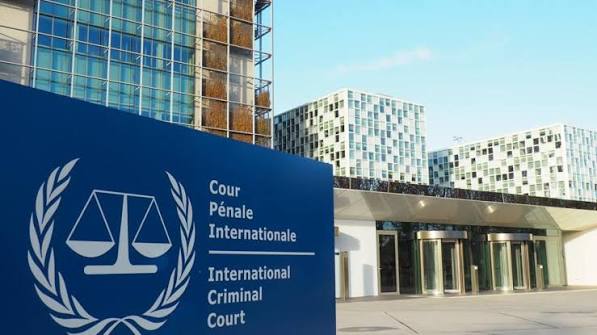
The International Criminal Court was built on a simple promise. If you commit genocide, war crimes or crimes against humanity on the territory of a member state, your passport will not save you. A new proposal, now circulating quietly among the court's members, would test that promise in a way it has not been tested since the court was founded.
According to an exclusive report by Middle East Eye, Guatemala has given ICC member states a three-page paper that closely echoes long-running demands from the United States and Israel. MEE says the document was submitted at a closed-door retreat for ambassadors from ICC member states in The Hague on November 18. The timing matters. The court's Assembly of States Parties, the body of governments that oversees the ICC, opens its annual session on November 30.
The paper, as MEE describes it, does not ask the court to shut down. It does not ask any country to leave. Its approach is quieter and, critics would argue, more far-reaching. It proposes dialogue with Washington about limiting the ICC's ability to pursue cases involving nationals of countries that are not members of the court. Those countries include the United States, Israel and Russia.
MEE reports that the paper floats a specific idea. A suspect's country of nationality would have to give consent before the court could act, even when the alleged crimes took place on the territory of an ICC member state. The paper also reportedly calls for an advisory opinion from the International Court of Justice on the question of immunity. It makes arguments that, according to MEE, echo Israel's challenge to how the ICC prosecutor handled the Palestine investigation. And it argues that Washington's views should be taken into account in discussions about the court's governance, because the United States hosts assembly sessions in New York.
The story behind who wrote the paper may be as revealing as what it says. MEE reports that some of Washington's G7 allies, including the United Kingdom, Germany and Italy, signaled they were ready to discuss the proposal with the United States. But they were reluctant to back the idea in public. As a result, according to MEE, Guatemala, a Latin American country closely allied with Israel and the US, decided to take the lead and draft the proposal itself.
It is important to be clear about what is known and what is not. The account comes from MEE, which says it has seen the document. MEE's description of the G7 positions rests on what it "understands," and its claims about a draft resolution rest on unnamed sources. As far as public reporting shows, Guatemala has not publicly confirmed the details of the paper. The British, German and Italian governments have not publicly confirmed the positions attributed to them. No draft resolution has been published. The full text of the paper has not been released.
It is also important to be clear about what a proposal like this can and cannot do. A paper circulated at a retreat is not law. A resolution adopted by the assembly cannot, on its own, rewrite the treaty that created the court. Changing who the ICC can prosecute would most likely require a formal amendment to that treaty, and that is a slow and demanding process. Still, proposals shape debates. Debates shape resolutions. And resolutions send political signals that prosecutors, judges and governments notice.
To understand why this paper has caused alarm among supporters of the court, you have to go back to a summer in Rome.
In July 1998, diplomats from around the world gathered in the Italian capital to finish a treaty that had been debated for years. The idea of a permanent international criminal court had floated around since the Nuremberg and Tokyo trials after the Second World War. The genocides in Rwanda and the former Yugoslavia in the 1990s gave it new urgency. The United Nations had created special tribunals for those conflicts. Many countries wanted a permanent court so the world would not have to build a new one after every atrocity.
On July 17, 1998, the Rome Statute was adopted. It entered into force on July 1, 2002. The court opened in The Hague, in the Netherlands. Today, more than 120 countries are members.
The most contested question in Rome was exactly the one Guatemala's paper reportedly raises. When should the court have the power to act?
The answer the negotiators reached is written into Article 12 of the statute. The court can act if the alleged crime took place on the territory of a member state. It can also act if the accused is a national of a member state. Those are the two main gateways. A third route exists through the UN Security Council, which can refer any situation to the court, even one involving a non-member. Countries that are not members can also accept the court's jurisdiction for specific situations.
The United States pushed hard in Rome for a different rule. American negotiators wanted the consent of the suspect's home country to be required. In practice, that would have meant no American could be tried without Washington's approval. Most countries rejected that idea. They argued it would give powerful states a veto over justice for their own citizens. They also pointed out a basic principle of criminal law. Every country already has the right to prosecute crimes committed on its soil, no matter the nationality of the offender. A member state, they reasoned, could pass that right to the international court it had helped create.
The territorial rule became one of the pillars of the system. The consent idea now floating in the Guatemalan paper, as MEE describes it, would revive the very position the United States lost in Rome nearly three decades ago.
The US relationship with the court has swung back and forth ever since.
President Bill Clinton signed the Rome Statute on the last day possible, December 31, 2000. He did not send it to the Senate for ratification and said he had serious concerns about it. In 2002, the George W. Bush administration formally informed the United Nations that the United States did not intend to become a party. The move was widely described as "unsigning" the treaty.
That same year, Congress passed the American Service-Members' Protection Act. Critics nicknamed it the "Hague Invasion Act" because it authorized the president to use "all means necessary" to free Americans or allies held by the court. Washington also negotiated bilateral agreements with about 100 countries, promising they would not hand Americans over to the ICC. These were known as Article 98 agreements, after a clause in the statute. In 2002 and 2003, the US also secured UN Security Council resolutions that temporarily shielded peacekeepers from non-member countries from ICC action.
Relations thawed in later years. The US cooperated with the court on some African cases and helped bring certain suspects to The Hague. It supported the Security Council's referral of Libya to the court in 2011.
Then the court turned toward situations involving American personnel. In 2017, the ICC prosecutor at the time, Fatou Bensouda of the Gambia, asked judges to authorize an investigation into Afghanistan. The inquiry could include alleged abuses by US forces and the CIA, including at detention sites in Afghanistan and in some European member states. Judges first refused in 2019. The court's Appeals Chamber reversed that decision in March 2020 and allowed the investigation to go ahead.
The first Trump administration responded with force. In 2020, it imposed sanctions on Bensouda and a senior aide, freezing assets and restricting travel. It was an extraordinary step against officials of an international court. The Biden administration lifted those sanctions in April 2021. Later that year, Bensouda's successor, Karim Khan of the United Kingdom, said his office would focus the Afghanistan investigation on the Taliban and the Islamic State group's local affiliate, and "deprioritize" other aspects. That decision included alleged US conduct. Human rights groups criticized it sharply.
The sharpest conflict, however, came over Palestine.
The State of Palestine joined the Rome Statute in 2015. Israel is not a member and has never accepted the court's authority. In February 2021, ICC judges ruled that the court's territorial jurisdiction covered Gaza, the West Bank and East Jerusalem. In March 2021, Bensouda opened a formal investigation.
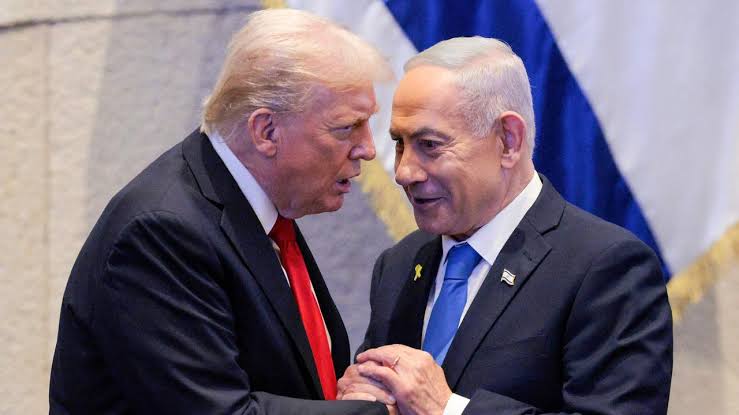
After the Hamas-led attack on Israel on October 7, 2023, and the war in Gaza that followed, the investigation moved to the center of world politics. In May 2024, Khan announced he was seeking arrest warrants for Israeli Prime Minister Benjamin Netanyahu and then Defense Minister Yoav Gallant. He also sought warrants for three Hamas leaders: Yahya Sinwar, Mohammed Deif and Ismail Haniyeh. In November 2024, judges issued warrants for Netanyahu, Gallant and Deif. The requests for Sinwar and Haniyeh were dropped after both men were killed.
The warrants against a sitting Israeli prime minister were a historic moment. Israel rejected them in the strongest terms and called the court biased. Netanyahu described the decision as antisemitic. Israel's supporters in Washington, across both major parties, condemned it.
Israel also challenged the case through the court's own procedures. It argued that the court lacked jurisdiction, in part because of the Oslo Accords, the 1990s agreements between Israel and the Palestinians. It also argued that the prosecutor should have formally notified Israel again after the war began, giving it the chance to show it was investigating the matter itself. Under the Rome Statute, the court is supposed to step back if a country is genuinely investigating or prosecuting the same crimes. That principle is called complementarity. Israel argued that the prosecutor's handling of this step was flawed. These challenges have moved through the court's chambers over the past two years, and some aspects have been sent back for further review.
According to MEE, the Guatemalan paper advances arguments that echo Israel's challenge on how the prosecutor handled the Palestine investigation. That is a striking detail. It suggests the paper is not only about abstract principles. It touches directly on one of the court's most sensitive active cases.
Washington's response to the warrants was swift. In February 2025, President Donald Trump signed an executive order authorizing sanctions against the ICC. It accused the court of "illegitimate and baseless actions targeting America and our close ally Israel." Karim Khan was among the first officials sanctioned. In the months that followed, the administration added several ICC judges and other senior officials to the sanctions list. Sanctioned officials faced frozen assets and travel bans. Reports said some court staff struggled with basic banking and technology services because companies feared breaking US rules.
At the same time, the court faced turmoil from within. In May 2025, Khan stepped aside from his duties while a UN investigation looked into allegations of sexual misconduct, which he denied. Deputy prosecutors took over the office's day-to-day work. The episode added to the pressure on an institution already under attack from outside.
This is the setting in which the Guatemalan paper has reportedly landed. The court is under sanctions from the world's most powerful country. Its chief prosecutor has stepped aside. Its most controversial warrant targets the leader of a close US ally. And some of its traditional supporters in Europe appear less willing to defend it in public than they once were.
The geography of this year's assembly tells part of the story. The Assembly of States Parties has held sessions both in The Hague and at UN headquarters in New York over the years. According to MEE, this year's session was moved to The Hague amid concerns that US sanctions and visa restrictions could limit participation. In plain terms, member states worried that some delegates and court officials might not be allowed into the United States, or might face legal risks if they went.
That is what makes one of the paper's reported arguments so remarkable. According to MEE, the proposal says Washington's views should be taken into account in discussions about the court's governance, because the US hosts assembly sessions in New York. Critics are likely to point out the obvious tension. The assembly moved away from New York this year because of fears about US restrictions. Hosting sessions, they will argue, is a duty that comes with the UN headquarters, not a ticket to shape a court the host country refuses to join.
Supporters of the proposal may see it differently. They might argue that a court cannot function well in open conflict with the world's largest economy and military power. They might say that dialogue is better than sanctions, and that some accommodation could protect the court from further damage. That is a real argument, and it has supporters among diplomats who fear the court's survival is at stake. But it raises a hard question. If the price of peace with Washington is giving non-member states a veto over cases involving their own nationals, what would remain of the court's independence?
The consent proposal deserves a closer look, because its effects would reach far beyond the United States and Israel.
If the court needed the consent of a suspect's home country, a war criminal would be safe as long as his own government protected him. That would apply to any non-member state. Russia is the clearest example. In March 2023, ICC judges issued an arrest warrant for President Vladimir Putin over the alleged unlawful deportation of children from occupied areas of Ukraine. They also issued a warrant for Maria Lvova-Belova, Russia's commissioner for children's rights. Russia is not a member of the court. The crimes allegedly took place in Ukraine, which accepted the court's jurisdiction and later became a full member.
Under a consent rule, Moscow would simply refuse. The case against Putin, and against any Russian soldier accused of crimes in Ukraine, would be blocked. MEE's report names Russia alongside the US and Israel as countries whose nationals would be affected. Many of the European governments said to be open to discussing the idea have strongly supported the Ukraine investigation. They would face an awkward choice. A rule that shields American and Israeli officials would also shield Russian ones.
The same logic applies to China, India, Saudi Arabia, Iran, North Korea and every other non-member. It would apply to private armies and mercenary groups whose fighters come from non-member states. It would apply to foreign forces acting on the soil of members, including in Africa.
The call for an ICJ advisory opinion on immunity adds another layer. The International Court of Justice, also based in The Hague, is the UN's top court. It settles disputes between states and gives advisory opinions on legal questions. Those opinions can only be requested by UN bodies such as the General Assembly or the Security Council, not by the ICC's Assembly of States Parties itself. So any push for an advisory opinion would likely have to go through the UN General Assembly.
The question of immunity is old and deeply contested. Article 27 of the Rome Statute says official position, including being a head of state, gives no protection from the court. But another clause, Article 98, has been used to argue that member states cannot be forced to arrest officials of non-member states who would normally enjoy immunity. In 2002, the ICJ ruled in a case between the Democratic Republic of Congo and Belgium that a serving foreign minister had immunity from prosecution in another country's national courts. It added that such officials could still be tried before certain international courts with jurisdiction.
In 2019, the ICC's Appeals Chamber ruled in a case involving Jordan that there is no head-of-state immunity before international courts under customary international law. That ruling concerned Jordan's failure to arrest former Sudanese President Omar al-Bashir during a visit in 2017. It angered some states and pleased others.
The immunity debate is not theoretical. When judges issued the Netanyahu warrant, France suggested he might enjoy immunity because Israel is not a member. Hungary hosted Netanyahu in April 2025 and announced it would leave the court. In September 2024, Mongolia, an ICC member, welcomed Putin without arresting him. Judges later found Mongolia had failed in its duty. An ICJ opinion favoring broad immunity for leaders of non-member states could give governments legal cover to ignore warrants.
For Africans, this part of the proposal carries a sharp sense of history.
The African Union has pushed for exactly this kind of ICJ opinion before. In 2018, AU leaders decided to seek a UN General Assembly request for an advisory opinion on the immunity of heads of state before the ICC. Their concern then was the warrant for al-Bashir, Sudan's president at the time, and the earlier cases against Kenya's leaders. Many Western governments resisted that push. Human rights groups warned it would weaken accountability. The AU effort did not produce an opinion.
Now, according to MEE, a similar idea is resurfacing, this time in a paper aligned with the interests of Washington and Israel. Many African observers will notice the irony. When African leaders were the targets, Western capitals defended the court's reach. Now that the court is pursuing the leader of a Western ally, some of those same capitals are reportedly willing to discuss limiting it, if only behind closed doors.
That irony sits on top of a long and painful relationship between Africa and the ICC.
African countries were among the court's strongest early supporters. Senegal was the first country in the world to ratify the Rome Statute, in February 1999. Ghana ratified in December 1999. Nigeria ratified in September 2001. Today, African states make up the largest regional group among the court's members.
African states also referred many of the court's earliest situations themselves. Uganda referred the crimes of the Lord's Resistance Army, leading to the warrant for Joseph Kony, who remains at large. The Democratic Republic of Congo referred its own situation, which produced the court's first conviction, of militia leader Thomas Lubanga, in 2012. The Central African Republic and Mali also referred their situations. In 2016, the court convicted Ahmad al-Faqi al-Mahdi for destroying historic shrines in Timbuktu, the first case to focus on cultural heritage as a war crime.
But over time, many Africans came to see the court as a tool aimed at them. For most of its first decade, almost every case the court pursued involved Africans. The UN Security Council referred Darfur in 2005, leading to warrants for al-Bashir in 2009 and 2010. It referred Libya in 2011. Kenya's case, involving post-election violence in 2007 and 2008, targeted Uhuru Kenyatta and William Ruto, who later became president and deputy president. The charges against Kenyatta were withdrawn in 2014, and the case against Ruto ended in 2016. Côte d'Ivoire's former president, Laurent Gbagbo, was tried in The Hague and acquitted.
Critics called the court an "International Caucasian Court" and accused it of "race hunting." Those phrases were blunt, and they were contested. Defenders pointed out that African governments themselves had asked for most of the investigations. They noted that the victims in these cases were overwhelmingly African. Still, the sense of selective justice was real and widespread.
In 2016, South Africa, Burundi and the Gambia announced plans to withdraw. Burundi left in 2017. The Gambia and South Africa reversed course. South Africa had earlier refused to arrest al-Bashir during an AU summit in Johannesburg in 2015, and its own courts ruled that refusal unlawful.
In recent years, the court has tried to show it is not focused only on Africa. It has opened investigations in Afghanistan, Bangladesh and Myanmar, Georgia, Palestine, the Philippines, Ukraine and Venezuela. In March 2025, former Philippine President Rodrigo Duterte was arrested and flown to The Hague over killings during his "war on drugs." The Philippines had left the court in 2019, but the alleged crimes took place while it was still a member.
The Palestine warrants were, for many in the Global South, the clearest test of whether the court would apply the same rules to allies of powerful Western states. The court's decision to issue them earned it new respect in parts of Africa, Asia and Latin America. It also earned it sanctions from Washington.
That is why a proposal to limit the court's reach over non-member nationals, at this exact moment, is likely to land badly in many African capitals. To critics, it would look like this: the court could pursue African warlords and presidents, but not the officials of powerful states that refuse to join.
The African picture is not uniform, though. In September 2025, the military governments of Burkina Faso, Mali and Niger announced plans to withdraw from the court, calling it a tool of neocolonial repression. Some African leaders would quietly welcome any weakening of the ICC, whatever the reason. The continent is not speaking with one voice.
The choice of Guatemala as the paper's author is worth examining too.
Guatemala joined the Rome Statute in 2012, a decade after the court began operating. Its relationship with the court is rooted in its own history. Between 1960 and 1996, the country endured a brutal civil war. An estimated 200,000 people were killed or disappeared. A UN-backed truth commission found that state forces committed acts of genocide against Maya communities in the early 1980s. In 2013, former military ruler Efraín Ríos Montt was convicted of genocide in a Guatemalan court, the first time a former head of state was found guilty of genocide by a national court in his own country. The conviction was overturned on procedural grounds within days.
From 2007 to 2019, Guatemala also hosted a UN-backed anti-corruption body known as CICIG. It helped bring down powerful officials, including a sitting president. It was shut down after the government turned against it.
Few countries know better than Guatemala what impunity costs, and how hard accountability is to win. That history will make the reported paper even more striking to the court's supporters.
Guatemala's ties to Israel run deep. It was one of the first countries to recognize Israel in 1948. During its civil war, Israel supplied arms and training to its military. In 2018, under President Jimmy Morales, Guatemala followed the United States in moving its embassy to Jerusalem. Current President Bernardo Arévalo, who took office in 2024, has kept close ties with both Israel and Washington. His government has also worked to manage a sensitive relationship with the Trump administration on migration and security.
MEE describes Guatemala as a country allied with Israel and the US that decided to take the lead after the G7 states held back. As far as public reporting shows, Guatemala has not publicly explained its reasons. Its government may argue that it is trying to build a bridge between the court and Washington. It may say that the court cannot survive a long war with the United States, and that someone had to start a conversation. Those motives would be plausible. But they would not answer the question of whether the substance of the proposal is compatible with the treaty Guatemala signed.
The reported positions of the UK, Germany and Italy may be the most politically sensitive part of MEE's story.
All three are ICC members and major funders of the court. All three have, at various times, presented themselves as defenders of international justice. All three also have deep ties to Washington and, in different ways, to Israel.
The United Kingdom has a mixed record on the Palestine case. The previous Conservative government planned to challenge the court's jurisdiction to issue warrants for Israeli officials. In July 2024, after Keir Starmer's Labour government took office, it dropped that challenge. Germany has strongly backed the court in many cases, but its leaders have struggled publicly with the idea of arresting Netanyahu, given Germany's history and its special relationship with Israel. Chancellor Friedrich Merz said in early 2025 that he would look for ways for Netanyahu to visit Germany despite the warrant. Italy drew criticism from the court's supporters in January 2025, when it released and flew home a Libyan police official wanted by the ICC instead of handing him over.
If MEE's account is accurate, these governments wanted the conversation to happen without being seen to start it. That pattern is common in diplomacy. Smaller allies sometimes carry proposals that larger states prefer not to sponsor. It allows powerful governments to test reactions without paying a public price. But it also raises questions of transparency. Citizens in London, Berlin and Rome would want to know whether their governments are quietly supporting limits on a court they publicly praise. Those governments have not publicly confirmed MEE's account.
What happens next, according to MEE's sources, is that the assembly's president and secretariat are expected to draft a resolution on Guatemala's proposal. That draft would then go to member states for negotiation.
That process is where the real fight will happen. Assembly resolutions are usually negotiated line by line. Language that appears strong in a first draft can be weakened, softened or removed. Many states, including many in Africa, Latin America and Europe, are likely to resist any wording that suggests the court should seek permission from non-members before acting. Others may support a softer version calling for "dialogue" or "engagement" with Washington without committing to any change in jurisdiction.
The legal path to any real change is steep. The Rome Statute can be amended, but amendments generally require adoption by two-thirds of member states. For most provisions, they then need ratification by seven-eighths of members before entering into force for everyone. A change to the court's core jurisdiction would face fierce opposition. Many legal experts would also argue that the assembly cannot use a resolution to tell judges how to interpret the statute. The court's judges, not its member governments, decide questions of jurisdiction in specific cases.
Still, the political effect could be significant even without legal change. A resolution that signals member states are open to limiting cases against non-member nationals could put pressure on prosecutors deciding what to pursue. It could encourage governments to ignore warrants. It could give Washington grounds to say that the court's own members agree with its complaints. And it could deepen the perception, already strong in the Global South, that international justice has one standard for the powerful and another for everyone else.
For Nigeria, these debates are not abstract.
Nigeria has been under the ICC's eye for more than a decade. In 2010, the prosecutor's office opened a preliminary examination into alleged crimes in Nigeria. The focus grew to include the Boko Haram insurgency in the northeast and alleged abuses by Nigerian security forces. In December 2020, Bensouda announced that her office had found a reasonable basis to believe that crimes against humanity and war crimes had been committed by both Boko Haram and Nigerian security forces. She said the next step would be to seek authorization for a full investigation. As far as public reporting shows, a full investigation has not been opened. Nigerian authorities have consistently said they can handle any abuses through their own systems.
Because Nigeria is a member, a consent rule would not shield Nigerians. Nigerian nationals accused of crimes would remain within the court's reach, as they are now. The change would affect foreigners. If nationals of non-member states committed atrocities on Nigerian soil, a consent rule would put them beyond the court's grasp unless their governments agreed. That matters for a country facing armed groups with foreign fighters, cross-border militancy across the Sahel, and growing foreign security involvement in the region.
The question took on new weight in late 2025, when the Trump administration designated Nigeria a "Country of Particular Concern" over religious freedom and threatened military action over killings of Christians. Nigerian officials rejected the framing and stressed their sovereignty. Whatever one thinks of that dispute, it illustrates a basic point. Under the current rules, if any foreign forces from a non-member state committed war crimes on Nigerian territory, the ICC could act on Nigeria's behalf. Under the consent rule floated in the paper, it likely could not, unless the foreign government allowed it.
Nigeria also has a proud record inside the court. Nigerian judge Chile Eboe-Osuji served as president of the ICC from 2018 to 2021. Nigerian lawyers, diplomats and academics have been active in debates on international justice for decades. Abuja's voice in the assembly negotiations could carry real weight, especially if it chooses to lead an African position.
Ghana's stake is just as real. Ghana was an early supporter of the court and ratified the statute before most of the world. Ghanaian jurist Akua Kuenyehia served as an ICC judge from 2003 to 2015, including as the court's first vice-president. Ghana is also one of the world's most respected contributors to UN peacekeeping. Its soldiers have served in conflict zones from Lebanon to South Sudan. Ghana understands the importance of rules that apply to all forces in a conflict, including those from powerful countries.
Ghana has built a reputation as a stable democracy and a careful diplomatic actor in West Africa. That gives it standing to argue for a principled position in The Hague. A consent rule would weaken protections for victims in the very kinds of conflicts where Ghanaian peacekeepers serve.
For both countries, there is also a broader strategic question. The world is moving toward a more divided, transactional order. Big powers are increasingly willing to bend or ignore rules when those rules get in their way. Middle powers and smaller states rely on international law to protect them. Weakening the ICC to satisfy non-members would set a precedent that sovereignty and accountability bend toward power. African states, which have often been on the receiving end of that dynamic, have every reason to be wary.
That does not mean the court is beyond criticism. Its record is uneven. Trials take years. Some high-profile cases have collapsed. Few suspects are ever arrested. The court depends on states to carry out its warrants, and many states have refused. Its budget is small compared to the tasks it faces. Its leadership has been hit by scandal. African critiques of selectivity were not invented out of nothing. Reform debates are legitimate, and member states have every right to hold them.
The question is what kind of reform. Making the court faster, fairer and more effective is one thing. Limiting its jurisdiction so that the nationals of powerful non-members are effectively protected is another. Critics of the Guatemalan paper are likely to argue that it falls into the second category, based on MEE's description.
Several developments in the coming days will show how far the proposal travels.
The first is whether a draft resolution emerges before or during the assembly session that opens on November 30. MEE's sources say one is expected. Its wording will reveal how much support the idea has.
The second is how member states respond in public. Statements from African, Latin American and European delegations during the session will show where the lines are drawn. Watch for whether the African Group speaks with one voice.
The third is whether the governments named by MEE confirm or deny the positions attributed to them. Silence would also send a message.
The fourth is Washington's reaction. The United States is not a member and has no vote in the assembly. But it can shape the debate through pressure, sanctions and diplomacy, and the paper reportedly invites exactly that kind of influence.
The fifth is the response of the court itself. ICC officials do not usually comment on assembly debates in detail. But the court's president and other senior officials may use the session to defend the court's independence.
For now, the facts that can be stated are these. According to Middle East Eye, Guatemala circulated a three-page proposal to ICC member states at a closed-door retreat in The Hague on November 18. MEE says the paper calls for dialogue with the United States on curbing the court's ability to pursue nationals of non-member states, including the US, Israel and Russia. It reportedly floats requiring consent from a suspect's home country, seeks an ICJ advisory opinion on immunity, echoes Israel's challenge to the Palestine investigation and argues that US views should count in the court's governance. MEE reports that the UK, Germany and Italy were open to discussing the idea but unwilling to back it publicly. The assembly session opens on November 30 in The Hague, moved from New York amid concerns over US sanctions and visa restrictions. A draft resolution is expected, according to MEE's sources. None of the governments named has publicly confirmed the reported details.
The ICC was created so that the worst crimes on Earth would not depend on the goodwill of the governments whose officials commit them. That idea was hard-won in Rome in 1998. It has been tested in Darfur, Kenya, Ukraine, the Philippines and Palestine. Now it faces a quieter test in a closed meeting room in The Hague. If the court's members decide that some passports deserve special protection, they will not just be changing a rule. They will be answering, for a generation, the question every victim of atrocity eventually asks: does justice apply to everyone, or only to those without powerful friends?