
SEOUL'S AI BOOM HITS ITS FIRST REAL TEST: KOSPI TUMBLES AS SAMSUNG AND SK HYNIX FEEL THE CHILL OF A FEARED CORRECTION
South Korea's benchmark Kospi index reportedly fell about 3 percent at Monday's opening. Technology stocks sold off on fears of a correction in AI-linked markets. Samsung Electronics reportedly fell about 3.3 percent and SK Hynix about 2.7 percent in early trade. Those figures are based on early reports and may change through the session. The drop matters because the two companies dominate South Korea's stock market and sit at the center of the global AI hardware supply chain. They make the advanced memory chips that power data centers run by the world's largest tech companies. The selloff follows a turbulent month. Earlier in November, Korean stocks suffered a far steeper one-day plunge that reportedly triggered a trading halt, as chip shares tumbled after US election results unsettled AI-linked markets. Investors are now asking whether the AI investment boom has run ahead of the profits it can deliver. South Korea is more exposed to that question than almost any other major market. A sustained correction would affect its exports, its currency and millions of retail investors. The effects would also reach commodity prices, global capital flows and frontier markets such as Nigeria and Ghana, where oil, gold, Eurobond borrowing costs and tech funding all respond to shifts in global risk appetite.
For most of the past two years, South Korea's stock market has been one of the purest bets on artificial intelligence anywhere in the world. On Monday morning, that bet was reminded of its downside.
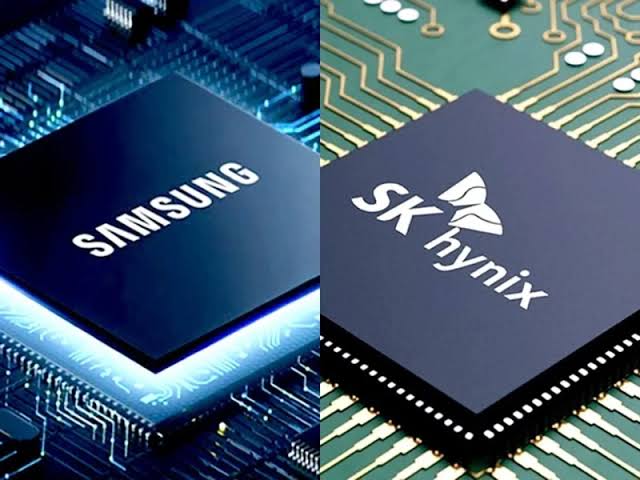
The Kospi, the country's benchmark index, reportedly fell about 3 percent at the opening bell in Seoul as technology shares came under heavy selling. Early reports pointed to a familiar culprit: fears that the global rally in AI-linked stocks is due for a correction. The two heaviest names on the index led the decline. Samsung Electronics reportedly dropped about 3.3 percent. SK Hynix reportedly slipped about 2.7 percent.
Opening moves can be misleading. Markets often fall sharply in the first minutes of trading and then recover some ground, or fall further, as the day goes on. The figures reported at the open are a snapshot, not a verdict. But the direction of travel tells its own story. Investors arrived in Seoul on Monday nervous, and they sold the stocks most tied to the AI trade first.
That nervousness did not appear from nowhere. Earlier this month, South Korean stocks suffered one of their worst sessions in years. According to reports at the time, the Kospi plunged so steeply in early November that a circuit breaker was triggered, pausing trading. The index reportedly ended that day down about 6 percent, near 5,060 points, with Samsung Electronics down more than 6 percent. Chip stocks led that rout as well. It came as results from the US midterm elections unsettled markets already uneasy about the cost and pace of AI spending.
Monday's reported drop is smaller. But it lands on a market that is still fragile, and it raises a question that investors from Seoul to New York to Lagos have been circling for months. Is the AI boom building something durable, or has it become a bubble waiting for a pin?
To understand why South Korea is so sensitive to that question, start with the structure of its stock market.
The Kospi is not a broad, balanced index in the way many investors imagine. It is heavily concentrated. Samsung Electronics alone has long made up a very large share of the index's total value, and SK Hynix has grown into the second-largest company on the market as its AI-related business boomed. Together, along with their affiliates and suppliers, they give the Kospi an outsized exposure to one industry: semiconductors. When those two stocks move, the whole index moves with them.
The same concentration runs through the wider economy. Semiconductors are South Korea's single biggest export, regularly accounting for around a fifth of total exports in recent years. Chip shipments have been a major driver of the country's trade surplus. They support tens of thousands of high-paying jobs and a deep network of suppliers in equipment, chemicals, materials and logistics. When chip demand is strong, the won tends to firm, tax revenues rise and the national mood improves. When chip demand falters, the whole economy feels it.
That dependence has been a source of enormous strength during the AI boom. It is also a source of risk. A country that rides one wave so heavily has few places to hide when that wave breaks.
The reason Samsung and SK Hynix matter so much to AI comes down to memory.
Artificial intelligence systems, especially the large language models behind chatbots and AI assistants, depend on vast clusters of specialized processors. Nvidia's graphics processing units, or GPUs, are the best-known part of that system. But those processors are only as useful as the memory feeding them data. Training and running large AI models requires moving huge amounts of information at very high speeds. That is where high-bandwidth memory, known as HBM, comes in.
HBM is a type of DRAM memory chip stacked vertically in layers and placed close to the processor. It allows data to flow far faster than conventional memory. Without it, the most advanced AI accelerators cannot perform at full capacity. Producing HBM is technically demanding. Only a small number of companies in the world can make it at scale. South Korea is home to two of the three biggest: SK Hynix and Samsung Electronics. The third is Micron Technology of the United States.
SK Hynix has been the standout of the AI era. It moved early and aggressively into HBM and became a key supplier to Nvidia. That position transformed the company. It went from being seen as the smaller, more volatile rival to Samsung to being one of the clearest winners of the AI boom. Its profits surged, and its share price followed. For a period, SK Hynix's operating profits even rivaled or surpassed those of Samsung's much larger chip division.
Samsung's story has been more complicated. It is the world's largest memory chipmaker by many measures. It also makes smartphones, televisions, displays and household appliances, and it runs a contract chip manufacturing business that competes with Taiwan's TSMC. But Samsung was slower to win full approval from Nvidia for its most advanced HBM products. For months, analysts and investors questioned whether the company had fallen behind in the most important technology race of the decade. Samsung has since worked to close the gap, investing heavily and pushing its next-generation HBM products toward major customers. Its share price recovered strongly as confidence in its AI position improved.
Together, the two companies form a critical choke point in global AI infrastructure. Every major technology company building AI data centers, from Microsoft and Google to Amazon, Meta and OpenAI's partners, ultimately relies on memory chips from a handful of suppliers, and South Korea makes many of them. That gives Seoul enormous strategic importance. It also means that any doubt about future AI spending shows up quickly in Korean share prices.
The reported fears driving Monday's selloff center on one core concern. The world's biggest technology companies are spending staggering sums on AI. The question is whether that spending will earn a return.
Over the past two years, large US tech firms have committed hundreds of billions of dollars a year to building data centers, buying chips and securing electricity. Their capital spending plans have grown again and again. Some estimates of total AI infrastructure investment over the coming years run into the trillions of dollars. That spending has been the engine behind Nvidia's rise into one of the most valuable companies in history. It has powered SK Hynix's profits. It has lifted chip equipment makers, power utilities, cable manufacturers and construction firms around the world.
The bull case is straightforward. AI, supporters argue, is a general-purpose technology on the scale of electricity or the internet. It will transform software, medicine, finance, manufacturing, education and countless other fields. Early spending looks huge because the infrastructure must be built before the benefits arrive. The companies spending the most are among the most profitable in the world, with strong balance sheets and real revenue from cloud computing and advertising. In this view, worrying about a bubble misses the bigger picture.
The bear case has grown louder through 2026. Skeptics point to several warning signs. The first is the gap between spending and revenue. AI services are growing fast, but critics argue that revenue from AI products remains small compared with the amount being invested in infrastructure. If that gap does not close quickly, investors may eventually force companies to slow spending.
The second is the way some AI deals have been financed. Analysts have raised concerns about arrangements in which chip suppliers invest in AI developers, who then use the money to buy more chips from those same suppliers. Critics describe this as circular financing that can inflate demand. Supporters say such partnerships are normal in fast-growing industries. The debate remains unresolved, but it has made some investors wary.
The third is debt. A growing share of data center construction has been financed by borrowing, including through private credit markets and special financing vehicles. Debt can accelerate growth in good times. It can also turn a slowdown into a crisis if revenues disappoint and loans come due.
The fourth is depreciation. AI chips become outdated quickly as newer and more powerful generations arrive. Some analysts argue that companies may be overestimating how long their AI hardware will remain useful, which would flatter their reported profits. If accounting assumptions change, earnings could look much weaker.
The fifth is concentration. A small number of very large companies now account for a big share of global stock market value, much of it tied to AI expectations. When so much depends on one theme, any wobble in confidence can trigger rapid selling across markets.
None of these concerns proves the AI boom is a bubble. Many experts believe AI investment will continue for years, even if it slows or shifts. But together, they explain why markets have become jumpy. Every disappointing earnings figure, cautious comment from a tech executive or political shift that could affect spending now has the power to move markets sharply.
Comparisons with the dot-com era are inevitable. In the late 1990s, investors poured money into internet companies on the belief that the web would change everything. They were right about the technology. They were wrong about the timing and the valuations. When the bubble burst in 2000, the Nasdaq lost most of its value over the next two years. Many companies vanished. Yet the internet went on to reshape the world, and some survivors became the giants that now lead the AI race.
That history offers a sobering lesson. A technology can be transformative and still produce a painful market correction. Investors can be right about the future and still lose money if they pay too much, too early.
Memory chipmakers have an additional reason to be nervous. Their industry is famously cyclical. Memory is closer to a commodity than many other chips. When demand is strong, prices soar and producers earn huge profits. Encouraged by those profits, companies expand production. Eventually, supply catches up with or overtakes demand. Prices fall, sometimes sharply. Profits collapse. Then the cycle starts again.
South Korean investors know this pattern well. Samsung and SK Hynix have been through several brutal downturns. As recently as 2022 and 2023, a memory slump pushed SK Hynix into heavy losses and sent Samsung's chip profits to their lowest levels in years. That downturn came after a pandemic-era surge in demand for laptops, phones and servers faded.
The AI boom created what many analysts called a memory supercycle. Demand for HBM and other data center memory surged. Prices for conventional DRAM and storage chips also rose sharply as producers shifted capacity toward AI products, creating shortages elsewhere. That helped lift profits across the industry.
The fear now is that the supercycle could turn. If AI customers slow their orders, even temporarily, memory prices could weaken. If competitors, including Chinese memory makers that have been expanding with state support, add more supply, pricing power could erode. Investors who have watched memory cycles before know how quickly euphoria can become oversupply. That memory of past pain helps explain why Korean chip stocks often fall faster than their American peers when AI sentiment sours.
The domestic picture in South Korea adds another layer. The country has one of the most active retail investor communities in the world. Individual investors, often called "ants" in Korean slang, account for a large share of daily trading. Many young Koreans, frustrated by high housing costs and limited job prospects, have turned to stocks and other investments as a path to building wealth. Samsung Electronics is among the most widely held stocks in the country, owned by millions of individuals.
Retail participation has been a powerful force behind the market's rise. It can also intensify declines. Many retail investors use borrowed money to trade. When prices fall quickly, some face margin calls that force them to sell, which can push prices lower still. Korean investors have also poured money into US tech stocks and leveraged products tied to the AI trade. A broad AI correction could therefore hit Korean households from several directions at once.
Foreign investors play an equally important role. They own a large share of Samsung and SK Hynix. When global funds reduce their exposure to AI or to emerging markets, Korean chip stocks are often among the first things they sell, because they are large, liquid and closely linked to the theme. Heavy foreign selling can also put pressure on the won. A weaker currency raises the cost of imported energy and food, adding to inflation concerns.
The political dimension matters too. President Lee Jae-myung, who took office in 2025, made boosting the stock market a central part of his economic agenda. He campaigned on lifting the Kospi to 5,000 points, a level that seemed ambitious at the time. His government pursued reforms aimed at improving corporate governance, protecting minority shareholders and addressing the long-standing "Korea discount," the tendency of Korean companies to trade at lower valuations than peers elsewhere. The AI boom helped push the index past that milestone and well beyond it at its peak.
That success has raised the political stakes of any correction. A government that tied its economic credibility partly to the stock market now faces the risk that market swings will be read as a verdict on its policies. Officials have generally sought to calm investors during sharp declines, stressing the strength of the economy and the long-term outlook for chips. But they cannot control global sentiment toward AI.
Geopolitics adds further uncertainty. South Korea's chipmakers sit at the center of the technology rivalry between the United States and China. Washington has imposed restrictions on exports of advanced chips and chipmaking equipment to China, which affect Korean firms with factories there. Samsung and SK Hynix both operate major plants in China and have needed US approvals to keep them running with American equipment. Trade tensions, tariffs and shifting US industrial policy have all affected their outlook. South Korea has also faced pressure to invest heavily in the United States as part of trade arrangements with Washington.
US domestic politics now matters more too. The recent midterm elections, which handed Democrats a large majority in the House of Representatives according to reports, have raised questions among some investors about future US policy on technology, trade, energy and spending. Whether those concerns prove justified remains to be seen. But markets dislike uncertainty, and AI-linked stocks have become a lightning rod for it.
What happens in Seoul does not stay in Seoul. South Korea is often seen as a bellwether for global technology demand. Its export data, published early each month, is watched closely as an early signal of how the world economy is doing. Its chipmakers' results offer clues about spending by the largest tech firms. A sustained slide in Korean chip stocks would add to pressure on markets in Taiwan, Japan and the United States.
Taiwan is the closest comparison. Its stock market is dominated by TSMC, which manufactures most of the world's advanced AI processors. Japan is home to key suppliers of chipmaking equipment and materials. In the United States, Nvidia, AMD, Broadcom, Micron and the big cloud companies make up a large share of the major indexes. When fear about AI spreads, it tends to travel through this entire network.
The ripple effects extend into credit markets, currencies and commodities. A sharp correction in technology stocks can lead investors to move money into safer assets such as US Treasury bonds and gold. It can strengthen the dollar against emerging market currencies. It can reduce demand for industrial metals such as copper, which have benefited from expectations of heavy spending on data centers and power grids. It can weigh on oil prices if investors expect slower global growth.
That brings the story much closer to West Africa than it might first appear.
Nigeria and Ghana do not have large technology hardware industries, and few of their citizens own Korean stocks directly. But both countries are tightly connected to global markets through commodities, capital flows and technology investment. A shift in global risk appetite triggered by an AI correction would reach them through several channels.
The first is oil. Nigeria remains heavily dependent on crude oil for government revenue and foreign exchange. Oil prices respond to expectations about global growth. If an AI-driven market correction feeds fears of a broader slowdown, oil demand forecasts could weaken and prices could fall. That would squeeze Nigeria's revenue at a time when the government is still trying to stabilize public finances after major reforms, including the removal of fuel subsidies and changes to its exchange rate system. Lower oil revenue could also put pressure on the naira by reducing dollar inflows.
The relationship is not automatic. Oil prices also depend on supply decisions by OPEC+ producers, conflicts in the Middle East and other factors. But in periods of market stress, oil often falls alongside riskier assets.
The second channel is gold, and here the effects may be different. Ghana is Africa's leading gold producer, and gold has become central to its economic recovery after its 2022 debt default. High gold prices have boosted export earnings, helped rebuild reserves and supported the cedi. Gold often benefits when investors seek safety during market turmoil. A serious correction in tech stocks could therefore support gold prices, at least in the short term, which would be positive for Ghana's external accounts. Yet that benefit has limits. If a correction turns into a broad financial crisis, investors sometimes sell gold too in order to raise cash.
The third channel is borrowing costs. Both Nigeria and Ghana have relied on international investors to finance their economies. Nigeria has issued Eurobonds in recent years. Ghana is working to rebuild its standing with investors after its debt restructuring. Frontier market debt is highly sensitive to global risk sentiment. When markets panic, investors demand higher yields from riskier borrowers. That can make it more expensive for African governments and companies to raise money abroad. A sustained AI correction that unsettles global markets could therefore raise borrowing costs or delay planned bond issues.
The fourth channel is portfolio flows. Foreign investors who buy Nigerian or Ghanaian stocks and bonds often manage global portfolios. When losses mount in large markets such as the United States or South Korea, some funds cut exposure to smaller, riskier markets to reduce overall risk. That can mean selling in Lagos or Accra even when local fundamentals have not changed. Such outflows can weaken currencies and push up local interest rates.
The fifth channel is technology investment itself. Nigeria and Ghana have some of the most vibrant startup ecosystems in Africa. Lagos is one of the continent's leading tech hubs, home to fintech companies that have attracted global investors. Accra has a growing tech scene of its own. Many of the venture capital funds that invest in African startups are based in the United States and Europe, and their appetite for risk tracks wider market conditions.
During the global tech downturn of 2022 and 2023, venture funding to African startups fell sharply. Companies cut staff, delayed expansion or shut down. If a new AI correction tightens funding conditions, African founders could again find money harder to raise. At the same time, the AI boom has brought new interest in African data centers, cloud infrastructure and AI applications. Global and regional companies have announced data center projects in Lagos, Accra and other cities. A slowdown in AI enthusiasm could cause investors to delay or scale back some of those plans.
The sixth channel is critical minerals. The AI boom is part of a wider surge in demand for minerals used in electronics, batteries and power infrastructure. Africa holds many of these resources. Ghana has lithium deposits that are being developed. Nigeria has promoted its lithium and other solid minerals as new sources of revenue and has sought to attract processing investment. South Korea has shown strong interest in African minerals. At the Korea-Africa summit in Seoul in 2024, Korea and African governments discussed cooperation on critical minerals, trade and development. If a tech correction reduces demand expectations for these minerals, prices could fall and investment could slow.
There is also a direct commercial relationship. Korean companies have long been active in West Africa. Samsung and LG are household names in Nigerian and Ghanaian markets for phones, televisions and appliances. Korean construction firms have worked on major infrastructure and energy projects in Nigeria. Korea has provided development financing and technical cooperation across the region. A weaker Korean economy would not end those ties, but it could affect the pace of investment and the willingness of Korean firms to take on new projects abroad.
For ordinary investors in Nigeria and Ghana, the lesson is also personal. Investment apps have made it easier for young Africans to buy shares in US tech companies, and many have done so during the AI rally. Those investors face the same risks as investors in Seoul or New York. A sharp correction in AI stocks would hit their savings too. Currency movements add another layer. When the naira or cedi weakens, dollar-denominated investments can look more attractive in local terms, but losses in the underlying stocks can quickly erase those gains.
So how worried should markets be about Monday's reported move?
A 3 percent drop at the open is significant but not, on its own, a crisis. Markets in South Korea have become accustomed to large swings during the AI era. The index has climbed to levels that were once hard to imagine, and corrections of a few percent are normal along the way. The more serious signal would be a sustained pattern: repeated heavy selling, falling earnings forecasts for chipmakers, weakening memory prices and evidence that big tech companies are cutting back on AI spending.
So far, the evidence on spending is mixed. Major technology companies have generally continued to signal heavy investment in AI infrastructure. Demand for advanced memory has remained strong, and supply of the most advanced HBM products has been tight. But investors are clearly less willing to give the AI trade the benefit of the doubt than they were a year ago. Each new data point is now scrutinized for signs of a slowdown.
Several indicators will help show whether Monday's selloff is a passing tremor or the start of something larger. The first is the next round of corporate guidance from the big US tech companies. Any sign that they plan to slow capital spending would hit chip stocks hard. The second is memory pricing. If contract prices for DRAM and HBM begin to soften, investors will treat it as a warning that the supercycle is ending. The third is South Korea's export data. Chip exports are a real-time measure of global demand. A sharp slowdown would confirm investors' fears. The fourth is foreign investor flows into and out of Korean stocks. Heavy, persistent foreign selling would signal that global funds are cutting their AI exposure.
The fifth is the broader global context: US interest rates, inflation, the dollar, oil prices and political developments in Washington. AI stocks do not trade in isolation. Higher interest rates make future profits less valuable, which hurts high-growth stocks. A stronger dollar can tighten financial conditions globally. Political uncertainty can raise risk premiums.
For South Korea, the deeper challenge is strategic. The country's dependence on chips has served it well, but it leaves the economy and the stock market vulnerable to a single industry's cycle. Policymakers have long talked about diversification into areas such as batteries, biotechnology, defense, shipbuilding, entertainment and advanced manufacturing. Some of those sectors have grown strongly. Korean shipbuilders and defense firms, for example, have benefited from global demand. But chips remain the heart of the system. A correction in AI enthusiasm would test whether Korea's other strengths can cushion the blow.
For Samsung and SK Hynix, the test is about staying power. Both companies have weathered many downturns. Both have strong technology, deep engineering talent and the financial capacity to keep investing through a slump. In past cycles, the strongest memory makers have often used downturns to gain market share while weaker rivals struggled. If the AI boom proves durable, today's selloff may look like a buying opportunity in hindsight. If the boom has been overextended, the correction could be deeper and longer than many expect.
For the rest of the world, Monday's reported decline is a reminder of how much now rides on artificial intelligence. Trillions of dollars of market value, national export strategies, government budgets and personal savings have all become linked, directly or indirectly, to the belief that AI will pay off. That belief may well prove correct in the long run. But markets do not move in the long run. They move day by day, driven by fear and greed, data and rumor.
In Seoul, the first minutes of Monday's trading reflected fear. The question for investors across the world, including those watching from Lagos and Accra, is whether that fear is an overreaction to normal market turbulence or an early warning that the most powerful investment story of the decade is running into the hard limits of profit, debt and demand.
The answer will not come from a single opening bell. It will come from the earnings reports, spending plans, export figures and memory prices of the months ahead. Until then, South Korea's chip giants will remain the world's clearest barometer of AI confidence, and every swing in their shares will be felt far beyond the Korean peninsula.