A NIGERIAN-BORN TEXAS PRISON SERGEANT FACES A FAMILY VIOLENCE CHARGE. THE CASE IS UNPROVEN, BUT THE QUESTIONS IT RAISES ARE NOT
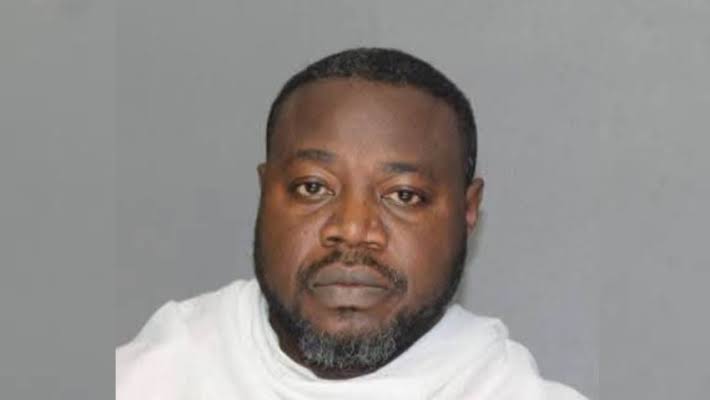
Olabode Abolarinwa Oyebanji, a 48-year-old Nigerian-born sergeant at the Allred Unit of the Texas Department of Criminal Justice (TDCJ), was arrested on November 9 in Waxahachie, Ellis County, according to reports citing police booking records. He was charged with assault by contact involving family violence. TDCJ employment records show he joined the department in July 2019. Police have not publicly disclosed the extent of the alleged assault or the identity of the family member involved. Reports say he is expected back in court in January. Oyebanji has not been convicted of any offense and is presumed innocent under US law. The exact classification of the charge has not been fully detailed in public reporting. In Texas, "assault by contact" usually refers to offensive physical contact rather than bodily injury, and it is generally treated as a lower-level offense. Some reports, however, have described the case in terms of the more serious Class A misdemeanor, which can carry up to one year in jail and a $4,000 fine. The case touches several sensitive issues at once: the standards expected of correctional officers, the reality of domestic violence, the rights of the accused, and how a large and accomplished Nigerian diaspora is portrayed when one of its members faces criminal allegations.
The arrest was recorded in a booking log, not announced at a news conference. Few people outside a small part of North Texas would have noticed it.
According to reports citing Waxahachie police booking records, officers arrested Olabode Abolarinwa Oyebanji, 48, on November 9 in Ellis County. The charge listed was assault by contact involving family violence. Oyebanji is a sergeant at the Allred Unit, a state prison run by the Texas Department of Criminal Justice. TDCJ employment records show he joined the department in July 2019.
Beyond that, the public record is thin. Police have not said what allegedly happened. They have not said whether anyone was hurt. They have not identified the family member involved, which is common and appropriate in domestic cases. Reports say Oyebanji is expected to return to court in January. As far as public reporting shows, he has not commented on the allegation, and no lawyer has spoken publicly for him.
That is the full extent of what is known. It matters to say so plainly. Stories like this travel fast, especially when the person involved has a public job and a national background that draws attention online. In Nigerian social media spaces, the story has already been shared with headlines stressing his origin. A charge is not a conviction, though, and a booking record is not a verdict. Oyebanji is presumed innocent unless and until a court finds otherwise.
With that in mind, the case still raises real questions. Some concern the law, and some concern the uniform he wears. Others go to the heart of how communities, including the Nigerian diaspora, talk about domestic violence and about their own members when they are accused.
What the charge actually means
The wording of the charge matters. Texas assault law covers several different kinds of conduct, and they carry very different penalties.
At the most serious misdemeanor level, a person can be charged with causing bodily injury to another person. When the alleged victim is a family member, household member or dating partner, it is typically classed as a Class A misdemeanor. Under Texas law, a Class A misdemeanor can carry up to one year in county jail and a fine of up to $4,000. Defense practitioners in Texas describe this charge as one that applies to cases involving bodily injury without aggravating factors. Those factors include a prior family violence conviction, strangulation or the use of a weapon, any of which can raise the charge to a felony.
"Assault by contact," the wording reported from the booking records, usually refers to something different. In Texas, that term generally covers physical contact that the other person would regard as offensive or provocative, rather than contact causing bodily injury. It is often treated as a lower-grade offense, typically a Class C misdemeanor punishable by a fine rather than jail time.
Some coverage of Oyebanji's arrest has framed the case around the Class A penalties. Booking records cited in other reports describe the charge as assault by contact. Based on what has been made public, the exact classification of the charge, and therefore the potential penalty, has not been clearly confirmed. Charges can also be amended, reduced or dismissed as a case moves forward. Anyone reading about this case should be careful not to assume the most serious outcome.
Whatever the classification, the family violence label carries weight on its own. In Texas, a court can enter what is called an "affirmative finding" of family violence. That finding can follow a person for years. It can raise the stakes of any future allegation, because a later family violence assault charge can be elevated to a felony if there is a prior conviction. It can affect child custody disputes, gun rights and some forms of employment. For a person whose job involves security and authority, those consequences can be serious even when the underlying charge is minor.
The uniform and the standard
Correctional officers hold an unusual kind of public trust. They do not patrol streets or make traffic stops. But inside prison walls, they hold enormous power over people who cannot leave.
A TDCJ correctional officer is responsible for the custody, safety and supervision of incarcerated people. Officers conduct counts, search cells, escort inmates, respond to fights and medical emergencies, and enforce rules. A sergeant has added duties. Sergeants supervise officers on a shift, handle disciplinary matters, make judgment calls during incidents and help set the tone for how a unit runs. In practice, they are the first line of leadership inside a prison.
The Allred Unit, located in Iowa Park in Wichita County, is one of the larger prisons in the Texas system, housing thousands of people. Like many Texas prisons, it operates in a system that has struggled for years with staffing shortages. TDCJ has raised pay, offered bonuses and expanded recruitment to fill vacancies. Officers often work long shifts in hot, crowded and dangerous conditions. The work is demanding and stressful. It is also essential.
Because the job involves authority over vulnerable people, the public expects correctional officers to show restraint and self-control. That is why allegations of violence involving officers, even off-duty and even at the misdemeanor level, tend to draw attention. The concern is not that an allegation proves anything. It is that agencies need ways to respond to allegations fairly and consistently, protecting both the public and the rights of their employees.
TDCJ, like most law enforcement and corrections agencies, has rules on employee conduct and requires staff to report arrests. Agencies typically review such cases. Depending on the facts and the outcome in court, the response can range from no action to reassignment, administrative leave or discipline. Public reporting has not described any action TDCJ may have taken in this case, and it would be wrong to speculate. An internal review, if one occurs, is a separate process from the criminal case and follows its own standards.
There is a broader point here too. Research and advocacy groups have long raised concerns about domestic violence in professions that involve high stress, shift work and exposure to violence, including policing and corrections. Some agencies have responded with wellness programs, counseling and clearer policies on handling domestic allegations against staff. Those discussions concern professions and systems, not any one person. Still, cases like this one are often what bring them back to public attention.
Domestic violence: why every allegation deserves serious attention
Domestic violence remains one of the most common and least visible forms of harm in the United States. National surveys from the Centers for Disease Control and Prevention suggest that roughly 1 in 4 women and about 1 in 10 men experience serious intimate partner violence at some point in their lives. Texas advocates count dozens of people killed by intimate partners in the state every year. Many of those deaths followed earlier incidents that were reported, dismissed or never reported at all.
Texas law uses the term "family violence" more broadly than many people realize. It covers violence between spouses and partners, but also between parents and children, siblings, relatives by blood or marriage, and people who live in the same household. A family violence charge does not tell the public who the alleged victim is or what the relationship was. In this case, police have not said, and the family member's privacy should be respected.
Domestic cases are often among the hardest to handle well. Incidents usually happen behind closed doors. There may be no outside witnesses. The people involved may share a home, children, finances and immigration paperwork. Alleged victims sometimes later decline to cooperate with prosecutors, for reasons ranging from reconciliation to fear to financial dependence. Accused people sometimes face charges based on a heated moment that does not reflect a pattern. Prosecutors and courts must weigh all of this carefully.
That is why the system offers protections on both sides. At an early hearing, a magistrate may issue an emergency protective order that limits contact between the accused and the alleged victim for a set period. Such orders are common in Texas family violence cases and do not mean a court has found anyone guilty. Victim advocates may offer support, safety planning and information about the process. The accused retains the right to counsel, the right to remain silent and the right to contest every piece of evidence.
For anyone affected by domestic violence, help is available. In the United States, the National Domestic Violence Hotline (1-800-799-7233) offers confidential support around the clock. Many Texas counties also have family violence centers and shelters. Immigrant survivors have specific legal protections, including options under the Violence Against Women Act and the U visa program, which can be crucial for people who fear that reporting abuse could affect their immigration status.
A diaspora under the spotlight
Oyebanji's Nigerian origin has featured heavily in how the story has spread, especially across Nigerian news pages and social media. That framing deserves a closer look.
Nigerian Americans are one of the most accomplished immigrant communities in the United States. Estimates put the Nigerian-born population in the hundreds of thousands, with many more Americans of Nigerian heritage. Texas, especially the Houston and Dallas–Fort Worth areas, is home to one of the largest concentrations. Studies of US Census data have repeatedly found Nigerian Americans among the most highly educated groups in the country. They work in large numbers as doctors, nurses, pharmacists, engineers, academics, entrepreneurs and public servants. Many also work in corrections, security and other public safety roles, often valued for their discipline and willingness to take on hard jobs.
For many of these families, a public service job is a source of pride. It represents stability, a steady income, benefits and a place in American life. It also often supports relatives back home through remittances, which are a vital source of income for millions of Nigerian households.
Against that backdrop, stories that lead with nationality can feel unfair. When an American-born officer is arrested, his birthplace rarely makes the headline. When an immigrant is arrested, it often does. Nationality has no bearing on whether an allegation is true. Highlighting it can feed stereotypes, both in the United States and in how Nigerians abroad are viewed at home. Ghanaians and other West Africans in the diaspora know this pattern well. A single arrest can become a story about a whole community, while thousands of quiet success stories go unreported.
At the same time, diaspora communities have their own conversations to have about domestic violence. Across many cultures, including some Nigerian and wider West African communities, family conflict is often seen as a private matter. Relatives, church leaders and elders may push couples to settle disputes quietly. Divorce can carry stigma. Women in particular may face pressure to endure abuse for the sake of the family, their children or their reputation. Immigrant survivors may fear involving police, worry about deportation, or feel isolated from extended family support.
Those pressures are not unique to Nigerians. They exist in many communities in the United States and around the world. But they are real, and they make it harder for victims to come forward. Back home, Nigeria's Violence Against Persons (Prohibition) Act of 2015 and Ghana's Domestic Violence Act of 2007 marked important steps toward treating family violence as a crime rather than a private affair. Enforcement in both countries remains uneven. Advocates on both sides of the Atlantic continue to push for a culture in which survivors are believed and supported, and in which accused people are judged by evidence rather than gossip.
Both principles can stand together. A community can take domestic violence seriously and still defend a member's right to a fair process. In fact, it must do both.
Due process is not a technicality
Presumption of innocence sits at the core of the American criminal justice system. It means the state carries the burden of proving guilt beyond a reasonable doubt. It means an arrest is an accusation, not a finding. And it means that until a court rules, Oyebanji stands in the same legal position as any person who has never been charged.
That principle matters especially in domestic cases, where emotions run high and online audiences often reach conclusions before any evidence is heard. A person's reputation can be badly damaged by a headline, even if the charge is later reduced or dismissed, or if a jury acquits. Many misdemeanor family violence cases in Texas end without a conviction. Some are dismissed. Some are resolved through programs such as pretrial diversion or deferred adjudication, which can allow a defendant to avoid a final conviction if conditions are met. Others go to trial. Outcomes depend on the facts, the evidence and the wishes of the people involved, all of which are unknown to the public here.
Due process also protects alleged victims. A fair, evidence-based process is what gives a guilty verdict its legitimacy and gives a victim's account its weight. Rushing to judgment in either direction, whether by convicting someone on social media or dismissing an allegation because of who made it, undermines the system that both sides depend on.
What happens next
Reports indicate that Oyebanji is expected back in court in January. Here is how misdemeanor family violence cases in Texas generally proceed.
Initial stages. After arrest, a defendant is typically brought before a magistrate, who sets bond and may impose conditions. In family violence cases, those conditions often include no-contact orders or an emergency protective order. Defendants are usually released while the case is pending.
Formal charging. For a misdemeanor, prosecutors in the county attorney's or district attorney's office review the police report and decide whether to file formal charges, and at what level. This is the point where the precise classification of the case becomes clear. Charges can be filed as booked, upgraded, reduced or declined.
Court settings. The January date is likely an early setting, where the defendant appears, often with counsel, and the parties discuss the case. Several such settings are common before any resolution.
Possible outcomes. The case could be dismissed, resolved through a plea agreement, resolved through deferred adjudication or a diversion program, or taken to trial before a judge or jury. Each path carries different consequences, including whether a family violence finding is entered.
Employment and other consequences. Separately, TDCJ may conduct its own review under agency policy. Depending on the outcome, a family violence conviction can also trigger federal restrictions on firearm possession in many cases. That matters for anyone in a job that may involve weapons. Immigration consequences can also arise in some criminal cases for non-citizens. It has not been reported whether Oyebanji is a US citizen, and it would be inappropriate to assume either way.
Until the court process moves forward, there is little more the public can responsibly say about the facts.
The larger lesson
This case may never draw much further attention. Most misdemeanor family violence cases do not. They play out in county courtrooms over a few months and end quietly, one way or another.
Yet the arrest of a prison sergeant on a family violence charge, reported through the lens of his Nigerian birth, brings together several issues that deserve attention well beyond one courtroom in North Texas. It is a reminder that the people trusted to keep order are held to a high standard, and that agencies need fair ways to respond when allegations arise. It is a reminder that domestic violence is common, often hidden and deadly when ignored. It is also a reminder that immigrant communities are too often judged by their worst headlines rather than their everyday contributions.
Above all, it is a reminder of what the law requires of everyone watching: patience. One person has been accused. A family member's experience remains private and unknown. A court will decide what happened. Until it does, Olabode Oyebanji is presumed innocent, and the alleged victim deserves safety, privacy and respect.