GOVERNMENT PAYS PROMOTION ARREARS TO 56,003 TEACHERS AHEAD OF OCTOBER 16 DEADLINE
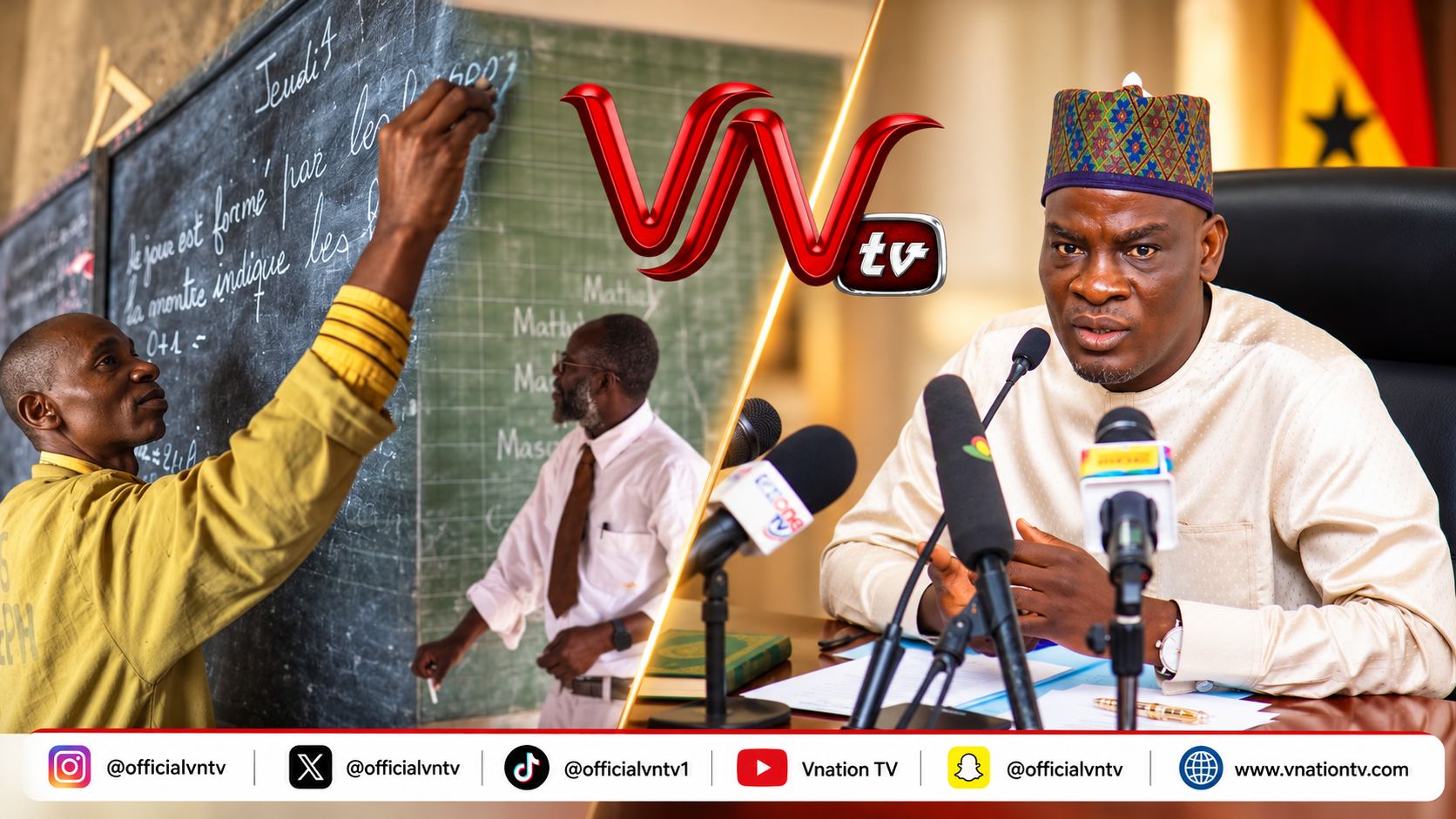
The Controller and Accountant-General’s Department says promotion-related salary adjustments and arrears have already been paid to 56,003 Ghana Education Service teachers ahead of the October 16 deadline. Of that number, 49,725 received payments on October 15 alongside their October salaries, while 6,278 had been paid in September. The arrears date back to January 1, 2026. Another 630 submitted cases remain pending because of verification issues, while 23,367 promoted teachers are still awaiting processing and submission of their documentation by GES.
The Controller and Accountant-General’s Department has paid promotion-related salary adjustments and arrears to 56,003 teachers of the Ghana Education Service, completing the first major phase of payments ahead of the October 16 deadline agreed between government and teacher unions. The development marks a significant step in resolving one of the central welfare disputes that fueled recent industrial action in the pre-tertiary education sector, although more than 23,000 promoted teachers are still waiting for their cases to be processed and submitted for payment.
According to the Controller and Accountant-General’s Department, 49,725 teachers received their promotion-related salary adjustments and arrears on October 15 together with their October salaries, while another 6,278 teachers had already received similar payments in September. The department said the payments cover arrears dating back to January 1, 2026 and reflect the new salary grades of teachers whose promotions had already been processed and verified.
The payment comes one day before the government’s publicly announced October 16 deadline for the first tranche of outstanding promotion arrears. Education Minister Haruna Iddrisu had repeatedly assured teachers that the first group would be paid by October 16 and that all eligible promoted teachers whose records were properly processed would eventually be placed on their new salary grades and receive outstanding arrears.
The October 16 deadline was one of the key commitments reached after weeks of tension between government and teacher unions over delayed salary adjustments, promotion arrears, allowances and conditions of service. Teacher unions had argued that many members had already been promoted in the Ghana Education Service structure but had continued receiving salaries based on their previous grades, creating months of financial losses and growing frustration among affected teachers.
The Controller and Accountant-General’s Department said the Ghana Education Service had reported that approximately 80,000 teachers had been promoted. Of that number, the GES had processed and submitted supporting documentation for 56,633 teachers for verification. After reviewing the records, the Controller and Accountant-General approved payments for 56,003 teachers, while 630 cases were held back because of discrepancies or other issues identified during verification.
The 630 pending cases are expected to be paid once the Ghana Education Service corrects the affected records and resubmits the required documentation. The verification process involves checking the teacher’s new grade, effective date of promotion, payroll details and the exact amount of arrears due. Officials have said the process is necessary to prevent payroll errors and ensure that public funds are paid only to individuals whose promotion details have been properly validated.
A much larger group of 23,367 promoted teachers has not yet reached the payment stage because their cases have not been fully processed and submitted to the Controller and Accountant-General’s Department by the Ghana Education Service. The department said those teachers will be paid after complete and accurate documentation is received and verified, meaning the settlement announced this week does not represent the end of the promotion arrears exercise.
The distinction is important because earlier government announcements had focused heavily on an initial group of about 51,000 to 52,000 teachers whose records were expected to be cleared first. As the processing exercise continued, the number of validated cases increased, resulting in payments to more than 56,000 teachers by the time the Controller and Accountant-General issued its latest update.
Haruna Iddrisu had said earlier this week that government intended to honor the first phase of the payments by October 16 and complete the remaining promotion-related salary adjustments by the end of the month. Speaking at the 64th Annual National Conference of the Conference of Heads of Assisted Secondary Schools in Ho, the Education Minister said the government wanted to demonstrate that commitments made to teachers would be honored within the agreed timeline.
The Minister had also assured the Ghana National Association of Teachers and other teacher unions that the Controller and Accountant-General would process the first phase of the arrears by October 16. His comments followed weeks of negotiations over unresolved teacher welfare issues and came after the unions used industrial action to press government for firm timelines rather than additional promises.
The dispute over promotion arrears formed part of a broader confrontation involving teachers’ conditions of service, allowances and delays in implementing administrative decisions that had already been approved. Union leaders repeatedly complained that teachers were being promoted administratively without seeing the corresponding salary changes reflected in their monthly pay, effectively leaving some educators performing duties at higher grades while continuing to earn lower salaries.
Government officials acknowledged the problem and attributed part of the delay to the process required to validate individual promotion records before they could be entered into the national payroll system. The Education Ministry, Ghana Education Service and Controller and Accountant-General subsequently established a data processing exercise aimed at matching promotion letters, effective dates and payroll records.
The validation exercise became particularly important after the Controller and Accountant-General warned that inaccurate or incomplete data could result in wrongful payments. Officials said the department could not simply apply new salary grades to every name submitted without verifying the supporting records because such an approach could create payroll irregularities and make it difficult to recover public funds if errors were later discovered.
By October 8, Controller and Accountant-General Kwasi Agyei said the Ghana Education Service had already processed about 52,000 promotion cases and submitted the necessary input forms. He indicated that teachers whose records were fully verified before October 16 would be included in the supplementary payment exercise, while those cleared after the deadline would have the adjustments added to subsequent payroll processing.
The latest payment figures indicate that the number successfully validated before the deadline eventually rose above the earlier target. Of the 56,633 records submitted by GES, only 630 remain unresolved at the verification stage, meaning the overwhelming majority of records already forwarded to the Controller and Accountant-General passed the required checks and have now been paid.
For the teachers who received their money, the payments include both the adjustment to their new salary grade and arrears accumulated from the effective date of the promotion. The government has said the arrears date back to January 1, 2026 for eligible cases, although individual amounts are expected to vary depending on the teacher’s grade, effective promotion date and salary difference.
The payments also provide some immediate relief after a period of industrial tension within the education sector. Pre-tertiary teacher unions had taken strike action over several unresolved demands, including promotion arrears, a proposed deprived-area allowance and negotiations over collective agreements and conditions of service.
The unions had made clear during negotiations that they wanted actual payments rather than repeated meetings or assurances. Their position reflected growing frustration among teachers who said they had waited months for administrative corrections that directly affected household income, loan obligations and other financial commitments.
Promotion arrears can accumulate quickly because each affected teacher is entitled to the difference between the old salary grade and the new grade from the effective date of promotion. When thousands of teachers are involved, the total financial obligation can become substantial, requiring coordination between the Ministry of Education, Ministry of Finance, GES and the Controller and Accountant-General.
The government has therefore sought to stagger and verify the payments rather than process the entire reported pool of approximately 80,000 promotions at once. That approach has allowed the first large group to be paid but means thousands remain dependent on administrative processing before they can receive their own adjustments.
The 23,367 cases that have not yet been submitted are likely to become the next focus of attention. For those teachers, the immediate problem is not that the Controller and Accountant-General has rejected payment but that their promotion documentation has not completed the GES processing stage required for payroll verification.
The Controller and Accountant-General has said it remains ready to process all eligible payments once the necessary records are received. That places pressure on the Ghana Education Service to complete outstanding documentation quickly if the government is to meet the broader commitment to resolve the arrears by the end of October.
Government officials have previously acknowledged that the administrative system used to process teacher promotions has contributed to delays. Haruna Iddrisu has said some affected teachers may need individual attention where records contain inconsistencies, and the Ministry has indicated that such cases should be resolved rather than allowed to remain indefinitely outside the payroll adjustment process.
For teacher unions, the payment of more than 56,000 cases represents a major development but not a complete settlement of their concerns. Promotion arrears were only one of several issues that triggered the recent industrial dispute, and negotiations over allowances and broader conditions of service remain important to union leaders.
The government has separately discussed a deprived-area allowance intended to compensate teachers working in difficult or underserved locations. Disagreement has existed over which schools and communities should qualify, prompting calls for a joint validation exercise between government and teacher representatives before the allowance is implemented.
Collective bargaining issues have also remained part of the wider teacher welfare agenda. Union leaders have argued that delays in implementing agreed conditions contribute to low morale and make it harder to retain experienced teachers, particularly in rural and underserved areas.
The payment of promotion arrears therefore carries significance beyond the individual salary adjustments. It is also being viewed as a test of whether commitments made during negotiations can be translated into payroll action within agreed timelines.
The latest Controller and Accountant-General figures suggest the first major deadline has been met for the majority of teachers whose records were ready. The department completed the payment to 49,725 teachers on October 15, while 6,278 had already been paid in September, bringing the confirmed total to 56,003.
That total exceeds the initial public target of roughly 51,000 to 52,000 teachers that government officials had discussed during the validation exercise. It indicates that additional records were successfully processed before the payment run was finalized.
However, the outstanding figures also show why the issue is not yet closed. A total of 630 submitted cases still require corrections, while more than 23,000 promoted teachers have not yet had their supporting documents fully processed and submitted by the Ghana Education Service.
The next phase will therefore depend on the speed at which those records are completed and verified. Teachers whose documentation is finalized after the current payment cycle may have their arrears incorporated into later salary runs or supplementary payments, depending on when the Controller and Accountant-General receives the necessary information.
For affected teachers, the distinction between being promoted on paper and being placed on the correct payroll grade has been at the heart of the dispute. The payment announced this week begins to close that gap for more than 56,000 educators, but it also highlights the administrative work still required to resolve every outstanding case.
The development is likely to reduce some pressure on government in its negotiations with teacher unions, particularly because the payment occurred before the publicly stated October 16 deadline. It may also help rebuild confidence among teachers who had questioned whether repeated assurances would result in actual salary adjustments.
That confidence, however, will depend on whether the remaining cases are processed without another prolonged delay. Union leaders are expected to continue monitoring the outstanding numbers and may seek updated timelines for the 630 cases requiring corrections and the 23,367 promotions still awaiting full processing by GES.
The Ministry of Education will also have to manage expectations carefully. The government has said all eligible promoted teachers will ultimately receive their due salaries and arrears, but administrative verification means payments may not reach every individual at the same time.
The current exercise demonstrates the scale of the challenge involved in updating a national payroll covering tens of thousands of teachers. Each promotion affects salary levels, arrears calculations, pension contributions and future payroll obligations, making accuracy important even as unions demand faster processing.
The government’s ability to complete the remaining cases will now determine whether the payment announced this week becomes the beginning of a full resolution or simply another stage in a longer dispute. Teachers whose arrears have been paid have received one of the key benefits they had demanded, but thousands of colleagues are still waiting for their records to reach the same stage.
For now, the strongest confirmed development is that the first major phase of the promotion arrears exercise has already been completed ahead of the October 16 deadline. The Controller and Accountant-General says 56,003 teachers have been paid, while 630 submitted cases require corrections and 23,367 promoted teachers remain outside the completed processing pool.
The next test will be whether the Ghana Education Service can rapidly complete the outstanding documentation and whether the government can honor its broader commitment to settle eligible promotion payments by the end of October. Until the remaining cases are cleared, the issue will continue to be a significant teacher welfare concern even after this week’s substantial payment.