
Ghana expands Free Primary Healthcare to 135 districts, targets nationwide coverage in 2027
Ghana's Free Primary Health Care programme has expanded to 135 districts across all 16 regions, with 4,447 facilities delivering services including health screening, maternal and child healthcare and treatment for common illnesses. Patients can access covered primary healthcare services regardless of active NHIS membership, while the government is targeting nationwide coverage by 2027.
ACCRA — Ghana has expanded its Free Primary Health Care programme to 135 districts across all 16 regions as the government moves towards providing nationwide access to basic preventive and curative health services by 2027.
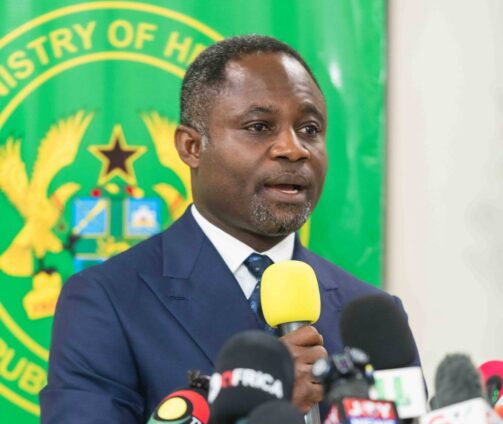
Health Minister Kwabena Mintah Akandoh said the programme was currently operating through 4,447 primary healthcare facilities, including 3,774 Community based Health Planning and Services compounds, 632 health centres and 41 polyclinics.
The expansion represents a significant stage in the rollout of the programme, which was launched by President John Dramani Mahama in April as part of the government's efforts to shift greater attention towards disease prevention, early detection and treatment at community level.
Speaking at a media engagement in Accra, Akandoh said training had been completed for regional, district and sub district teams across the country to prepare health workers for implementation.
Another 127 facilities operated by the Christian Health Association of Ghana have received training covering the policy, services available to patients, financing arrangements and requirements for delivering care.
The government has also distributed 24,534 pieces of essential medical equipment, more than 10,000 motorbikes and tricycles and 5,000 outreach kits to support the rollout.
The equipment and vehicles are intended to allow health workers to move beyond conventional health facilities and provide preventive and basic healthcare services in homes, schools, workplaces, markets and other community locations.
Under the programme, patients can receive routine screening for conditions including hypertension and diabetes, with blood pressure and blood sugar checks forming part of the services available.
Selected cancer and mental health screenings are also included, alongside weight checks and other assessments intended to identify health risks before they develop into more serious conditions.
Maternal and child healthcare forms another major component of the programme, covering antenatal services, immunisation, growth monitoring and follow up care for newborns.
Family planning and counselling are also included.
Patients can receive treatment for common illnesses such as malaria, diarrhoeal diseases and respiratory infections, while health workers are expected to provide education on nutrition, physical activity, hygiene and healthier lifestyles.
Akandoh said the programme was designed to identify health problems earlier and provide treatment as close as possible to where people live.
Cases requiring more advanced medical intervention will continue to be referred to hospitals and other higher level facilities.
Hospital admission, surgery, specialist treatment and other services outside the primary healthcare package will continue to be covered through the National Health Insurance Scheme or the Ghana Medical Trust Fund, depending on eligibility and the treatment required.
A significant feature of the programme is that access to its covered services is not dependent on having active NHIS membership.
People can visit participating CHPS compounds and health centres directly to receive eligible services.
The government has also introduced a digital access option.
Patients can dial *929#, select the OTAC portal and generate a four digit Free Primary Health Care access code. The code remains valid for 24 hours.
The system is intended to allow people who are not active NHIS members to access services included in the programme.
The government is also experimenting with alternative locations for delivering basic healthcare.
Thirty prefabricated health kiosks have been completed for deployment across six regions and 30 districts.
The kiosks are expected to be located at places including markets and transport centres, allowing people to receive basic healthcare without necessarily travelling to a conventional health facility.
The government expects 217 kiosks to be completed within six months as the community based network expands.
Akandoh said the approach was intended to make healthcare more accessible, particularly for people who might struggle to visit existing health facilities because of distance, work or other circumstances.
The government had allocated GH¢79.624 million towards implementation of the Free Primary Health Care programme as of September 5.
The funding includes payments for preventive and health promotion services as well as transfers supporting implementation and training at national and district levels.
The programme is ultimately intended to complement rather than replace the NHIS.
While the free primary care package concentrates on prevention, screening, maternal and child health and treatment of selected common conditions, patients requiring more complex care will continue to rely on Ghana's existing hospital and health insurance systems.
The government says its next challenge will be extending the programme beyond the 135 districts currently participating and establishing nationwide coverage by the end of 2027.
If the expansion proceeds according to schedule, free primary healthcare would become available across Ghana's districts, giving communities access to a standard package of basic services regardless of whether an individual has active NHIS membership.