LIBYA CENTRAL BANK RAIDED AS GOVERNOR QUITS AND LEADERSHIP CRISIS DEEPENS
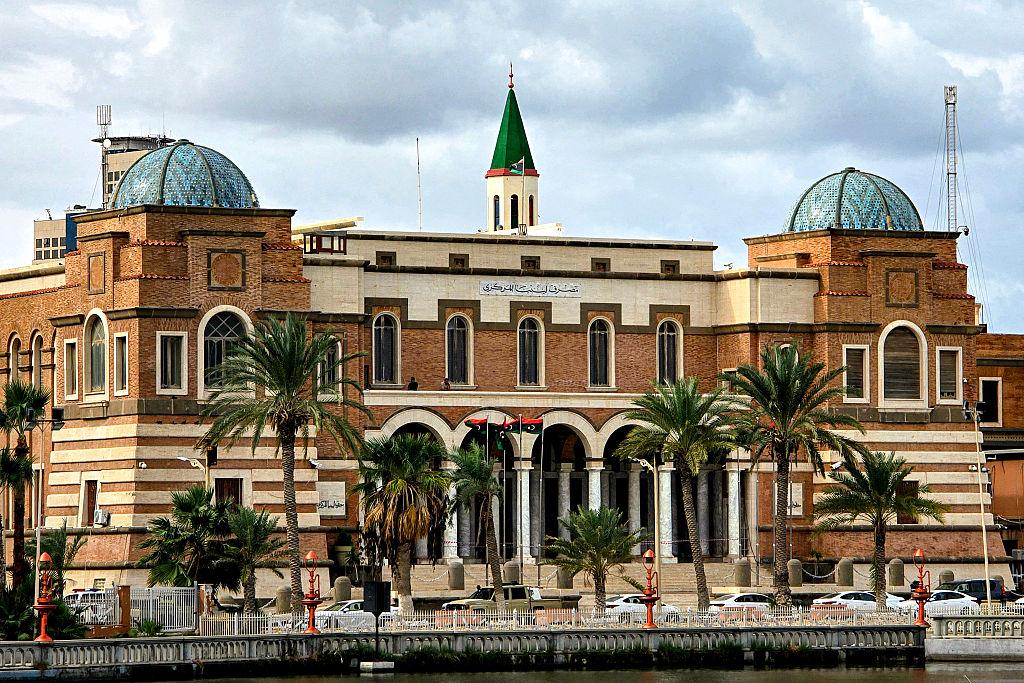
Libya’s Central Bank says unidentified individuals entered its headquarters in Tripoli shortly after the eastern-based House of Representatives accepted Governor Naji Issa’s resignation in principle and named board member Fauzi Abokhzam as interim governor pending a final decision. The bank criticised the security arrangements around its headquarters, while the Tripoli government had not commented publicly at the time of initial reporting. The incident comes amid continuing disputes over public spending, oil revenues and control of Libya’s national institutions. Kilambi News
Libya’s Central Bank has reported a security breach at its headquarters in Tripoli after unidentified individuals entered the building on Thursday, an incident that came amid a sudden leadership transition following parliament’s decision to accept Governor Naji Issa’s resignation in principle and appoint board member Fauzi Abokhzam as interim governor pending a final decision. The timing of the raid has intensified concern over the stability and independence of one of Libya’s most important state institutions, particularly because the central bank sits at the heart of the country’s oil revenue management, foreign exchange system and public finances.
The Central Bank of Libya said the incident exposed serious weaknesses in the security arrangements surrounding its headquarters and called attention to the need for stronger protection of the institution. The bank did not immediately identify those who entered the premises or explain whether they were armed, whether any documents or equipment were taken or whether sensitive financial systems were accessed. No casualties were reported in the initial account, and the Tripoli-based Government of National Unity had not publicly commented on the incident when the first reports emerged.
The raid occurred shortly after Libya’s eastern-based House of Representatives moved to accept Naji Issa’s resignation in principle. Lawmakers also named Fauzi Abokhzam, a member of the central bank’s board, as interim governor while parliament considered the next stage of the leadership process. The decision immediately raised questions over whether the transition would be recognised by the authorities in Tripoli and whether the central bank could maintain a unified leadership structure across Libya’s deeply divided political system.
Libya remains politically split between rival authorities in the east and west, with the internationally recognised Government of National Unity operating from Tripoli while the House of Representatives and eastern institutions remain aligned with forces led by Khalifa Haftar. The country’s prolonged political division has repeatedly turned state institutions into arenas of confrontation, and the central bank has been among the most sensitive because of its control over public revenue and foreign reserves.
The Central Bank of Libya manages much of the country’s income from oil exports, processes government salaries, oversees foreign exchange transactions and plays a central role in financing state institutions. Because Libya depends heavily on petroleum revenue, control of the central bank has implications far beyond monetary policy. It affects the ability of governments and public bodies to pay workers, fund ministries, import essential goods and maintain access to foreign currency.
That makes any leadership dispute involving the bank potentially destabilising. Even when political factions agree that the institution should remain unified, disagreements over appointments, spending and access to public money can quickly become broader national crises. Libya has experienced similar disputes before, including the 2024 confrontation over the central bank’s leadership that contributed to political tensions and disruptions in oil production.
Naji Issa emerged from that earlier period as a figure who could operate across some of Libya’s political divisions. His position offered a measure of continuity at a time when rival institutions were competing for influence over national finances. His resignation has therefore created uncertainty not only about who will replace him but also about whether the replacement process will be accepted by all major political actors.
The House of Representatives’ decision to appoint Abokhzam on an interim basis appears intended to prevent a leadership vacuum, but the move could create new friction if the Tripoli-based authorities reject the process. Libya’s central institutions function most effectively when appointments are accepted nationally, particularly in sectors such as banking and oil where international partners need clarity about who has legal authority to sign documents, approve transactions and represent the state.
If rival authorities recognise different leadership structures, the consequences could extend into foreign banking relationships, oil payments and public-sector financing. International financial institutions and commercial banks dealing with Libya require clear legal authority, and uncertainty over who controls the central bank can complicate major transactions and weaken confidence in the country’s financial system.
The security breach at the Tripoli headquarters has added another layer of concern. The fact that unidentified individuals were able to enter the building has raised questions over whether the central bank can operate independently from political or armed pressure. Tripoli has long been home to multiple armed groups, some of which have varying degrees of formal or informal connection to state institutions, and strategic government buildings have previously become targets of political pressure.
The central bank’s public criticism of security arrangements suggests officials believe the protection around the headquarters was inadequate. Authorities have not yet explained which security units were responsible for protecting the building or how the individuals were able to gain access. Until those details are established, it remains unclear whether the incident was an opportunistic security breach or part of a wider political dispute.
There is also no confirmed evidence linking the raid directly to Issa’s resignation or Abokhzam’s interim appointment. The proximity of the two developments has naturally raised suspicion, but no official investigation has established that the security incident was organised by any political faction or was intended to influence the central bank’s leadership.
The distinction is important because Libya’s political environment is highly polarised, and unverified claims about the motives behind the raid could quickly become part of a broader struggle between rival camps. A professional assessment of the situation therefore requires separating what is confirmed from what remains uncertain.
What is confirmed is that the bank reported unauthorised entry into its headquarters, that parliament accepted Issa’s resignation in principle and that Abokhzam was named interim governor pending a final decision. The wider political implications remain developing.
The leadership dispute comes at a time when Libya continues to face serious economic pressures. Despite possessing Africa’s largest proven oil reserves, the country remains vulnerable to political instability, weak public institutions, large subsidy programmes and disputes over government spending. The central bank is constantly under pressure to balance competing demands for public expenditure with the need to preserve foreign reserves and defend the value of the Libyan dinar.
Government salaries and subsidies consume a large share of state spending, while Libya also depends heavily on imported goods. That means access to foreign currency is essential for businesses and households, making central bank decisions especially important to daily economic life.
A weakening currency or disruption to foreign exchange can quickly increase prices for food, medicine, machinery and other imports. The central bank therefore operates under constant pressure from political actors who want greater spending and from economic officials who warn that unrestricted expenditure could destabilise the currency.
These tensions formed part of the wider context surrounding Issa’s resignation. While no single reason has been publicly established as the sole cause, analysts have pointed to continuing disagreements over public spending, fiscal discipline and the management of oil revenues.
Libya’s oil sector remains central to these disputes. Most state revenue comes from petroleum exports, and control over the flow of that money gives political factions significant leverage. Eastern authorities have previously used oil production shutdowns or export restrictions as political pressure during disputes with Tripoli-based institutions.
That history means any new confrontation over the central bank can quickly become a national economic issue. If political factions begin linking bank leadership to oil production or government financing, the consequences could extend beyond Tripoli and affect international energy markets.
The National Oil Corporation and the Central Bank of Libya are among the few institutions that have continued operating across the country’s political divide. Their ability to function nationally has been crucial to preventing complete economic fragmentation.
A renewed split in the central bank would therefore represent a major setback. It could create competing claims over public money, weaken confidence in the banking system and complicate payments to state institutions in different regions.
The appointment of Abokhzam may help preserve continuity if his interim leadership is accepted broadly. As an existing board member, he is already familiar with the institution and its internal structures, which could make the transition less disruptive than bringing in an outsider.
However, his political acceptance will matter more than administrative familiarity. The central bank’s authority depends on recognition from rival political institutions, domestic banks and international partners.
The Tripoli government’s silence at the time of initial reporting has therefore become significant. Until the Government of National Unity states whether it accepts or rejects the parliamentary move, uncertainty will continue over the practical authority of the interim governor.
Prime Minister Abdul Hamid Dbeibah’s government has repeatedly clashed with the eastern-based parliament over questions of legitimacy and national authority. The House of Representatives has maintained that the Tripoli administration’s mandate has expired, while the Government of National Unity continues to govern from the capital.
This dispute has prevented Libya from completing its political transition despite years of negotiations. National elections planned for 2021 were postponed, and the country remains under transitional arrangements that have repeatedly been extended.
The unresolved political structure has created an environment in which control of key institutions can become more important than formal political agreements. Ministries, state companies, security agencies and financial bodies are often pulled into the broader struggle between rival factions.
The central bank has historically tried to maintain a degree of institutional neutrality, but its control over oil revenues makes complete insulation from politics almost impossible.
The raid therefore comes at a particularly sensitive moment. Even if the incident ultimately proves unrelated to the leadership transition, the fact that it occurred at the same time reinforces perceptions of instability around the institution.
Security at the central bank is not merely a matter of protecting a building. The headquarters contains sensitive financial information, government accounts, internal banking systems and records involving state revenues and foreign transactions.
Any unauthorised access therefore raises concerns about data security as well as physical safety. The bank has not said whether restricted offices, computer systems or confidential documents were accessed.
A full investigation will be necessary to establish what happened and determine whether any information or assets were compromised. The credibility of that investigation will be important because rumours surrounding financial institutions can quickly undermine public confidence.
Libya has previously faced cyber threats and concerns over data security within financial institutions. The latest incident appears to involve physical access rather than a cyberattack, but it highlights broader vulnerabilities in the bank’s security arrangements.
The Tripoli authorities will face pressure to explain how the breach occurred and what steps are being taken to strengthen protection around the headquarters. Failure to provide a clear account could encourage further speculation and political accusations.
The episode also comes at a time when Libyans are already dealing with wider economic frustrations. Electricity shortages, inflation, currency weakness and public-service problems have generated anger in different parts of the country.
For ordinary citizens, leadership battles at the central bank may appear distant, but the consequences can be immediate if they affect salaries, exchange rates or access to imported goods.
That is why disputes over the institution have repeatedly become politically explosive. Control over the bank can determine whether public servants are paid on time, whether businesses can access foreign currency and whether the government can fund basic services.
The international community is also likely to monitor developments closely. The United Nations, United States and European governments have previously intervened diplomatically when disputes over the central bank threatened to divide the institution or disrupt oil revenues.
Their priority has generally been maintaining a single national financial authority and preventing the country’s economic institutions from fragmenting along political lines.
Any prolonged confrontation over the interim governor could therefore trigger new international mediation. Foreign partners have strong interests in Libya’s financial stability because instability can affect oil exports, migration and regional security.
The United Nations has repeatedly argued that Libya’s political factions must agree on transparent and unified public spending. The lack of a single national budget has long created disputes over how oil money is allocated between competing authorities.
The central bank’s role in managing those funds makes it a focal point for broader political negotiations.
If the leadership transition is handled through an agreed process, the bank may be able to avoid another institutional crisis. If rival governments attempt to impose competing appointments, however, Libya could return to the type of financial confrontation that disrupted the country in previous years.
The legal status of parliament’s decision also remains important. Accepting Issa’s resignation in principle suggests that further procedural steps may still be necessary before the transition is finalised.
The House of Representatives will need to clarify whether Abokhzam’s interim role is immediately effective and what process will be used to appoint a permanent governor.
The central bank itself will also need to state how its board intends to operate during the transition.
Without that clarity, uncertainty could continue among financial institutions and government agencies.
The raid has made that uncertainty more urgent. A leadership transition under normal circumstances can be managed administratively, but a security breach creates additional concerns about whether the institution is vulnerable during a period of political change.
Libya’s experience shows that institutional weakness can quickly become a wider national problem. When political factions lose confidence in central institutions, they often attempt to create parallel structures or use economic pressure to strengthen their negotiating positions.
That risk is particularly dangerous in the financial sector.
A divided central bank could complicate salary payments, weaken monetary policy and encourage competing exchange-rate systems. It could also make it harder for Libya to manage foreign reserves and negotiate with international financial institutions.
The current situation has not reached that stage, but the combination of a governor’s resignation, an interim appointment and a reported security breach has created conditions that demand careful management.
For Abokhzam, the immediate challenge will be establishing authority without deepening political divisions. He will need the support of the central bank board, recognition from national institutions and confidence from domestic and international financial partners.
For Issa, the resignation marks the end of a period in which he tried to manage competing political and fiscal pressures.
For the government in Tripoli, the raid raises questions about whether it can protect key state institutions located in the capital.
For the House of Representatives, the appointment creates a test of whether its decision can gain national acceptance beyond the east.
The next major developments will likely include a formal response from the Tripoli government, clarification from the central bank board and any investigation into those responsible for entering the headquarters.
Authorities will also need to establish whether the incident caused any operational disruption. Even a brief interruption at the central bank can create anxiety among commercial banks, businesses and public institutions if payment systems or foreign-exchange operations are affected.
There was no indication in the initial reports that the bank had stopped operating, but officials may need to provide reassurance that its systems remain secure and functional.
Libya’s economy cannot easily absorb another institutional crisis. Years of political division have already weakened investment, reduced trust in government and created repeated uncertainty around public spending.
The country remains wealthy in natural resources but institutionally fragile, making the protection of organisations such as the central bank especially important.
The raid is therefore significant even if it ultimately proves limited in scope. It is a reminder that Libya’s political transition remains vulnerable to security failures and competing claims over national institutions.
The leadership change adds further uncertainty because the country now needs to determine whether a new governor can operate with broad political legitimacy.
If Abokhzam receives cross-regional support, the transition may proceed without major disruption. If he becomes identified with only one political camp, the central bank could again become a battleground between east and west.
For now, the confirmed situation remains fluid. The Central Bank of Libya says unidentified individuals entered its Tripoli headquarters and has criticised the security arrangements around the building. Parliament has accepted Naji Issa’s resignation in principle and named Fauzi Abokhzam as interim governor while a final decision is awaited.
The Tripoli government had not commented publicly when the initial reports were published, and no evidence has established who carried out the raid or whether it was connected to the leadership transition.
Those unanswered questions will determine whether the incident remains a contained security breach or develops into a wider struggle over Libya’s most important financial institution.
What is already clear is that the central bank has once again become a focal point in Libya’s political crisis. In a country where access to oil revenues, foreign currency and public spending is closely connected to political power, leadership at the bank is never merely a technical matter.
The raid and resignation have therefore reopened a familiar and dangerous question for Libya: whether a national institution responsible for managing the country’s wealth can remain independent and secure while the state around it remains politically divided.