KENYAN CULT LEADER PAUL MACKENZIE SENTENCED TO 200 YEARS IN PRISON OVER SHAKAHOLA MASSACRE THAT KILLED 190 CHILDREN
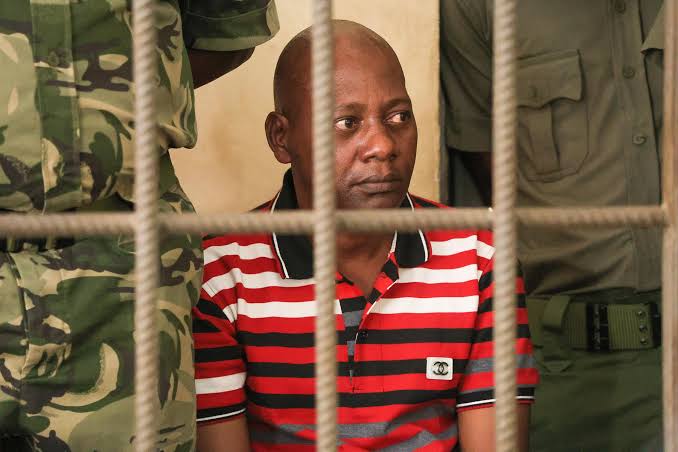
Kenyan preacher Paul Mackenzie has been sentenced to 200 years in prison for the murder of 191 people, including 190 children, in the Shakahola Forest massacre. The Mombasa High Court found that an organised system of religious indoctrination and enforced fasting led to the deaths. Mackenzie was convicted alongside 28 co-accused.
Kenyan preacher Paul Nthenge Mackenzie has been sentenced to an aggregate 200 years in prison for his role in the deaths of 191 people, including 190 children, in the Shakahola Forest massacre, one of the deadliest cases of religiously motivated killings in Kenya’s recent history. The Mombasa High Court delivered the sentence on Friday, November 6, 2026, bringing a major phase of the prosecution to a close more than three years after the discovery of hundreds of bodies buried in shallow graves in coastal Kenya. The court found that Mackenzie had led an organised system of religious indoctrination and enforced fasting in which followers were instructed to starve themselves and their children to death in the belief that they would meet Jesus.
Justice Diana Kavedza Mochache imposed the sentence after Mackenzie and 28 co-accused were convicted on October 19 of all 191 murder counts. The prosecution had urged the court to impose the death penalty on Mackenzie, arguing that the scale of the killings and the circumstances in which the victims died justified the harshest possible punishment. The judge instead handed him two consecutive 100-year prison terms, producing an aggregate sentence of 200 years.
The sentence reflects two categories of murder established during the trial. Mackenzie received 100 years for the 183 deaths attributed to starvation, with the individual sentences within that category running concurrently. He was then sentenced to a further 100 years for eight murders involving direct homicide, with those sentences also running concurrently. The two blocks of punishment are to run consecutively, bringing the total term to 200 years.
The case involved 191 victims: 190 children and one adult. The court found that 183 died through starvation, while eight were victims of direct homicide. The distinction formed part of the prosecution’s case that the deaths were not simply the result of individuals independently choosing to fast, but occurred within a structured system in which children and other vulnerable followers were subjected to coercion, intimidation and violence.
In its October judgment, the court found that Mackenzie, who led Good News International Ministries, was central to the organisation and direction of the deadly practices. The prosecution presented evidence that followers were encouraged to abandon ordinary life and relocate to the Shakahola area, where fasting was imposed in stages. Children were targeted first, followed by young people, women and men. The court found that the system was enforced through a hierarchy of followers, including individuals assigned roles in controlling, supervising and preventing people from escaping the process.
Mackenzie’s followers were taught that refusing to eat would allow them to reach heaven and meet Jesus. The court rejected the defence position that the victims had voluntarily chosen to fast to death, finding that the prosecution had established the defendants’ responsibility beyond reasonable doubt. The judgment also examined evidence that some victims were subjected to physical violence, while others were prevented from receiving food and assistance.
The 29 people convicted in the case included Mackenzie and 28 co-accused who were found to have participated in the organised system connected to the deaths. Their alleged roles included enforcing the group’s rules and helping maintain its operations in the forest. One co-accused, Enos Amanya Ngala, had pleaded guilty to all 191 murder counts, while the others had contested the charges. The court found all 29 guilty.
Mackenzie’s assistant pastor, Smart Mwakalama, was among those sentenced, receiving an aggregate term of 160 years, according to Kenyan media reports. Other co-accused were also handed prison terms based on their convictions and the court’s assessment of their individual roles. The sentences mark an attempt by the Kenyan judiciary to address not only the responsibility of the group’s leader but also the participation of those who helped operate the system in which the victims died.
The case became known internationally in April 2023, when Kenyan authorities began uncovering mass graves in Shakahola Forest, near the coastal town of Malindi in Kilifi County. Investigators initially found bodies buried in shallow graves, with subsequent searches revealing more suspected victims across the forest. The scale of the discoveries shocked the country and prompted a major investigation into the activities of Mackenzie’s church and the people who had followed his teachings.
Authorities have ultimately recovered 448 bodies from the wider Shakahola site, according to reports. That figure is larger than the 191 deaths covered by the murder convictions and should not be confused with the number of victims in this particular case. The murder trial addressed 191 identified counts, while investigations and legal proceedings connected to other deaths have continued separately. Many of the bodies recovered from the forest presented significant identification challenges, requiring forensic examinations and DNA analysis to establish the identities of victims and assist families seeking answers.
The investigation exposed how the group had operated in a remote area where followers were able to live under the influence of Mackenzie’s teachings with limited outside scrutiny. Families and former members described an environment in which ordinary institutions and services were rejected, while the preacher’s religious instructions shaped decisions about food, education, healthcare and contact with the outside world. The court’s findings established that the practices leading to the deaths were organised and enforced rather than simply a series of unrelated acts of religious devotion.
The tragedy also raised difficult questions about how the group was able to operate for an extended period and why warning signs did not result in effective intervention before so many people died. Mackenzie had previously attracted attention from Kenyan authorities, and the Shakahola discoveries prompted scrutiny of the police response, oversight of religious organisations and the capacity of government agencies to identify groups placing followers at risk. Human rights advocates and other critics have argued that accountability should extend beyond the people convicted in the murder case to any officials or institutions whose failures may have allowed the situation to continue. The extent of any official responsibility must be established through evidence and the relevant investigations.
The sentencing is a significant legal outcome, but it does not resolve every question arising from the massacre. Mackenzie continues to face other proceedings involving allegations connected to terrorism, child abuse, torture and additional deaths. Reuters has also reported that he is separately accused of ordering the deaths of 52 people at another site, charges he has denied. Those allegations are distinct from the 191 murder convictions and should not be treated as findings already established by the court in the Shakahola murder trial.
For families of the victims, the sentence follows years of uncertainty, forensic investigations and efforts to identify relatives among the remains recovered from the forest. Some families have been able to bury loved ones after identification, while others have continued to wait for answers. The loss of 190 children has been particularly devastating, with families describing the disappearance and deaths of multiple children from the same households. The court proceedings have provided a formal account of how the killings occurred and established criminal responsibility for those convicted, but the scale of the loss cannot be measured by the length of the prison terms alone.
The case has also renewed debate in Kenya about religious freedom, regulation of religious organisations and the responsibility of authorities to intervene when religious teachings are allegedly used to justify abuse or endanger lives. The challenge for the government is to protect people from exploitation without treating legitimate religious belief as a crime. Any regulatory response will need to distinguish lawful religious activity from organised coercion, violence and criminal conduct, while ensuring that complaints about abuse are investigated promptly and independently.
Mackenzie’s 200-year sentence represents the punishment imposed in the murder case, while the wider Shakahola investigation and related proceedings remain important to understanding the full scale of the tragedy. The court’s findings established that the 191 deaths were connected to an organised system of enforced fasting and direct violence, rather than voluntary religious practices undertaken without coercion. With hundreds of bodies recovered from the wider forest site and other cases still before the authorities, the aftermath of the massacre continues to demand attention from Kenya’s justice system, investigators and institutions responsible for protecting vulnerable people.