DR CONGO EBOLA DEATH TOLL PASSES 5,000 AS OUTBREAK OVERWHELMS HEALTH RESPONSE
The Democratic Republic of the Congo’s 2026 Ebola outbreak has now killed more than 5,000 people, making it the country’s deadliest Ebola epidemic on record and the world’s second-deadliest after the 2014–2016 West African crisis. More than 10,000 infections have been reported, with the Bundibugyo strain killing close to half of confirmed patients. Conflict, delayed detection, community deaths, shortages of trained personnel and major funding gaps are complicating containment efforts, while imported cases have been reported elsewhere in Africa.
The Democratic Republic of the Congo is confronting the deadliest Ebola outbreak in its history after the number of confirmed deaths climbed above 5,000, placing extraordinary pressure on health workers, treatment centres and already fragile public-health systems while raising growing fears that the epidemic could spread further across Central and East Africa. Government data released at the end of October show that more than 10,000 people have now been infected since the outbreak was declared in May, with more than 5,000 confirmed deaths and a fatality rate approaching 50 percent. The scale of the crisis has surpassed every previous Ebola outbreak recorded in the country and has become the second-deadliest Ebola epidemic globally, behind only the catastrophic 2014–2016 West African outbreak that killed more than 11,000 people.
The outbreak is being driven by the Bundibugyo species of Ebola virus, a comparatively rare form of the disease for which there is no fully approved vaccine or specific antiviral treatment equivalent to those available for the more familiar Zaire Ebola strain. That distinction has made the current emergency particularly difficult to control because health authorities cannot rely on the same combination of licensed vaccines and therapeutics that transformed responses to several more recent Ebola outbreaks. Instead, authorities have been forced to depend heavily on early detection, isolation, supportive care, infection-control procedures, contact tracing, community engagement and emergency use of available medical countermeasures while researchers continue working on better tools specifically targeting Bundibugyo virus.
The latest figures reveal the brutal pace at which the epidemic has expanded. By October 20, the World Health Organization had recorded 9,704 confirmed cases and 4,687 deaths in the Democratic Republic of the Congo across 66 health zones in eight provinces. Days later, government data pushed the total beyond 10,000 infections and 5,000 deaths, demonstrating that transmission remained intense despite months of national and international intervention. The outbreak has spread far beyond its early geographical concentration, reaching increasingly distant communities and creating a response challenge that becomes more complicated every time a new health zone records cases.
Ituri remains one of the principal centres of transmission, but the virus has also affected North Kivu, Haut-Uélé, Tshopo, South Kivu, Bas-Uélé, Sud-Ubangi and other areas as the geographical footprint of the epidemic continues to widen. Many of these regions already face severe humanitarian challenges involving displacement, conflict, weak infrastructure and limited access to healthcare, creating conditions in which Ebola can spread rapidly before cases are identified. Health authorities must often operate across difficult terrain, insecure roads and communities that may be several hours from treatment centres or diagnostic laboratories, delaying the isolation and care that are critical to reducing transmission.
One of the most alarming features of the outbreak has been the large number of people dying outside recognised Ebola treatment centres. WHO reported that among 482 deaths recorded during one recent reporting period, 307 occurred in communities compared with 175 in treatment facilities. Community deaths are particularly dangerous during an Ebola outbreak because patients may remain infectious while relatives and neighbours provide care without appropriate protective equipment, and traditional burial practices can expose additional people to infected bodily fluids. Every undetected or late-detected infection therefore creates the possibility of another chain of transmission extending through households, health facilities and communities.
The high number of community deaths also reflects persistent problems with access to care. Some patients do not reach treatment facilities until their illness is advanced, while others may initially seek treatment at local clinics that lack specialised protective equipment or isolation capacity. In remote areas, long travel distances and poor roads can delay transport, and insecurity can prevent response teams from reaching communities quickly. Fear and misinformation can create additional obstacles when residents worry about entering treatment centres or distrust outside health teams, making community engagement as important as medical intervention.
WHO has repeatedly stressed that the outbreak is unfolding in an exceptionally difficult operating environment. Eastern Congo has endured years of armed conflict involving numerous militias, government forces and displaced communities, while health systems in many affected areas were already stretched before Ebola appeared. Humanitarian organisations are simultaneously responding to malnutrition, cholera, displacement, sexual violence and other health emergencies, leaving limited personnel and resources available for an epidemic requiring intensive surveillance, protective equipment, laboratory testing, specialised treatment facilities and continuous community outreach.
Funding shortages have deepened those problems. WHO has warned that the response has faced significant financial gaps at the same time that the number of cases and affected areas has continued increasing. Insufficient funding affects almost every element of outbreak control, from hiring and deploying additional health workers to providing fuel for vehicles, maintaining laboratories, purchasing protective equipment, operating isolation centres and financing the teams responsible for following thousands of contacts. As transmission expands geographically, those costs increase because response operations must be established in additional locations while existing hotspots continue requiring intensive intervention.
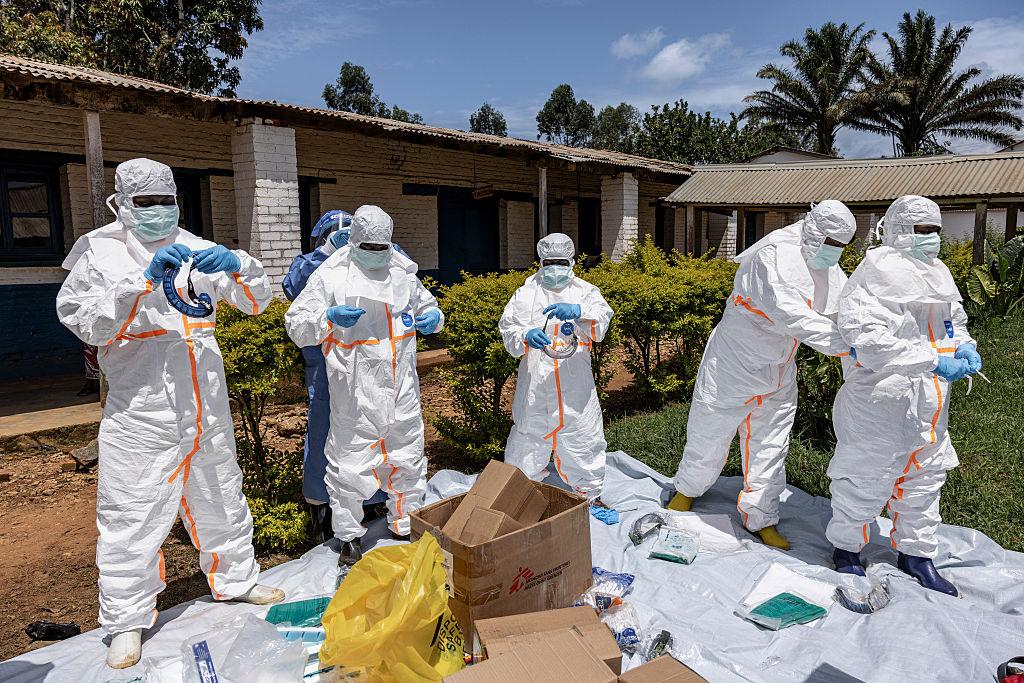
Staffing shortages have also become increasingly severe. Ebola treatment requires specially trained personnel who can work safely inside high-risk zones, correctly use protective equipment and maintain strict infection-prevention procedures while providing care to critically ill patients. Health workers themselves face significant danger, and infections among medical personnel can further reduce the available workforce while undermining public confidence in treatment facilities. Protecting healthcare workers is therefore essential not only for their own safety but for maintaining the functionality of the wider response.
The Bundibugyo strain presents additional medical difficulties. Ebola causes severe illness characterised by fever, weakness, gastrointestinal symptoms and, in some patients, bleeding and organ dysfunction. Early supportive treatment with fluids, oxygen, management of secondary infections and close monitoring can improve survival, but the absence of a specifically licensed treatment for the Bundibugyo strain limits the options available to clinicians. Researchers and public-health authorities have been examining whether vaccines and treatments developed for other Ebola species can provide useful protection, but the evidence base remains more limited than for Zaire Ebola virus.
WHO has issued emergency guidance permitting consideration of the Ervebo vaccine under certain circumstances during the Bundibugyo outbreak, despite the vaccine being specifically licensed against Zaire Ebola virus. Tens of thousands of vaccine doses were made available to the Democratic Republic of the Congo as authorities sought every available method to slow transmission. The strategy reflects the severity of the emergency, but public-health officials have been clear that vaccination alone cannot replace surveillance, isolation, contact tracing and community cooperation when dealing with a virus for which the available tools are not specifically designed.
The outbreak’s international dimension has become increasingly concerning. Cases linked to travel from the Democratic Republic of the Congo have been identified outside the country, forcing neighbouring governments to strengthen screening and preparedness measures. Kenya confirmed an imported case in October involving a traveller who had passed through Uganda after leaving Congo and later died. Nigeria has also reported an imported case, while Uganda previously recorded infections during the outbreak and subsequently brought its transmission under control. France reported an imported infection earlier in the year that was also contained.
Those cases do not mean that Ebola is spreading uncontrollably across Africa, but they demonstrate the danger created by regional travel and porous borders. People regularly move between the Democratic Republic of the Congo and neighbouring countries for trade, family visits, employment and displacement, and many crossings occur through routes where formal health screening is limited. A person infected with Ebola can travel before developing obvious symptoms, meaning surveillance must extend well beyond the communities where active transmission is already known.
Neighbouring countries have consequently increased preparedness at border crossings, airports and healthcare facilities. Health authorities are training personnel to recognise symptoms, strengthening laboratory capacity and preparing isolation centres in case additional imported infections are detected. The goal is to identify any case quickly enough to prevent a single traveller from establishing sustained local transmission, a challenge that becomes more urgent as the number of infections inside Congo rises.
The epidemic has also attracted wider international attention because of its potential implications for global travel. Governments and public-health agencies have reviewed screening protocols, while airlines and airport authorities have been asked to cooperate with passenger health measures intended to detect and trace potential exposures. The United States and other countries have monitored travellers arriving from affected areas, although public-health experts generally caution that broad travel bans can be counterproductive if they discourage people from reporting symptoms or make humanitarian operations more difficult.
The scale of the crisis has revived painful memories of the 2014–2016 West African epidemic, when Ebola spread through Guinea, Liberia and Sierra Leone, infecting more than 28,000 people and killing over 11,000. That outbreak demonstrated how quickly Ebola can overwhelm weak health systems when transmission becomes established in densely populated communities and major urban centres. The Democratic Republic of the Congo has far more experience with Ebola than the West African countries had at the beginning of that epidemic, but the current Bundibugyo outbreak combines several of the same dangerous ingredients: delayed detection, limited healthcare access, population movement, mistrust and severe resource constraints.
Congo has experienced numerous Ebola outbreaks since the virus was first identified near the Ebola River in 1976, and the country has developed considerable technical expertise in outbreak response. Congolese epidemiologists, laboratory specialists, nurses and community workers have repeatedly contained epidemics that might otherwise have expanded much further. The current crisis, however, has exposed the limits of even an experienced response system when transmission reaches thousands of cases across multiple provinces while insecurity and funding shortages restrict operations.
The outbreak was declared in May after clusters of unexplained illness were identified and laboratory testing confirmed Bundibugyo virus disease. By August, the number of confirmed infections had already crossed 5,000, and WHO declared that the outbreak continued to constitute a Public Health Emergency of International Concern. At that stage, the organisation warned that the combination of geographical expansion, healthcare-worker infections, insecurity, laboratory limitations and the absence of a licensed strain-specific vaccine or antiviral treatment created a very high risk within the Democratic Republic of the Congo.
The progression since then has justified those warnings. Case numbers climbed from fewer than 6,000 in late August to more than 7,000 in September, passed 8,000 by early October and exceeded 10,000 before the end of the month. Deaths followed a similarly steep trajectory, rising from roughly 2,800 in August to more than 4,000 in early October before crossing the 5,000 threshold. The consistency of the fatality rate at close to 48 percent shows that the expansion is not simply the result of greater surveillance uncovering mild cases; the disease continues to kill nearly half of the people confirmed to have been infected.
Public-health specialists say one of the most important priorities is reducing the delay between the onset of symptoms and admission to appropriate care. Patients who receive medical attention earlier generally have better chances of survival and fewer opportunities to expose family members and community contacts. Rapid testing is equally important because Ebola symptoms can initially resemble malaria, typhoid and other common illnesses, making laboratory confirmation essential before response teams can identify contacts and isolate additional suspected cases.
Laboratory capacity has expanded during the outbreak, but the enormous geographical spread continues to create bottlenecks. Samples sometimes need to travel long distances to reach laboratories capable of confirming infection, delaying results and leaving suspected patients and contacts in uncertainty. Mobile laboratories and decentralised testing can reduce those delays, but deploying them safely requires additional trained personnel, equipment and logistical support.
Contact tracing remains another enormous undertaking. Every confirmed Ebola patient may have had close physical contact with relatives, neighbours, healthcare workers or other individuals while infectious. Response teams must identify those people and monitor them for symptoms throughout the virus’s incubation period. When thousands of cases occur across dozens of health zones, the number of contacts can quickly become overwhelming, particularly when communities are mobile or security conditions make daily monitoring difficult.
Community cooperation is therefore essential. Ebola responses can collapse when people hide sick relatives, avoid health centres or conduct burials without trained teams because they distrust authorities. The Democratic Republic of the Congo has experienced these problems during previous outbreaks, particularly in areas where residents already have tense relationships with government institutions or armed groups. Successful response teams increasingly rely on local leaders, religious figures, traditional authorities, survivors and community health workers who can communicate in trusted ways rather than treating public-health measures as instructions imposed from outside.
Safe and dignified burials are another critical part of controlling transmission. Ebola remains highly infectious after death, meaning direct contact with a body during traditional funeral preparation can expose numerous relatives. Burial teams wearing protective equipment must therefore handle remains carefully while still respecting families’ cultural and religious expectations. When those procedures are perceived as insensitive or secretive, communities may resist them, making communication and family participation vital.
The economic consequences of the epidemic are also widening. Outbreaks disrupt markets, agriculture, transport and cross-border commerce as communities reduce movement and authorities impose health measures. Families lose income when breadwinners become ill or must remain under monitoring, while healthcare expenses and funeral costs impose additional hardship. Schools and other public institutions can also be affected when transmission becomes intense, further extending the impact beyond patients and healthcare facilities.
Health systems face another danger when Ebola consumes resources needed for routine services. Doctors, nurses, ambulances and hospital beds reassigned to outbreak response may no longer be available for pregnant women, children with malaria, trauma patients or people requiring chronic care. Fear of infection can also cause patients to avoid hospitals, allowing treatable illnesses to worsen. During major Ebola epidemics, indirect deaths from disrupted healthcare can become substantial even among people who never contract the virus.
This broader strain is one reason international agencies are calling for additional funding rather than concentrating only on Ebola treatment centres. Authorities need resources to maintain routine healthcare, strengthen infection prevention in ordinary clinics, support laboratories, provide protective equipment and ensure that communities continue receiving essential services. Without that wider support, an outbreak can weaken the health system in ways that make further transmission more likely.
International assistance has arrived from WHO, Africa CDC, humanitarian organisations and bilateral partners, but officials say the scale of the epidemic requires much more. Medical supplies, protective equipment, laboratory materials, vehicles, communications systems and trained personnel all need sustained financing, while emergency operations must often continue for months after case numbers begin falling to ensure the virus has truly been eliminated.
Médecins Sans Frontières and other humanitarian organisations have long warned that Ebola responses cannot succeed through emergency deployments alone. Local health systems must have sufficient staffing, trust and infrastructure to identify cases quickly before international teams arrive. The current outbreak reinforces that argument because transmission expanded substantially before response capacity could match the scale of the emergency.
The outbreak has also been influenced by changes in international humanitarian financing. Global health organisations have faced significant uncertainty over funding from major donor governments, forcing agencies to prioritise limited resources across multiple crises. Reductions or delays in international health financing can have especially serious consequences during infectious-disease emergencies because every week of inadequate surveillance allows transmission chains to grow and ultimately makes containment more expensive.
The Democratic Republic of the Congo itself faces difficult financial choices. The government must respond to Ebola while simultaneously dealing with armed conflict, displacement, poverty, infrastructure needs and other infectious diseases. A sustained epidemic involving thousands of patients can consume enormous resources that a low-income country cannot easily generate domestically, making external assistance essential.
The rising death toll therefore represents not only a medical tragedy but a warning about the capacity of the response. Crossing 5,000 deaths does not mean containment has become impossible, but it demonstrates that existing measures have not yet reduced transmission sufficiently. Public-health authorities now need to intensify surveillance, shorten the time between illness and treatment, increase contact tracing, protect healthcare workers and ensure that communities in newly affected areas receive information and resources before large outbreaks become established.
The experience of previous Ebola epidemics shows that transmission can eventually be stopped when these measures work together. Ebola does not spread through the air in the same way as highly transmissible respiratory viruses; infection generally requires direct contact with bodily fluids from an infected person or contaminated materials. That means strong infection control, rapid isolation and careful monitoring of contacts can break transmission chains if implemented consistently.
The challenge in Congo is implementing those measures across a vast geography while communities remain under pressure from conflict and displacement. A strategy that succeeds in a relatively accessible urban area may be far harder to maintain in remote health zones where roads are poor, security is uncertain and medical facilities are limited. The response therefore needs to be adapted to local conditions rather than relying on one standard approach.
Scientists are also racing to improve the medical options available against Bundibugyo virus. The current epidemic has created an urgent need for clinical research into vaccines and treatments that could be used against future outbreaks. Bundibugyo Ebola has historically caused fewer and smaller epidemics than the Zaire strain, meaning less commercial and scientific attention was devoted to developing specific countermeasures. The 2026 outbreak has demonstrated how dangerous that gap can become when the virus enters conditions favourable to sustained transmission.
Research during an active emergency raises difficult ethical and logistical questions because health workers must balance the need to test experimental tools against the immediate obligation to provide the best available care. Nevertheless, without data from outbreaks, it can be extremely difficult to determine whether potential vaccines and therapeutics are effective. International research organisations are therefore coordinating priorities while ensuring that Congolese institutions and scientists remain central to decisions about studies conducted during the epidemic.
Survivors will also require long-term support. Ebola recovery does not necessarily end when a patient leaves a treatment centre, and survivors can experience persistent joint pain, vision problems, neurological symptoms and psychological trauma. Communities may stigmatise people who recover, while families who have lost several relatives can struggle with grief and economic hardship. Survivors can also become valuable partners in response efforts because their experiences often make them trusted advocates for early treatment and community cooperation.
The death toll of more than 5,000 means thousands of Congolese families are already living with those consequences. Behind the national statistics are communities where multiple generations have been affected and health workers have repeatedly faced the loss of patients, colleagues and relatives. That human cost is likely to continue rising until daily infection numbers begin falling consistently across the affected provinces.
The next phase of the response will therefore be critical. If international funding increases and authorities are able to reinforce surveillance and treatment in the areas where transmission remains strongest, the epidemic could begin to contract. If the response continues operating below the level required while cases appear in new health zones, the country risks months of additional transmission and further cross-border spread.
The international community also has a direct interest in preventing that outcome. Ebola outbreaks become more expensive and dangerous the longer they are allowed to grow, and imported cases require neighbouring countries to dedicate resources to screening, contact tracing and emergency preparedness. Supporting containment at the source is therefore not simply humanitarian assistance to Congo but a regional and global health-security investment.
For now, the numbers remain deeply alarming. More than 10,000 people have been infected, more than 5,000 have died and transmission has reached eight provinces, while imported infections have already demonstrated that national borders cannot isolate the crisis. Nearly half of confirmed patients have died, and many deaths continue to occur outside treatment facilities, showing that authorities are still struggling to identify and care for patients early enough.
Congo has defeated Ebola outbreaks before, including emergencies that once appeared extremely difficult to control. Its health workers possess experience built over decades, and international agencies now have far better surveillance, diagnostic and infection-control knowledge than existed during the earliest outbreaks. What the country lacks is not an understanding of what must be done but sufficient resources and access to apply those measures everywhere the virus is spreading.
That makes the latest milestone particularly sobering. The death toll passing 5,000 is not simply another statistical update; it is evidence that the 2026 outbreak has reached a scale that demands a substantially reinforced response. Without greater funding, more healthcare workers, stronger laboratory capacity, better access to isolated communities and sustained international support, the Democratic Republic of the Congo risks watching an already historic public-health disaster become even larger.
The immediate objective is clear: break transmission before thousands more people are infected. Achieving that will require Congo’s government, WHO, Africa CDC, humanitarian organisations, donor governments and affected communities to work together at a scale that matches the epidemic. The country’s experience proves Ebola can be contained, but the latest figures also demonstrate that time, personnel and resources are running at a far more dangerous pace than the response can currently afford.