
FORMER GERMAN INTELLIGENCE CHIEF FORMALLY ARRESTED AS ESPIONAGE CASE DEEPENS
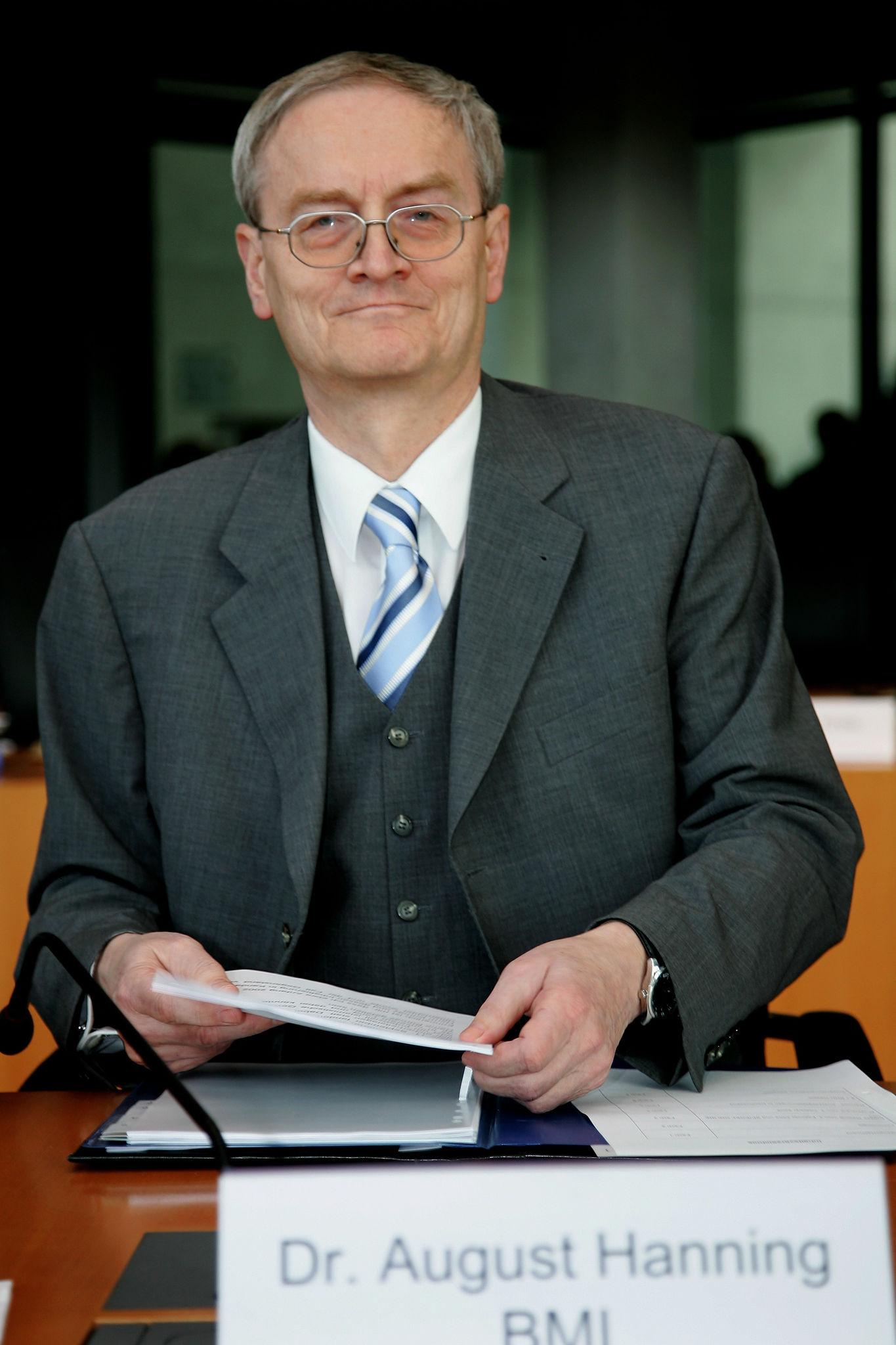
Former German intelligence chief August Hanning has been formally placed in pretrial detention after a Federal Court judge issued an arrest warrant on Wednesday. Prosecutors allege Hanning obtained roughly 2,000 intelligence documents from former senior BND official Manfred D. and used confidential information in an analysis intended for an unnamed foreign intelligence service. Hanning’s lawyer acknowledges he possessed confidential documents but denies he passed damaging intelligence to a foreign power. Azerbaijan has separately denied reports suggesting its intelligence service was connected to the case.
ormer German foreign intelligence chief August Hanning has been formally placed in pretrial detention after a judge at Germany’s Federal Court of Justice issued an arrest warrant on Wednesday, escalating an extraordinary espionage investigation centered on roughly 2,000 intelligence documents, allegations of payments to a former senior BND official and claims that confidential information was used in an analysis intended for a foreign intelligence service.
The judicial order marks a significant development from Hanning’s initial detention on Tuesday. German federal prosecutors had already arrested the 80-year-old former head of the Bundesnachrichtendienst, or BND, on suspicion of treasonous espionage, obtaining state secrets, attempted treason and espionage, but Wednesday’s warrant formally allows authorities to keep him in custody while the investigation continues. A second suspect, identified under German privacy rules as Manfred D., a former senior BND official who worked closely with successive agency chiefs, has also been placed under formal arrest.
Prosecutors allege that Hanning began receiving confidential intelligence material from Manfred D. around 2010, roughly five years after Hanning ended his tenure as president of the BND. According to the federal prosecutor’s account, Manfred D. supplied Hanning with approximately 2,000 documents over the following years, including material intended only for internal use within the intelligence service and reports prepared for senior officials in the German chancellery. Some of the documents were classified, although prosecutors have not publicly disclosed the full range of classification levels or the complete subjects covered by the material.
The most serious element of the investigation concerns what prosecutors believe Hanning did with information obtained from those documents. Authorities allege that he used at least some of the material to prepare an analysis for an officer of a foreign intelligence service and had for years provided political information to a representative of that service. The foreign service has not been publicly identified by German prosecutors, and it remains unclear whether the analysis investigators say Hanning prepared ever reached the person for whom it was allegedly intended.
That uncertainty is central to the case because possession of confidential or classified material and espionage on behalf of a foreign power are legally and factually distinct questions. Hanning’s lawyer has acknowledged that the former BND chief possessed confidential documents but strongly denies that he passed information to a foreign state in a way that damaged Germany or received payment for doing so. The defense position means prosecutors will have to establish not only how the documents reached Hanning but also what he intended to do with them, whether he communicated their contents to foreign intelligence officials and whether any such activity meets the high legal threshold for the national security offenses under investigation.
The case has drawn exceptional attention in Germany because Hanning once occupied the most senior position in the country’s foreign intelligence service. He served as BND president from 1998 to 2005, a period that included the September 11 attacks, the expansion of international counterterrorism cooperation and intense intelligence activity surrounding Afghanistan, Iraq, Islamist networks in Europe and other major security challenges. After leaving the BND, Hanning continued his government career as a senior official in the Interior Ministry before moving into private advisory and consulting work.
His background gives the allegations a significance that extends beyond the conduct of one retired official. A former intelligence director would have possessed detailed knowledge of the BND’s internal procedures, relationships with allied agencies, methods of intelligence collection and the way sensitive information moves through the German government. He would also have retained professional relationships with officials inside the intelligence community, which prosecutors now allege provided the basis for a long-running channel through which confidential material was obtained after his departure from public service.
Manfred D.’s alleged role is equally important. He served in senior positions within the BND and reportedly worked as chief of staff to successive agency presidents, remaining inside the service until his retirement in March 2026. That position could have given him access to a wide range of intelligence assessments and internal briefing materials, including information prepared for the highest levels of the German government. Prosecutors allege that he supplied documents to Hanning over an extended period and that the arrangement involved payment.
If that account is established in court, the case would involve more than an isolated document leak. The suspected transfers are alleged to have continued for years and potentially exposed large amounts of sensitive material to someone who no longer held an official position inside the intelligence service. Investigators will therefore need to determine how the documents were accessed, copied or removed, whether electronic systems recorded unusual activity and whether internal controls should have detected the alleged transfers earlier.
The number of documents involved has contributed to the seriousness with which the case is being treated. Roughly 2,000 intelligence documents represent a substantial volume of information, but the scale of any national security damage cannot be determined from the number alone. Intelligence files can range from administrative material and general analytical assessments to highly sensitive information involving human sources, foreign military capabilities, surveillance methods or information provided under restrictions by allied governments.
German media have reported that some of the material concerned issues including Iran’s nuclear program and Russian military activities and that certain documents contained information regarded as highly sensitive by allied intelligence services. Those details have not all been publicly confirmed by prosecutors, which means they remain part of the reporting surrounding the investigation rather than fully established facts in the criminal case.
The possibility that allied intelligence material was among the documents is particularly sensitive because intelligence-sharing relationships depend heavily on trust. Germany receives information from foreign partners under conditions designed to limit access and prevent unauthorized disclosure. If an allied government concludes that material it supplied to the BND was repeatedly removed or shared outside authorized channels, it could reassess what information it is willing to provide Germany in the future.
That concern has already emerged in political discussions surrounding the case. German lawmakers responsible for intelligence oversight have warned that the allegations could damage confidence in the BND among partner agencies. At the same time, officials have cautioned against drawing conclusions about the scale of the breach before investigators establish what information was involved and whether any of it actually reached a foreign service.
The identity of the alleged foreign intelligence service remains one of the most closely watched unanswered questions. German magazine Der Spiegel reported that investigators were examining a possible connection to Azerbaijan and that Hanning had been in contact with an Azerbaijani agent. Germany’s federal prosecutor’s office has declined to confirm that reporting and has continued to refer only to an unnamed foreign intelligence service.
Azerbaijan has denied any involvement. Its Media and Broadcasting Council described reports of an Azerbaijani connection as unfounded and accused unnamed actors of attempting to damage relations between Baku and Berlin. A senior Azerbaijani official also said the government had contacted German intelligence authorities through official channels and had been told that the case was not connected to Azerbaijani intelligence.
Those statements do not resolve the issue because German prosecutors have not publicly identified the alleged foreign recipient. Azerbaijan’s denial must therefore be weighed alongside the absence of any official German confirmation tying the case to Baku. Until investigators disclose additional evidence, the alleged Azerbaijani connection remains unverified and should not be treated as an established part of the prosecution.
The possibility of a foreign intelligence link nevertheless raises the stakes considerably. If prosecutors establish that a former BND director used confidential information to assist another country’s intelligence service, the case could become one of the most serious breaches involving Germany’s intelligence leadership since the end of the Cold War. If the evidence instead shows unauthorized possession without successful transmission abroad, the legal and security consequences could be significantly different.
Wednesday’s formal arrest order does not decide any of those questions. Under German criminal procedure, investigators can seek a judicial warrant authorizing pretrial detention when legal conditions are met, including the seriousness of the alleged offense and concerns relevant to the integrity of the investigation. The warrant allows authorities to hold Hanning while prosecutors continue gathering evidence, but it does not amount to a conviction or establish that the allegations against him are true.
The same principle applies to Manfred D. Both men remain suspects, and prosecutors will ultimately have to present evidence capable of supporting formal charges and proving criminal responsibility before a court. The investigation is likely to involve extensive review of intelligence records, financial transactions, electronic communications and possible contacts with representatives of foreign governments or intelligence organizations.
Financial records could become particularly important because prosecutors allege that the intelligence material was supplied in exchange for payment. Establishing a clear link between money transferred by Hanning and specific documents or intelligence services would strengthen the government’s case, while the defense is expected to challenge the interpretation of any payments and argue that they do not prove espionage.
Investigators are also likely to examine Hanning’s private professional activities after leaving government. Former senior intelligence officials frequently work as consultants, security advisers or geopolitical analysts, using expertise accumulated during public service. Such work is legal, but it creates clear boundaries regarding access to classified information. Former officials remain subject to secrecy obligations and cannot lawfully obtain current protected intelligence merely because they once held senior positions.
The prosecution’s theory appears to be that those boundaries were crossed. Hanning allegedly maintained a relationship with a former aide who remained inside the BND and used that connection to obtain information not available through legitimate private-sector channels. If proven, that arrangement could prompt a broader review of how Germany manages relationships between serving intelligence employees and influential former officials.
The scandal has therefore arrived at a particularly sensitive moment for the BND. Germany has been debating how to strengthen its intelligence capabilities in response to growing security threats from Russia, cyber operations, sabotage, terrorism and foreign interference. Lawmakers have considered expanding the powers available to intelligence services while also trying to maintain safeguards rooted in Germany’s historical sensitivity to state surveillance.
An allegation involving a former agency chief complicates that debate because it raises questions about whether expanded powers can be accompanied by sufficient internal controls. Intelligence agencies frequently argue that they need greater operational freedom to counter sophisticated threats, but public and parliamentary support for those powers depends on confidence that sensitive information is being protected from misuse.
Current BND President Martin Jäger has emphasized that internal security cannot be compromised and that the agency has conducted its own investigation after suspicions emerged. That response suggests the BND is examining not only the alleged conduct of the suspects but also whether weaknesses in internal procedures allowed documents to leave authorized channels.
The institutional review could become as consequential as the criminal prosecution. If Manfred D. was able to provide hundreds or thousands of documents over a long period, the BND may need to examine whether access was logged effectively, whether employees were able to print or remove sensitive files without sufficient scrutiny and whether senior personnel were subject to adequate monitoring.
The alleged duration of the scheme is especially troubling from an internal-security perspective. Prosecutors say the arrangement began around 2010 and that documents were supplied through June 2022. A suspected transfer mechanism operating for more than a decade would suggest that any controls designed to identify unusual document access either failed, were circumvented or did not exist in a form capable of detecting the behavior.
That issue could also draw scrutiny from Germany’s parliamentary intelligence oversight bodies. Lawmakers responsible for monitoring the intelligence services may seek explanations about how document security was managed, whether earlier warnings existed and what steps are now being taken to prevent similar incidents.
The criminal investigation may limit what the government can say publicly in the immediate term. Prosecutors will need to protect evidence, intelligence officials may be unable to discuss classified material and defense lawyers will have the right to challenge any claims made outside court. That combination means the public picture is likely to remain incomplete for some time.
The case has already prompted comparisons with major German espionage scandals from the past, although officials have warned that historical parallels can be misleading. One frequently mentioned case is that of Günter Guillaume, an East German intelligence operative who penetrated the office of West German Chancellor Willy Brandt and whose exposure contributed to a political crisis in the 1970s.
Hanning’s case is fundamentally different. Prosecutors are not alleging that he infiltrated Germany on behalf of an adversary. He was a German intelligence professional who rose to the top of the country’s foreign intelligence service and later allegedly used connections inside that institution to obtain protected information. That distinction makes the current case unusual in a different way because the suspected threat came from someone who had previously been entrusted with the agency’s highest level of authority.
The allegations also raise questions about professional networks among former intelligence officials. Relationships built over decades do not simply disappear when senior officers retire. Former colleagues continue to attend conferences, work in security businesses and communicate privately. Those connections can be valuable to governments and companies, but they can also create vulnerabilities if serving officials provide current information because of old personal relationships.
Germany may therefore face calls to strengthen post-employment rules for senior intelligence personnel and clarify how contact with former colleagues should be managed. Such changes could include tighter disclosure requirements, stronger auditing of document access or clearer restrictions on consulting work involving foreign governments and security organizations.
The foreign-policy dimension will depend heavily on whether investigators eventually identify the intelligence service involved. If the alleged recipient belongs to a country with which Germany has close diplomatic or economic ties, Berlin would have to determine whether the issue should be handled primarily through criminal prosecution, diplomatic protest or broader security measures.
If investigators conclude that no material was successfully delivered, the diplomatic consequences could be more limited while the domestic criminal case remains serious. That is why the current uncertainty over whether Hanning’s analysis reached its intended recipient is more than a technical detail. It could shape the ultimate assessment of both the intelligence damage and the international fallout.
Hanning’s defense has so far focused on rejecting the allegation that he transferred harmful information. His lawyer’s acknowledgment that confidential documents were in Hanning’s possession may narrow part of the factual dispute, but it leaves major questions unresolved about where the documents came from, whether Hanning was authorized to possess them and what he did with their contents.
Those questions are likely to dominate the investigation in the weeks ahead. Prosecutors will need to show how the alleged document transfers occurred and establish whether the material qualifies under the relevant laws protecting state secrets. They will also have to prove the connection between Hanning’s possession of the information and any suspected activity involving a foreign intelligence service.
For Manfred D., the investigation will focus on whether he knowingly supplied the documents, whether he received payment and whether he understood the purpose for which Hanning allegedly wanted the information. His status as a long-serving BND official means prosecutors may have access to detailed records showing which documents he could retrieve and when.
The case could expand if those records identify additional officials or intermediaries. Federal prosecutors have not publicly indicated that further arrests are imminent, but investigations involving thousands of documents and years of suspected communications rarely depend on a single piece of evidence. Authorities are likely to reconstruct the network systematically before deciding whether additional people should face charges.
Germany’s intelligence partners will be watching that process closely. Even if no allied material was ultimately transferred abroad, confirmation that highly classified files could be removed from the BND over many years would raise questions about information security. Partner agencies routinely evaluate the reliability of institutions with which they share intelligence, and confidence can be damaged by internal breaches even when the underlying investigation remains unresolved.
The wider damage assessment may therefore take longer than the immediate criminal inquiry. Intelligence officials could have to review hundreds or thousands of documents individually, determine who originally supplied the information and assess whether any operational changes are required. That process may involve foreign governments whose intelligence appears in the files.
The formal arrest order issued Wednesday ensures that Hanning will remain available to investigators while those questions are pursued. It also marks the first major judicial assessment of the evidence gathered so far, although the court’s decision to authorize detention should not be interpreted as a final judgment on the allegations.
For Germany, the significance of the case lies in both the identity of the suspect and the possible scale of the breach. Hanning was once responsible for protecting the country’s most sensitive foreign intelligence information. Prosecutors now allege that years after leaving office, he obtained protected material from a former colleague and used some of it for the benefit of an outside intelligence service.
The investigation has not yet established publicly whether the alleged foreign service received the information, how much of the approximately 2,000-document collection was classified at the highest levels or whether any intelligence sources or ongoing operations were compromised. Prosecutors have also not identified the foreign service, while Azerbaijan has rejected reports linking its intelligence apparatus to the case.
Those unresolved questions will determine whether the investigation ultimately becomes a major international espionage scandal or a narrower prosecution centered on unauthorized access to and use of state secrets. For now, the confirmed development is that Germany’s Federal Court of Justice has authorized Hanning’s continued detention, Manfred D. is also being held, and federal investigators are examining a suspected flow of sensitive intelligence material that prosecutors believe continued for years.
The next phase will be driven by forensic examination of documents, communications and financial records and by the government’s assessment of whether Germany or its intelligence partners suffered measurable security damage. Until those findings are established and tested in court, Hanning and Manfred D. remain accused rather than convicted, while the BND faces the separate task of determining how confidential information allegedly left its internal systems and what safeguards may need to change as a result.