

FORMER CIA OFFICIAL ADMITS INVENTING CLASSIFIED PROGRAMS IN $194 MILLION FRAUD SCHEME
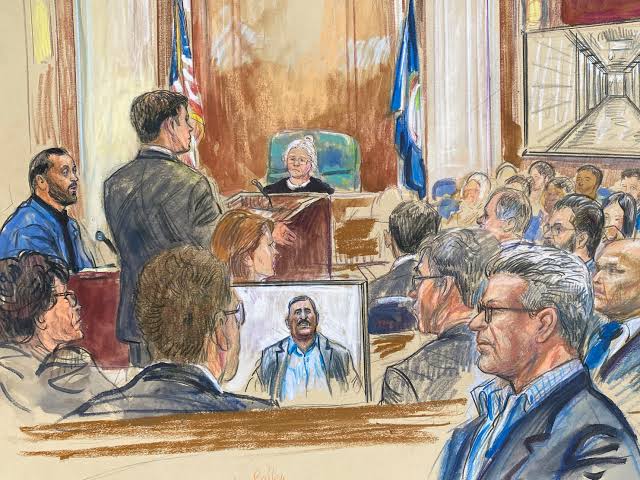
Former senior CIA official David J. Rush has pleaded guilty to a fraud scheme that cost the U.S. government approximately $194 million. Prosecutors say he invented fake classified programs to obtain hundreds of gold bars, luxury Florida properties, watches, vehicles and other assets while using government secrecy to discourage scrutiny.
A former senior CIA official has pleaded guilty to orchestrating a sprawling fraud scheme that prosecutors say cost the U.S. government approximately $194 million, using fabricated classified programs and his position of extraordinary trust to obtain hundreds of gold bars, luxury real estate, expensive watches, vehicles and other assets while presenting the spending as part of legitimate national security activity.
David J. Rush, 49, of Ashburn, Virginia, entered a guilty plea to one count of wire fraud in federal court in Alexandria on Tuesday, admitting that he created fictitious government authorities, including a fake Special Access Program, to move large amounts of public money into transactions that ultimately benefited him personally. Prosecutors say Rush’s scheme exploited the secrecy surrounding classified work, allowing him to discourage scrutiny by telling colleagues and contractors that they lacked the “need to know” when they questioned unusual expenditures.
The case is one of the most extraordinary fraud prosecutions involving a senior U.S. intelligence official in recent years because of both the amount of money involved and the way prosecutors say Rush used the culture of secrecy around sensitive government operations to conceal what he was doing. Rather than simply falsifying invoices or redirecting a single payment, court documents say he constructed the appearance of legitimate classified programs, briefed people into those supposed programs and used his real government authority to make fraudulent instructions appear credible.
Rush held a senior executive-level position and possessed a Top Secret/Sensitive Compartmented Information security clearance, giving him access to highly sensitive information and placing him in a position where colleagues and contractors were accustomed to operating under strict secrecy rules. Prosecutors say he abused that trust by inventing government activities that did not exist and then using those fictitious programs to obtain money, property and other valuable assets.
One of the schemes centered on what Rush portrayed as a highly classified Special Access Program. Such programs are among the most tightly controlled areas of the U.S. national security system and can restrict information even from officials who otherwise possess top-secret clearances. Access is normally limited to people specifically authorized to know about the program, and that structure can make ordinary oversight more difficult because many employees are legally required not to discuss what they have been told.
Prosecutors say Rush exploited that exact feature.
According to court documents, he held supposed classified briefings and “read in” contractors and colleagues to the fictional program, creating the impression that they were participating in an authentic government operation. At least one contractor was required to sign a non-disclosure agreement, strengthening the appearance that the activity was genuine and making participants less likely to discuss it outside the small group Rush controlled.
When a contracting official questioned the spending, Rush allegedly responded by saying the official did not have the necessary “need to know.” In a genuine classified environment, such an answer can be entirely normal. In Rush’s case, prosecutors say it became a shield that allowed fraudulent spending to continue without the kind of challenge that would ordinarily accompany transactions involving tens of millions of dollars.
Between November 2025 and March 2026, approximately $145 million was transferred to 0701 Holdings LLC, a company created at Rush’s direction. The transfers were described as payments for consulting and other government-related work, but prosecutors say the money was instead used to acquire luxury properties and other assets for his personal benefit.
Among the purchases were four high-end properties in South Florida, including two homes in Palm Beach and additional property in Hobe Sound. Court documents describe individual purchases valued at tens of millions of dollars, including properties costing approximately $21.9 million, $27 million, $13.65 million and $40 million.
Rush intended to resell some of the properties for profit, according to prosecutors, meaning the real estate was not simply being used as accommodation associated with government work. Messages cited in court records show him discussing how particular features might affect resale value and whether certain purchases would limit future profits.
The real estate scheme was only one part of the fraud.
Rush also invented a separate supposed “sensitive government activity” that prosecutors say he used to obtain enormous quantities of gold. He represented the operation as one in which gold, diamonds or cryptocurrency might be required for sensitive government purposes involving a small number of people.
That explanation resulted in the government financing the acquisition of hundreds of gold bars.
When FBI agents searched Rush’s Virginia residence on May 19, they recovered 298 gold bars, with an estimated government acquisition cost of approximately $46 million. Investigators also seized more than $2.1 million in cash, more than €100,000 in euros and numerous luxury watches.
The scale of the seizure immediately turned what had initially appeared to be a case involving government salary fraud into something far larger. Images of the gold and cash recovered from Rush’s home became one of the most visible elements of the investigation, raising questions about how a serving intelligence official could accumulate such a quantity of valuable assets without triggering earlier intervention.
Federal prosecutors later alleged that the gold was directly linked to fraudulent government activity rather than unrelated personal wealth. Rush has now admitted the broader fraud scheme as part of his guilty plea.
Under the plea agreement, he has agreed to forfeit the gold bars, the seized cash, the fraudulently acquired properties, 30 luxury watches and two 2026 BMW Alpina vehicles. At least one of those vehicles was valued at approximately $172,000. He also faces restitution obligations connected to the approximately $194 million loss.
The Justice Department says Rush fraudulently obtained approximately $193.59 million in U.S. government funds. Separate spending tied to the case included more than $1.8 million in privately chartered flights that prosecutors say he authorized for personal use at government expense.
That detail adds another dimension to the scheme because it shows the alleged abuse was not confined to long-term asset purchases. Prosecutors say Rush also used government resources to support an expensive personal lifestyle while presenting the costs as legitimate expenses associated with official duties.
Rush’s misconduct went beyond financial fraud.
Court documents say he also lied about his education and military experience as he advanced through government service. Prosecutors allege that he exaggerated or fabricated elements of his academic and military background, helping him secure credibility and senior positions that gave him greater access to sensitive programs and government resources.
Investigators have also said Rush admitted providing classified information to a foreign government official concerning the identity of a secret U.S. source. The court filing does not publicly identify the foreign government involved, but the disclosure adds a national security dimension to a case already involving massive financial misconduct.
That aspect of the case may ultimately raise questions beyond sentencing for wire fraud because it touches on the protection of human sources, one of the most sensitive responsibilities within the intelligence community. Revealing the identity of a clandestine source can place lives at risk and compromise ongoing intelligence operations.
The Justice Department has said its investigation remains active, and the Director of National Intelligence has requested that the Inspector General for the Intelligence Community open an additional review. That means the guilty plea does not necessarily mark the end of scrutiny surrounding Rush’s actions or the institutional weaknesses that allowed the scheme to develop.
The CIA has said it identified potential criminal conduct through an internal investigation and referred the matter to the FBI. CIA Director John Ratcliffe said the agency cooperated with investigators and described Rush’s conduct as an abuse of position and a betrayal of public trust.
The referral is significant because intelligence agencies operate under layers of secrecy that can complicate ordinary oversight. Internal controls are therefore particularly important, since outside agencies, auditors and even members of Congress may not have immediate visibility into highly classified programs.
Rush’s case has already prompted scrutiny of those controls.
One of the central questions is how a single official could create a fictional classified program convincing enough to cause contractors and colleagues to participate, transfer money and accept that ordinary oversight did not apply. The nature of special access programs makes that question especially serious because the secrecy intended to protect genuine national security operations may also create opportunities for abuse if internal verification systems fail.
The Department of Justice says Rush used legitimate authority combined with false personal credentials to make his directions appear trustworthy. That combination appears to have been crucial. He was not an outsider impersonating a government official. He was a real senior official with genuine access, real clearance and enough authority to make the fabricated programs appear plausible.
That is what makes the scheme more difficult to compare with conventional procurement fraud.
In a normal government contract, unusual spending can be reviewed by multiple officials, auditors or legal departments. In a tightly compartmented intelligence program, the circle of people permitted to ask questions may be much smaller. Rush allegedly understood that structure and used it to suppress scrutiny.
The case also illustrates the vulnerability created when government secrecy is used as proof of legitimacy. If an employee questioning a transaction is told that details cannot be provided because the work is highly classified, there must still be a secure method for verifying that the classified authority actually exists.
Federal investigators will likely examine whether those verification mechanisms were missing, ignored or manipulated.
The fraud also raises questions about contractor responsibility. Prosecutors say people and companies acting under Rush’s direction transferred large sums because they believed they were supporting legitimate government work. Some may have been deceived by the same secrecy structures that Rush exploited, while investigators will continue examining who knew what and whether anyone else bears criminal or administrative responsibility.
No evidence publicly released so far establishes that all of the contractors involved knowingly participated in the fraud. Court filings instead describe Rush as the central architect who created confidence in his instructions through his official position, security clearance and fabricated authority.
The Justice Department’s decision to prosecute the case through a wire fraud charge reflects the financial mechanism used to move money. Wire fraud carries a maximum sentence of 20 years in federal prison, although Rush’s actual sentence will be determined later under federal sentencing guidelines and other statutory factors.
He is scheduled to be sentenced on January 28, 2027, in federal court in Alexandria.
The plea agreement also requires substantial forfeiture and restitution, meaning the government will attempt to recover assets and money connected to the scheme. The gold bars, properties, cash, watches and vehicles seized or identified during the investigation represent a significant portion of the losses, but the final financial recovery may depend on asset valuations, resale proceeds and other legal proceedings.
Rush’s guilty plea reduces the likelihood of a public trial involving extensive classified evidence, something prosecutors and defense lawyers would have had to manage through specialized national security procedures. Cases involving intelligence personnel can become particularly complicated because the government must prove criminal conduct without unnecessarily exposing sensitive programs unrelated to the alleged crime.
That issue appears especially relevant here because Rush worked in areas involving highly classified operations beyond the fictional programs he created. Public reporting has indicated that some of his legitimate responsibilities involved extremely sensitive intelligence collection, meaning prosecutors have had to separate the fraud evidence from information that cannot safely be disclosed.
The plea allows the government to secure a conviction without litigating every underlying classified issue before a jury.
It does not, however, resolve the broader institutional concerns.
A fraud approaching $200 million, involving hundreds of gold bars and multiple luxury properties, is large enough that investigators and lawmakers are likely to examine how approval systems failed to detect it sooner. The fact that Rush allegedly fabricated his academic and military background may also trigger questions about hiring and vetting procedures inside agencies entrusted with the country’s most sensitive information.
Security clearances generally involve extensive background investigations, employment checks and reviews of financial and personal history. Senior executive positions can involve additional scrutiny. If significant falsehoods in Rush’s credentials went undetected for years, investigators may want to determine whether the problem resulted from incomplete records, verification failures or deliberate deception sophisticated enough to evade normal screening.
The discovery of classified information being shared with a foreign official adds urgency to that review because the issue is no longer confined to financial controls. It touches on whether an individual who allegedly misrepresented his background and abused financial authority was simultaneously entrusted with information capable of affecting intelligence operations and national security.
That combination explains the strong language used by senior officials after the plea.
The government’s position is that Rush did not merely steal taxpayer money. He exploited access granted to him precisely because the intelligence community believed he could be trusted with extraordinary authority and secrecy.
The case therefore carries implications for internal culture as much as for criminal law.
Intelligence agencies need employees to act without publicly explaining many of their decisions, and colleagues often have to rely on established chains of trust because they cannot independently verify every classified detail. That system can function only when internal controls are strong enough to prevent secrecy from becoming immunity.
Rush’s scheme, according to the Justice Department, showed what can happen when one person successfully convinces others that secrecy itself prevents scrutiny.
The full institutional consequences remain uncertain. Federal authorities have not publicly announced disciplinary action against every official who may have approved or failed to detect the transactions, and the continuing inspector general review may produce additional findings about management failures, contracting procedures and clearance oversight.
For now, the core criminal case is no longer in dispute.
Rush has admitted that he used fictitious classified authorities to obtain government funds, and he has agreed to surrender assets acquired through the scheme. The approximately $194 million loss places the case among the largest known frauds involving a senior U.S. intelligence official, while the combination of gold, luxury property and fabricated secret programs gives it an unusual scale even by federal corruption standards.
The next phase will focus on sentencing, asset recovery and the continuing investigation into how the scheme operated for as long as it did. The government will also have to determine whether reforms are needed to ensure that future officials cannot use the secrecy surrounding legitimate intelligence work to create fictional programs, redirect public funds and prevent colleagues from asking the questions that might have exposed the fraud earlier.