
CALIFORNIA COUPLE ARRESTED IN SURROGACY ABUSE CASE INVOLVING MORE THAN 20 CHILDREN

California couple Guojun Xuan and Silvia Zhang have been arrested and charged in a child-abuse case involving more than 20 children, most born through surrogate mothers. Prosecutors allege at least 14 surrogate-born children were abused inside the couple’s Arcadia mansion, while the FBI is separately investigating the wider surrogacy operation
A wealthy California couple who became the legal parents of more than 20 children, most of them born through surrogate mothers, have been arrested after a long-running investigation into allegations that children inside their Arcadia mansion were subjected to systematic physical abuse while the couple operated a surrogacy business that prosecutors say concealed the true scale of their family from women recruited to carry their babies.
Guojun Xuan, 66, and Silvia Zhang, 39, were taken into custody at their home in Arcadia, east of Los Angeles, on October 6 following an investigation that began after a two-month-old infant was hospitalized with a serious head injury in 2025. Los Angeles County prosecutors have now filed multiple felony charges, including conspiracy to commit child abuse, child abuse-related offenses, accessory after the fact and allegations involving efforts to discourage or influence witnesses. The couple pleaded not guilty at their arraignment and deny the allegations against them.
The case involves at least 21 children who were located by authorities during the investigation, although officials and court records have indicated that the couple may have become parents to an even larger number of children through surrogacy arrangements. Fifteen children were initially removed from the Arcadia residence, while six others were later located at separate addresses. The children ranged in age from approximately two months to 13 years, with many of them still toddlers when authorities intervened.
Prosecutors say at least 14 surrogate-born children were abused inside the home. Their allegations describe a tightly controlled household staffed by several live-in nannies and monitored by more than 30 surveillance cameras, with video evidence allegedly capturing children being struck, punished and physically handled in ways authorities say crossed far beyond lawful discipline. Prosecutors also allege that Xuan participated in some incidents and that both adults were aware of mistreatment occurring inside the residence.
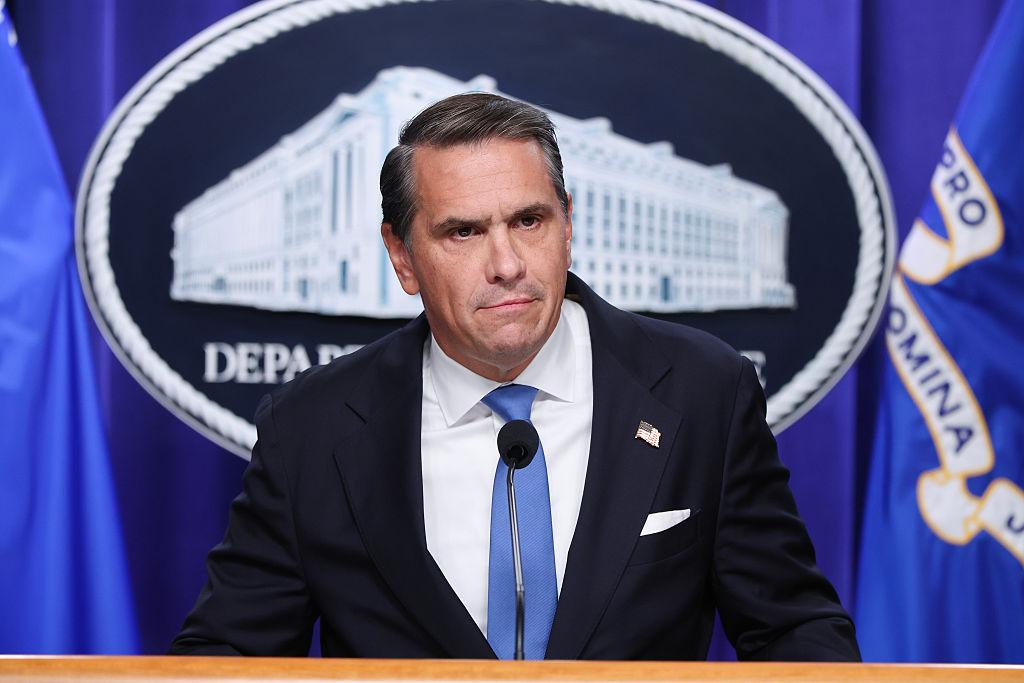
Los Angeles County District Attorney Nathan Hochman described the allegations as unprecedented because of the number and ages of the children involved. Authorities say some of the youngest alleged victims were only two months old, while others were toddlers unable to protect themselves or independently report what was happening inside the property.
The investigation began in May 2025 after Zhang took a two-month-old child to a hospital with a traumatic head injury and bleeding in the brain. Medical staff reported the injury to authorities, beginning an inquiry that eventually expanded from one injured infant into an examination of the entire household, the couple’s surrogacy arrangements and the conduct of the adults responsible for caring for the children.
Police initially focused on a nanny suspected of violently shaking or otherwise injuring the baby. Investigators later reviewed extensive surveillance footage from inside the Arcadia home and concluded that the allegations went well beyond one incident involving one caretaker. Prosecutors say footage showed multiple children being physically punished by nannies and other adults inside rooms that had been organized almost like classrooms or group-care areas.
One nanny, identified by prosecutors as Chunmei Lei, had previously been charged with felony child abuse and remained wanted as authorities announced the latest case against Xuan and Zhang. Prosecutors allege that other nannies were also involved in inappropriate physical discipline, although not every caregiver who worked inside the house has been charged with a crime.
The allegations against the couple include claims that they encouraged, tolerated or failed to stop abuse occurring under their roof. Prosecutors say the surveillance system gave them extensive visibility into what was happening throughout the mansion, undermining any argument that they were completely unaware of the treatment of the children.
The defense is expected to challenge those allegations. Xuan’s attorney has denied that his client participated in child abuse and has argued that investigators and the media have unfairly characterized the household. Attorneys representing the couple have emphasized that criminal allegations are not proof of guilt and that the evidence must be tested in court.
The case has attracted national attention not only because of the abuse allegations but because of the extraordinary surrogacy network surrounding the children. Investigators say most of the children were born through surrogate mothers recruited from different parts of the United States, and several women have said they were not told that Xuan and Zhang were simultaneously arranging pregnancies with many other surrogates.
Some surrogate mothers have said they were led to believe they were helping a couple who wanted one additional child after experiencing fertility difficulties. They later learned that numerous other women had received similar representations and that the intended parents were building a household containing more than 20 children.
The couple were connected to a business known as Mark Surrogacy or Mark Surrogacy Investment, which was involved in arranging pregnancies. Investigators are examining allegations that surrogate mothers were not adequately informed about the couple’s ownership or involvement with the agency that recruited them, raising questions about conflicts of interest and whether participants received truthful information before entering agreements.
That portion of the investigation has drawn federal attention. FBI agents participated in the October operation at the Arcadia property and executed a federal search warrant separate from the local child-abuse case. Federal investigators have been examining the couple’s surrogacy activities and related business practices, although no publicly announced federal fraud indictment had been filed against the couple as of the latest confirmed information.
That distinction is important because early descriptions of the case have sometimes combined the state child-abuse prosecution with the broader federal investigation. Xuan and Zhang are currently facing criminal charges brought by Los Angeles County prosecutors over the alleged treatment of children and related conduct. The FBI’s involvement means federal authorities are separately examining issues connected to the surrogacy operation, but the existence of a federal search does not itself establish that the couple has been convicted or federally charged with fraud.
Authorities are trying to determine why the couple pursued such a large number of simultaneous surrogacy arrangements and whether every agreement complied with state and federal law. Investigators are also reviewing the legal and biological parentage of the children, the identities of egg donors and surrogates, and the business relationships connecting the couple to the agencies and intermediaries that arranged pregnancies.
Surrogacy itself is legal in California under regulated circumstances, including gestational surrogacy arrangements in which intended parents enter contracts with women who agree to carry pregnancies on their behalf. California has developed one of the more established legal frameworks for commercial surrogacy in the United States, and the use of a surrogate is not evidence of wrongdoing.
The questions in the Arcadia case concern the scale and circumstances of the arrangements, what the surrogates were told, whether there were undisclosed business relationships, and what happened to the children after they were born.
The couple reportedly told investigators that they simply wanted a large family. Zhang has previously referred to growing up under China’s former one-child policy as part of her desire to have many children. Authorities say birth certificates and other documents generally appeared to establish legal parental relationships between the couple and the children, although investigators continue reviewing individual cases.
Xuan was listed as the father on at least some of the children’s birth records, and donor eggs were reportedly used in multiple pregnancies. Police believe Zhang personally gave birth to one or two children while the others were carried by surrogates.
The legal structure of the arrangements has made the custody situation particularly complicated. Surrogate mothers generally relinquish parental rights under properly executed agreements, and the intended parents become the legal parents of children born through the process. Once the Arcadia children were removed because of alleged abuse, however, some women who had served as surrogates expressed concern for the children and sought information about whether they could become involved in their care.
Child welfare authorities placed the children in protective custody following the 2025 investigation. Because the case involves minors and dependency proceedings, many details regarding their current locations and custodial arrangements are confidential.
The sheer number of young children living together has also drawn scrutiny of how the household functioned on a daily basis. Authorities have described six live-in nannies helping supervise the children. Surveillance footage reportedly showed groups of children gathered in classroom-style rooms, with prosecutors alleging that strict discipline was imposed when children failed to follow instructions.
According to investigators, alleged punishments included striking children with objects and hands and other forms of physical force. Because many of the children were infants or toddlers, prosecutors argue that they were particularly vulnerable and dependent on the adults inside the home for every aspect of their safety.
The government’s case is expected to rely heavily on surveillance recordings. The mansion’s extensive camera system may provide investigators with an unusually detailed visual record of interactions inside the home, potentially allowing prosecutors and defense attorneys to review events directly rather than relying entirely on competing witness accounts.
Surveillance evidence can also help establish whether the couple personally witnessed incidents, whether they intervened afterward and how frequently particular forms of discipline occurred. Prosecutors have indicated that the alleged abuse was not limited to one spontaneous incident but formed a continuing pattern.
The defense may attempt to challenge how individual clips are interpreted, whether footage has been placed in proper context and whether specific actions legally satisfy the requirements for felony child abuse. Those questions will ultimately be decided through the court process rather than through public descriptions of the videos.
Witness allegations will also be central. Prosecutors have accused the couple of attempting to influence or discourage witnesses, resulting in additional charges beyond the underlying abuse allegations. Details of every alleged witness interaction have not been fully presented in open court, but authorities say efforts to control what people told investigators became part of the case.
The prosecution has argued that the couple presents a substantial flight risk because of their wealth, international connections and access to multiple passports. Prosecutors initially sought extremely high bail, citing the seriousness of the accusations and concerns that the defendants could leave the United States.
A judge ultimately set bail at $20 million for each defendant, significantly lower than the amount prosecutors requested but still extraordinarily high compared with ordinary criminal cases. The court also imposed restrictions connected to any potential release.
The couple’s financial circumstances are expected to remain relevant as the case progresses. Authorities have described the Arcadia residence as a multimillion-dollar mansion and have pointed to other business interests and assets associated with Xuan and Zhang. Those resources contributed to prosecutors’ argument that conventional bail conditions might not be enough to guarantee their appearance in court.
Federal involvement could significantly broaden the case if investigators conclude that crimes were committed through interstate surrogacy transactions, financial transfers, immigration matters or business representations made to surrogate mothers. Women involved in the arrangements lived in multiple states, meaning contracts and payments crossed state boundaries.
The FBI has not publicly detailed the full scope of its investigation, and federal authorities have not announced final conclusions about the legality of the business operation. That means allegations that the couple ran an “illegal surrogacy ring” should be treated cautiously until investigators establish which specific laws they believe were violated.
What is already clear is that law enforcement agencies are examining two connected but distinct areas. Los Angeles County prosecutors are pursuing the alleged abuse of children and related efforts to interfere with witnesses, while federal investigators are examining the broader circumstances surrounding the surrogacy operation.
The distinction matters because surrogacy law in the United States is largely governed at the state level, and there is no single federal law that makes arranging multiple surrogate pregnancies inherently criminal. Any federal prosecution would need to be tied to specific alleged offenses such as fraud, financial crimes, immigration violations or other conduct falling within federal jurisdiction.
The investigation has therefore raised broader questions about oversight of commercial surrogacy agencies. California’s legal environment has made the state a major destination for surrogacy because contracts are recognized and intended-parent rights can be established clearly, but agencies and matching services can operate across state and international borders.
When intended parents, egg donors, surrogate mothers, clinics, lawyers and agencies are all located in different jurisdictions, oversight can become fragmented. The Arcadia case may prompt renewed debate over whether agencies should face stricter disclosure requirements, particularly when the intended parents have ownership interests in businesses responsible for recruiting surrogates.
Several women who spoke publicly about their experience said they would have made different decisions had they known how many other surrogate pregnancies were being arranged at the same time. Their complaints center less on the existence of surrogacy and more on whether they were given enough information to provide meaningful consent to the arrangement.
Prosecutors have not charged the surrogate mothers with wrongdoing. The women are generally being treated as people who may have been misled and as potential witnesses in the continuing investigation.
The case could also affect how clinics and lawyers conduct due diligence on intended parents. Assisted-reproduction professionals ordinarily review contracts, medical histories and legal parentage, but there may be limited mechanisms for identifying whether an intended parent is simultaneously entering agreements through multiple agencies in several states.
The number of children connected to Xuan and Zhang demonstrates how difficult that can become when different professionals possess only fragments of the overall picture.
Authorities have not publicly stated that every surrogacy agreement was fraudulent or legally invalid. Some may have complied with existing law even if the surrogate was unaware of the family’s overall size. That is another reason investigators are reviewing individual arrangements rather than treating the entire network as automatically illegal.
The criminal abuse case, however, does not depend on whether the surrogacy contracts were lawful. Once children were living in the Arcadia residence, the adults responsible for them had the same obligations to protect them from abuse that apply in any household.
Prosecutors say that obligation was repeatedly violated.
The discovery of surveillance footage will likely make this prosecution different from many child-abuse cases, where evidence depends heavily on testimony and medical findings. Here, authorities say there is extensive recorded material from within the home itself, potentially covering long periods and numerous alleged victims.
Medical evidence from the infant whose injury triggered the investigation will also be important. The baby’s traumatic brain injury prompted mandatory reporting by hospital staff and ultimately led police to examine the home more closely.
That intervention illustrates the role medical professionals play in child protection. Hospitals are required to report suspected abuse when injuries are inconsistent with the explanations given or when medical evidence raises concern that a child may have been deliberately harmed.
Without that initial report, authorities may not have discovered the larger household when they did.
The children’s current welfare remains the most sensitive element of the case. Officials have said the minors were placed under child-protection supervision, but they have avoided releasing detailed information that could identify individual children, foster placements or medical conditions.
That privacy is particularly important because the children did not choose the circumstances that have made the case nationally prominent. Public discussion about the surrogacy arrangements, the couple’s wealth and the criminal accusations could follow them long after the prosecution ends.
The legal proceedings are expected to take time. Prosecutors must present evidence supporting the numerous charges, defense attorneys will have opportunities to challenge searches and surveillance evidence, and the separate federal investigation may produce additional developments.
One nanny remains wanted, according to authorities, and investigators may continue questioning other caregivers, surrogates, business employees and professionals involved in arranging the pregnancies.
Xuan and Zhang have pleaded not guilty, meaning all allegations against them remain to be proved beyond a reasonable doubt. The disturbing nature of the accusations and the number of children involved do not remove that constitutional requirement.
The next significant developments are likely to involve pretrial hearings, further disclosures about surveillance evidence and the outcome of the FBI’s investigation into the surrogacy business. Federal authorities could eventually announce charges, close aspects of the inquiry without charges or refer additional matters to state agencies depending on what investigators find.
For now, the confirmed criminal case centers on allegations that children living in the Arcadia mansion were systematically abused and that the adults responsible for them either participated in, encouraged or failed to prevent that treatment. The wider surrogacy investigation is examining how more than 20 children came to be connected to one couple, what the women who carried those pregnancies were told and whether the business arrangements surrounding the births violated additional laws.
The case has moved from an investigation triggered by the injury of one infant into a prosecution involving more than a dozen alleged child-abuse victims, more than 20 children linked through a network of surrogate pregnancies and parallel scrutiny by local and federal authorities. As the criminal proceedings continue, investigators will have to establish not only what happened inside the Arcadia mansion but whether the system that produced such an unusually large number of simultaneous surrogacy arrangements contained warning signs that should have been recognized much earlier.