BURKINA FASO RESTORES DEATH PENALTY FOR TERRORISM AND TREASON AS ALL 71 LAWMAKERS BACK NEW PENAL CODE

Burkina Faso’s transitional parliament has unanimously approved a revised penal code restoring the death penalty eight years after capital punishment was removed from the country’s criminal law. All 71 lawmakers backed the measure, which covers terrorism, espionage, treason, parricide and the importation of expired or prohibited goods resulting in death. Justice Minister Edasso Rodrigue Bayala says the tougher penalties are intended partly to deter recruitment by armed groups, while Human Rights Watch and other rights organisations warn that capital punishment could worsen repression and fair-trial concerns. AN
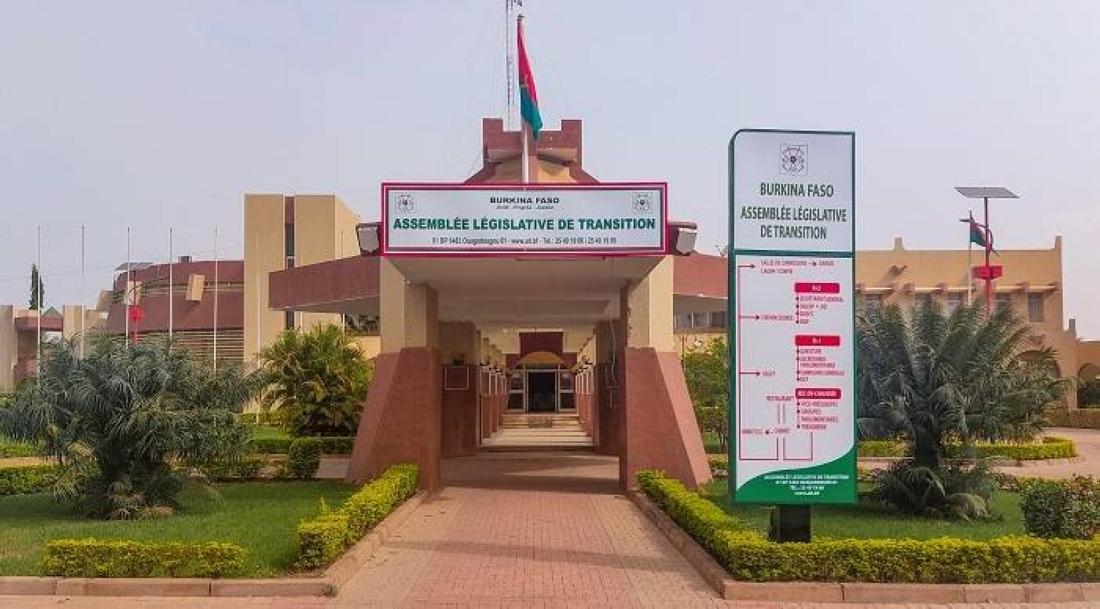
Burkina Faso’s transitional parliament has unanimously approved a new penal code restoring the death penalty for terrorism, espionage, treason, parricide and the importation of expired or prohibited products that result in death, reversing a major criminal-law reform adopted eight years ago. All 71 members of the country’s Assemblée législative du peuple voted in favour of the revised code during a plenary session in Ouagadougou on Tuesday, October 20, after Justice Minister Edasso Rodrigue Bayala presented the legislation on behalf of the government. The measure marks a significant change in Burkina Faso’s justice policy under Captain Ibrahim Traoré’s military-led administration and has already generated sharply contrasting reactions between government officials, who describe it as necessary in the fight against terrorism, and human-rights organisations, which warn that capital punishment could deepen repression and weaken already fragile protections for defendants.
The revised penal code contains more than 900 articles and replaces key provisions of Burkina Faso’s 2018 criminal legislation. According to the Justice Ministry and the state-run Burkina Information Agency, the offences for which judges may now impose the death penalty include acts of terrorism, espionage, high treason, parricide and importing expired or prohibited goods when those products cause a person’s death. Justice officials said the new framework is intended to strengthen public security, protect lives and property and adapt the country’s criminal law to what the government describes as new and increasingly serious forms of crime.
The decision is particularly important because Burkina Faso abolished the death penalty for ordinary crimes in 2018 under the government of former President Roch Marc Christian Kaboré. The country had already gone decades without carrying out an execution, with international monitoring organisations recording the last known judicial execution in 1988. Reintroducing capital punishment therefore represents not merely an amendment to sentencing rules but a reversal of a long period during which Burkina Faso had moved away from execution as a criminal punishment.
Bayala has linked the change directly to the country’s prolonged security crisis. Burkina Faso has spent years fighting armed groups affiliated with al-Qaeda and the Islamic State, with attacks killing thousands of civilians and security personnel and forcing large numbers of people from their homes. The government argues that existing penalties, particularly life imprisonment, have not provided sufficient deterrence against recruitment into militant organisations and that the criminal code must reflect what authorities consider the exceptional seriousness of terrorism-related offences.
The Justice Minister told lawmakers that armed groups had exploited the previous sentencing framework when recruiting new members by telling prospective fighters that even if they were captured, the most severe punishment they would face was life imprisonment. The government’s position is that making terrorism punishable by death will remove that perceived assurance and create a stronger deterrent for people considering joining or assisting violent organisations. The new code applies the punishment not only to principal perpetrators of terrorist acts but also, according to the government’s explanation, to certain accomplices involved in conduct covered by the terrorism provisions.
The legislation extends beyond terrorism. Espionage and treason are also included among the offences carrying the death penalty, placing acts viewed as threats to national security within the highest category of punishment. Parricide, involving the killing of a parent, has similarly been included, while the code introduces capital punishment for people whose importation of expired or prohibited products results in death. That last category appears designed to address dangerous commercial conduct involving goods that could cause fatal harm to consumers, although courts will ultimately determine how the provision is applied in individual cases.
Burkina Faso’s Assembly said the wider criminal-code revision followed an article-by-article examination that produced hundreds of amendments before the final vote. The legislation is organised across multiple books, titles and chapters and is considerably broader than the death-penalty provisions alone. Government officials say the reform is intended to modernise the criminal justice system and respond to changes in crime, national security and social conditions since the previous penal code was adopted.
The unanimous vote also reflects the political structure currently operating in Burkina Faso. The country has been under military-led rule since the September 2022 coup that brought Ibrahim Traoré to power. The transitional legislature is not a parliament elected through the kind of multiparty national election that existed before the coup, and Burkina Faso’s wider political system has been substantially restructured during the transition. That context has shaped much of the international reaction to the new penal code because rights organisations argue that the reintroduction of capital punishment cannot be separated from concerns over political freedoms, detention of critics and the shrinking space for dissent.
Human Rights Watch said the restoration of the death penalty risks becoming another tool of repression rather than an effective solution to Burkina Faso’s security crisis. The organisation argues that capital punishment is inherently cruel and that weaknesses in the country’s justice system make irreversible sentencing particularly dangerous. Its concerns include slow terrorism investigations, procedural problems and questions over whether defendants in security-related cases consistently receive the level of due process required when the possible punishment is death.
The group has also warned that offences such as treason and national-security crimes require especially strong judicial safeguards because governments can interpret them broadly during periods of political instability. Human Rights Watch says the combination of capital punishment and an environment in which journalists, activists and other government critics have faced restrictions could create fear even among people who are not involved in terrorism. The organisation has therefore urged authorities not to use the security crisis as justification for weakening fundamental legal protections.
Amnesty International has also opposed Burkina Faso’s move toward restoring executions. The organisation has repeatedly called on countries that have abolished capital punishment not to reverse course and has highlighted Burkina Faso’s long period without a judicial execution. Its opposition is based on the position that the death penalty violates the right to life and creates the possibility of irreversible miscarriages of justice, particularly in systems where access to effective legal representation or independent judicial review may be limited.
The government rejects the argument that the new code is principally designed to silence critics. Officials describe the measure as a criminal-justice and national-security response to an insurgency that has devastated large parts of the country. Burkina Faso has lost control of territory at various points during the conflict, while communities in the north and east have faced attacks, blockades and repeated displacement. Authorities therefore argue that extraordinary security conditions require a stronger legal response against people who organise, finance or assist terrorist violence.
That disagreement reflects a wider debate seen across countries facing serious insurgencies. Governments often argue that the harshest available penalties are necessary to deter terrorism and reassure populations affected by violence, while human-rights groups question whether executions actually reduce recruitment or attacks. Critics also warn that terrorism prosecutions can sometimes rely on disputed confessions, intelligence evidence or broad definitions of complicity, making procedural safeguards especially important when the punishment cannot be reversed.
There is currently no evidence that Burkina Faso plans an immediate execution following the vote, and the adoption of the revised code should not be interpreted as meaning executions will begin automatically. Courts would first have to convict defendants of offences carrying the death penalty and impose that sentence through the judicial process. Questions also remain about implementation procedures, appeals, possible clemency and how future death sentences would be carried out under the restored legal framework.
The country’s nearly four-decade gap since its last known execution is therefore significant. Even before formal abolition in 2018, Burkina Faso had effectively operated without executions for many years. Restoring the punishment creates a legal possibility that had disappeared from the code, but actual use will depend on future prosecutions, judicial decisions and government policy.
The new law also arrives at a time when the Traoré government is reshaping several areas of public administration and national policy. Authorities have justified many reforms through the language of sovereignty, national security and the need to rebuild state institutions during an extended conflict. The government has strengthened ties with Mali and Niger through the Alliance of Sahel States and has reduced cooperation with some Western governments while expanding partnerships with other international actors.
Supporters of the current administration frequently argue that Burkina Faso requires tougher institutions to survive an insurgency that previous governments failed to contain. From that perspective, the death-penalty provision is part of a broader attempt to demonstrate that the state is prepared to use its strongest legal powers against terrorism, treason and activities viewed as threatening national survival. The unanimous parliamentary vote is likely to be presented domestically by supporters as evidence of political unity around that position.
Human-rights organisations see the same development differently. They argue that security emergencies can produce laws that remain in place long after the immediate crisis and that giving the state irreversible power over life and death creates risks extending well beyond terrorism cases. Their concern is particularly focused on whether broad offences such as treason or espionage could eventually be interpreted in ways that reach people engaged in political or journalistic activity.
Those concerns are intensified by other recent political developments. Human Rights Watch has accused Burkina Faso’s authorities of restricting media organisations, civil-society groups and political activity, while government officials say some restrictions are necessary to protect national security and prevent destabilisation. The dispute has become part of a larger argument over whether the military-led transition is restoring order or concentrating state power too heavily.
The revised penal code will therefore be judged not only by the offences written into it but also by how prosecutors and courts use those provisions. A narrowly applied system focused on clearly proven acts of terrorism or homicide would generate different legal concerns from a system in which politically sensitive offences are prosecuted broadly. International observers are likely to pay particularly close attention to the first cases in which prosecutors seek death sentences under the new law.
The punishment for importing expired or prohibited products resulting in death is also likely to attract legal scrutiny because it expands the death penalty beyond traditional national-security and homicide offences. The provision appears aimed at conduct that causes fatal harm through prohibited commercial activity, but courts may need to determine what level of knowledge, intent or negligence is required before a defendant can face capital punishment.
The inclusion of parricide likewise demonstrates that the legislation is not exclusively a counterterrorism measure. It forms part of a broader revision of criminal penalties that the government says reflects national values and the seriousness of certain offences. State media described the new code as an attempt to strengthen public order and ensure stronger protection for individuals and property.
Another important issue will be the quality of legal representation available to defendants facing capital charges. Death-penalty cases generally require extensive procedural protections because errors cannot be corrected after an execution. Defence lawyers must have adequate time, access to evidence and the ability to challenge investigative methods, while courts must remain sufficiently independent to review government allegations critically.
Human Rights Watch has previously raised concerns about Burkina Faso’s specialised judicial mechanisms dealing with terrorism, including lengthy investigations and procedural weaknesses. The organisation argues that adding the death penalty to a system facing those challenges increases the consequences of any error. The government has not accepted the suggestion that the judicial system is incapable of applying the new provisions fairly and says the criminal-code reform forms part of a wider effort to strengthen justice.
Burkina Faso’s decision also runs against the broader international trend toward abolition. A large majority of countries have either formally abolished the death penalty or stopped carrying out executions, although a number of states continue using it for murder, terrorism, drug offences and other serious crimes. African countries remain divided, with some abolishing capital punishment in recent years while others retain it in law.
Burkina Faso had previously been counted among countries moving away from capital punishment following the 2018 reform. The October 20 vote reverses that direction and could influence debates elsewhere in the Sahel, particularly in states confronting similar insurgencies and arguments over national security.
Whether the measure actually changes militant recruitment is difficult to establish in advance. Armed groups operating in Burkina Faso frequently recruit through a combination of ideology, coercion, local grievances, economic incentives and security conditions. The government’s claim that recruiters use the prospect of life imprisonment rather than execution as reassurance may be relevant in some cases, but terrorism specialists generally describe recruitment as a complex process unlikely to depend on a single legal penalty.
The death penalty could also create operational complications in terrorism cases if defendants become less willing to surrender or cooperate because they believe capture could lead to execution. Supporters of capital punishment argue the opposite, saying the possibility of death increases deterrence. Those competing claims are likely to remain part of the policy debate as the law begins to be applied.
The most immediate legal fact is nevertheless clear. Burkina Faso’s 71-member transitional assembly unanimously approved the revised penal code on October 20, formally reintroducing capital punishment into the country’s criminal-law framework after its abolition in 2018. Terrorism, espionage, treason, parricide and the importation of expired or prohibited products resulting in death are among the crimes now identified as potentially punishable by death.
The vote does not resolve the deeper argument over whether capital punishment will make Burkina Faso safer. The government says the change strengthens deterrence and equips the state to respond to terrorism and other grave crimes with penalties matching their seriousness. Human-rights organisations argue that it risks irreversible miscarriages of justice and could become another instrument of repression in a country already experiencing restrictions on civic and political freedoms.
That debate will now move from legislation to implementation. The first prosecutions brought under the revised code, the quality of judicial safeguards and whether courts actually impose death sentences will determine how significant Tuesday’s vote becomes in practice. For now, however, Burkina Faso has made one of the most consequential changes to its criminal justice system in years, restoring a punishment that had been formally removed from the law and had not been carried out judicially for nearly four decades.