BRITAIN WANTS GHANA AS ITS FIREWALL AGAINST THE SAHEL. IN LONDON, ACCRA MUST DECIDE WHAT IT GETS IN RETURN
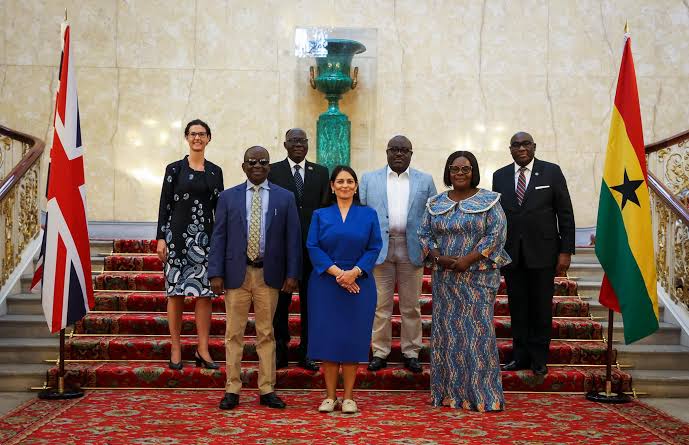
The fourth UK–Ghana Security Dialogue runs in London on November 23 and 24, 2026. Ministers and senior officials from both countries are meeting to deepen security cooperation and agree on practical priorities for the year ahead. The UK's Minister of State for Defence, Lord Coaker, is expected to open the talks with Ghana's Interior Minister, Mohammed-Mubarak Muntaka, and Defence Minister, Kenneth Gilbert Adjei. The agenda is broad. It covers security in the Sahel, counter-terrorism, defense cooperation, migration, cybersecurity, fraud, serious and organized crime, and misinformation and disinformation. The meeting is expected to end with a Joint Communiqué setting out shared priorities and next steps. Any further agreements will be announced only after both sides finalize and sign them. The meeting is more than routine diplomacy. Ghana sits on the southern edge of the Sahel's "coup belt," where military governments in Mali, Burkina Faso and Niger have broken with ECOWAS and turned away from Western partners. Jihadist groups have pushed south into the coastal states, striking Benin and Togo and operating close to Ghana's northern border. For Britain, Ghana is a stable, English-speaking democracy at a moment when Western influence in the Sahel has collapsed. For Ghana, the partnership offers training, intelligence and support, but it also raises hard questions about sovereignty, migration demands and how far Accra should align with London. The outcome will matter for Nigeria and the wider region, where the same threats are spreading.
Ghana does not border the Sahel, but the Sahel increasingly borders Ghana.
That is the reality hanging over the fourth UK–Ghana Security Dialogue, which opens in London on Monday and runs through Tuesday. Ministers and senior officials from both countries are meeting for two days of talks on what they describe as shared security challenges. The headline goal is modest. Both sides want to strengthen cooperation and agree on practical priorities for the year ahead. The context is anything but modest. Across the Sahel, a decade of jihadist expansion, military coups and the retreat of Western forces has redrawn the security map of West Africa. Ghana, long seen as one of the region's calmest democracies, now sits close to the front line.
Lord Coaker, the UK's Minister of State for Defence, is expected to open the dialogue alongside Ghana's Minister for the Interior, Mohammed-Mubarak Muntaka, and its Minister for Defence, Kenneth Gilbert Adjei. The presence of both Ghana's interior and defense ministers says a lot. This is not just a military conversation. It covers policing, borders, crime and migration as much as soldiers and weapons.
The agenda is wide. Talks are expected to cover regional security, with a particular focus on the Sahel. They will also cover counter-terrorism, defense cooperation, migration, cybersecurity, fraud, and serious and organized crime. Emerging threats such as misinformation and disinformation are also on the list. The meeting is expected to end with a Joint Communiqué outlining shared priorities and next steps. Any further agreements, officials say, will be announced only after they are finalized and signed.
Both governments have framed the talks in warm, practical language. "The UK and Ghana share a clear interest in keeping our people safe and supporting a stable and prosperous West Africa," Lord Coaker said ahead of the meeting. "This Dialogue is about turning that shared ambition into practical cooperation that delivers real results for both our countries."
Adjei struck a similar note, with a pointed emphasis on equality. "Ghana remains committed to peace and stability in West Africa, and we know that today's threats do not respect borders," he said. "Our partnership with the United Kingdom is built on mutual respect and shared interests. Through this Dialogue, we want to deepen practical cooperation so that both our countries are better equipped to protect our citizens."
Read between the lines and you can see the shape of the bargain. Britain wants a reliable partner in a region where its options have shrunk. Ghana wants help against threats it cannot fully handle alone, without looking like a junior client of its former colonial ruler. The phrase "mutual respect" is doing real work in Adjei's statement. In today's West Africa, a government seen as too close to a Western power can pay a political price at home. The military rulers next door have built much of their popularity on rejecting exactly that kind of relationship.
To understand why this dialogue matters now, start with the map to Ghana's north.
Since 2020, West and Central Africa have seen a wave of military takeovers unlike anything in a generation. Mali's army seized power in August 2020 and again in May 2021. Guinea's president was overthrown in September 2021. Burkina Faso had two coups in 2022, in January and September. Niger's elected president, Mohamed Bazoum, was removed by his own presidential guard in July 2023. Gabon followed weeks later. More recently, Guinea-Bissau saw soldiers take power, and Benin faced a reported coup attempt that was put down with outside help. Analysts now routinely call this stretch of the continent the "coup belt."
The juntas in Mali, Burkina Faso and Niger have gone further than seizing power. They expelled French troops, who had led counter-terrorism operations in the region for years. They ended or scaled back cooperation with Western partners. The United Nations peacekeeping mission in Mali, known as MINUSMA, was forced to close in 2023. In its place, the juntas turned to Russia. Russian military contractors, first under the Wagner Group banner and later under the Defence Ministry's Africa Corps, have deployed to Mali and other parts of the region. In 2023, the three countries formed the Alliance of Sahel States. In early 2025, they formally left ECOWAS, the West African regional bloc, dealing a serious blow to regional unity.
The juntas promised to defeat the jihadists faster than the civilian governments and their Western allies had. The record so far suggests otherwise. Armed groups linked to al-Qaeda and the Islamic State remain highly active across the central Sahel. The most powerful of them, Jama'at Nusrat al-Islam wal-Muslimin, known as JNIM, is al-Qaeda's affiliate in the region. It has expanded its reach across Mali and Burkina Faso, besieged towns, attacked army bases and imposed blockades on key roads. Burkina Faso, which shares a long border with Ghana, has lost control of large parts of its territory, according to many security analysts. Hundreds of thousands of Burkinabè have been displaced.
Violence in the central Sahel has for several years ranked among the deadliest terrorism problems in the world. And it is not standing still. Its direction of travel is south.
For years, security experts warned that the jihadist groups of the Sahel would eventually try to push toward the Gulf of Guinea. The coastal states, including Côte d'Ivoire, Ghana, Togo and Benin, offered several attractions. Their northern regions are often poorer, more remote and less served by the state than their southern capitals. They share porous borders with Burkina Faso and Niger. They have national parks and forest reserves that offer cover. And they have trade routes, ports and markets that can be used to move fuel, weapons, livestock, gold and supplies.
Those warnings have come true. Benin has suffered repeated deadly attacks in its north, especially around the W and Pendjari national parks near the borders with Burkina Faso and Niger. Some attacks have killed dozens of soldiers in a single assault. Togo has faced attacks in its northern Savanes region and has declared security emergencies there. Côte d'Ivoire was hit earlier, including a deadly 2016 attack on the beach resort of Grand-Bassam and later strikes near its northern border. It has since invested heavily in development and security in the north, and attacks there have declined.
Ghana has so far been spared a major jihadist attack on its soil. That is a real achievement, and Ghanaian security services deserve credit for it. But it is not a guarantee. Researchers and security analysts have warned for some time that militant groups may be using northern Ghana for logistics, rest, recruitment, supplies or financing, even without carrying out attacks. These claims are hard to verify fully, and Ghanaian officials have generally rejected suggestions that the country is a militant safe haven. Still, the concern is widely shared among regional security experts. Groups often use a neighboring country quietly before they begin operating openly.
Several local conditions make northern Ghana vulnerable. The first is the long-running conflict in Bawku, in the Upper East Region, near the borders with Burkina Faso and Togo. The violence is rooted in a chieftaincy dispute between Kusasi and Mamprusi communities and has flared repeatedly, with deadly shootings and curfews. It is a local conflict, not a jihadist insurgency. But security experts worry that armed groups from the Sahel could exploit such disputes, supply weapons, or recruit from frustrated young men. In other parts of the Sahel, militants have expanded by inserting themselves into local quarrels over land, cattle and chieftaincy.
The second is illegal mining, known in Ghana as galamsey. The informal gold trade has devastated rivers and forests in the south, but it also matters for security. Across the Sahel, gold mining sites have become sources of income for armed groups, who tax, protect or directly control them. Gold is easy to smuggle and hard to trace. Where there is unregulated gold, there is money for weapons.
The third is displacement. Thousands of people fleeing violence in Burkina Faso have crossed into northern Ghana in recent years. Most are civilians seeking safety, and they deserve protection. But refugee movements create real pressures on poor host communities. They also create risks of tension, stigma and, in some places, ethnic profiling. Fulani communities, in particular, have often been unfairly blamed for militant violence across West Africa. That kind of suspicion can drive the very grievances militants exploit.
Ghana's response has combined military deployments, intelligence work and regional diplomacy. In 2017, it joined neighbors in launching the Accra Initiative, a framework for intelligence sharing and joint operations among coastal and Sahelian states. It has strengthened its military presence in the north, including new forward bases. It has also tried to keep lines open to the juntas next door. President John Mahama's government has pursued engagement with the Alliance of Sahel States rather than isolation, arguing that Ghana cannot secure its border by shutting out the governments on the other side of it. That approach is pragmatic. It also complicates any partnership with Britain, because the juntas are deeply hostile to Western security involvement.
This is where Britain enters the picture, and where its motives deserve a close look.
The United Kingdom's role in West Africa has changed sharply in the past decade. For years, Britain worked in the Sahel largely alongside France. It supplied heavy-lift Chinook helicopters to support French counter-terrorism operations in Mali. It sent several hundred troops to MINUSMA, where they conducted long-range reconnaissance patrols in some of the most dangerous areas of the country. Then, in late 2022, Britain announced it would withdraw its contingent early. It cited the junta's partnership with Russian mercenaries and political instability in Bamako. France's own forces were pushed out of Mali, Burkina Faso and Niger over the following two years. The Western security model in the Sahel collapsed.
That collapse left Britain looking for new footholds. Its answer has been to work more closely with the coastal states and with stable partners such as Ghana, Nigeria, Senegal and Côte d'Ivoire. Ghana fits the profile almost perfectly. It is a Commonwealth member with English as its official language. Its legal system draws on English common law. Its military has longstanding training ties with Britain. It is a respected contributor to UN peacekeeping missions. It has held repeated peaceful transfers of power between rival parties, most recently after the December 2024 election. For a British government looking for dependable partners in a turbulent region, Accra is an obvious choice.
There is also a post-Brexit story here. Since leaving the European Union, British governments have tried to redefine the country's global role. The idea of "Global Britain" promised new partnerships outside Europe. Successive strategy documents identified Africa as a region of growing importance for trade, security and diplomacy. Britain has sought new trade arrangements with African countries, promoted its financial services and universities, and tried to compete for influence with China, Russia, Turkey, the Gulf states and others who have expanded their presence on the continent.
Yet Britain's tools have shrunk even as its ambitions have grown. In 2020, it merged its aid ministry into the Foreign Office. In 2021, it cut aid spending from 0.7 percent of national income to 0.5 percent. In 2025, the government announced further cuts, aiming to reduce aid to 0.3 percent by 2027 to fund higher defense spending. Those decisions hit programs across Africa, including health, education and governance work. Critics argue that Britain is asking for deeper security partnerships while cutting the development support that addresses the root causes of insecurity, such as poverty, weak public services and unemployment.
That tension is likely to shape how Ghanaians view this dialogue. Security cooperation is valuable. Training, intelligence and equipment can save lives. But militant groups in the Sahel have thrived not only because armies were weak. They have thrived because many communities felt abandoned by their governments. In northern Ghana, poverty rates remain far higher than in the south. Investment in roads, schools, clinics, water and jobs may do as much to keep militants out as any military deployment. If Britain's offer is heavy on security and light on development, it may treat the symptoms more than the disease.
The defense element of the dialogue is likely to focus on training, capacity building and regional coordination. Britain has long supported Ghana's armed forces through professional military education and training programs. It has also backed the Kofi Annan International Peacekeeping Training Centre in Accra, which trains military, police and civilian personnel from across Africa. Deeper cooperation could cover border security, counter-improvised explosive device training, intelligence analysis, maritime security in the Gulf of Guinea and support for Ghana's operations in the north. What it almost certainly will not involve is British combat troops fighting in Ghana. Neither government would want that, and the politics of the region would make it explosive.
Maritime security deserves more attention than it often gets. A few years ago, the Gulf of Guinea was the world's hotspot for piracy and kidnapping at sea. Coordinated naval patrols, regional cooperation and international support have since brought attacks down sharply. But the waters off West Africa remain vulnerable to illegal fishing, fuel smuggling, drug trafficking and the return of piracy if pressure eases. Ghana's ports, including Tema and Takoradi, are central to the regional economy. Britain has interests here too, through shipping, trade and its own naval presence. Keeping the sea lanes safe is one area where shared interests are easy to see.
Counter-terrorism is the most sensitive item on the agenda. Cooperation will likely include intelligence sharing, financial tracking of terrorist funding, aviation security and support for Ghana's legal and judicial capacity to prosecute terrorism cases. That last point matters. Arresting suspects is only one step. Courts must be able to try them fairly, using evidence that holds up. Weak prosecutions can lead to suspects being released or held without trial for years, both of which can fuel resentment. Human rights groups have documented abuses by security forces in parts of the Sahel, and those abuses have pushed some communities toward militants. Any partnership that strengthens Ghana's forces should also strengthen accountability.
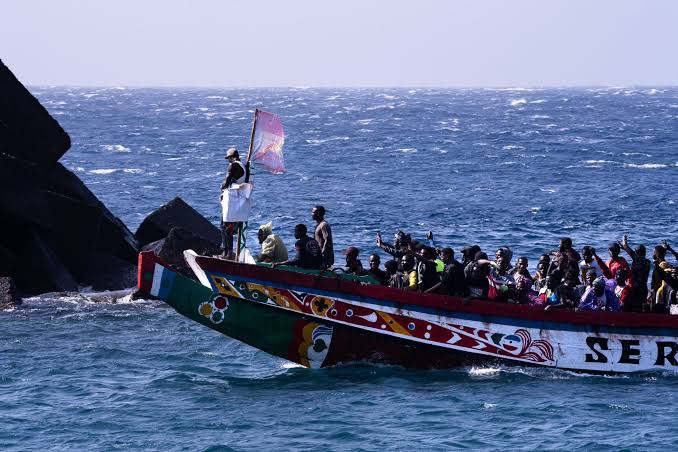
Migration is where the two countries' interests diverge most clearly. For Britain, migration is a dominant political issue. Successive governments have promised to cut net migration and stop irregular arrivals, especially small boat crossings over the English Channel. One tool Britain uses is cooperation with countries of origin on returns. That means agreements to identify, document and accept back citizens who have no legal right to remain in the UK. Expect returns to feature in the talks, even if officials frame it carefully.
For Ghana, migration looks very different. Remittances from Ghanaians abroad are a vital source of foreign exchange and household income. Families across the country depend on relatives working in Britain, the United States, Europe and elsewhere. Ghanaian professionals, especially nurses and care workers, have been recruited in large numbers by the British health and care sector. Ghana is on the World Health Organization's list of countries where active international recruitment of health workers should be restricted because of local shortages. Yet many Ghanaian health workers still leave, drawn by higher pay and better conditions. That has strained Ghana's hospitals even as it has supported British ones.
Ghanaians also face high visa costs, frequent refusals and long waits when trying to travel to Britain for business, study or family visits. Many see a double standard. Britain recruits Ghanaian nurses when it needs them, but makes it hard for ordinary Ghanaians to visit. If London presses Accra hard on returns without offering better legal pathways, smoother visa processes or fairer recruitment practices, the partnership may look one-sided. Ghana has already shown it is willing to take controversial steps on migration. In 2025, the government agreed to accept West African nationals deported from the United States, a decision that drew criticism at home. How far it is willing to go with Britain will be closely watched.
Fraud and cybercrime may be the most practical area of cooperation, and the most uncomfortable for Ghana's image. Fraud is now one of the most common crimes in the United Kingdom. Much of it is online. Romance scams, investment scams, business email compromise, impersonation fraud and money mule schemes cost British victims enormous sums every year. Many of these schemes operate across borders. West Africa, including Ghana and Nigeria, has become associated in the public mind with certain types of online fraud.
In Ghana, cyber fraud is often linked to the term "sakawa," which in popular culture mixes internet scams with claims of spiritual rituals. In Nigeria, the equivalent slang is "yahoo yahoo," and those involved are often called "yahoo boys." Both countries have made arrests and worked with foreign law enforcement. In recent years, Ghanaian suspects have been extradited to the United States to face charges linked to large-scale romance and business email fraud. Ghana created its Cyber Security Authority under the Cybersecurity Act of 2020 to strengthen its defenses and response.
It is essential to keep this in proportion. The overwhelming majority of Ghanaians, at home and abroad, have nothing to do with fraud. Ghana's tech sector is growing. Its young people are building startups, software companies, fintech platforms and creative businesses. Fraud networks are also global. Some of the largest scam operations in the world are now based in Southeast Asia, with victims and organizers across many continents. Treating Ghanaians as suspects by default would be unfair and counterproductive. But real cooperation on cybercrime, from shared investigations to faster legal assistance and digital evidence sharing, could protect victims in both countries. Ghanaians are victims of fraud too, often on a large scale.
That brings us to one of the most delicate issues in the relationship: links between crime in Ghana and Ghanaian diaspora communities abroad. Britain is home to a large and long-established Ghanaian community, concentrated in London and other major cities. It includes doctors, nurses, lawyers, teachers, entrepreneurs, academics, church leaders, artists and public servants. Its contribution to British life is substantial. It would be wrong and offensive to describe the diaspora as a security problem.
At the same time, every transnational criminal network uses the human ties available to it. Investigators in Britain and elsewhere have reported cases in which fraud proceeds were laundered through diaspora contacts, money mule accounts or informal money transfer channels. Drug trafficking cases have at times involved couriers moving between West Africa and Europe through airports such as Accra's Kotoka International. Ghana has long been identified as one of several West African transit points on cocaine routes from South America to Europe. Criminal groups exploit family networks, trusted communities and cash-based businesses on both sides of the route.
The challenge for both governments is to target criminal networks without stigmatizing whole communities. That means intelligence-led policing, cooperation on financial investigations and engagement with diaspora organizations, churches and community leaders who often know more than police about emerging threats. Diaspora communities are also frequent victims, targeted by scammers who exploit trust and shared language. Done right, cooperation can protect them. Done badly, it can drive mistrust and make communities less willing to come forward.
Misinformation and disinformation, the final item on the agenda, may sound abstract, but it sits at the heart of the Sahel's political crisis. Across the region, social media campaigns have fueled anti-Western sentiment, celebrated military rulers and spread false claims about France, the United States and other powers. Researchers and Western governments have linked some of these campaigns to Russian-backed networks, though attribution is often complex and Moscow rejects such accusations. Not all anti-Western sentiment is manufactured. Much of it reflects genuine anger over colonial history, failed interventions and economic hardship. But coordinated disinformation can turn that anger into a political weapon.
Ghana is not immune. During its 2024 election, observers tracked false claims, manipulated images and coordinated online campaigns. Viral rumors have also fueled ethnic and chieftaincy tensions in some regions. Deepfakes and AI-generated content are making the problem harder to manage. Cooperation with Britain could include training for election bodies, media literacy programs and support for independent fact-checkers. But this area carries risks too. Governments can use the language of fighting disinformation to restrict legitimate criticism and press freedom. Ghana's strong tradition of a free and lively media is one of its greatest democratic assets. Any partnership on information threats must protect it, not weaken it.
Here lies the larger political risk for Accra. Ghana is trying to play a balancing role in a polarized region. To its north, military governments have rejected the West and embraced Russia. To its south and east, coastal democracies still work closely with Western partners. Ghana wants good relations with both. It needs cooperation from Burkina Faso to secure its northern border. It needs Western partners for training, investment, trade and finance. It is also still rebuilding its economy after a severe debt crisis, a sovereign default and an IMF-backed recovery program.
A visible deepening of security ties with Britain could make that balance harder. The juntas next door may view it with suspicion. Critics at home may question whether Ghana is being pulled into a Western strategy that serves London's interests first. Supporters will argue the opposite: that Ghana is sovereign and free to choose its partners, and that refusing help against real threats would be reckless. The language in Adjei's statement, stressing "mutual respect and shared interests," appears aimed squarely at that debate. Ghana wants to be seen as a partner choosing cooperation, not a client receiving instructions.
The question of what Ghana actually gains will decide whether this dialogue is judged a success. Communiqués are easy to sign. Results are harder to deliver. Ghanaians will want to see concrete benefits: equipment and training that make a measurable difference in the north, intelligence that prevents attacks, faster cooperation in recovering stolen funds, fairer visa treatment, support for border communities and investment that creates jobs. If the main visible outcomes are deportation flights and fraud arrests, many will conclude the partnership is weighted toward British priorities.
For Nigeria, the London talks are worth watching closely. Nigeria is West Africa's largest country, its biggest military power and its most important economy. It has its own security partnership with Britain, formalized in recent years through a security and defense partnership and regular high-level dialogue. Like Ghana, it faces threats that cross borders. In the North-East, Boko Haram and the Islamic State West Africa Province continue to operate around Lake Chad. In the North-West, armed bandit groups have killed and kidnapped thousands. Security analysts have warned of growing links between Sahelian jihadist groups and armed groups in Nigeria's north-west, including a group known as Lakurawa that emerged near the borders with Niger. Reports in the past year have also pointed to JNIM claiming activity in parts of western Nigeria near the Benin border, though the full scale of its presence remains unclear.
What happens in Ghana's north matters for Nigeria because the threat is moving along the same corridor. Militants who establish themselves in northern Benin and Togo are close to both Ghana and Nigeria. Weapons, fighters, fuel, cattle and money move through the same borderlands. If coastal states such as Ghana, Togo and Benin can hold the line, Nigeria's western flank is safer. If they fail, the jihadist belt could stretch from Mali to Nigeria's border in an unbroken arc.
There is also a diplomatic dimension. Nigeria has long seen itself as the natural leader of West African security. It led ECOWAS interventions in Liberia and Sierra Leone in the 1990s. It led the bloc's tough response to the 2023 coup in Niger, including the threat of military intervention that never materialized. That episode damaged ECOWAS's credibility and helped drive the Sahel juntas out of the bloc. Today, regional security leadership is more fragmented. Countries are building bilateral partnerships with outside powers, including Britain, France, the United States, Turkey, the Gulf states and Russia. Ghana's deepening ties with London are part of that trend.
For Nigeria, that raises a question. Should West Africa's security be coordinated mainly through ECOWAS and regional frameworks, or through a patchwork of bilateral deals with outside powers? Both can coexist. But if every coastal state builds its own separate arrangements, regional coordination may weaken just as the threat is growing. Nigeria and Ghana, as the two largest English-speaking democracies in the region, have a shared interest in making sure outside partnerships strengthen regional institutions rather than replace them. ECOWAS, weakened by the departure of the Sahel states, needs its remaining members to pull together.
Nigeria also faces the same migration and fraud debates as Ghana, often in sharper form. Nigerians make up one of Britain's largest African communities. Nigerian health workers have been recruited in large numbers by British hospitals and care homes. Nigerians have faced tightening visa rules and stricter immigration policies, including limits on international students bringing family members. Nigerian fraud networks have been the target of major international law enforcement operations. Whatever model Britain develops with Ghana on returns, fraud and diaspora cooperation may become a template it seeks to apply in Nigeria too. Nigerian officials will want to know what Ghana agreed to and what it received in return.
The wider region will draw its own lessons. Côte d'Ivoire has shown that heavy investment in its northern regions, combined with security operations, can reduce militant violence. Benin and Togo have shown how quickly the threat can escalate when militants establish bases in remote border areas. Senegal and Mauritania have managed to avoid the worst of the Sahel's violence through a mix of security, governance and religious engagement. Ghana is now trying to stay ahead of the threat rather than react to it after a crisis. That is the right instinct. Prevention is far cheaper than recovery.
What should observers watch for when the Joint Communiqué is published? First, the balance between security and development. A communiqué that focuses only on military cooperation, intelligence and crime will be less convincing than one that also addresses jobs, services and investment in northern Ghana. Second, the treatment of migration. Look for whether returns are paired with commitments on legal pathways, visa processes or ethical recruitment of health workers. Third, the approach to the Sahel. Does the communiqué signal engagement with the military governments or isolation? Ghana's interests depend on keeping channels open to Burkina Faso, whatever London thinks of the junta in Ouagadougou.
Fourth, watch for specifics. Vague promises of "enhanced cooperation" mean little. Clear commitments, such as joint training programs, funding figures, new legal assistance agreements, cybercrime task forces or maritime patrol support, would show the dialogue has substance. Officials have said any additional agreements will be announced after they are finalized and signed. That suggests there may be more to come than the communiqué alone reveals.
Fifth, watch for accountability. Security partnerships can strengthen states. They can also strengthen abuses if there is no oversight. Ghanaians deserve to know what their government has agreed to, how it will be funded, and how civil liberties will be protected. Parliamentary scrutiny, both in Accra and London, should be part of the process.
There is a final, broader point. The Sahel crisis is not only a security problem. It is a crisis of governance, economics, climate and legitimacy. Droughts and shrinking grazing land have intensified conflicts between farmers and herders. Young populations face too few jobs. States have often been absent, corrupt or abusive in their remote regions. Outside interventions, however well-intended, have frequently failed to address these root causes. France's long military campaign in the Sahel killed many militant leaders, but it did not stop the spread of the insurgency. That lesson should shape every new partnership in the region, including this one.
Ghana has advantages its northern neighbors lacked. It has stronger institutions, a more stable democracy, a professional military and a functioning civil society. It has time, because the threat has not yet fully arrived. It has partners willing to help. The question is whether it can use those advantages to build resilience in the north before militants test it in force. Britain can be part of that effort. But Britain cannot do it for Ghana, and it should not try.
For London, the dialogue is a chance to show that its post-Brexit Africa strategy is more than words. Britain has lost ground in the Sahel. It has cut aid. It faces stiff competition for influence from powers with fewer scruples and deeper pockets. A genuine, balanced partnership with Ghana would demonstrate that Britain can still be a valuable security partner in Africa. A one-sided deal focused on British domestic politics, such as deportations, would confirm the suspicions of those who see Western engagement as self-serving.
For Accra, the dialogue is a test of strategic confidence. Ghana must take help where it is useful, protect its sovereignty, keep its regional relationships intact and make sure its own citizens benefit. That is a difficult balance. But Ghana has played this kind of role before. It has long been a respected voice in African diplomacy and a reliable peacekeeper. Its leaders now need to apply that experience to a threat on their own doorstep.
The talks in London will end with handshakes, photographs and a carefully worded statement. The real verdict will come later, in places far from London: in the villages near the Burkinabè border, in the markets of Bawku, at the ports of Tema and Takoradi, and in the inboxes of fraud victims in both countries. If the partnership makes those places safer, it will have been worth it. If it produces only paperwork and promises, the Sahel's armed groups will keep moving south, and Ghana's long run of calm may not last.