

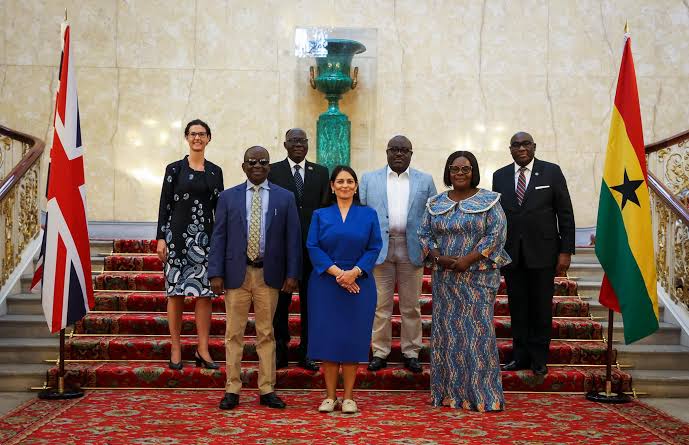
BRITAIN WANTS GHANA AS ITS FIREWALL AGAINST THE SAHEL. IN LONDON, ACCRA MUST DECIDE WHAT IT GETS IN RETURN
The fourth UK–Ghana Security Dialogue runs in London on November 23 and 24, 2026. Ministers and senior officials from both countries are meeting to deepen security cooperation and agree on practical priorities for the year ahead. The UK's Minister of State for Defence, Lord Coaker, is expected to open the talks with Ghana's Interior Minister, Mohammed-Mubarak Muntaka, and Defence Minister, Kenneth Gilbert Adjei. The agenda is broad. It covers security in the Sahel, counter-terrorism, defense cooperation, migration, cybersecurity, fraud, serious and organized crime, and misinformation and disinformation. The meeting is expected to end with a Joint Communiqué setting out shared priorities and next steps. Any further agreements will be announced only after both sides finalize and sign them. The meeting is more than routine diplomacy. Ghana sits on the southern edge of the Sahel's "coup belt," where military governments in Mali, Burkina Faso and Niger have broken with ECOWAS and turned away from Western partners. Jihadist groups have pushed south into the coastal states, striking Benin and Togo and operating close to Ghana's northern border. For Britain, Ghana is a stable, English-speaking democracy at a moment when Western influence in the Sahel has collapsed. For Ghana, the partnership offers training, intelligence and support, but it also raises hard questions about sovereignty, migration demands and how far Accra should align with London. The outcome will matter for Nigeria and the wider region, where the same threats are spreading.