
ZELENSKYY SAYS TRUMP HAS MADE FINAL DECISION TO LET UKRAINE PRODUCE PATRIOT MISSILES
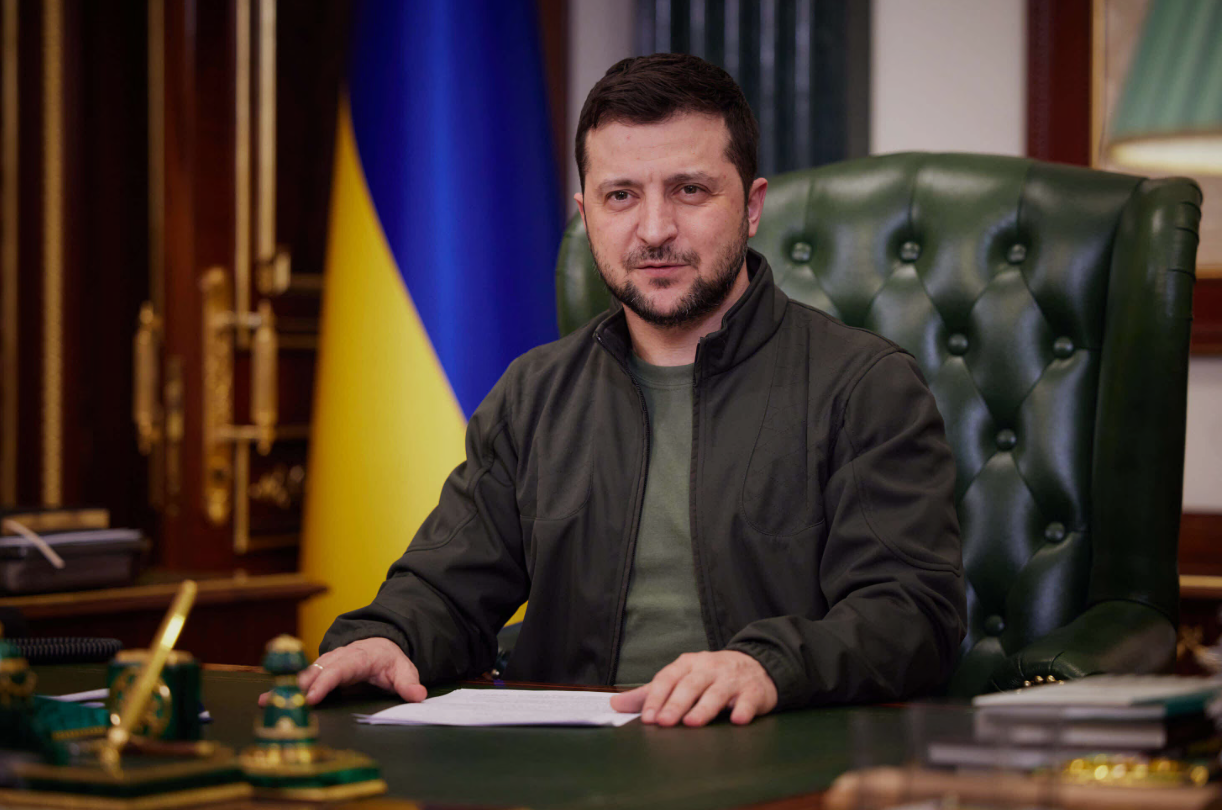
Ukrainian President Volodymyr Zelenskyy says US President Donald Trump has made a final decision to grant Ukraine licenses to manufacture Patriot air-defense interceptor missiles. Zelenskyy says Trump communicated the decision during their meeting in New York earlier this week, although Trump has since declined to publicly confirm the licensing agreement when questioned about it.
Ukrainian President Volodymyr Zelenskyy says US President Donald Trump has made a final decision to allow Ukraine to receive licenses to manufacture Patriot air-defense interceptor missiles domestically, potentially giving Kyiv greater control over supplies of one of its most critical weapons.
Zelenskyy says Trump personally communicated the decision during their meeting on the sidelines of the United Nations General Assembly in New York earlier this week.
Speaking to journalists on September 25, the Ukrainian leader said specific agreements were now in place following months of discussions between Kyiv and Washington.
According to Zelenskyy, Trump told him he had reached a final decision and that Ukraine would receive licenses to produce Patriot missiles.
But there is an important qualification.
Trump has not publicly confirmed Zelenskyy's account in equally explicit terms.
When questioned on September 26 about whether he had agreed to allow Ukraine to manufacture Patriot missiles, Trump acknowledged discussing the interceptors with Zelenskyy but declined to directly confirm the licensing agreement.
That means the reported final approval currently rests primarily on Zelenskyy's account of his conversation with the US president.
MONTHS OF BACK AND FORTH
The issue has been under discussion for months.
Ukraine has repeatedly asked Washington for permission to manufacture Patriot interceptors domestically as Kyiv struggles to maintain sufficient stocks against Russian missile attacks.
Trump previously expressed support for the proposal during the NATO summit earlier this year.
But the position subsequently became less certain.
In July, Trump said Washington had not yet agreed to transfer the technology and warned that the United States had to be careful about sharing sensitive military capabilities.
The US State Department also indicated after earlier discussions that a final decision had not yet been made.
Zelenskyy's latest statement therefore suggests that, from Kyiv's perspective, the uncertainty has now been resolved.
WHICH PATRIOT MISSILES?
That remains one of the biggest unanswered questions.
Zelenskyy did not disclose which Patriot interceptor variants would be covered by the licenses.
The Patriot family uses different interceptors designed to engage different types of threats.
Ukraine has been particularly dependent on Patriot systems because of their ability to defend against ballistic missile attacks that are difficult for many other Ukrainian air-defense systems to intercept.
The Institute for the Study of War has reported that Ukrainian officials have been discussing licenses connected to PAC-2 and PAC-3 interceptors with Washington.
But neither Kyiv nor Washington has publicly confirmed the exact missiles that would be covered by any final agreement.
WHY UKRAINE WANTS TO BUILD THEM AT HOME
Ukraine's demand is driven by one of the central problems confronting its air-defense network.
Interceptor missiles are finite.
Russia continues launching ballistic missiles, cruise missiles and drones against Ukrainian cities and infrastructure, forcing Kyiv to consume large quantities of air-defense ammunition.
Ukraine currently depends heavily on foreign production and deliveries.
Domestic manufacturing could eventually reduce that dependence.
Instead of waiting exclusively for interceptors manufactured abroad to become available, Ukraine could potentially build at least part of its required supply domestically under US license.
That could also make long-term planning easier for Kyiv if the war continues.
A LICENSE DOES NOT MEAN MISSILES TOMORROW
Even if the licensing agreement is finalized exactly as Zelenskyy describes, Ukraine would not immediately begin producing large numbers of Patriot interceptors.
Missile manufacturing is highly complex.
Production requires specialized facilities, sensitive technology, qualified personnel, secure supply chains and access to components that may themselves be controlled by export restrictions.
Ukraine would therefore have to establish or expand industrial capacity before meaningful production could begin.
Defense analysts cited in recent reporting say that process could take considerable time.
The licensing agreement would consequently be more important for Ukraine's medium- and long-term air-defense capability than for its immediate battlefield requirements.
PATRIOT HAS BECOME CRITICAL TO UKRAINE
The US-made Patriot system has become one of Ukraine's most important air-defense assets.
Its importance increased as Russia expanded its use of ballistic missiles against Ukrainian targets.
Patriot batteries can engage aircraft, cruise missiles and certain ballistic missile threats.
Ukraine has repeatedly asked allies for additional systems and interceptors, arguing that existing supplies are insufficient to protect all major cities and strategic infrastructure.
The shortage becomes particularly serious when Russia launches large coordinated attacks designed to overwhelm Ukrainian defenses.
Every interceptor fired must eventually be replaced.
That makes access to production almost as strategically important as receiving additional launchers.
TRUMP HAS YET TO PUBLICLY MATCH ZELENSKYY'S WORDING
Zelenskyy's statement is unusually definitive.
He says Trump told him directly that the decision was final.
But Trump's public comments since then have been more cautious.
Asked about the issue on September 26, Trump confirmed that Patriot missiles were among numerous subjects discussed with Zelenskyy.
He did not, however, directly confirm that he had formally approved licenses for Ukraine to manufacture them.
The distinction matters.
Until Washington publishes formal authorization or Trump publicly confirms the decision in explicit terms, the announcement should continue to be attributed to Zelenskyy.
WHAT HAPPENS NEXT
Several details now require clarification.
The first is whether Washington will formally announce the licensing authorization.
The second is which Patriot interceptor variants Ukraine will be permitted to manufacture.
The third is where production will take place and which American and Ukrainian defense companies will participate.
Another major question is how long it will take before the first Ukrainian-produced interceptor could become operational.
Ukraine also needs to secure components and establish production facilities capable of meeting stringent requirements for sophisticated missile systems.
Those details will determine whether the agreement becomes a symbolic political breakthrough or a significant expansion of Ukraine's defense-industrial capacity.
A POTENTIALLY MAJOR SHIFT FOR UKRAINE'S AIR DEFENSE
If implemented, domestic Patriot interceptor production would mark a significant development in the military relationship between Washington and Kyiv.
Ukraine would move from being solely a recipient of some of America's most advanced air-defense ammunition toward becoming a licensed producer.
For Kyiv, that could eventually mean greater independence in defending Ukrainian cities and critical infrastructure.
For Washington, it would involve sharing sensitive defense technology that previous US administrations have closely controlled.
Zelenskyy says Trump has now made that decision.
Trump, however, has stopped short of publicly confirming it himself.
Until formal US authorization becomes public, that distinction remains central to the story.