
NO SURVIVORS FOUND AS ATHENS EXPLOSION DEATH TOLL RISES TO SIX AFTER RESCUERS SEARCH RUBBLE
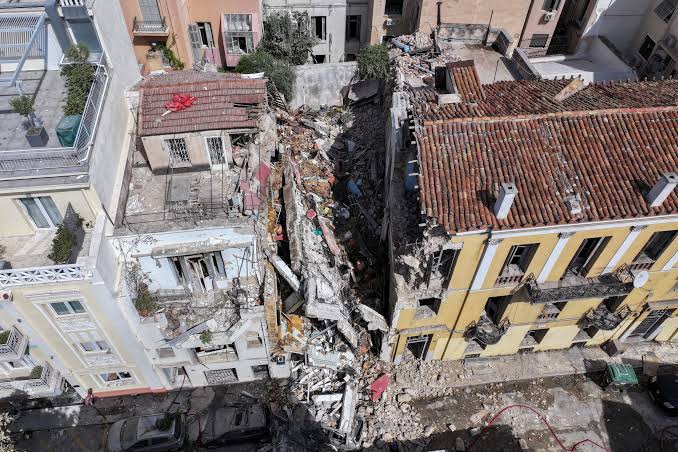
All six people sought following a devastating explosion and building collapse in central Athens have been confirmed dead. Greek firefighters recovered the victims from the rubble of a residential building in the historic Plaka district near the Acropolis. Four American tourists were among those killed, while Athens Mayor Haris Doukas says a major gas leak is the suspected cause, although the official investigation remains underway.
What began as a desperate search for people missing beneath the rubble of a collapsed residential building in central Athens has ended with no survivors found among the six being sought.
Greek authorities confirmed on Saturday that six people have died following the powerful explosion that destroyed a residential building in the historic Plaka district near the Acropolis.
The death toll marks a devastating update to the disaster.
Earlier reports had confirmed two deaths while rescuers continued searching for four people who remained missing.
Those hopes have now ended.
Fire brigade spokesman Vassilis Vathrakogiannis said emergency crews recovered the bodies of all six people as they searched through the wreckage using rescue dogs, cameras, sensors and heavy equipment.
The victims included four American tourists and an elderly couple who lived in the building.
Authorities were continuing the formal identification process.
The explosion occurred on Friday morning in Plaka, one of Athens' most famous and heavily visited neighborhoods.
It was powerful enough to destroy the residential property, damage surrounding buildings, shops and vehicles and send debris and shattered glass across surrounding streets.
Athens Mayor Haris Doukas has said the blast was likely connected to gas infrastructure.
But investigators have not yet formally established the exact cause.
FOUR AMERICAN TOURISTS AMONG THE DEAD
Four American tourists staying in short-term accommodation inside the building were among those killed.
According to reports citing Greek authorities, the tourists had been expected to leave Athens on Friday and catch an afternoon flight from Athens International Airport.
They never arrived.
Their failure to appear for the flight became one of the indicators that they could still be inside the destroyed building.
The other two victims were an elderly couple who lived in another apartment in the property.
Reports from Greek state media identified the couple as a British man and his Greek wife.
Authorities had spent hours searching for the six people after information from relatives, neighbors and accommodation records suggested they were likely inside when the explosion occurred.
The recovery of the final bodies brought that search to a tragic conclusion.
BLAST HIT ATHENS' TOURIST HEART
The location has added to the shock surrounding the disaster.
Plaka sits beneath the Acropolis and is one of the most recognizable tourist districts in Greece.
Its narrow streets are lined with homes, hotels, restaurants, shops and short-term holiday accommodation.
The destroyed property stood near some of Athens' most visited historical landmarks, including the Acropolis, Hadrian's Arch and the Temple of Olympian Zeus.
The explosion occurred shortly after 7:30 a.m. on Friday.
Its force was felt across the surrounding area.
Nearby homes and businesses suffered damage.
Cars were struck by debris.
Windows shattered.
Rubble and broken glass were reportedly thrown as far as three blocks from the building.
Two women were rescued from an adjacent building and taken to hospital, while another person suffered minor injuries from flying debris.
RESCUERS SEARCHED THROUGH THE NIGHT
The operation involved dozens of firefighters and specialist rescue teams.
Crews used search dogs, cameras, sensors and other equipment while excavators carefully removed sections of the collapsed structure.
At points during the search, rescue operations were slowed or temporarily halted so teams could listen for possible sounds beneath the rubble.
Authorities initially hoped some of those missing might have survived in pockets within the collapsed structure.
But as the operation continued, bodies began to be recovered.
By Saturday, authorities confirmed that all six people being sought had died.
The search operation is now giving way to an investigation into how the explosion happened.
WAS IT A GAS LEAK?
Attention is increasingly focused on the building's gas infrastructure.
Mayor Doukas said there was a strong possibility that the explosion was triggered by a significant gas leak.
Reports of a gas smell in the area are also being examined.
However, authorities have not yet formally concluded that a gas leak caused the disaster.
The fire brigade's investigative unit is examining the scene to determine the precise origin and cause of the explosion.
That distinction remains important.
A suspected gas leak is currently the leading explanation publicly discussed by Athens authorities, but the investigation has not finished.
Investigators will need to determine where the gas originated, whether infrastructure inside or around the property failed and whether warning signs existed before the explosion.
NEIGHBOURING BUILDINGS UNDER SCRUTINY
The scale of the explosion has also created concerns about surrounding properties.
Authorities have been inspecting neighboring buildings to determine whether they remain structurally safe.
The mayor described extensive damage along the street and behind the destroyed property.
At least several neighboring homes have reportedly been considered unsafe following initial inspections.
The disaster is particularly challenging because of Plaka's dense urban environment.
Its narrow streets, historic buildings and heavy pedestrian traffic can complicate emergency access and evacuation.
Local residents had reportedly raised concerns before the explosion about emergency-response difficulties in the neighborhood.
Those concerns are likely to receive renewed scrutiny as authorities investigate the disaster.
FROM FOUR MISSING TO SIX DEAD
The rapidly changing casualty figures reflected the difficulty of the rescue operation.
Initial reports focused on injuries and people feared trapped inside.
As rescuers searched the ruins, authorities confirmed deaths while others remained officially missing.
By Saturday afternoon, that uncertainty was over.
Six bodies had been recovered.
There were no survivors among the people rescuers had been searching for inside the destroyed building.
The victims had been living or temporarily staying in one of Europe's busiest tourist districts.
Four were visitors preparing to leave Greece.
Two were residents of the building.
Their deaths have transformed what initially appeared to be a major urban emergency into one of Athens' deadliest recent residential building disasters.
INVESTIGATION NOW TAKES CENTRE STAGE
With the search operation concluding, investigators face a series of questions.
What caused such a powerful explosion?
Was there a gas leak?
If so, where did it originate?
Were there previous signs of a problem?
Could the disaster have been prevented?
And were the building's gas systems and surrounding infrastructure operating safely?
Greek authorities have not yet provided definitive answers.
For now, the suspected gas connection remains exactly that — suspected.
What is no longer uncertain is the human toll.
Six people are dead.
Four American tourists who travelled to Athens will not return home.
An elderly couple who lived in the building also lost their lives.
And in the shadow of the Acropolis, a residential building has been reduced to rubble as investigators begin the difficult task of determining why.