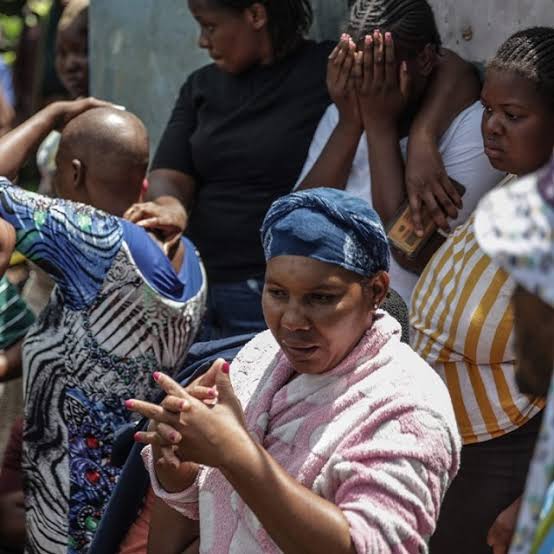
WORSHIPPERS COLLAPSE IN BAVARIAN CHAPEL AS "VERY HIGH" CARBON MONOXIDE LEVELS LEAVE 19 IN HOSPITAL, INCLUDING TWO CHILDREN
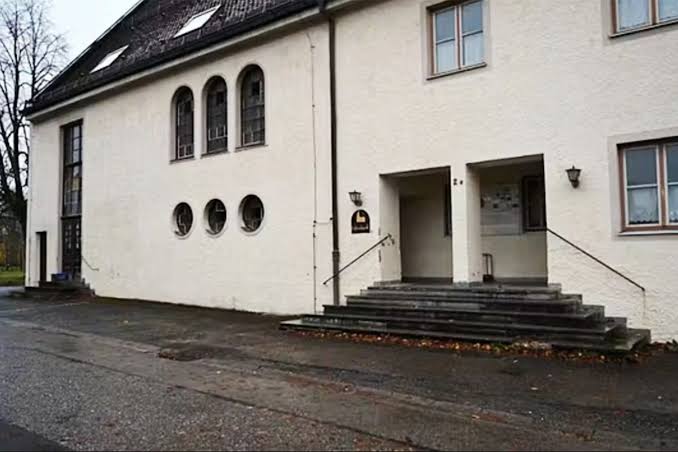
Two children are among 19 people taken to hospital with suspected carbon monoxide poisoning after several worshippers collapsed during a church service in Germany, according to Mail Online. Four people were reported to be seriously ill. Emergency services blamed a faulty heating system at a castle chapel in the Allgäu region of Bavaria. Police in Kempten told the German newspaper Bild that the alarm was raised at around 10:50am. Several people suddenly collapsed during a service held by the Priestly Fraternity of St Peter, a traditionalist Catholic society. Worshippers had complained of breathing difficulties and nausea. More than 120 emergency workers, including firefighters, paramedics and police officers, went to the scene. A rescue helicopter was also called in. Sohrab Taheri-Sohi, a spokesman for the Bavarian Red Cross, said more than 50 people were affected. Firefighters later found a "very high concentration of carbon monoxide" inside the chapel. Police believe a heater bought only weeks earlier malfunctioned after a 70-year-old church official switched it on at about 6am to warm the building. Kempten Police said the heater's automatic shut-off "did not function properly due to a technical malfunction or an operating error." No deaths were mentioned in the reports. The incident is a sharp warning about a silent killer that also claims lives in Nigerian and Ghanaian homes, often through generators and charcoal stoves used in closed rooms.
It began like any other Sunday-style morning of worship. The chapel was cold, so someone tried to make it comfortable. Hours later, people were collapsing in the pews.
Two children are among 19 people taken to hospital after a suspected carbon monoxide leak during a church service in Germany, according to Mail Online. Four of them were described as seriously ill. The service was taking place in a castle chapel in the Allgäu, a scenic region of southern Bavaria known for its mountains, farms and old castles.
Police in Kempten, the main city of the region, told the German newspaper Bild that the alarm was raised at around 10:50am. Several worshippers suddenly collapsed during the service. Before that, people had begun to complain of breathing difficulties and nausea. Those are classic early signs of carbon monoxide poisoning, though they can easily be mistaken for ordinary illness, tiredness or the effect of a stuffy room.
The emergency response was huge. More than 120 emergency workers were sent to the chapel, including firefighters, paramedics and police officers. A rescue helicopter was also called in. Sohrab Taheri-Sohi, a spokesman for the Bavarian Red Cross, said more than 50 people were affected in total. That suggests that while 19 people needed hospital care, dozens more were checked or treated at the scene.
When firefighters entered the chapel with gas detection equipment, they found what was described as a "very high concentration of carbon monoxide" inside the building.
Investigators quickly turned their attention to the heating.
According to police, a heater bought only weeks before the incident appears to have malfunctioned. A 70-year-old church official switched it on at about 6am, several hours before the morning service, to warm the chapel for worshippers. That is a common and caring thing to do in a cold stone building in late November. In this case, police believe it set off a dangerous chain of events.
"Based on current information, the heater's automatic shut-off mechanism did not function properly due to a technical malfunction or an operating error," Kempten Police said.
That statement is careful, and it should be read carefully. Police have not said the official did anything wrong. They have not said the heater was defective. They have said that one of two things happened: either the device failed, or it was operated in a way that stopped its safety feature from working. Only a full investigation can establish which. The reports also do not say what fuel the heater used, what model it was, or where it was bought.
One thing is clear from basic science. Carbon monoxide does not come from electric heating elements. It is produced when fuel burns, such as gas, oil, kerosene, wood, charcoal or petrol. Any heater that produced enough carbon monoxide to fill a chapel would have been burning fuel of some kind. If that burning was incomplete, or if the fumes had nowhere to escape, the gas would have built up steadily over the hours between 6am and the start of the service.
That timeline may help explain why so many people were affected. By the time worshippers arrived, the gas may already have been building for hours. The longer people stayed inside, breathing it in, the worse the effects would have become.
The setting may also have played a role. Castle chapels in Europe are often centuries old. They tend to have thick stone walls, heavy doors and small windows. Those features keep heat in during winter. They also keep air from moving. A building designed to hold warmth can just as easily hold poison.
The service itself was run by the Priestly Fraternity of St Peter. The fraternity is a society of Catholic priests founded in 1988. It is known for celebrating the traditional Latin Mass, the older form of Catholic worship that was standard before the reforms of the 1960s. Its communities are often small and close-knit, and families with young children are a common sight at its services. That may help explain why children were among the injured.
The fraternity has a strong presence in southern Germany, but the reports do not identify the exact chapel or name any of the people affected. Out of respect for those still recovering, that silence is understandable.
What happened inside that chapel shows why carbon monoxide is often called a "silent killer."
The gas has no color. It has no smell. It has no taste. It does not sting the eyes or burn the throat. People can breathe it for a long time without knowing anything is wrong. By the time they realize they are in danger, they may already be too confused or weak to get out.
The gas is so dangerous because of what it does inside the body. Red blood cells carry oxygen using a protein called hemoglobin. Carbon monoxide binds to hemoglobin far more strongly than oxygen does, more than 200 times more strongly by most estimates. Once it latches on, it blocks oxygen from reaching the brain, heart and other organs. In effect, the body slowly suffocates, even while the person keeps breathing normally.
The early symptoms are easy to dismiss. They include headache, dizziness, nausea, weakness, tiredness and shortness of breath. Many people mistake them for flu, food poisoning or simple exhaustion. As exposure continues, people can become confused, lose coordination, faint or fall unconscious. At high levels, carbon monoxide can cause seizures, heart problems and death.
One telling sign is when several people in the same place feel unwell at the same time. That is exactly what happened in the Bavarian chapel. When many worshippers began to complain of nausea and breathing problems together, it pointed to a shared cause in the air, not a coincidence.
Some groups are more at risk than others. Children breathe faster than adults, so they can take in the gas more quickly. Older people and those with heart or lung problems are also more vulnerable. Pregnant women are a special concern, because carbon monoxide can harm an unborn baby even when the mother shows only mild symptoms.
Treatment usually starts with removing the person from the source and giving high-flow oxygen. In serious cases, doctors may use hyperbaric oxygen therapy, where patients breathe pure oxygen inside a pressurized chamber to clear the gas from the blood faster. Some survivors of serious poisoning suffer lasting effects, such as memory problems, difficulty concentrating or changes in mood, which can appear weeks later. That is why the condition of the four seriously ill patients will be watched closely in the coming days.
Germany has seen many carbon monoxide incidents over the years. Shisha lounges, where charcoal is burned to heat water pipes, have been a repeated source of poisoning cases. Faulty gas boilers, blocked chimneys and fuel-burning heaters used in enclosed spaces have caused others. Many German homes now have smoke alarms, which are required by law across the country. Carbon monoxide alarms are less common, even though they are inexpensive and widely available.
Investigators will now try to answer several questions. Why did the heater's automatic shut-off fail? Was the device faulty from the factory, damaged, or used in a way it was not designed for? Was it suitable for a building of that size? Was there enough ventilation? Was there any carbon monoxide detector in the chapel? The answers may matter well beyond this one case, especially if a product defect is found. A faulty model sold to one church could also be sitting in homes, halls and other places of worship.
For readers in Nigeria and Ghana, the story may seem far away. It is not.
In Nigeria, carbon monoxide poisoning is one of the most common causes of preventable death in the home. The main cause is well known: the generator. With grid power unreliable, millions of households run small petrol generators every night. Too often, families place them in kitchens, corridors, garages or close to bedroom windows, sometimes to protect them from thieves. Fumes drift inside while people sleep. Over the years, Nigerian media have reported many cases of whole families, couples, students and young children found dead in the morning after a night with a generator running too close to the house.
Charcoal is another danger. During the harmattan season, from roughly December to February, temperatures drop sharply at night in parts of the north and on the Jos Plateau. Some families bring charcoal stoves or burning coals into closed rooms to keep warm. It is a deadly practice. A charcoal fire in a small, sealed room can produce lethal levels of carbon monoxide in a few hours.
Ghana faces many of the same risks. During periods of "dumsor," the country's term for power cuts, generator sales rise and so does the danger. Charcoal remains a major cooking fuel in many Ghanaian homes. Cooking indoors with poor ventilation, or leaving coal pots burning in closed rooms, can expose families to dangerous fumes.
Churches in both countries face their own version of the risk. Many congregations depend on generators to power sound systems, lights and fans during services, vigils and night programs. In some buildings, the generator sits right beside the hall, or in an enclosed room next to it. Night vigils, which can last for hours with large crowds and doors shut, create exactly the conditions that make carbon monoxide so dangerous: a fuel-burning machine, a closed space and many people breathing the same air for a long time.
The lesson from the Bavarian chapel is simple. A machine bought to make worshippers comfortable can put them in danger if it is not installed, used and monitored safely. That applies to a gas heater in a German castle just as much as to a generator behind a church in Lagos, Port Harcourt, Accra or Kumasi.
There are clear steps that families and church leaders can take.
Never run a generator indoors, in a garage, on a closed veranda or close to doors and windows. Place it outside, at a safe distance from the building, with the exhaust pointing away from where people sit or sleep.
Never burn charcoal, firewood or kerosene inside a closed room for warmth. If a fire must be used for cooking, make sure the space has good airflow.
Keep fuel-burning appliances in good condition. Gas cookers, heaters and boilers should be checked by qualified people. Chimneys and vents should not be blocked.
Install carbon monoxide detectors. Battery-powered alarms are cheap compared with the cost of a life. Churches, schools, hostels, hotels and homes that use generators or gas appliances should have them. A detector is the only reliable way to know the invisible gas is present.
Make sure places of worship have proper ventilation, especially during long services and night vigils. Doors and windows should allow fresh air to move, and generators should be kept well away from the main hall.
Know the warning signs. If several people suddenly feel dizzy, sick or short of breath in the same place, assume carbon monoxide until proven otherwise. Get everyone outside into fresh air immediately. Turn off the source if it is safe to do so. Call for emergency help. In both Nigeria and Ghana, 112 is the national emergency number. Anyone who has collapsed or shows confusion needs medical care, even if they seem to recover in the open air.
Train church workers and ushers. The people who open buildings early, switch on equipment and manage services should know the risks. In the German case, the heater was switched on hours before anyone else arrived. A worker trained to check ventilation and recognize warning signs can make the difference between a scare and a tragedy.
The full story of what happened in that Allgäu chapel is still being pieced together. Based on reports from Mail Online and Bild, and statements from Kempten Police and the Bavarian Red Cross, 19 people were taken to hospital, including two children. Four were seriously ill. More than 50 people were affected. More than 120 emergency workers and a rescue helicopter responded. Firefighters found a very high concentration of carbon monoxide inside the chapel. Police believe a heater bought just weeks earlier, switched on by a 70-year-old church official at around 6am, failed to shut off as it should have, due either to a technical fault or an operating error.
Nobody went to that service expecting danger. They went to pray. The quick response of emergency crews likely prevented a far worse outcome.
Carbon monoxide gives no warning that people can see, smell or taste. That is what makes it so deadly, in a Bavarian castle or a Nigerian bedroom. The best protection is not luck. It is knowledge, ventilation and a small alarm on the wall that never sleeps.