
WHERE IS THE LIGHT?” NIGERIANS MOCK ADELABU’S POWER PROMISES AS OUTAGE COMPLAINTS FLOOD SOCIAL MEDIA
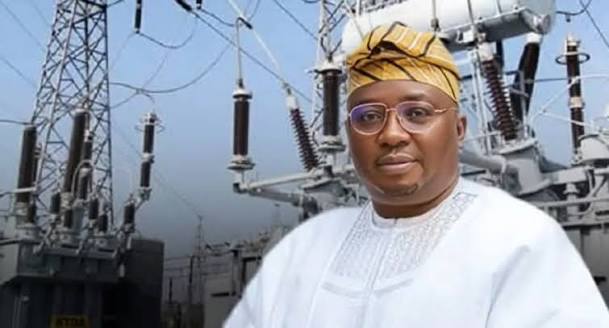
Nigerians have repeatedly challenged claims of improvement in the country's electricity sector, using social media to contrast government promises with their experiences of prolonged outages, poor supply and rising electricity costs. Former Power Minister Adebayo Adelabu's previous assurances remain a particular target of criticism.
Nigerians frustrated by persistent electricity problems have repeatedly taken to social media to challenge optimistic claims about improvements in the country's power sector, contrasting government promises with their experiences of blackouts and unreliable supply.
Much of the criticism has centred on Adebayo Adelabu, who served as Minister of Power under President Bola Tinubu before resigning in April 2026 to pursue his political ambitions in Oyo State.
Adelabu repeatedly defended the government's electricity reforms while in office and promised that Nigerians would eventually experience significant improvements in power supply.
But those assurances frequently collided with complaints from households and businesses reporting prolonged outages.
In March 2026, amid another period of severe electricity shortages, Adelabu publicly apologised to Nigerians and said improvements should begin to emerge within two weeks.
When that deadline passed, residents in several parts of the country told Vanguard that their experiences had changed little.
In Abuja's Utako district, resident Ekwa Mbuk questioned why customers continued to endure darkness.
“So why are we at Utako District subjected to darkness for another night?” he asked in a complaint directed at the Abuja Electricity Distribution Company.
Mbuk said residents had experienced lengthy outages followed by extremely limited supply.
“Since last night, no light… we've had only an hour of light. Are we getting what we're paying for?” he asked.
The complaints were not limited to Abuja.
In Lagos, another electricity consumer, identified as Iyke Oscar, questioned why customers classified under Band A continued paying premium electricity tariffs despite unreliable supply.
“Why are we still paying as Band A, if we can't have light up to 24 hours?” he asked.
Band A customers are supposed to receive significantly longer daily electricity supply than consumers in lower tariff categories.
In Delta State, resident Abednego Emonena offered an even more blunt assessment.
“Electricity in Nigeria is still a joke,” he said.
A resident identified as Akin Muyiwa described similar frustration in Akure, Ondo State.
“We don't know what's called electricity,” he said.
In Imo State, Mary Blossom complained that parts of Owerri had endured an extended blackout.
“For the past four weeks, no light,” she said.
Another resident, Diana Efe, complained that her community in Edo State had gone several days without electricity following rainfall.
“This is the fifth day we haven't seen electricity since rain fell,” she said.
The frustration reflected a wider disconnect between official claims of progress in the electricity sector and the everyday experiences reported by some consumers.
Social media has repeatedly become an outlet for that anger.
Earlier complaints on X have been equally harsh.
In February 2024, an X user posting as @big_temsx complained that electricity supply had deteriorated dramatically, claiming that an area that previously received around 15 hours of electricity daily was receiving only a fraction of that.
Another X user, @Tee_Classiquem1, criticised Adelabu's performance and questioned how officials responsible for the electricity sector were selected.
Those posts reflected the opinions and personal experiences of individual social media users and do not independently establish nationwide electricity supply levels.
However, the criticism has persisted alongside broader evidence that Nigeria continues to face substantial electricity challenges.
In March 2026, Adelabu himself acknowledged the severity of the situation and apologised for poor electricity supply.
He attributed the disruption largely to gas shortages and technical problems affecting the electricity system.
Independent scrutiny has also challenged some previous government claims about improvements in the sector.
Africa Check examined 20 claims Adelabu made about Nigeria's electricity sector in April 2025 and found a mixed record.
Its assessment classified seven claims as correct, while others were rated incorrect, misleading, unproven or mostly correct.
Among the areas questioned were electricity access, generation figures and claims concerning grid disturbances.
That does not mean every claim about progress in Nigeria's power sector is false.
The country has undertaken reforms covering electricity market decentralisation, tariffs, transmission infrastructure, metering and power generation.
Adelabu, when announcing his departure from government in April, cited increases in peak generation, transmission upgrades, improved market revenue and implementation of the Electricity Act 2023 among the achievements of his tenure.
At the same time, he acknowledged that major problems remained, including gas shortages, infrastructure vandalism and weaknesses across the electricity value chain.
For many Nigerians, however, the political argument over statistics and reforms ultimately comes down to a much simpler question: does electricity stay on when they return home or open their businesses?
The reactions documented across the country suggest that for many consumers, their personal experience remains far removed from the uninterrupted electricity they have been promised for years.
That gap between government ambitions and conditions experienced by consumers continues to fuel anger whenever politicians point to progress in Nigeria's troubled electricity sector.