
NIGERIA TURNS TO GERMANY FOR TECHNOLOGY AND BILLIONS IN INVESTMENT TO REVIVE STRUGGLING STEEL INDUSTRY
Nigeria is stepping up efforts to attract German technology, equipment and investment into its steel industry as the Federal Government pushes to revive domestic production, process more minerals locally and reduce dependence on imported industrial equipment.
Nigeria is intensifying efforts to bring German technology and investment into its steel and metallurgical industries as the Federal Government seeks to transform the sector into a major driver of manufacturing, infrastructure development and economic diversification.
Minister of Steel Development Shuaibu Audu made the push during talks with a delegation of German Original Equipment Manufacturers at the ministry's headquarters in Abuja.
The German delegation was led by Dr Chux Onaa, Head of VDMA-German OEMs.
The meeting focused on moving previous discussions between Nigeria and Germany beyond diplomatic engagements and towards concrete industrial partnerships and investment.
Audu identified mineral processing, steel production, equipment manufacturing and supply, engineering services, capacity development and technology transfer as major areas where Nigeria wants German companies to participate.
The government is particularly interested in attracting German manufacturers to ongoing and emerging projects across Nigeria's steel and metallurgical value chain.
Audu said Nigeria possesses significant mineral and metallurgical raw materials alongside a large domestic market capable of supporting greater industrial development.
The government's objective is to use those resources to develop more domestic manufacturing rather than continuing to export raw materials while importing expensive finished industrial products and equipment.
German technology could play an important role in that strategy.
Germany has one of the world's most established industrial engineering and manufacturing sectors, and its equipment manufacturers supply machinery used across mining, mineral processing, construction and heavy industry.
Nigeria wants some of that expertise deployed locally.
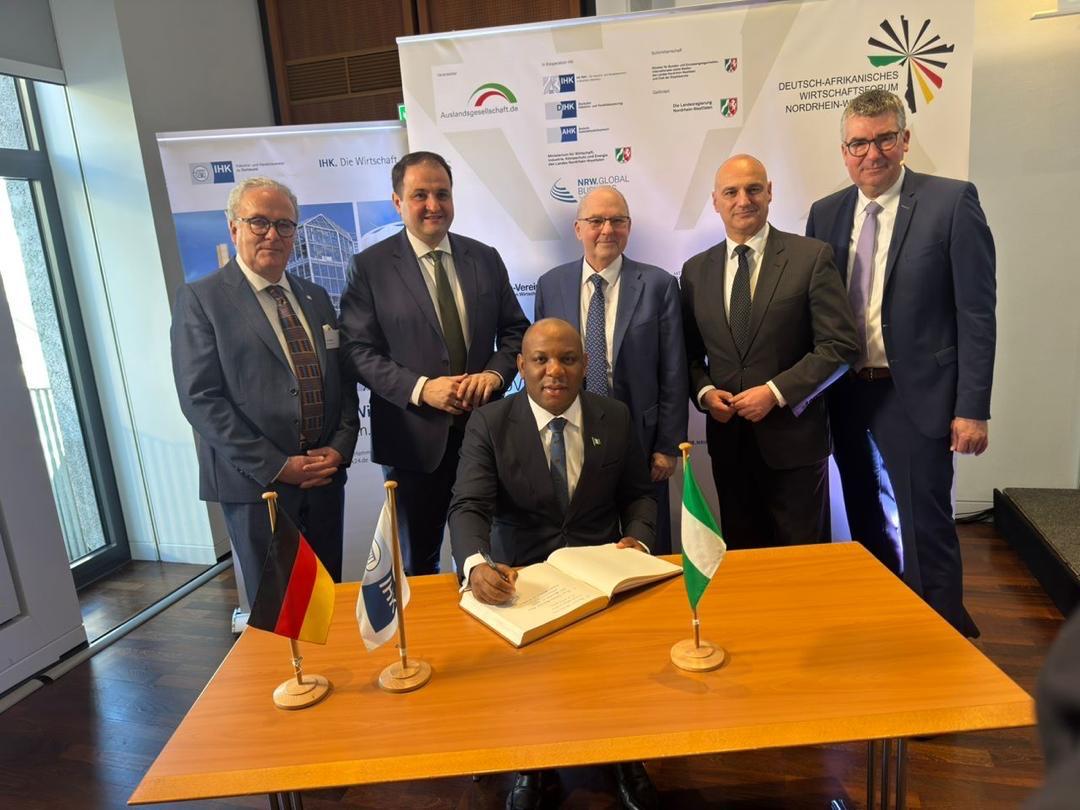
The latest discussions build on engagements between Nigerian officials and German businesses at the German-African Economic Forum in Dortmund earlier this year.
During those meetings, both sides explored opportunities across steel development, mining, mineral processing, engineering, technology transfer and industrial investment.
Audu also held investment discussions with German industrial companies during his visit to Germany, including engagements aimed at attracting long-term investment and modern steel-production expertise into Nigeria.
The German delegation's visit to Abuja is intended to move those earlier discussions closer to specific projects.
Audu said stronger cooperation with German manufacturers could help Nigeria develop local industrial value chains while reducing dependence on imported equipment and technology.
That ambition goes beyond simply producing more steel.
Steel is a fundamental input for construction, transportation, energy infrastructure, machinery, manufacturing and numerous other industries.
A reliable domestic steel industry could therefore have consequences across much of Nigeria's economy.
For decades, Nigeria has attempted to build a major domestic steel industry with limited success.
The country possesses substantial deposits of iron ore and other mineral resources, but several major state-backed steel projects have struggled to achieve their original production ambitions.
The Ajaokuta Steel Company remains the most prominent example.
Conceived as the foundation of Nigeria's industrial transformation, the massive complex has consumed significant public investment over several decades without becoming the fully operational integrated steel plant originally envisioned.
Successive administrations have announced different strategies to revive the facility and the wider steel sector.
President Bola Tinubu's administration created a dedicated Ministry of Steel Development as part of another attempt to accelerate that process.
The government argues that reviving domestic steel production could support infrastructure development, expand manufacturing and create jobs.
But officials are also increasingly emphasising value addition.
Rather than exporting mineral resources in relatively unprocessed form, Nigeria wants more extraction, processing, manufacturing and equipment production to take place domestically.
Technology transfer is therefore a major component of the talks with German companies.
Nigeria wants foreign partnerships to provide not only capital and machinery but also technical knowledge and training that can strengthen domestic industrial capacity.
Permanent Secretary of the Ministry of Steel Development Ambassador Nura Abba Rimi said the engagement with German manufacturers was consistent with the government's wider industrialisation strategy.
Onaa, who led the German delegation, said German OEMs possess technologies capable of supporting raw-material processing, including technologies used by cement and building-material industries.
The discussions do not yet amount to announcements of completed German investments.
They represent an effort to identify specific projects and commercial partnerships that could eventually attract capital, equipment and expertise into Nigeria.
That distinction will become important as the talks progress.
Nigeria has announced numerous plans over several decades to revive its steel industry.
The measure of the latest initiative will ultimately be whether negotiations translate into factories, equipment, functioning production facilities, technology transfer and commercially sustainable domestic steel output.
For the government, the opportunity is significant.
A functioning steel value chain could reduce import dependence, provide raw materials for Nigerian manufacturers and retain more economic value from the country's mineral resources.
It could also provide industrial equipment and expertise that Nigeria currently sources from overseas.
The latest engagement with German manufacturers represents another attempt to move towards that goal.
This time, Abuja says it wants the discussions to produce concrete industrial partnerships rather than remain promises on paper.